
Samos, an island in the eastern Aegean, offers ideal conditions for diving and snorkelling enthusiasts. Its clear, warm waters and diverse marine life make it a prime destination for underwater exploration. Plan the whole trip with Greece Tours.
With numerous dive centres and snorkelling spots, Samos caters to both beginners and experienced divers. From vibrant reefs to intriguing caverns, the island’s underwater world promises unforgettable adventures.
What makes diving on Samos unique?
Diving on Samos combines clear eastern-Aegean water with rocky reefs, walls, and small caverns. The island sits off the Turkish coast, where the Mycale strait narrows to about 1.2 km, sheltering marine-rich shallows.
Samos lies in the eastern Aegean, off the Turkish coast, where the Mycale strait narrows to about 1.2 km. The island rises steeply from the sea to Mt Kerkis at about 1,434 m and the Ampelos range. Pine-backed slopes drain into pebble coves rather than muddy flats, so the shallows stay transparent through the season. Clear runoff and the deep offshore channel keep visibility open along the rocky drop-offs near Pythagorio and Kerveli. The green interior filters rain before it reaches the coast, which limits sediment along the north shore around Kokkari and Tsamadou. This geography gives divers reliable clarity from the sheltered southeast harbour of Pythagorio to the exposed northwest capes below Karlovasi.
Coastal water temperatures climb through summer, extending comfortable bottom time on the reefs.
The underwater terrain around Samos changes character within short distances. Rocky reefs step down in ledges near Pythagorio, while steeper walls and small caverns appear along the east coast toward Kerveli. Boulder fields and posidonia seagrass meadows fill the sandy gaps between headlands, giving fish cover and feeding grounds. Divers meet groupers wedged into crevices, moray eels tucked under ledges, octopus across the boulders, and bream cruising the open water. The mix of hard rock, sand, and seagrass within one dive keeps the profiles interesting for repeat visits. Depths on the guided coastal sites stay moderate, so no-decompression bottom times remain generous.
This variety, packed into a compact coastline, separates Samos from flatter Aegean reef systems and rewards divers who return across a week of repeat dives.
Dive operators work mainly from Pythagorio in the southeast and from bays along the east coast near Kerveli and Vathy. These bases run try-dives for first-timers, entry-level certification courses, and guided boat dives for certified divers. Boat access shortens the run to offshore reefs and lets guides match the site to conditions and skill. Instructors brief each group on the local topography, currents, and marine life before entry, then lead the dive at a set pace. Rental gear covers mask, fins, wetsuit, regulator, and buoyancy device, so travellers arrive with little more than a swimsuit. The southeast base also sits close to Samos International Airport at Pythagorio, which shortens transfers.
Guided small groups keep the ratio low and let divers hold longer at each feature.
Above the water, Samos rewards a diving trip with heritage and landscape between sea days. Pythagorio and the Heraion of Hera form a UNESCO World Heritage site, and the Eupalinos Tunnel aqueduct cuts through the hill above the harbour town. The island claims Pythagoras, Aristarchus, and Epicurus as native thinkers, anchoring a strong cultural draw. Mountain villages such as Manolates and Vourliotes on the Ampelos slopes pair terraced Muscat vineyards with shaded tavernas. Non-diving afternoons fit walks to Potami waterfalls near Karlovasi or tastings of the PDO Samos sweet wine. The island’s beaches spread across four coasts, so shore time and dive time slot together within a compact touring radius.
This blend turns a single-focus dive holiday into a rounded island week of sea, ruins, and wine.
Where are the best dive spots around Samos?
The best dive areas around Samos cluster near Pythagorio in the southeast, the sheltered east-coast bays around Kerveli, and the reef-lined north coast near Kokkari. Each holds distinct rock formations and marine life.
Pythagorio, on the southeast coast, works as the main diving base on Samos. The harbour town sits about 12 km from Vathy and next to Samos International Airport, so transfers stay short. Reefs off the headlands here drop in stepped ledges, with boulder tumbles that shelter grouper and octopus close to the boat moorings. Operators run boat dives from the old harbour, cutting the surface run to offshore rock and reducing shore-entry surge. The UNESCO monuments above the town, including the ancient harbour and the Eupalinos Tunnel, make Pythagorio a practical base for pairing dives with heritage. Entry-level courses use the calm inshore water inside the bay before groups move to open reef.
This concentration of services and short runs anchors most first-time divers to the southeast.
Kerveli and the east coast near Vathy hold sheltered bays with clear, calm water. The east-facing coves sit in the lee of the prevailing north wind, so surface conditions stay workable when the north coast turns choppy. Rocky seabeds and steep walls near Kerveli give both snorkellers and divers structure to follow at moderate depth. The bays back onto pine slopes, and the light runoff keeps the shallows clear for underwater sightlines. Vathy, the island capital and main ferry port, lies about 10 km north, so lodging and dinner options stay close to the dive bays. Fish such as bream, damselfish, and wrasse hold along the rock edges, with octopus across the boulder gaps.
These east-coast sites suit divers who value flat entries and consistent visibility.
The north coast around Kokkari and Tsamadou draws snorkellers and shallow divers to its rocky headlands. Kokkari, a fishing and windsurf village about 10 km west of Vathy, marks the start of a string of pebble coves backed by reef. Tsamadou, Lemonakia, and Tsabou sit within 3 km of each other, each fronting rocky points that shelter reef fish. Clear water over the cobble seabed gives strong sightlines close to shore, so no boat is needed to reach fish. Afternoon north wind, the meltemi, can raise chop here, so mornings give the calmest water. Snorkellers work the headland edges where bream and wrasse gather, while the sandy centres offer easy rest stops.
This linked coast pairs relaxed beach time with close in-water reef exploration on one drive.
Choosing a base comes down to wind, transfer time, and the mix of diving and touring wanted. Pythagorio suits divers who want boat access, courses, and heritage within walking distance of the harbour. Kerveli and the east coast fit travellers who prioritise calm, clear bays and quiet lodging near Vathy. The north coast around Kokkari rewards snorkellers and shore divers who want reef within wading distance of pebble beaches. Road distances across this part of Samos stay short, with Pythagorio to Kokkari about 20 km, so a single base still reaches most sites. Booking guided boat dives lets operators shift the day’s plan to the calmer coast when the meltemi blows.
Matching the base to conditions keeps in-water days productive across a full week on the island.
What marine life can divers expect to see around Samos?
Divers around Samos meet groupers, moray eels, octopus, and bream across the rocky reefs. Damselfish, wrasse, and sea bream fill the mid-water, while posidonia meadows shelter smaller species and the occasional seahorse.
Groupers rank among the headline sightings on the Samos reefs. The dusky grouper holds territory in rock crevices and under ledges, often returning to the same hollow across a season. These heavy-bodied fish hover near their cover and watch divers rather than fleeing at once, so slow approaches give clear views. The stepped reefs off Pythagorio and the walls near Kerveli give grouper the deep crevices they favour. Divers also read the reef by its residents, since a settled grouper signals stable, food-rich rock. Guides point out the largest individuals on each site and keep groups at a distance that avoids spooking them.
Steady buoyancy and quiet finning improve every grouper encounter, letting divers hold position on the ledge line while the fish stays put.
Octopus and moray eels give the rocky ground its constant movement. Octopus press into narrow gaps and shift colour to match the boulder field, so spotting one rewards a careful scan of the reef edge. Moray eels anchor in holes with their heads out and jaws working, a normal breathing motion rather than a threat. Bream move through the mid-water in loose groups, catching light as they turn along the reef wall. Damselfish and wrasse work the shallower rock, darting between crevices and picking food from the algae. This layering, with grazers up top and ambush hunters below, keeps a single dive rich from the surface down.
Divers who slow down and inspect the ledges find far more than a fast swim-through reveals along the same stretch.
Posidonia seagrass meadows fill the sandy channels between reefs and act as nurseries. These underwater meadows are protected Mediterranean habitat, and their blades shelter juvenile fish, pipefish, and the occasional seahorse. Seahorses stay rare and hard to spot, gripping stems with their tails and swaying with the surge, so a sighting depends on a slow, patient search. The meadows also hold sea stars, sea urchins, and the odd cuttlefish hunting the edges at dusk. Guides on Samos steer groups over the seagrass rather than through it, since fins can scar the slow-growing blades. Healthy posidonia signals clean water, which ties back to the island’s clear runoff from the pine-covered slopes.
Divers who study the meadow margins add species the open reef never shows along its bare rock.
The wider species mix reflects a healthy eastern-Aegean ecosystem. Reef fish such as bream, salema, and wrasse share the water with cephalopods, echinoderms, and territorial grouper. The clear water off Samos supports strong sightlines that make behaviour easy to watch, from a hunting octopus to a grazing shoal. Marine life density rises around the boulder reefs and posidonia edges, where cover and food overlap. Divers on repeat visits track the same grouper hollows and octopus dens across a week, reading the reef as a stable neighbourhood. The Seitani coast in the northwest even shelters the endangered Mediterranean monk seal, a marker of the region’s biological value.
This range of species keeps the underwater world around Samos engaging from the first dive to the last of a week.
What courses and try-dives are available on Samos?
Samos dive centres run try-dives for first-timers, entry-level certification courses, and advanced or specialty training. Guided boat dives serve certified divers, and instructors follow international standards across every level of the programme.
Try-dives give first-timers a controlled introduction to the underwater world of Samos. An instructor covers breathing on a regulator, equalising ears, and basic hand signals in shallow, calm water before the descent. The session stays in sheltered bays, such as the inshore water at Pythagorio, at depths inside beginner limits. One instructor supervises a small group closely, so each participant stays within arm’s reach through the dive. No certification is needed for a try-dive, which makes it a common first step for families and holidaymakers. Divers surface with a clear sense of whether to pursue a full course.
This short, guided format turns curious swimmers into confident beginners without a large time commitment, using the clear inshore water that Samos offers along its sheltered southern and eastern bays.
Entry-level certification courses on Samos follow recognised international training standards. A beginner course runs over three to four days, mixing theory, confined-water skills, and open-water dives that build toward an internationally recognised qualification. Students learn buoyancy control, mask clearing, regulator recovery, and buddy procedures under an instructor’s direct watch. The calm, clear bays around Pythagorio and Kerveli give ideal training water, with moderate depth and steady visibility. Certified divers can then log dives worldwide, so the course carries value far beyond the Samos coast. Advanced and specialty courses extend skills into deeper dives, navigation, and night diving for those who want to progress.
The staged structure lets a traveller start as a non-diver and finish a week holding a portable certification that opens dive sites across the Mediterranean and beyond.
Guided boat dives serve certified divers who want depth and reach without organising their own logistics. Boats leave from Pythagorio harbour and east-coast bays, cutting the surface run to offshore reefs and walls that shore entries cannot reach. A dive guide leads each group, sets the route along the rock, and points out grouper hollows, octopus dens, and posidonia edges. Boat access also lets operators shift the day to the sheltered coast when the meltemi raises chop in the north. Two-dive boat trips are common, with a surface interval and a snack between the descents. Guides match the site to certification level and conditions, keeping the group inside no-decompression limits.
This format suits visiting divers who want local knowledge, short runs, and a planned day on the Samos reefs.
The full programme covers every level from first breath to specialty training. Non-divers start with a try-dive, work through entry-level certification, and progress to advanced skills across return visits. Instructors hold recognised ratings and keep group sizes low, so supervision stays close at each stage. Rental equipment is inspected and maintained, and centres run through gear checks before every entry. The clear, moderate-depth bays of the southeast and east coasts give a forgiving classroom for skills work. Certified divers add guided boat dives to explore reefs off Pythagorio and Kerveli that beginners never reach. This spread of options means a mixed group, with a certified diver and a curious beginner.
Can dive the same coast on the same day at levels matched to each person’s training and comfort.
Which beaches are best for snorkelling on Samos?
Tsamadou, Lemonakia, and Tsabou on the north coast, plus Kerveli and Psili Ammos in the east, rank as the top snorkelling beaches on Samos. Rocky headlands and clear water gather reef fish close to shore.
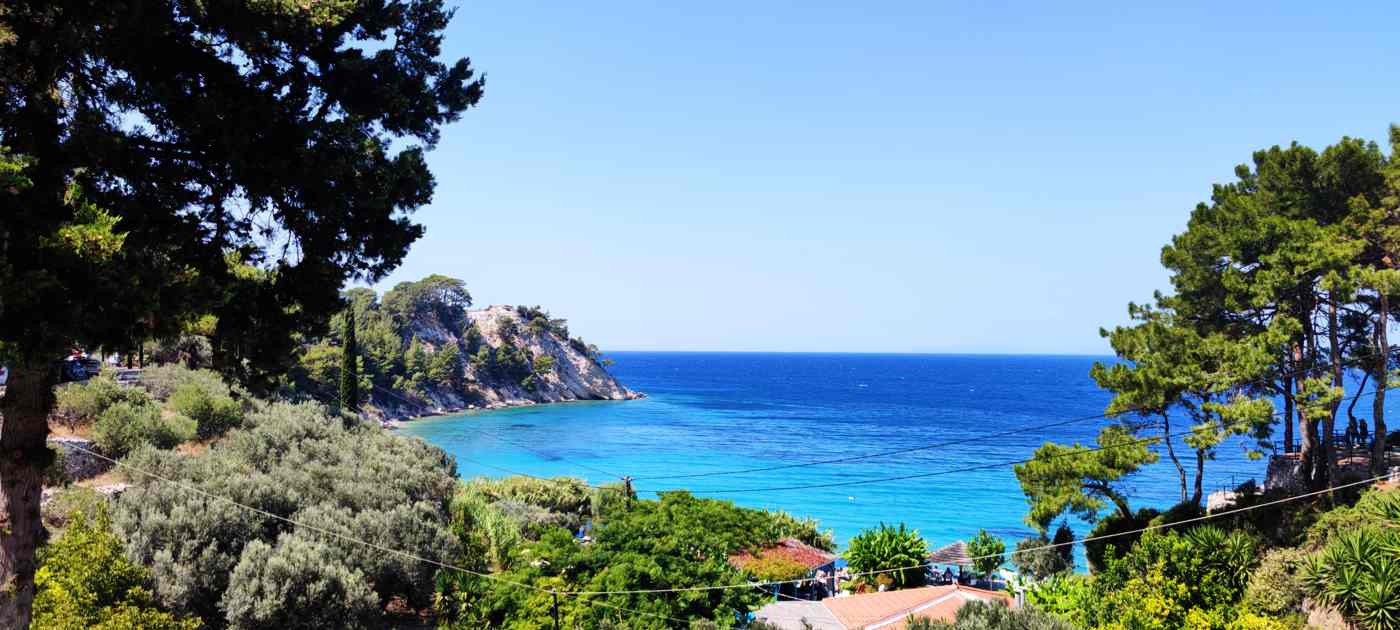
Tsamadou beach on the north coast, about 12 km west of Vathy, ranks among the strongest snorkelling stops on Samos. Pine-backed slopes fall to a pebble shore, and rocky headlands close each end of the cove. The cobble seabed and clean runoff keep the water clear, so sightlines hold from the waterline outward. Snorkellers work the rock at either flank, where bream, wrasse, and damselfish gather around the ledges and crevices. The centre of the bay drops over cobble and gives an easy rest between passes along the reef. Morning water stays calmest before the afternoon meltemi lifts chop across the exposed north coast.
Tsamadou pairs a swimmable beach with reef within a short fin of the shoreline, so no boat or guide is required for a full session here.
Lemonakia and Tsabou sit within 3 km of Tsamadou, forming a run of north-coast coves near Kokkari. Lemonakia curves between rocky points, and its clear water over cobble gives snorkellers close reef along both headlands. Tsabou, the next cove west, holds a similar profile with rock flanks and a pebble centre. The fishing and windsurf village of Kokkari anchors this stretch and supplies parking, tavernas, and rental gear within a short drive. Reef fish hold along the boulder edges, and octopus press into the rock gaps closer to the points. The exposed aspect means the calmest snorkelling comes before midday, since the meltemi builds chop through the afternoon.
These linked coves let snorkellers sample three reefs in one day, moving along the coast road between short in-water sessions at each point.
Kerveli beach on the east coast sits in the lee of the prevailing north wind, about 10 km southeast of Vathy. The sheltered aspect keeps the bay calm when the north coast turns rough, so snorkelling here often works when Tsamadou does not. Rocky seabed and pine-backed slopes frame the cove, and the clear water gives long sightlines close to the rock. Snorkellers follow the headland edges, where bream and wrasse hold near the ledges and octopus tuck into the boulder gaps. The calm, shallow entry suits families and less confident swimmers who want reef without surge.
Kerveli’s protected position makes it a reliable fallback on windy days, and its distance from Vathy keeps it quieter than the busier north-coast stops right through the summer season.
Psili Ammos near Vathy and Potami near Karlovasi round out the snorkelling options across two more coasts. Psili Ammos, on the east coast within about 12 km of Vathy, offers a shallow sandy entry with rock at the flanks, so it suits beginners and children. The calm, shallow water warms quickly and gives an easy introduction to snorkelling. Potami, on the northwest coast near Karlovasi, backs onto a river gorge and waterfall walk, pairing reef with a short inland hike. The rocky edges at Potami hold reef fish, and the clear water carries sightlines from the pebble shore.
These beaches spread snorkelling across the island’s compass points, so a traveller finds sheltered water on at least one coast regardless of the day’s prevailing wind direction on Samos.
When is the best time for diving on Samos?
The diving season on Samos runs from late spring to early autumn, when water temperatures reach about 22 to 27 degrees and seas stay calm. Summer gives the warmest water; shoulder months bring fewer crowds.
Late spring to early autumn gives the strongest diving conditions on Samos. Water temperatures climb from about 22 degrees in the shoulder months toward roughly 27 degrees at the height of summer, so bottom time stays comfortable in a standard wetsuit. Visibility holds through this window as calm seas limit stirred sediment along the rocky reefs. Dive operators around Pythagorio and the east coast run full schedules across these months, covering try-dives, courses, and guided boat trips. Longer daylight extends the diving window into the evening for two-tank boat days. The warm, clear water and settled weather make this the core season for both divers and snorkellers.
Travellers who plan an in-water holiday on Samos target this stretch to match conditions, operator schedules, and comfortable temperatures on the reefs.
Summer, from late June through August, holds the warmest water and the steadiest schedules. Sea temperatures near their peak of about 27 degrees let divers stay down without heavy exposure protection, and snorkellers linger in the shallows. Operators run at full capacity, so booking a boat dive or course a day ahead secures a place during the busiest weeks. The meltemi wind blows from the north through much of summer, raising chop on the north coast around Kokkari and Tsamadou. Guides answer this by shifting boat dives to the sheltered south and east near Pythagorio and Kerveli. Mornings give the calmest water before the wind builds, so early departures often produce the flattest conditions.
Summer combines peak warmth with the trade-off of stronger north wind and larger crowds across the island.
The shoulder months of late spring and early autumn trade a degree or two of warmth for quiet water and open bookings. Fewer visitors reach the beaches and dive boats across late spring, early June, September, and October, so groups stay small and sites feel uncrowded. Water still holds near 22 to 24 degrees in these windows, comfortable in a full wetsuit for most divers. The meltemi eases at the season’s edges, which steadies the north coast and widens the choice of sites on a given day. Operators keep running courses and guided dives, though on lighter schedules than midsummer. Travellers who value calm reefs and shorter waits over peak warmth often prefer these months.
The shoulder season suits divers who want the same clear water without the summer congestion.
Winter cuts the diving offer sharply, though the island stays reachable and reef life continues. Sea temperatures drop through the cooler months, so cold-water exposure protection becomes necessary and daylight shortens the diving window. Operator schedules thin out, and boat dives run on demand rather than daily rotation. The reefs, grouper hollows, and posidonia meadows persist year-round, but conditions favour experienced, well-equipped divers over holiday beginners. Ferries to Vathy and Karlovasi keep the island connected through winter for travellers who accept cooler water. Most visitors align a Samos dive trip with the late-spring-to-autumn window instead, when warmth, schedules, and settled seas overlap.
Planning around this seasonal pattern matches expectations to the water, and it keeps the core in-water experience within the months the reefs show best.
How can diving be combined with a beach holiday on Samos?
Diving fits a Samos beach holiday by pairing morning boat dives from Pythagorio or Kerveli with afternoons on the island’s four coasts. Short road distances link dive bays, pebble coves, UNESCO sites, and mountain villages.
A Samos holiday pairs morning dives with afternoons on the beach without long drives. Boat dives from Pythagorio or the east-coast bays finish by early afternoon, leaving hours for the pebble coves at Tsamadou, Lemonakia, or Kerveli. Road distances across the diving zone stay short, with Pythagorio to Kokkari about 20 km and Vathy central to both. Non-divers in a group swim, snorkel, or sunbathe while others take the boat, then everyone meets at a beach taverna. This rhythm suits families and mixed groups where not everyone dives. The compact geography means a single base reaches dive sites, snorkelling beaches, and dinner within a short radius.
Samos rewards travellers who want an active water holiday rather than a single-focus dive trip, since the coast packs both into a short driving day.
The island’s four coasts spread the beach choice across pebble coves, sandy bays, and sheltered inlets. The north coast around Kokkari holds the pine-backed pebble beaches of Tsamadou, Lemonakia, and Tsabou. The east coast near Vathy offers the calm, shallow entries of Psili Ammos and Kerveli, sheltered from the north wind. The southwest under Mt Kerkis holds Votsalakia, Kampos, and Balos, long shores away from the diving hubs. The northwest near Karlovasi gives Potami and the wilder Seitani beaches reached on foot. This range lets a traveller match the beach to the wind, moving to the leeward coast on breezy days.
Wind direction rather than distance drives the daily choice, and every coast sits within about a 30 km drive of a central base near Vathy.
Between sea days, Samos fills afternoons with heritage and hill villages. Pythagorio and the Heraion form a UNESCO World Heritage site, and the Eupalinos Tunnel aqueduct runs through the hill above the harbour. The island’s link to Pythagoras, Aristarchus, and Epicurus anchors a cultural stop between beach mornings. Mountain villages such as Manolates and Vourliotes on the Ampelos slopes pair terraced vineyards with shaded squares and tavernas. The PDO Samos Muscat wine, grown on those terraces, gives a tasting to close a non-diving day. Potami near Karlovasi adds a short river-gorge walk to a waterfall.
This mix of ruins, villages, and vineyards turns rest days into touring days, so a group balances underwater time with the culture and landscape that fill the island’s interior and coast.
Logistics make the combined holiday straightforward across a week. Samos International Airport sits next to Pythagorio, so transfers to the southeast dive base stay under 10 km. Vathy and Karlovasi serve as the two main ferry ports, linking the island to Piraeus and neighbouring Aegean islands for longer trips. Dive operators supply rental gear, so travellers pack light and add diving to an existing beach booking on arrival. A central base near Vathy reaches the airport, both dive zones, and most beaches within a short drive. Booking guided boat dives lets operators handle the day’s site choice around the wind, freeing visitors to plan beach and touring time.
This ease of movement, over short distances, lets a single holiday hold diving, snorkelling, beaches, and heritage without a rushed schedule.
What safety measures are in place for diving on Samos?
Dive centres on Samos follow recognised international training standards, run pre-dive briefings, and keep group sizes small. Instructors hold current ratings, gear is inspected before each entry, and guides read local currents and topography.
Recognised international standards govern the diving programme across Samos. Certifying bodies set the training syllabus, depth limits, and instructor ratings that operators follow at every level. Beginners start in shallow, sheltered bays such as the inshore water at Pythagorio, well inside no-decompression limits. Instructors hold current qualifications and cap group sizes so supervision stays close through each dive. The staged training model means a diver only reaches deeper or more exposed sites after logging the skills for them. This structure keeps risk low for first-timers and steady for progressing divers. Operators anchor the whole schedule to these standards rather than improvising, so a certification earned on Samos carries the same weight worldwide.
The framework gives travelling divers a predictable, documented safety baseline before they enter the water on any guided dive.
Pre-dive briefings and gear maintenance form the daily routine at Samos centres. Each dive opens with a briefing that covers the site layout, expected depth, currents, marine life, and the planned route along the reef. Instructors review hand signals, buddy checks, and emergency procedures before anyone enters the water. Rental equipment, from regulators to buoyancy devices, is inspected and serviced on a schedule, and staff run a final check at the boat. Depth and time are planned to stay inside no-decompression limits, with a surface interval between two-tank boat dives. This preparation removes guesswork from the descent and keeps each group aligned on the plan.
The combination of a clear briefing and maintained gear underpins every dive, so participants focus on the reef rather than on managing avoidable risk underwater.
Guided dives add local knowledge that a visiting diver cannot bring. Guides know the topography off Pythagorio and Kerveli, the position of walls and crevices, and how currents behave with the meltemi wind. They set the route, control the depth profile, and adjust the day’s site to keep groups in sheltered water when the north coast roughens. Familiarity with grouper hollows, boulder fields, and posidonia edges lets guides show marine life without disturbing habitat or divers straying off plan. A guide also monitors air, buoyancy, and group spacing throughout the dive, catching issues early. This on-site expertise matters most on the offshore boat sites, where surface support and reef reading protect the group.
Local guiding turns unfamiliar water into a managed, well-understood dive from entry to exit.
The safety framework runs through every stage of a Samos dive day. International standards, current instructor ratings, and small groups set the baseline, while briefings and gear checks handle the daily detail. Guided boat dives layer on local knowledge of currents, topography, and weather. Operators shift sites around the meltemi rather than push into unsafe chop, favouring the sheltered south and east coasts on windy days. Rental gear stays maintained, and training progresses only as skills accumulate. This coordinated approach lets beginners try a first dive and lets certified visitors explore deeper reefs, each inside a controlled plan. Divers who follow the briefing, stay with their guide.
Respect depth limits complete the island’s reefs, walls, and seagrass meadows within a structure built to keep the whole group safe.
What can snorkellers expect to see at Tsamadou beach?
Snorkellers at Tsamadou beach find clear water over a cobble seabed, with rocky headlands at each end sheltering reef fish. Bream, wrasse, and damselfish hold along the ledges within a short fin of the pebble shore.
Tsamadou beach, on the north coast about 12 km west of Vathy, gives snorkellers reef within wading distance. Pine-backed slopes drop to a pebble shore, and rocky headlands close each end of the cove. The cobble seabed and clean runoff keep the water clear, so sightlines hold from the waterline out to the rock. Snorkellers enter over the pebbles and reach the flanking reef within a short fin from shore. Morning water stays calmest before the afternoon meltemi lifts chop across the exposed north coast. The centre of the bay drops over cobble and gives an easy rest between passes along the headland.
This layout, with clear water and rock at both ends, makes Tsamadou a self-contained snorkelling stop that needs no boat and rewards a slow, close inspection of the ledges.
The rocky headlands at each end of Tsamadou hold the reef fish. Bream and salema move in loose groups along the rock, catching light as they turn near the ledges. Wrasse and damselfish work the shallower crevices, darting between gaps and picking food from the algae on the boulders. Octopus press into the rock seams closer to the points, shifting colour to match the stone, so a careful scan of the reef edge rewards patience. Sea urchins line the shaded undercuts, and the odd sea star clings to the lower rock. The clear water over cobble carries sightlines that make this behaviour easy to watch from the surface.
Snorkellers who follow the headland edge slowly, rather than swimming straight across the bay, find far more fish along the structured rock margins.
Tsamadou pairs its reef with a setting built for a full beach day. The pebble shore backs onto pine trees that throw shade over part of the cove through the afternoon. The clear, cobble-bottomed water warms through summer and gives comfortable swimming between snorkelling passes. Sun loungers and a beach bar serve the central shore in season, so the cove functions as a resort beach as well as a snorkelling site. Parking sits above the beach off the north coast road, with Kokkari about 3 km east for tavernas and supplies. The exposed aspect means calm mornings suit snorkelling before the wind builds.
This balance of reef, shade, and services lets a traveller combine an active water session with the rest and food of an ordinary beach day at one stop.
A snorkelling session at Tsamadou rewards a slow, methodical approach over a fast crossing. Clear water and a cobble seabed give strong sightlines, and the flanking reef concentrates fish along the rock rather than across open sand. Working one headland, resting in the centre, then working the other spreads the session across both reef edges. Bream, wrasse, damselfish, and the occasional octopus fill a single visit, with sea urchins and sea stars along the shaded rock. Timing the swim for the calm morning water avoids the afternoon chop that the meltemi brings to the north coast. Tsamadou needs no boat, no guide.
Little gear beyond a mask and fins, which makes it an accessible introduction to the reef life that fills the clearer waters around Samos.
How does the Seitani coast protect the Mediterranean monk seal?
The Seitani coast in northwest Samos shelters the endangered Mediterranean monk seal through protected, hard-to-reach coves. Mikro and Megalo Seitani lie beyond road access near Karlovasi, and their sea caves give seals quiet breeding sites.
The Seitani coast, on the northwest shore below Mt Kerkis near Karlovasi, forms a protected refuge for the Mediterranean monk seal. Mikro Seitani and Megalo Seitani sit beyond the reach of roads, screened by cliffs and reached mainly on foot from Potami. The remoteness limits human traffic, so the coves stay quiet through the breeding period. Sea caves and secluded pebble beaches along this shore give seals the sheltered haul-out and pupping sites the species needs. The rugged coast under Mt Kerkis, rising to about 1,434 m, walls the beaches off from development. This isolation, more than any structure, does the protecting, keeping the seals apart from the boat traffic and crowds that fill the island’s roadside beaches.
The Seitani shore stands as the island’s core habitat for the endangered mammal.
The Mediterranean monk seal ranks among the most endangered marine mammals on Earth, with a small remaining population across the eastern Mediterranean and the Aegean off Samos. The species needs undisturbed caves and beaches to rest, breed, and raise pups, and it abandons sites where human pressure grows. The eastern Aegean, including Samos and its neighbours, holds part of the surviving range for these animals. Protecting habitat matters more than any single measure, since the seals depend on quiet coastline to reproduce. The Seitani coves supply exactly that isolation, with cliff-backed beaches and sea caves screened from roads and marinas. Conservation status places the monk seal under protection across Greek waters.
The Seitani shore contributes directly to that effort by preserving the undisturbed ground the population requires to hold and slowly recover its numbers.
Access to the Seitani beaches stays deliberately limited, which is the point of their protection. Visitors reach Megalo Seitani on a coastal walking trail from Potami near Karlovasi, a hike of about 3 km over rough ground with no road at the end. The effort keeps crowds thin, and the absence of vehicle access and beach development preserves the quiet the seals depend on. Walkers who reach the coves are asked to keep noise low, avoid the sea caves, and give any resting seal a wide berth. The cliff scenery below Mt Kerkis and the clear water reward the walk, but the coast serves the wildlife first.
This balance, allowing careful foot access while blocking roads and building, lets people appreciate the shore without displacing the animals it exists to protect.
Preserving the Seitani coast ties Samos into the wider effort to hold the monk seal’s range. Undisturbed habitat on this shore supports the health of the eastern-Aegean population and, through it, the broader marine ecosystem. The same clear water and rocky coves that shelter seals also feed the reef life divers meet off the island’s other coasts, linking conservation to the diving draw. Keeping the northwest beaches road-free and quiet costs the island little in tourism while protecting a globally threatened species. The Seitani refuge sits within reach of Karlovasi yet stays a world apart in disturbance, a contrast that makes the protection work.
Guarding this coast lets Samos hold a breeding stronghold for the Mediterranean monk seal, contributing to the long, slow recovery the species needs across Greek waters.
Frequently Asked Questions
What are the main dive centres on Samos?
Dive operators on Samos work mainly from Pythagorio in the southeast and from the sheltered east-coast bays near Kerveli and Vathy. These bases run try-dives for first-timers, entry-level certification courses, and guided boat dives for certified divers. Pythagorio suits divers who want short boat runs to offshore reefs and heritage within walking distance of the harbour, since the town sits beside the UNESCO monuments and about 12 km from Vathy. The east-coast bases favour calm, clear water in the lee of the north wind. Instructors hold current international ratings and keep group sizes small, so supervision stays close on every dive.
Centres supply inspected rental gear, from masks and fins to regulators and buoyancy devices, so travellers arrive with little kit. Guided dives reach reefs, walls, and posidonia meadows off Pythagorio and Kerveli that shore entries cannot access. Which anchors most visiting divers to these two coasts across a week of guided diving on Samos.
Is snorkelling suitable for beginners on Samos?
Snorkelling on Samos suits beginners, thanks to clear water and sheltered coves along the north and east coasts. Beaches such as Tsamadou, Lemonakia, and Kerveli hold reef within a short fin of the pebble shore, so no boat is needed to reach fish. Clean runoff from the pine-covered slopes keeps the shallows transparent, giving strong sightlines from the waterline outward. Beginners enter over cobble or shallow sand, then follow the rocky headlands where bream, wrasse, and damselfish gather along the ledges. Psili Ammos near Vathy adds a shallow, sandy entry that suits children and first-time snorkellers.
Calm morning water gives the easiest conditions before the afternoon meltemi lifts chop on the exposed north coast, so early sessions work best. A mask, snorkel, and fins cover the whole activity, and staying near the sheltered headlands keeps a beginner in calm. Readable water while the reef fish stay in clear view close to the pebble shore throughout the session.
What equipment is needed for diving on Samos?
Diving on Samos calls for a mask, snorkel. Fins, plus a wetsuit sized to the season and core scuba gear: a regulator. A buoyancy control device, a tank, and a weight system. Dive centres around Pythagorio and the east coast rent inspected, maintained equipment, so travellers arrive with little more than a swimsuit. A 5 mm wetsuit covers most of the late-spring-to-autumn season, when water sits around 22 to 27 degrees, while cooler months need thicker exposure protection. Beginners on a try-dive or course receive full instruction on assembling, checking, and using the gear before entering the water. Staff run a final equipment check at the boat, confirming air, buoyancy, and fit for each diver.
Snorkellers need only a mask, snorkel, and fins for the clear north- and east-coast coves. Renting on the island keeps luggage light, and centres match tank size, weights, and wetsuit thickness to each diver’s build and the day’s conditions.
Are there any restrictions for diving on Samos?
Diving on Samos operates under recognised international standards and Greek regulations that protect divers and marine habitat. Divers follow the guidance of certified instructors, stay inside no-decompression depth and time limits, and complete pre-dive briefings before entry. Certification level governs which sites a diver reaches, so deeper reefs and walls open only to those who hold the training for them. Protected zones exist around the island, and the Seitani coast in the northwest is a refuge for the endangered Mediterranean monk seal where access is limited and disturbance discouraged. Posidonia seagrass meadows carry protected status, and guides route groups over rather than through the slow-growing blades.
Removing marine life or antiquities from the water is prohibited, which matters near the UNESCO waters off Pythagorio. Divers who respect depth limits, protected habitat, and guide instructions dive responsibly across the island. These rules preserve the reefs, seagrass, and wildlife that make the clear waters around Samos worth exploring.
What is the water temperature around Samos?
Water temperature around Samos tracks the season, running warmest through summer and cooler across winter. From late spring to early autumn, sea temperatures sit between about 22 and 27 degrees, giving comfortable conditions for diving and snorkelling in a standard wetsuit. The peak near 27 degrees arrives in the late-summer weeks, when divers stay down with lighter exposure protection and snorkellers linger in the shallows. Shoulder months of late spring and early autumn hold near 22 to 24 degrees, still comfortable in a full wetsuit for most divers. Winter temperatures drop further, so cold-water exposure protection becomes necessary and operator schedules thin to on-demand dives.
The clear water off the pine-backed coast holds these temperatures steadily through the core season, thanks to the deep offshore channel of the Mycale strait. This warm, settled window from spring to autumn draws divers and snorkellers to the island’s reefs, coves, and posidonia meadows across the eastern Aegean off the Turkish coast.
What is the visibility like for diving on Samos?
Visibility on the Samos reefs stays strong through the diving season, driven by the island’s steep, pine-covered slopes and the deep offshore water. Clean runoff drains into pebble coves rather than muddy flats, so the shallows stay clear along the north coast around Tsamadou and the east coast near Kerveli. The deep Mycale strait, which narrows to about 1.2 km toward the Turkish coast, keeps offshore water clear and limits stirred sediment on the reefs. Calm seas from late spring to early autumn hold visibility open, letting divers read the topography, follow walls, and watch grouper, octopus, and bream from a distance.
The clear water also supports underwater photography, since the light carries and colour holds at moderate depth. Afternoon meltemi wind can raise chop and reduce clarity on the exposed north coast. Morning dives and the sheltered south and east coasts give the steadiest sightlines across a typical diving day on the island.
How can I book a diving experience on Samos?
Booking a dive on Samos works through the operators based around Pythagorio in the southeast and the east-coast bays near Kerveli and Vathy. Centres list try-dives, entry-level certification courses, and guided boat dives, so travellers match the experience to their skill level and time. Online booking secures a place ahead of arrival, which matters through the busy summer weeks when boats fill a day in advance. Walk-in inquiries work in the shoulder months, when schedules run lighter and groups stay small. Certified divers bring their certification card and a logbook, while first-timers need only book a try-dive, since no qualification is required for the supervised introduction.
Operators handle rental gear, so visitors pack light and add diving to an existing beach holiday on arrival. Guided boat trips let the centre pick the day’s site around the meltemi wind, shifting to the sheltered south and east coasts when the north roughens. Confirming a day ahead keeps the plan flexible.