
Samos gives honeymooners a green, uncrowded island in the eastern Aegean, close to the Turkish coast. Couples swim at pine-backed coves, dine on quiet harbours, taste sweet Muscat wine in mountain villages and walk to a river waterfall. Two UNESCO sites, Pythagoreion and the Heraion, add depth to lazy beach afternoons. The island stays calm compared with Mykonos and Santorini, so days feel private and slow. Plan the whole trip with Greece Tours.
This guide covers why Samos suits a honeymoon, sunset dinners on the Pythagorio marina, wine tasting among the Mt Ampelos vineyards at Manolates and Vourliotes. Quiet swims at Tsamadou and the remote Seitani coves. A boat day paired with the Potami waterfalls walk. Each section gives concrete places, distances and practical planning so couples build unhurried, romantic days without noise, queues or guesswork.
Why does Samos suit a honeymoon better than the crowded islands?
Samos combines green mountains, quiet beaches, two ancient UNESCO sites and its own sweet Muscat wine on one island. Couples pair swimming, walking and dining without the crowds and noise of Mykonos or Santorini.
Samos sits in the eastern Aegean, close to the Turkish coast, where the Mycale strait narrows to about 1.2 kilometres. The island stays green and forested, unlike the bare Cyclades. Mount Kerkis rises about 1,434 metres in the southwest, and Mount Ampelos fills the centre with pine and vineyards. A honeymoon on Samos mixes mountain villages, long beaches and ancient ruins within a short drive. Vathy, the northeast capital, holds the main ferry port. Pythagorio, on the southeast coast, guards the ancient harbour. Karlovasi anchors the northwest and second port. Couples base themselves in one town and reach the rest of the island in under an hour, keeping days relaxed and unhurried.
Roads stay quiet outside July and August, so driving between coves feels calm and easy for two.
The island carries deep history that turns a honeymoon into more than beach time. Samos is the birthplace of Pythagoras, Aristarchus and Epicurus, three names couples recognise. The UNESCO listing covers Pythagoreion and the Heraion, the sanctuary of the goddess Hera. Walkers explore the Eupalinos Tunnel, an ancient aqueduct cut through a hill by engineers of the sixth century before our era. The ancient harbour, the theatre and the temple columns of the Heraion stand within a short drive of each other. Couples spend a cool morning among the ruins, then swap sandals for swimsuits by noon.
This mix of culture and coast gives a honeymoon range, so days never feel repetitive across a week or ten nights on the island. The two UNESCO sites lie close to Pythagorio and the airport.
Scale keeps a Samos honeymoon intimate rather than hectic. The island measures about 43 kilometres long, so no drive between towns runs long, and couples rarely feel rushed between plans. Kokkari, a fishing and windsurf village on the north coast, sits about 10 kilometres from Vathy. Pythagorio lies about 14 kilometres south of the capital, near Samos airport. Mountain villages like Manolates and Vourliotes cling to the slopes of Mount Ampelos above the north shore. Because distances stay short, couples combine a morning swim, a lunch in the hills and a harbour dinner in one day.
The island supports slow travel, where two people pick two or three ideas a day and leave the rest of the hours open for each other. Nothing on the itinerary demands a long or tiring transfer.
Access is straightforward, which matters at the start of a honeymoon. Samos International Airport, named Aristarchos of Samos, sits near Pythagorio and takes summer flights from Athens and other European cities. Ferries link Vathy and Karlovasi with Piraeus and neighbouring islands such as Ikaria, Fourni and Patmos. Boats also cross the narrow strait to Kusadasi in Turkey, opening a two-country trip within one holiday. Couples fly in, collect a rental car and reach most hotels within half an hour of landing. Boutique stays cluster in Pythagorio, Vathy and the north-coast villages, so choosing a base is simple.
The short transfers mean a honeymoon starts with a swim on the first afternoon rather than a long, tiring cross-island journey by road. The first day belongs to the couple, not the road.
Where do couples find the best sunset dinners on the Pythagorio marina?
Couples dine along the Pythagorio marina, where tavernas line the quay beside the fishing boats and the ancient breakwater. Tables face west across the harbour, so the light softens over the water during dinner.
The harbour town of Pythagorio gives couples the island’s most romantic evening setting. The marina curves around a sheltered bay, protected by the ancient mole that the historian Herodotus praised in antiquity. Tavernas and cafes run along the waterfront, their tables set metres from the moored boats. Couples walk the quay before dinner, watch fishermen land the catch and pick a table as the sun drops behind the western hills. The old harbour, part of the UNESCO listing, gives the scene real depth beyond a pretty view. Warm evenings bring a slow pace, with locals and visitors sharing the promenade.
A honeymoon dinner here pairs fresh fish, island salads and a glass of chilled Samos wine beside calm, lamp-lit water. Couples linger over dessert as the harbour lights come on.
Timing shapes the mood of a Pythagorio dinner. Couples aim to sit down about an hour before sunset, so they watch the light change through the meal rather than arrive after dark. In late spring and early autumn the sun sets over the marina in a soft band of orange and pink, reflected on the still bay. The promenade fills gently rather than all at once, keeping the noise low. After dinner, couples stroll to the small square by the church, then out along the breakwater for a quiet view back at the lit harbour. The walk covers only about three hundred metres, so heels and slow steps both work.
This rhythm, dinner then a harbour walk, turns one evening into an unhurried, private highlight of the trip.
The food along the marina suits a celebration without pretension. Tavernas serve grilled fish by weight, octopus, prawns and the day’s catch, alongside horta, tomato fritters and thick Greek yoghurt. Couples order a shared plate of small dishes, then one main to split, keeping the meal light in the heat. Local white and rosé wines pour well with seafood, while the sweet Muscat of Samos closes the night as a dessert wine. Prices along the quay run higher than in the back streets, so couples wanting a quieter, cheaper table walk one block inland and still catch the harbour breeze. Either way, the produce stays fresh and the portions stay generous.
A honeymoon dinner rewards slow ordering, one dish at a time, over two or three unrushed hours.
Beyond the plates, Pythagorio rewards a full evening on foot. The statue of Pythagoras stands on the harbour arm, a natural photo stop for two before the tables fill. Narrow lanes climb behind the front, lined with bougainvillea, small shops and quiet bars for a drink after dinner. Couples reach the castle of Lykourgos Logothetis above the town in a short walk, catching a wider view over the bay and the strait toward Turkey. The airport sits close, yet evening flights stay few, so the marina stays calm after dark. Because Pythagorio lies about 14 kilometres from Vathy, couples staying in the capital drive down for dinner in about twenty minutes.
The town works as the island’s clear choice for a romantic, water-facing honeymoon night.
What is wine tasting like among the Mt Ampelos vineyards at Manolates and Vourliotes?
Couples taste sweet Muscat wine in the mountain villages of Manolates and Vourliotes, set on the terraced slopes of Mount Ampelos. Cool, pine-shaded lanes and valley views frame each glass above the north coast.
Samos built its name on Samos wine, a sweet Muscat grown on the terraced slopes of Mount Ampelos. The grape is Muscat Blanc à Petits Grains, and the island holds a protected designation of origin for the style. Vines climb the mountain in narrow stone terraces, rising above 800 metres, where cool nights concentrate the sugar and aroma. Couples drive up from the north coast into the pine forest to reach the wine villages. The road twists through chestnut and plane trees, opening onto valley and sea views at each bend. Tasting here means more than the drink; it links the glass to the steep land that produces it.
A honeymoon afternoon on Ampelos pairs the sweet wine with cool mountain air and long, quiet views.
Manolates sits high on the northern slope of Mount Ampelos, about 600 metres above the sea. Cars stop at the village edge, so couples walk the last cobbled lanes on foot, which keeps the streets calm and car-free. Stone houses, flower pots and small workshops line the paths, and cafes set tables under the plane trees. Couples taste local wine with mezedes, then browse ceramics and weaving from village makers. Short marked trails start here, including the path toward the Kakoperato waterfall and the walk down through the forest. The village looks north over Kokkari and the sea toward the Turkish coast.
Couples treat Manolates as a cool, slow afternoon away from the beach heat.
Vourliotes stands a short drive east of Manolates, about 8 kilometres up from Kokkari on the same slope of Mount Ampelos. A central square sits under mulberry and plane trees, ringed by tavernas and old stone houses in ochre and red. Couples taste local wine and mezedes at the square, then wander the narrow lanes that spread from it. The Panagia Vrontiani monastery, one of the oldest on the island, stands a short way above the village and rewards a quiet visit. Marked paths link Vourliotes with Manolates through the forest, so walkers connect both villages on foot in about two hours. Because the square stays shaded and calm, couples settle in for a long, slow lunch.
Vourliotes gives a honeymoon a second wine-village afternoon with valley views down toward the sea.
Tasting on Mount Ampelos rewards a planned, unhurried afternoon rather than a quick stop. Couples drive up in the cooler hours, since the mountain roads twist and reward slow, careful turns. The sweet Muscat pours as a golden dessert wine, rich with honey, apricot and orange notes from the sun-dried grapes. Drier white styles also come from the island cooperative and small producers, so couples sample both across a light lunch. One partner drives while the other tastes, or a hired driver frees both to enjoy the glasses. The villages sit high, so couples pack a light layer for the cooler mountain air. A bottle of Muscat travels home as an easy keepsake of the trip.
This wine afternoon links the glass, the terraces and the honeymoon into one lasting memory.
Which quiet coves at Tsamadou and Seitani suit a romantic swim?
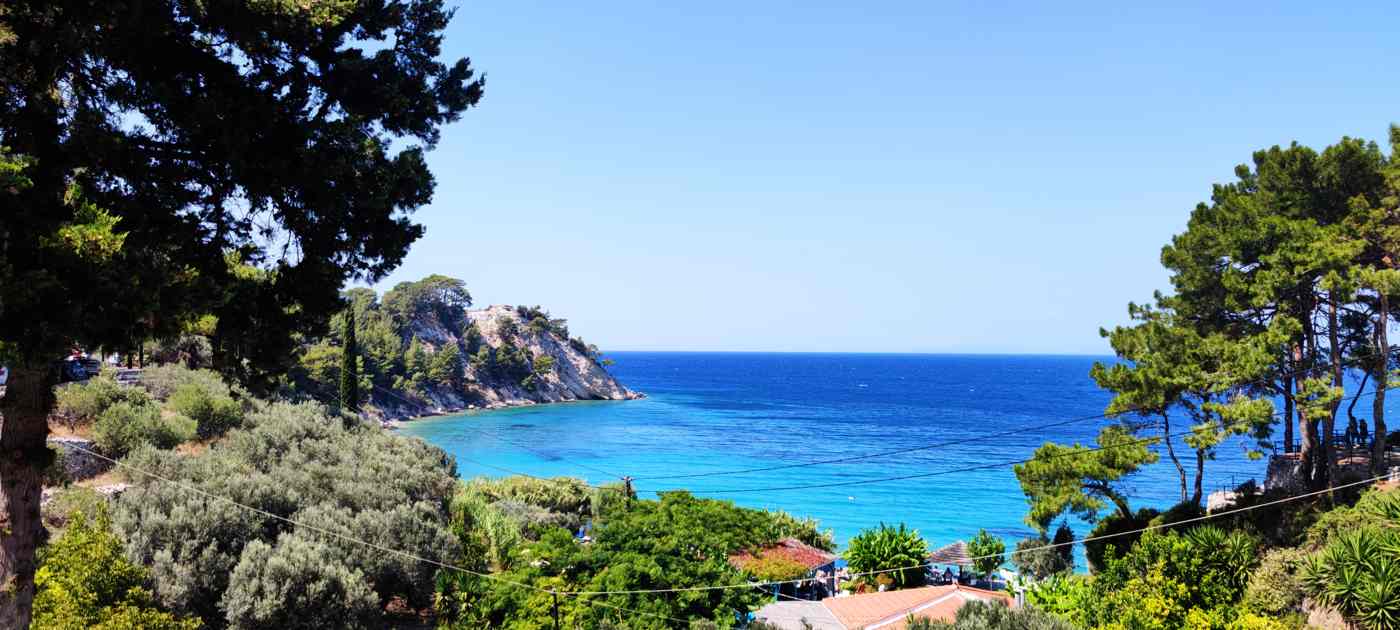
Couples swim at pine-backed Tsamadou near Kokkari and at the remote Seitani coves on the northwest coast. Both keep clear water and calm settings, with Seitani reached only on foot or by boat.
Tsamadou lies on the north coast, about 3 kilometres west of Kokkari, and ranks among the island’s most romantic beaches. Pine and tamarisk trees grow down to the pebbles, casting shade over the shore through the afternoon. The water shifts from turquoise to deep blue and stays clear over the smooth stones. A road descends to a small car park above the cove, then a short path drops to the beach. Couples arrive early for a quiet spot, swim in the calm bay and shelter under the trees at midday. Neighbouring Lemonakia and Tsabou sit within a kilometre, so two people hop between three coves in one morning.
The light stays soft, and the pine backdrop makes Tsamadou a natural choice for a honeymoon swim.
Mikro and Megalo Seitani sit on the northwest coast beyond Karlovasi, inside a protected area for the Mediterranean monk seal. No road reaches them, which keeps the coves wild and quiet. Couples walk in from the end of the road at Potami, following a coastal path for about an hour to Mikro Seitani, a small cove between cliffs. Megalo Seitani, a longer sand beach, lies about half an hour further along the trail. Walkers carry water, sun cover and food, since the beaches hold no shops or sunbeds. The reward is clear water, cliffs and near-empty sand even in summer. Other couples reach the coves by boat from Karlovasi instead of walking.
This effort turns a Seitani swim into a private, romantic half-day away from any crowd.
The two beaches suit different honeymoon moods, so couples pick by energy and time. Tsamadou works for a relaxed morning with easy access, shade and nearby coves for variety. Seitani rewards couples ready to walk, offering solitude that busy beaches cannot match. Both keep clean, clear water and a natural, undeveloped setting. Couples pair a swim with a north-coast lunch in Kokkari, a fishing and windsurf village about 10 kilometres from Vathy. The village front holds tavernas, a pebble beach and colourful boats, giving an easy base for beach days. From here, Tsamadou lies minutes west by car, while the Seitani trail starts further along past Karlovasi.
This stretch of coast gives a honeymoon its quietest, clearest swimming, framed by pine, cliff and open Aegean water.
Practical points keep these swims smooth for two. Tsamadou and its neighbours hold pebbles and stones, so water shoes protect feet and make entry easy. The north coast catches the meltemi wind in high summer, which can raise waves and cloud the water on gusty days; the south coast near Pythagorio then offers calmer swimming. Couples check the forecast and swap coasts as needed. Parking above Tsamadou fills by mid-morning in peak weeks, so an early start secures both a space and a shaded patch. For Seitani, couples start the walk before the midday heat and turn back with enough daylight.
With these small plans, a honeymoon strings together calm, scenic swims across the greenest coast on the island. Simple planning keeps both coves calm and easy for a couple.
How do couples combine a boat day along the coast with the Potami waterfalls walk?
Couples take a day boat along the Samos coast to reach hidden coves, then walk from Potami beach up the river gorge to the waterfalls. The two ideas fill one full, varied romantic day.
A boat day opens parts of the Samos coast that roads never reach. Small boats and day trips leave from Pythagorio, Vathy and Kokkari, cruising to coves, sea caves and swim stops along the shore. Couples pick a shared trip or, for privacy, a small hired boat with a skipper for the day. Routes run to the northwest coves near Seitani, the cliffs under Mount Kerkis in the southwest, or across the strait toward Turkey. The boat anchors in clear bays where couples swim straight off the deck into calm water. Lunch on board or at a remote taverna breaks the day.
A boat day suits most of the honeymoon season and gives two people quiet water, shade and long coastal views.
Potami, about 4 kilometres west of Karlovasi, joins a beach and a river walk in one easy outing. The beach mixes sand and pebbles under green hills, with clear water for a morning swim. From the western end, a marked path follows the Potami river inland through plane trees and thick shade. Couples pass a small Byzantine church and reach the first waterfall and rock pool after a gentle twenty-minute walk. Strong walkers scramble further up the gorge, using ropes and rock steps, to higher pools and cascades. The shade and running water keep the gorge cool even at midday. Because the walk stays short and green, it pairs well with a beach afternoon.
A swim at Potami then a waterfall walk gives a honeymoon an easy, refreshing half-day.
Linking the boat and the waterfall builds one full romantic day. Couples start early with a coastal cruise and swim stops, then land near Karlovasi or drive across for lunch. In the afternoon they swim at Potami and walk up to the falls while the gorge stays shaded and cool. The northwest coast holds both the boat coves and the river, so distances stay short and the day flows without rushing. Couples finish with a drink on the Karlovasi or Kokkari front as the light fades. This pairing captures the range of a Samos honeymoon: open sea in the morning, a green river gorge by day and a quiet harbour at dusk.
Two people cover water, forest and village within a single, unhurried span of hours.
Timing and small preparations keep this day comfortable for two. Boat trips run mostly from late spring into early autumn, and calmer mornings suit the smaller open boats. Couples book a day ahead in peak weeks and check the wind, since the meltemi can push swell onto the north coast. For Potami, walkers wear grippy shoes for the wet rock near the falls and carry water for the gorge. The first waterfall suits any pace, while the higher pools need a head for scrambling, so couples turn back where they feel at ease. Starting the boat early leaves the afternoon free for the river and an unhurried dinner.
Planned this way, the coast and the waterfalls form the most varied single day of a Samos honeymoon, without strain or long drives.
How do couples pair the UNESCO Pythagoreion and the Heraion with lazy beach afternoons on Samos?
Honeymooners tour the Eupalinos Tunnel and Pythagorio marina in the cool morning, drive 6 km west to the Heraion column, then spend the afternoon swimming at nearby south-coast beaches before dinner.
The UNESCO Pythagoreion rewards an early start, when the ancient harbour town stays cool and quiet for two. Couples walk the marina below the old town, then climb to the Eupalinos Tunnel, the 1,036-metre aqueduct driven through the hill from both ends. The lit stretch inside the rock runs cool even in July heat. Nearby stand the Roman baths, the ancient harbour mole, and the hilltop Castle of Lykourgos Logothetis, each a short stroll apart. A honeymoon pace fits Pythagorio well, since the sights cluster within the town and its edge. The archaeological museum in the town holds finds from the ancient city.
Ending the morning at a marina cafe over Greek coffee sets a relaxed tone before the beach. The compact layout means little driving, leaving energy for the afternoon swim.
The Heraion of Hera lies about 6 km west of Pythagorio, near the village of Ireo, an easy drive between town and beach. One re-erected column marks where a huge dipteral temple once stood, begun by the architects Rhoikos and Theodoros. The Sacred Way linked the sanctuary to the ancient city, and its open, flat ground makes a slow, shaded wander for a couple. The site shares UNESCO World Heritage status with Pythagoreion, so the two pair naturally in one honeymoon morning. Few crowds gather here compared with larger Greek sites, which suits visitors wanting quiet. The setting, between reed beds and the south coast, feels calm and green.
From the Heraion the road runs quickly to the south-coast sand for the afternoon swim ahead.
South-coast beaches sit minutes from both sites, turning culture and swimming into one easy day. Below the Heraion, the shore at Ireo offers pebbles and calm water sheltered from the meltemi that stirs the north coast. East of Pythagorio, the long sand of Mykali and the fine sand of Psili Ammos face the Turkish coast across the narrow Mycale strait. Couples spread a towel, swim in warm shallows, and lunch at a beach taverna on grilled fish. Snorkelling gear reveals clear water over the pale pebbles. The south stays sheltered on meltemi days, so afternoons here feel still and warm. A slow return to Pythagorio for a shower leaves the evening free for the marina.
Pairing morning ruins with an unhurried afternoon on the sand defines the Samos honeymoon rhythm.
A honeymoon week absorbs the two UNESCO sites and the south beaches without rush over two or three days. Couples split the pairing across mornings, keeping middays and afternoons for the water, when the ruins grow hot and busy. The Vathy archaeological museum, home to the 5-metre Kouros from the Heraion, adds a cool indoor stop on a windier day. Renting a car makes the 6 km hop between Pythagorio, the Heraion and the beaches simple, since buses run less often here. Early or late visits to the tunnel and sanctuary bring softer light for photographs. Building the itinerary around one site and one beach each day keeps the pace romantic rather than crowded.
This balance of history and sea is the heart of a Samos honeymoon.
Why do couples add a day boat to Kusadasi and Ephesus as a two-country trip on a Samos honeymoon?
Day boats cross the 1.2 km Mycale strait from Vathy and Pythagorio to Kusadasi in about 1 to 1.5 hours, letting honeymooners add Turkey and the ancient city of Ephesus to a Greek island week.
Samos lies about 1.2 km from the Turkish mainland at the narrowest point of the Mycale strait, the closest Greek island to Turkey. Day boats run a morning-out, evening-back schedule in the season from both Vathy and Pythagorio, crossing to Kusadasi in about 1 to 1.5 hours. A passport is required, and non-EU couples check visa rules before booking, since border formalities apply on arrival. The short sea trip itself feels like an outing, with the Samos coast and the Turkish shore both in view. Honeymooners board early, clear passport control, and step into a different country before mid-morning. The set timetable means one full day covers the excursion, returning to the same Samos base by evening.
This ease makes the two-country day a popular honeymoon add-on.
Ephesus draws most day-trippers from Kusadasi, one of the best-preserved ancient cities of the Mediterranean, about 20 km inland. Couples walk the marble main street past the reconstructed Library of Celsus, the great theatre seating thousands, and the terraced houses of the old town. Guided tours meet the boat and drive the short distance, turning the ruins into a half-day with commentary. Nearby stands the House of the Virgin Mary, a quiet hilltop pilgrimage chapel set in pine woods. The scale and detail of Ephesus reward slow walking, so comfortable shoes and water matter in the heat. A honeymoon gains from sharing a wonder of the ancient world, a memory beyond the beach.
The return boat leaves in the late afternoon, giving time for the site and Kusadasi both.
Kusadasi itself fills the rest of the day, a lively Turkish resort port with a seafront promenade and a covered bazaar. Couples browse stalls of carpets, spices, jewellery and Turkish delight, where bargaining is expected and part of the fun. A causeway leads to Pigeon Island and its small Byzantine-Ottoman castle guarding the harbour. Cafes pour Turkish coffee and tea, and lunch brings kebabs, meze and fresh bread away from Greek flavours for a day. The town’s scale and buzz contrast with quiet Samos, adding variety to a honeymoon week. Shoppers carry euros and lira, and most vendors commonly take cards for larger buys.
A stroll along the marina before the evening boat closes the Turkish side, with quiet Samos waiting an hour across the water.
The two-country day suits couples who prefer a full, active day over a lazy one. It runs long, from an early boat to a late-afternoon return. A whole day away from Samos trades one beach afternoon for a wonder of the ancient world and a taste of Turkey. Sun protection, water, a passport and comfortable shoes cover the essentials for the crossing and the ruins. Booking through a local agent bundles the boat, the transfer and an Ephesus guide into one arrangement. Honeymooners short on time skip the trip and keep the week on Samos, since the island fills a relaxed holiday alone. Those with five to seven days fit the excursion easily around beaches and wine.
The strait’s narrowness makes this the simplest Turkey day trip in the Aegean.
Where couples stay on a Samos honeymoon by their style, in Pythagorio, Vathy or the north-coast villages?
Pythagorio suits couples wanting UNESCO sights, a marina and the airport nearby; Vathy fits harbour-capital culture and ferries; north-coast Kokkari and the Ampelos villages draw honeymooners after beaches, windsurf energy or quiet vineyards.
Pythagorio fits couples who want history, a pretty marina and easy arrivals, with Samos Airport about 3 km away. Rooms and small boutique hotels cluster around the harbour and the beaches on either side of the UNESCO town. Evenings centre on the marina, where waterfront tavernas and cafe-bars line the quay below the old streets. The Eupalinos Tunnel, the Heraion and the castle all sit within a short drive, so sightseeing needs little travel. Honeymooners who fly in and want to settle fast favour this southeast base for a first Samos trip. Beaches such as the south-coast sand at Ireo and the east-coast coves lie close for daily swims.
The blend of ancient sites, dining and marina strolls makes Pythagorio the classic romantic base on the island.
Vathy, the northeast capital officially named Samos Town, suits couples drawn to a working harbour and island culture. The lower town wraps a deep bay of cafes and squares, while the older Ano Vathy quarter climbs the hillside in tiled lanes. The Archaeological Museum and its 5-metre Kouros, the metropolis church and the wine museum at nearby Malagari fill unhurried hours. Ferries leave from here, so Vathy fits arrivals by sea and onward island-hopping. East-coast coves such as Kerveli, Mykali and Psili Ammos lie a short, scenic drive south. Honeymooners who prefer a lived-in Greek town over a resort strip find Vathy authentic and central. Buses reach the airport in about 20 minutes.
Its harbour dinners, museum and quiet upper lanes give a base with more everyday life than the tourist marinas.
The north-coast villages suit couples wanting beaches, greenery and a slower rhythm than the towns. Kokkari, a former fishing village about 10 km west of Vathy, keeps a whitewashed harbour and tavernas while sitting minutes from the pine-backed coves of Tsamadou and Lemonakia. Windsurfers ride the meltemi off its bay, adding energy to the seafront evenings. Above the coast, the mountain villages of Mt Ampelos offer cool, car-free lanes and vineyard views. Honeymooners after quiet stay high in a village such as Manolates, where stone houses, flowered alleys and valley-view tavernas replace beach crowds. Marked footpaths link the hill villages through pine and chestnut woods.
This green, elevated base pairs walking and wine with a short drive down to the north-coast sand for swims and lunch by the sea.
Choosing a base matters more on Samos than on small islands, since the island runs about 476 square kilometres and sights spread far apart. Couples pick one area near their priorities rather than moving hotels every second night, which wastes honeymoon time. A car or scooter widens any base, reaching the Ampelos villages, the Kerkis southwest and the wild northwest that buses skip. Pythagorio and Vathy give culture and dining; Kokkari gives beaches and buzz; the hill villages give calm and wine. Southwest Votsalakia under Mt Kerkis adds a quieter beach-first option for couples wanting sand over sights. Booking boutique rooms early secures the best-placed stays in peak months.
Matching the base to how a couple likes to spend days shapes the whole Samos honeymoon.
When is the best time for a Samos honeymoon, late spring or early autumn?
Late spring and early autumn best suit a Samos honeymoon, when warm sea, open tavernas, soft light and thinner crowds meet mild days; May, June, September and early October fit couples best.
Late spring brings a green, flowering Samos with warm days and a sea starting to warm for swimming. May and early June open the tavernas and beach facilities while the crowds of high summer stay away. Wildflowers cover the slopes of Mt Ampelos, and the Potami gorge and mountain trails run at their best before the heat. Long daylight and soft evening light suit couples wanting walks, wine villages and quiet beaches together. Sea temperatures climb through June, so swimming grows comfortable as the month goes on. Prices and hotel demand sit below the July and August peak, easing boutique bookings. Couples read the best time to visit Samos for deeper month-by-month detail.
This early shoulder window balances warmth, greenery and calm for a relaxed honeymoon.
Early autumn matches late spring for a honeymoon, with the sea at its warmest after a long summer of heat. September brings warm water, open facilities and thinning crowds as families leave at the school-year start. The Muscat grape harvest comes in late summer to early autumn, filling the Ampelos villages with the work and scent of the vintage. October cools gently, quietening the towns while keeping warm afternoons and swimmable sea early in the month. Walking returns to comfort as the summer heat fades, reopening the Kerkis and Potami trails. Soft, golden light in the vineyards and on the marinas suits slow evenings and photographs.
Couples wanting warm swims with calm and wine choose September, then early October as the quiet season winds down.
July and August bring the hottest, busiest weeks, when the marinas fill and boutique rooms book far ahead. The meltemi wind cools the north coast and feeds the Kokkari windsurf scene, while the south and east stay sheltered and calm. Couples set on midsummer favour the south-coast and east-coast beaches on windy days for still, calm swimming. Heat peaks midday, so sightseeing at the Eupalinos Tunnel and the Heraion works best early or late. Nights stay warm for long marina dinners, and every taverna, boat and winery runs at full swing. Higher prices and denser crowds trade against guaranteed hot, dry weather across the island.
Honeymooners who value warm nights and full facilities over quiet accept the summer premium and plan carefully around the midday heat.
Winter turns Samos green, mild and rainy, with the island given over to local life and reduced flights and ferries. Most tavernas, boat trips and beach facilities close, and the day boat to Kusadasi runs on a thin off-season schedule. Couples seeking a beach-and-wine honeymoon skip the quiet winter months, since the warm-weather season shapes the island’s romance. The wine villages and the Muscat cooperative continue year-round, so an off-season visit still tastes the local sweet Muscat. Most honeymooners choose late spring or early autumn, blending warm sea, open tavernas and calm together. Matching the trip to a couple’s heat tolerance and crowd preference fine-tunes the month within those windows.
This timing choice quietly sets the tone for beaches, wine, walks and the two-country day alike.
What does a sample romantic day on a Samos honeymoon look like, from morning swim to sunset?
A romantic Samos day opens with an early swim at a quiet cove, moves to a wine-village lunch on Mt Ampelos, then closes with a sunset dinner on the Pythagorio marina over sweet Muscat.
Morning starts early to beat the heat and the crowds, with a drive to a pine-backed north-coast cove. The road from Kokkari reaches the cove in minutes. Tsamadou near Kokkari offers clear, deep water and pale pebbles under pines, calm on a still day before the meltemi builds. A couple swims, snorkels over the rocks, and takes coffee from a beach canteen as the light climbs. The neighbouring coves of Lemonakia and Tsabou lie minutes away for a change of scene. Early beach hours bring quiet water and easy parking before the day-trippers arrive by late morning. Towels, sun cream and water cover the essentials for a slow start by the sea.
This unhurried morning swim sets a relaxed pace for the romantic day that follows across the island.
Midday climbs from the coast into the terraced vineyards of Mt Ampelos for a village lunch. A winding road rises through pine and vine to Vourliotes, one of the oldest villages, set around a shaded square of tavernas. Couples take a slow lunch of wild greens, cheese, slow-cooked meat and the local sweet Muscat under a plane tree. Car-free lanes wind among colourful stone houses, cool even in high summer, past small craft and ceramic workshops. A short walk or drive reaches the neighbouring hill village and the forest monastery of Panagia Vronda above. The vineyard views over the north coast and the sea make an unhurried, romantic midday.
This mountain break trades the beach heat for cool air, wine and quiet before the afternoon.
Late afternoon returns toward the coast for a gentler activity as the heat eases. A short river walk at Potami near Karlovasi leads through a shaded forest gorge past a small Byzantine chapel to waterfalls and rock pools. Higher falls reward the sure-footed up a short ladder. Couples swim in the cool pools, then relax on the sand-and-pebble Potami beach below the wooded slopes. Those based in the southeast instead wander the Pythagorio marina, the castle or the Heraion in the softer light. A stop for a swim on the way back rinses off the day before the evening. The lowering sun warms the hills and the sea, cueing the shift toward dinner.
This flexible afternoon suits the couple’s base, pairing water, greenery or ruins before the sunset ahead.
Sunset closes the day on the Pythagorio marina, where the quay glows and the boats rock at their moorings. A waterfront taverna serves grilled fish, octopus and meze as the wide sky over the harbour turns pink and gold. A glass of sweet Samos Muscat, the island’s own wine, pairs with dessert to end the meal. Couples linger over the water, watching the lights come on along the marina and the old town above. The relaxed, low-key evening scene fits a honeymoon better than any club, with music drifting from the cafe-bars. A slow walk along the quay under the castle hill rounds off the night.
This whole morning-to-sunset arc, swim, wine village, waterfall and marina dinner, captures a Samos honeymoon in a single day.
Frequently Asked Questions
What is the best base for couples on a Samos honeymoon?
Pythagorio is the classic honeymoon base on Samos, a UNESCO harbour town with a marina, boutique rooms and the airport about 3 km away. Couples wanting history and easy dining favour it, since the Eupalinos Tunnel, the Heraion and beaches all sit a short drive off. Vathy, the northeast capital officially named Samos Town, suits couples drawn to a lived-in Greek harbour, the archaeological museum and ferry links. The north-coast fishing village of Kokkari puts the Tsamadou and Lemonakia beaches and a windsurf scene on the doorstep. For quiet and wine, the Mt Ampelos villages such as Vourliotes give cool, car-free lanes and vineyard views above the coast.
Southwest Votsalakia under Mt Kerkis offers a relaxed, beach-first stay far from the busier towns. Samos runs about 476 square kilometres, so choosing one base near your priorities beats moving hotels often. Booking boutique rooms early secures the best-placed stays in peak months. A rented car widens whichever base a couple picks.
Is Samos romantic enough for a honeymoon?
Samos delivers romance through nature, wine and ancient sites rather than luxury glamour or a party scene. Couples find sunset dinners on the Pythagorio marina, wine tasting among the terraced vineyards of Mt Ampelos, and quiet swims at pine-backed coves like Tsamadou. The green, mountainous island stays less crowded than famous Cycladic destinations, so calm and space come easily. Walks to the Potami waterfalls, boat days along the coast, and the remote Seitani coves add shared adventure to the mix. The UNESCO Pythagoreion and the Heraion pair culture with lazy beach afternoons for a varied, unhurried week. Cool mountain villages such as Manolates and Vourliotes give flowered lanes, valley-view tavernas and the island’s sweet Muscat wine.
A day boat to Kusadasi and Ephesus even adds a two-country outing. Honeymooners who want a relaxed, authentic Greek island over a resort bubble find Samos genuinely romantic, with the sea, the vineyards and the ruins carrying the mood.
Which quiet beaches suit a Samos honeymoon?
Quiet beaches ring Samos, especially away from the organised north-coast coves near Kokkari. The wild Mikro and Megalo Seitani beaches on the northwest coast are the most remote. Reached only on foot along a coastal path from Potami, about 30 to 60 minutes, or by boat, with no facilities inside a monk-seal reserve. On the east coast, Kerveli sits in a sheltered pine-and-olive bay southeast of Vathy, calmer than the busier beaches. The southwest under Mt Kerkis holds long strands like Votsalakia and the quieter Balos, far from the main towns. Even near Kokkari, the small pebble cove of Tsabou stays more natural than its famous neighbours Tsamadou and Lemonakia.
Votsalakia in the southwest also stays sheltered on most meltemi days. Couples chasing solitude go early or late in the day and pack water, since remote coves lack shade and canteens. The meltemi wind hits the north coast hardest, so the sheltered south and east stay calm for still swimming on windy afternoons.
What is the wine experience like on a Samos honeymoon?
The Samos wine experience centres on sweet Muscat, made from Muscat Blanc à Petits Grains grown on stone-terraced vineyards climbing the slopes of Mt Ampelos. Couples taste the PDO Samos range, the fortified Vin Doux, the sun-dried Nectar, and the naturally sweet Anthemis and Grand Cru styles, plus a dry Muscat. Tastings run at the island cooperative, which has long controlled the wine, and at small wineries, while a wine museum near Vathy at Malagari tells the story. The mountain villages of Vourliotes and Manolates sit among the terraces, with tavernas pouring the local sweet and dry Muscat under plane trees.
A honeymoon pairs a village lunch of wild greens, cheese and slow-cooked meat with a glass of Muscat and valley views. The sweet Samos Muscat, documented since antiquity, makes an easy bottle to carry home. Cool, car-free lanes and vineyard walks add to the tasting, turning wine into a relaxed half-day rather than a quick stop.
How does the Turkey day trip work from Samos?
The Turkey day trip is one of Samos’s signature outings, since the island lies about 1.2 km from the Turkish mainland at the Mycale strait. Day boats cross from Vathy and Pythagorio to Kusadasi in about 1 to 1.5 hours on a morning-out, evening-back schedule in the season. Most couples join a tour to Ephesus, one of the best-preserved ancient cities of the Mediterranean, with its Library of Celsus and great theatre. Most also visit the House of the Virgin Mary nearby, then browse the Kusadasi bazaar, seafront and Pigeon Island castle. A passport is required, and non-EU travellers check visa rules in advance, since border formalities apply on arrival.
The day runs long, from an early boat to a late-afternoon return, so it trades one beach day for a wonder of the ancient world. Sun protection, water and comfortable shoes help across the crossing and the ruins. Booking through a local agent bundles the boat, transfer and guide.
What are the best months for a Samos honeymoon?
May, June, September and early October are the best months for a Samos honeymoon, blending warm sea, open facilities, soft light and thinner crowds. Late spring turns the island green and flowering, with wildflowers on Mt Ampelos and the Potami gorge and mountain trails at their best before the heat. The sea warms through June, so swimming grows comfortable by late June as the crowds of high summer stay away. Early autumn matches it, with the sea at its warmest, the Muscat grape harvest filling the villages, and soft golden light for slow evenings. July and August bring the hottest, busiest weeks, when the meltemi cools the north coast while the south and east stay sheltered.
Winter turns mild, green and rainy, with reduced flights and ferries and most facilities closed. Couples wanting warm swims with calm and wine choose late spring or early autumn, then fine-tune the month to their heat tolerance and crowd preference.
How do couples get around Samos on a honeymoon?
Getting around Samos takes more planning than small islands, since the island runs about 476 square kilometres with sights spread far apart. A rented car or scooter is the surest way for couples to reach the Ampelos mountain villages, the Kerkis southwest and the wild northwest, where buses do not go. Rental offices cluster at the airport near Pythagorio and in Vathy, Pythagorio, Kokkari and Karlovasi. The public KTEL bus network links the main towns, Vathy, Pythagorio, Kokkari, Karlovasi and Marathokampos. Plus the airport, running more often in summer and less on Sundays and in shoulder season. Taxis wait at the airport, ports and town squares for door-to-door trips.
Buses are cheap but infrequent to remote beaches, so they suit town-to-town hops more than beach days. Roads are mountainous and winding, driving is on the right, and rough tracks to remote coves such as Seitani stay footpath-only. The towns themselves stay walkable, so a car matters most for the beaches, villages and ancient sites between them.