
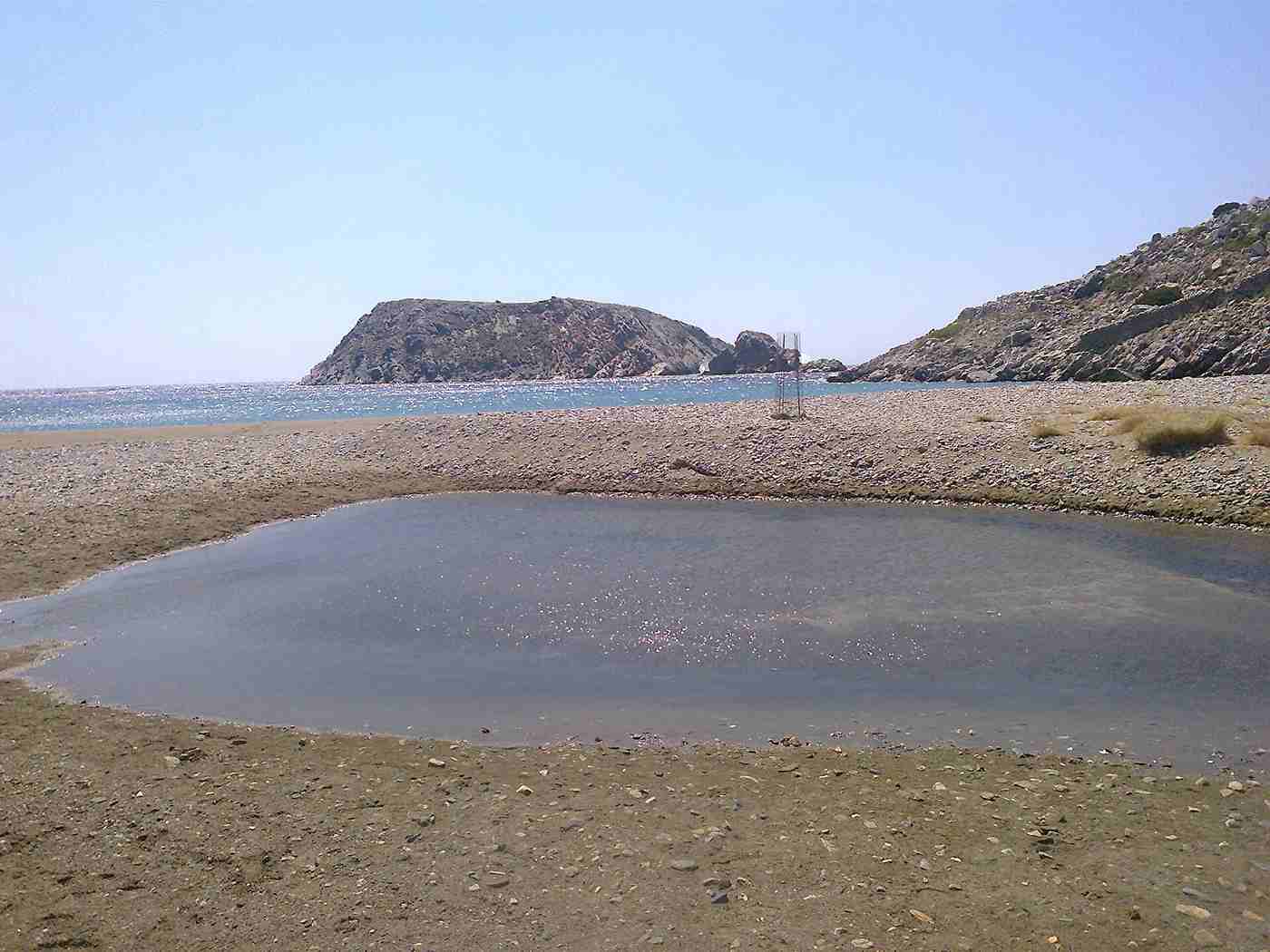
Varvarousa beach is a secluded pebble cove on the northwest coast of Syros, set in the wild uplands of Apano Meria north of the fishing village of Kini beach. The cove holds clear turquoise water, sheltered swimming and green cedar and tamarisk backing the shore. No taverna, sunbeds or shops stand here, so visitors carry their own water, food and shade for the day.
The bay sits among the remote northern beaches of Syros, close to Delfini and along the same rough coast as Grammata, Lia and Aetos. Most visitors reach Varvarousa by boat from Kini harbour, since the beach lies away from the surfaced road network and a car cannot drop onto the sand. A long, rough hike or a four-wheel-drive track offers the only land route. This guide covers access, the pebble shore, the missing facilities, the swimming and snorkelling, the Kini boat trips, the northern beaches nearby, and how Varvarousa measures against Delfini, Grammata and Lia.
Where is Varvarousa beach on Syros and how do you reach it?
Varvarousa beach sits on the northwest coast of Syros, in the wild Apano Meria north of Kini. Boats from Kini harbour reach the cove, or a long rough track and hike drop down to the pebble shore.
Varvarousa occupies a small cove on the northwest coast of Syros, the administrative centre of the Cyclades. The bay lies north of the fishing village of Kini, inside the wild uplands of Apano Meria. No surfaced road drops to the sand, so the cove stays cut off from the island’s main network. Low hills of scrub and rock rise directly behind the pebble shore. The water opens west and north toward the open Aegean, away from the sheltered port side. Green cedar and tamarisk edge the back of the beach, giving the cove its wild feel. This remote position, roughly 12 kilometres from the capital, keeps Varvarousa among the quietest beaches on Syros.
The main way to reach Varvarousa runs by boat from the harbour at Kini beach. Small taxi-boats and organised day cruises leave the seafront through the peak summer months. The crossing north takes roughly fifteen to twenty minutes on a calm sea. Boats drop swimmers straight onto the pebble shore, since no jetty or harbour serves the cove. The sea route stays the simplest option, because the land tracks run rough and long. A calm morning suits the trip best, before the meltemi wind builds over the exposed north coast. Passengers carry water, food and shade, as the bay holds no shops or taverna of any kind. The short sea crossing keeps the remote cove within easy reach of the fishing village.
Reaching Varvarousa overland means a long, rough hike or a four-wheel-drive track through Apano Meria. The route leaves the road above Kini and crosses open hillside of scrub, rock and dirt. A high-clearance vehicle handles the stony track, though the final stretch to the cove is steep and uneven. Walkers follow faint paths across the uplands, a hike of well over an hour in the heat. Firm shoes and plenty of water matter, since the ground is loose and shade is scarce. Most visitors skip the land route and choose the shorter boat crossing from Kini instead. The effort of the overland approach is a main reason Varvarousa keeps such thin crowds.
The distance from the port capital of Ermoupoli underlines how far Varvarousa sits from the main resorts. The town lies about 12 kilometres away on the far, eastern side of the island. No bus serves the cove, so visitors reach it by boat from Kini or by the rough inland track. Drivers cover the road to Kini in roughly 20 minutes before the surfaced route ends. Beyond that point the coast turns wild, with Varvarousa among the first of the roadless northern bays. The separation from town and road filters out casual beach traffic through the season. This isolation places Varvarousa firmly among the secluded beaches of the northwest coast of Syros.
What kind of beach is Varvarousa on Syros, sand or pebble?
Varvarousa is a small pebble cove on the northwest coast of Syros, backed by green cedar and tamarisk. The shore runs roughly 80 metres of smooth stones, with clear turquoise water over a clean bed and no built facilities.
Varvarousa is a compact cove of smooth grey and white pebble along the waterline. The shore runs roughly 80 metres in a shallow curve between two low rocky arms. Fine shingle and rounded stones cover the beach rather than the soft sand of the port-side bays. The seabed stays clean and pebbly, so the water reads clear and turquoise close to shore. Swimmers find firm footing on the stones, though water shoes help across the sharper shingle. Low hills of scrub and rock rise directly behind the beach, enclosing the cove. Green cedar and tamarisk grow at the back of the shore, marking the wild character of Apano Meria. The pebble bed is common along the remote northern coves of Syros.
The water at Varvarousa reads clear and turquoise because the pebble bed carries no fine sand to cloud it. The cove drains cleanly over stone, keeping visibility high on calm summer days. A gentle shelf lets swimmers wade out a few metres before the depth increases. The clarity draws snorkellers to the rocky arms that close each side of the bay. Sheltered water on still days leaves the surface flat and easy to read through a mask. The turquoise colour deepens to blue where the pebble bed gives way to the open sea. These conditions place Varvarousa among the clearest swimming coves on the northwest coast. The clean stone bed is the reason the water stays so transparent here.
The green cedar and tamarisk behind Varvarousa give the cove its wild, enclosed look. The trees cluster at the back of the pebble shore, offering the only patchy natural shade. Low hills of scrub and bare rock frame the bay on either side above the beach. This backing of cedar and tamarisk sets Varvarousa apart from the barer beaches of the south coast. The greenery holds a little cover for visitors escaping the midday sun on the stones. Birds and cicadas fill the quiet, since no road or taverna breaks the calm of the cove. The mix of pebble, clear water and green backing defines the character of this remote bay. The setting rewards visitors after a plain, wild stretch of shore.
Varvarousa carries no built structures of any kind along its pebble shore. No taverna, sunbeds, umbrellas, showers or shops stand behind the beach through the season. The cove holds only the pebbles, the clear water and the cedar and tamarisk at the back. Visitors lay towels straight on the stones and shelter under the trees or a carried umbrella. The plain, undeveloped shore is part of why the bay stays so quiet and secluded. This lack of any facilities matches the roadless position deep in the wild Apano Meria. Travellers who want service and tavernas base themselves at Kini and treat Varvarousa as a day trip. The bare setting suits a self-sufficient swim rather than a serviced beach day.
Why does Varvarousa beach on Syros have no facilities?
Varvarousa has no facilities because it lies roadless in the wild Apano Meria, with no village behind it and no way to supply a taverna by land. The pebble cove holds only stones, clear water and cedar and tamarisk shade.
Varvarousa sits deep in the roadless uplands of Apano Meria, cut off from any village or supply route. No surfaced road drops to the cove, so no vehicle can restock a taverna or shop by land. The bay holds no houses, no promenade and no cluster of businesses behind the pebble shore. Supplies would have to come by boat or the rough track, which no beach operator maintains. These traits leave the cove entirely without built facilities through the summer season. Visitors carry their own water, food, shade and everything else a full day needs. The roadless setting is the plain reason Varvarousa stays undeveloped year after year. The isolation that gives the bay its calm also rules out any service on the sand.
The absence of a village behind Varvarousa removes the base a beach taverna usually depends on. Kini, the nearest settlement, lies over the headlands to the south, well beyond the cove. No community lives close enough to run a stall, a mini-market or a bar on the shore. The uplands of Apano Meria hold only scattered farms, chapels and dry-stone terraces. This empty hinterland leaves the beach with no local supply, staff or seafront trade. The plain shore stands in contrast to the serviced bays around the port on the east coast. The lack of a nearby village keeps Varvarousa firmly among the wild, unserviced beaches of Syros. Visitors treat the cove as a place to bring everything they use.
The clear water and pebble shore stay clean partly because no facilities crowd the bay. No sunbed rows, snack stalls or showers add waste or run-off to the cove. The pebble bed carries no litter from a busy seafront, so the turquoise water reads sharp. Visitors who reach Varvarousa tend to respect the wild setting and carry their rubbish out. The green cedar and tamarisk at the back give the only shade the beach offers. This natural cover replaces the umbrellas and canopies of the serviced bays elsewhere. The undeveloped shore rewards visitors who value quiet and clean water over service. Bringing shade and water is the trade for a swim in such an untouched cove.
The missing facilities shape how visitors plan a day at Varvarousa on Syros. A boat trip from Kini often includes water and a snack, since the cove sells nothing. Independent visitors pack food, a hat, sun cream and at least two litres of water each. The pebble shore and cedar shade give the only comfort the bay provides through the day. No lifeguard patrols the cove, so swimmers judge the calm sea and their own limits. The plain setup discourages large groups that prefer the sunbeds and menus of the port beaches. This self-sufficient approach is standard for the roadless northern bays of the island. Careful planning turns the lack of facilities into part of the quiet appeal of Varvarousa.
Is Varvarousa beach on Syros good for swimming and snorkelling?
Varvarousa suits swimming and snorkelling well because its clear turquoise water shelves gently over a clean pebble bed, sheltered on calm days. Two rocky arms close the cove, drawing small fish that snorkellers spot in the sharp, transparent water.
Varvarousa offers clear turquoise water that suits swimming across most of the summer season. The cove drains cleanly over a pebble bed, keeping the water transparent close to shore. A gentle shelf lets swimmers wade out a few metres before the depth increases steadily. Sheltered conditions on calm days leave the surface flat and easy for a long swim. The clean stone bed carries no fine sand to cloud the water when swimmers move about. Two low rocky arms close each side of the bay, marking the edges of the swimming area. Green cedar and tamarisk at the back give a patch of shade for rests between dips. These traits make Varvarousa a steady choice for a quiet swim on the northwest coast.
The rocky arms at Varvarousa hold the most life for anyone with a mask and fins. Small fish shelter in the crevices and among the stones where the pebble gives way to rock. The clear water lets snorkellers watch them from the surface without diving deep at all. Sea grass in patches of the cove adds cover for smaller fish along the rocky edges. The pebble centre stays plainer, better for easy floating than for spotting marine life. Moving toward either rocky arm brings the richest views within a short swim from the shore. The turquoise clarity keeps visibility high through the calmer middle hours of the day. Snorkellers bring their own gear, since the roadless cove has no rental stand.
Calm conditions are the key to good swimming and snorkelling at Varvarousa through summer. The cove faces west and north, so a hard meltemi wind can push swell onto the pebble. On sheltered days the surface stays flat, and the water clears to give sharp views below. A strong wind stirs the shallows and can make the boat crossing from Kini rough or unsafe. Morning visits often bring the flattest water before any afternoon breeze builds over the coast. Checking a simple wind forecast the evening before helps visitors pick a calm day. The exposed north coast rewards patience and the right weather window for a safe swim. A settled sea turns Varvarousa into one of the clearest coves on the island.
Swimmers at Varvarousa should come prepared for a beach without any support on the shore. Water shoes help across the pebble and around the rocks where the small fish gather. No lifeguard watches the cove, so each swimmer judges the sea state and their own range. Carrying at least two litres of water each matters, since the cedar shade is patchy. The sheltered water on calm days suits families and confident swimmers alike near the shore. Stronger swimmers explore the rocky arms and the deeper turquoise water beyond the shelf. The clear, clean sea makes the effort of reaching the cove worthwhile for many visitors. Sensible preparation lets a self-sufficient day at Varvarousa run smoothly from start to finish.
How do Kini boat trips reach Varvarousa on Syros?
Kini boat trips reach Varvarousa by heading north along the northwest coast, a crossing of roughly fifteen to twenty minutes on a calm sea. Taxi-boats and day cruises drop swimmers on the pebble shore and often pair the cove with beaches further north.
Kini harbour is the launch point for almost every boat trip to Varvarousa on Syros. Small taxi-boats and organised day cruises leave the Kini beach seafront through the peak summer months. The crossing north hugs the northwest coast for roughly fifteen to twenty minutes on calm water. Boats round the headlands past Delfini before reaching the pebble cove of Varvarousa. The captain drops swimmers straight onto the shore, since no jetty serves the bay. Operators post schedules along the Kini seafront and take bookings at the harbour or the tavernas. The short, direct route makes the cove an easy first stop on a northern boat trip. Passengers carry water, a hat and food, as Varvarousa holds no shops.
Varvarousa ranks among the common stops on the Kini boat trips up the north coast. Many day cruises pair the cove with Grammata, Lia or Aetos on a single loop north. The boats anchor off Varvarousa long enough for a swim and a snorkel from the shore. Some trips serve water and a light snack on board, since the beaches sell nothing. The captain judges the sea before setting out, because the north coast turns rough in wind. A calm morning lets a cruise take in two or three bays before the afternoon breeze builds. The loop returns to Kini in the early afternoon, ahead of the meltemi at its strongest. This shared route makes Varvarousa a fixture of the northern day-boat circuit.
Booking a boat to Varvarousa runs simplest through the operators along the Kini seafront. Taxi-boats take small groups on short hops, while larger cruises run set loops up the coast. Prices and departure times sit on boards by the harbour and at the seafront tavernas. A calm sea is the condition every trip depends on, so weather can shift or cancel a run. Travellers keep a spare day in the plan, since the north coast closes in a hard meltemi. Morning departures give the flattest water and the best chance of a full loop. The captain returns swimmers to Kini before the afternoon wind rises over the exposed coast. Flexible plans suit the boat trips to the roadless northern beaches of Syros.
The boat approach shapes the whole experience of a day at Varvarousa on Syros. Arriving by sea means the cove appears from the water, framed by low hills and green trees. Swimmers step from the boat onto pebbles, with the clear turquoise water at their feet. The captain often waits offshore or returns at a set hour to collect the group. This rhythm keeps the cove quiet, since only boat passengers and rare hikers reach it. The sea route also lets a trip combine Varvarousa with the beaches further north in one outing. Most visitors treat the Kini boat as the natural way to sample this wild coast. The crossing turns a remote cove into an easy half-day from the fishing village.
What other remote northern beaches lie near Varvarousa on Syros?
Delfini lies just south of Varvarousa, while the roadless bays of Grammata, Lia and Aetos stretch further north. These coves face the open sea, hold no facilities and are reached mainly by boat from Kini harbour.
Delfini lies just south of Varvarousa, the nearest beach and the last easy stop before the wild coast. The cove mixes sand and pebble and carries a single taverna and a few sunbeds in season. A narrow road and a headland walk from Kini reach Delfini, unlike the roadless Varvarousa. The two coves pair for anyone chasing quieter, less serviced sand north of the fishing village. Delfini marks the point where the west coast of Syros begins to turn wilder and more remote. Boats from Kini often drop swimmers at Delfini on the way north to Varvarousa. The short hop between the two shows the shift from serviced beach to roadless cove. Delfini works as the gateway to the northern bays beyond.
Grammata is the best known of the roadless bays north of Varvarousa on the coast. Ancient sailors carved prayers and names into the soft rock around the sheltered inlet over the centuries. These inscriptions give the beach its name, Grammata beach, which means letters in Greek. The bay has no road, no taverna and no sunbeds, so the boat brings all a day needs. The sheltered position keeps Grammata usable on days the open north coast runs rough. Snorkellers find calm, clear water and rocky edges rich with small fish along the inlet. Most visitors reach it by the taxi-boats and cruises that leave from Kini harbour. Grammata often shares a boat loop with Varvarousa on the northern circuit.
Lia and Aetos lie further along the exposed northern coast, remote bays of pebble and clear water. Both sit away from any road, so a boat from Kini is the main way to reach them. The beaches stay quiet even in high season, since the crossing filters out casual visitors. Snorkellers find clear water and rocky edges rich with fish along these sheltered inlets. Neither bay carries a taverna or sunbeds, so the day-boats supply the shade, water and food. The northern coast faces the open sea, so crossings run only when the meltemi allows. A day trip by boat often takes in two or three of these bays in one loop. Varvarousa sits near the start of this wild string of coves.
The whole northern coast beyond Varvarousa depends on a calm sea and a boat from Kini. Small taxi-boats and organised day cruises leave the harbour through the peak summer months. Crossings run in the morning when the sea is calmest, returning in the afternoon before the wind builds. Operators post schedules along the Kini seafront and take bookings at the harbour or the tavernas. Passengers carry water, a hat and food, since none of the northern bays hold shops. Weather can cancel a trip at short notice, so travellers keep a spare day in the plan. Varvarousa sits at the near end of this roadless coast, an easy first stop by boat. The wild string of coves rewards visitors after seclusion and clear water.
How does Varvarousa beach compare with Delfini, Grammata and Lia on Syros?
Varvarousa is a roadless pebble cove reached mainly by boat, wilder than Delfini and its taverna to the south. Grammata adds ancient rock inscriptions in a sheltered inlet, while Lia is a remote pebble bay further along the northern coast.
Delfini sits just south of Varvarousa and carries the taverna and light service the cove lacks. Its mix of sand and pebble, a single taverna and a few sunbeds draw visitors through summer. A narrow road and a ten-minute headland walk reach Delfini, unlike the roadless Varvarousa. The two coves share the same clear water and the wild backing of the northwest coast. Varvarousa trades even Delfini’s single taverna for a fully self-sufficient day on the pebble. Boats from Kini often link the two, dropping swimmers at each on the way north. Delfini suits a quieter dip with a little service, while Varvarousa rewards full seclusion. The short distance between them shows the shift from serviced beach to roadless cove.
Grammata lies north of Varvarousa and adds a layer of history to the roadless coast. Ancient sailors carved prayers into the soft rock around the sheltered inlet over the centuries. The name Grammata beach means letters in Greek, after these old inscriptions. Like Varvarousa, the bay holds no road, no taverna and no sunbeds through the season. Its sheltered position keeps Grammata calm on days the open north coast runs rough. Varvarousa faces the sea more directly, so it needs a settled day for a safe boat trip. Both coves share clear water, rocky edges and thin crowds reached only by boat. Grammata pairs the swim with the draw of the ancient carvings in the rock.
Lia lies further along the exposed northern coast, a remote pebble bay much like Varvarousa. Both sit away from any road, so a boat from Kini is the main way to reach them. Lia and Varvarousa share clear water, pebble shores and rocky edges rich with small fish. Neither cove carries a taverna or sunbeds, so visitors bring shade, water and food. Lia sits deeper along the coast, so its crossing runs longer and needs a calmer sea. Varvarousa lies closer to Kini, making it an easier first stop on the northern loop. Both bays reward snorkellers with clear, sheltered water on settled summer days. The choice between them often comes down to how far north a boat trip runs.
Choosing between these coves comes down to the day you want rather than a single best beach. Varvarousa wins for a wild, roadless swim in clear turquoise water reached by boat. Delfini suits a quieter dip with a single taverna and an easy walk from Kini. Grammata adds ancient rock carvings to a sheltered inlet of clear, deep water. Lia offers the deepest seclusion, a remote pebble bay far along the northern coast. A single boat trip from Kini can take in two or three of these bays in one loop. The short crossings and the shared launch point make hopping between them straightforward. A week on Syros can sample the whole wild string, using Kini as the serviced anchor.
Frequently Asked Questions
Is Varvarousa beach on Syros sandy or pebbly?
Varvarousa is a pebble cove, roughly 80 metres of smooth grey and white stones on the northwest coast of Syros. The beach carries fine shingle and rounded pebbles rather than the soft sand of the port-side bays. The seabed stays clean and pebbly, so the water reads clear and turquoise close to shore. Water shoes help across the sharper shingle, and green cedar and tamarisk back the stones at the rear of the cove.
How do you get to Varvarousa beach on Syros?
Varvarousa is reached mainly by boat from Kini harbour, a crossing of roughly fifteen to twenty minutes north along the coast. Small taxi-boats and day cruises drop swimmers straight onto the pebble shore, since no road or jetty serves the cove. A long, rough hike or a four-wheel-drive track through Apano Meria offers the only land route. Most visitors choose the shorter boat trip from Kini over the steep, stony overland approach.
Are there any facilities at Varvarousa beach?
Varvarousa has no facilities of any kind. There is no taverna, no sunbeds, no showers, no mini-market and no lifeguard along the roadless pebble shore. Visitors carry their own water, food and shade, and shelter under the green cedar and tamarisk at the back of the cove. The lack of any service follows from the beach’s isolated position deep in the wild Apano Meria north of Kini.
Is Varvarousa beach on Syros good for swimming?
Varvarousa suits swimming because its clear turquoise water shelves gently over a clean pebble bed and stays sheltered on calm days. Two rocky arms close the cove, giving snorkellers small fish to spot in the transparent water. No lifeguard patrols the shore, so swimmers judge the sea state themselves, and a hard meltemi wind can push swell onto the exposed coast. A settled morning brings the flattest, clearest water for a safe swim.
Is Varvarousa a stop on Kini boat trips?
Varvarousa is a common stop on the boat trips that leave Kini harbour for the northern coast of Syros. Taxi-boats and day cruises drop swimmers on the pebble shore, often pairing the cove with Grammata, Lia or Aetos on a single loop. The crossing north takes roughly fifteen to twenty minutes on a calm sea. Trips run in the morning when the water is flattest and return before the afternoon meltemi builds over the coast.
How does Varvarousa compare with Grammata beach on Syros?
Varvarousa and Grammata are both roadless northern coves reached mainly by boat from Kini, with clear water and no facilities. Grammata sits in a more sheltered inlet and is famous for the ancient prayers and names carved into its soft rock over the centuries. Varvarousa faces the open sea more directly, so it needs a calmer day for a safe crossing. Both share pebble shores, rocky edges rich with small fish and thin crowds through the summer.