
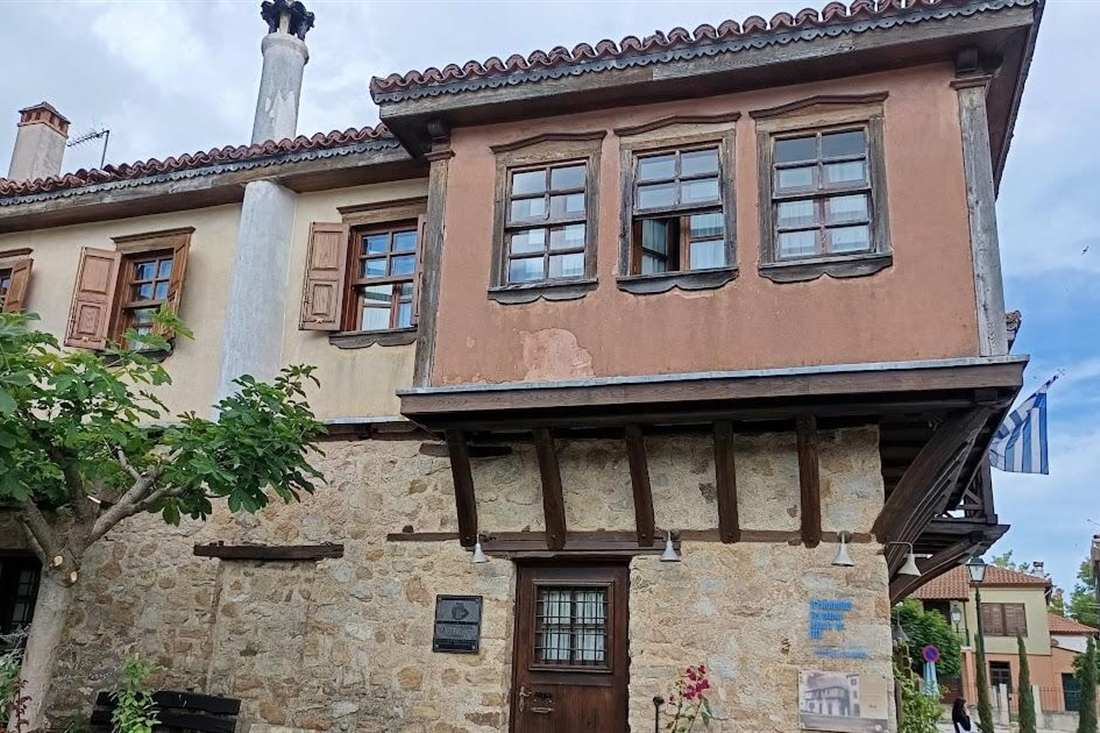
A Thessaloniki traditional villages tour is a private 7-hour day trip from the city into the oak and chestnut forest of Mount Holomontas. It stops in Petrokerasa for coffee, in Agios Prodromos for a tavern lunch and in Galatista at a Byzantine tower. Tours across the rest of the country are listed on Greece Tours.
The sections below cover the tour you can book, the route, the villages, the folklore museum, the tower, the food, the seasons, what to bring and booking, with links into the Thessaloniki pages. The tour shown is checked on GetYourGuide and Viator.
What is a Thessaloniki traditional villages tour?
A Thessaloniki traditional villages tour is a 7-hour private day trip to the mountain villages of Holomontas. It crosses oak and chestnut forest, stops for coffee and lunch, and ends at Galatista’s Byzantine tower.
The listing describes mountains, lakes, traditional villages, history and culture. Guests taste local products along the way and take in wide views over the hills.
The villages sit in the highlands between the plain of Thessaloniki and the Chalkidiki peninsula. Stone houses, village squares and old churches mark each stop.
A Thessaloniki traditional villages tour shows a side of northern Greece that beach trips miss. It trades the coast for forest roads, springs and tavern lunches.
Which Thessaloniki traditional villages tour can you book?
GetYourGuide lists the Thessaloniki traditional villages tour as Thessaloniki: Private Traditional Villages Tour. It lasts 7 hours, starts at 10:00 and includes hotel pickup and drop-off. The same tour appears on other booking sites under its English or Spanish title.
The private format means the car or minibus carries one party only. The driver-guide sets the pace and adds stops for photos or springs on request.
Listings describe the walking as uneven in places, around village lanes and forest stops. The tour therefore does not suit guests with mobility problems.
A Thessaloniki traditional villages tour runs on the date the guest books. Private tours need no minimum group, so couples and solo travellers book alone.
What route does the Thessaloniki traditional villages tour follow?
The Thessaloniki traditional villages tour starts at the guest’s hotel and drives to Livadi. It crosses oak and chestnut forest to Petrokerasa, then continues to Agios Prodromos for lunch. The last stop is Galatista and its Byzantine tower.
- Hotel pickup in Thessaloniki at 10:00
- Livadi, the first village stop
- The oak and chestnut forest, with springs and local products
- Petrokerasa, for coffee with the locals
- Agios Prodromos, for lunch in a traditional tavern
- Galatista, for the 14th-century tower
The road from Livadi to Petrokerasa runs about 11 km. Dense forest lines the road on both sides.
The route loops through the hills and returns to the city by late afternoon. A Thessaloniki traditional villages tour drops guests back at their hotel.
Where is Mount Holomontas?
Mount Holomontas covers almost all of central and eastern Chalkidiki, south-east of Thessaloniki. Its highest peak rises to 1,165 metres, north-east of Polygyros. It is the highest point in Chalkidiki and the setting of the Thessaloniki traditional villages tour.
The mountain also goes by Cholomontas or Cholomon. The ancient Greeks knew it by another name, Ypsizon.
Dense oak forest covers its slopes, and the area forms part of the Natura 2000 network. Natura 2000 is the European Union network of protected nature sites.
Higher up, the oaks give way to chestnuts, pines and firs. Canyons, rivers and natural springs cut through the forest.
What do you see on the forest road from Livadi to Petrokerasa?
The forest road from Livadi to Petrokerasa crosses about 11 km of oak and chestnut woods. The Thessaloniki traditional villages tour stops at springs for fresh water and at stalls for local products. Views open over the hills between the trees.
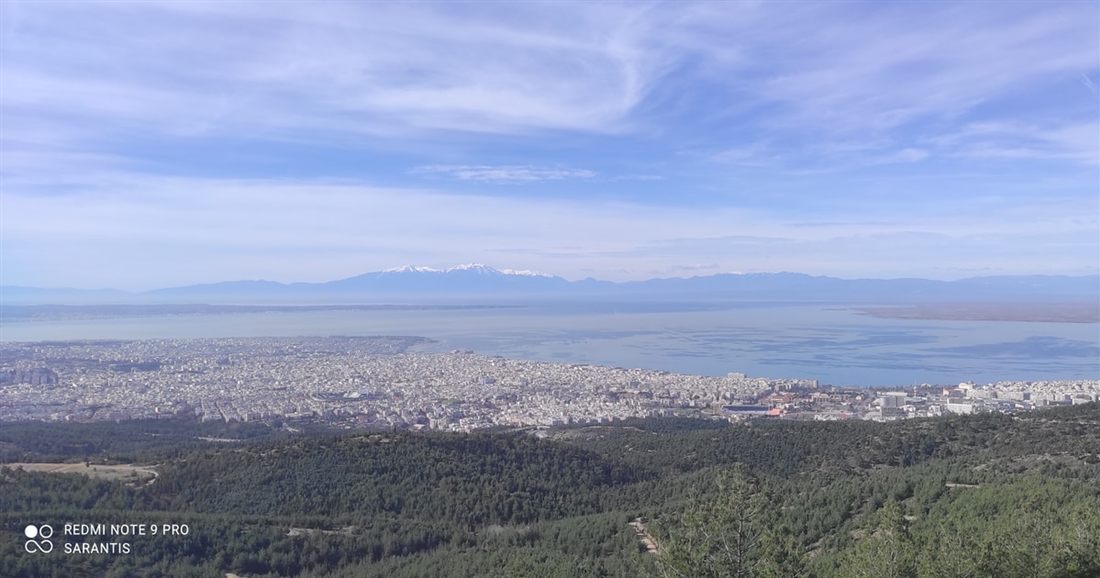
Spring water runs from stone fountains along the mountain roads. Locals fill bottles there, and the tour stops for guests to drink.
Chestnut trees grow thick on the higher slopes. Their nuts ripen in autumn, when the forest floor fills with spiny husks.
The road winds slowly, so the driver stops at viewpoints and clearings. A Thessaloniki traditional villages tour takes its time here, since the forest is the heart of the day.
Which local products do you try on a Thessaloniki traditional villages tour?
A Thessaloniki traditional villages tour stops for local products in the forest villages. The highlands keep old trades in honey, wine, cereals and bread. Guests taste and buy these along the route.
- Honey from village beekeepers
- Local wine from the hill vineyards
- Traditional bread baked in the villages
- Cereals grown on the mountain farms
- Chestnuts from the forest in autumn
Beekeeping and wine making appear among the old trades in the Petrokerasa museum. They remain part of village life in the hills today.
Agios Prodromos names cereals and traditional bread among its products. Guests carry a loaf back to the city as a souvenir.
What is the village of Petrokerasa like?
Petrokerasa is a mountain village in the highlands north of the Chalkidiki peninsula. It lies in the Thessaloniki regional unit, at about 520 to 600 metres. The Thessaloniki traditional villages tour stops here for coffee with the locals.
The village once went by the name Ravna. Its stone houses and lanes climb the slope around a central square.
Coffee in the square is a village ritual. Locals gather at the café tables, and guests join them for a Greek coffee.
About 250 people live in the village. It belongs to the municipality of Lagkadas, in the region of Central Macedonia.
How is Greek coffee served on a Thessaloniki traditional villages tour?
On a Thessaloniki traditional villages tour, Greek coffee comes in a small cup over its grounds. The café boils it in a small long-handled pot called a briki. A glass of cold water comes with every cup.
- Sketos: no sugar
- Metrios: medium sweet, with one spoon of sugar
- Glykys: sweet, with two spoons of sugar
The sugar goes into the pot before boiling, so guests choose the sweetness when they order. Stirring the cup lifts the grounds, so locals sip slowly from the top.
The village café, the kafeneio, is the social centre of a Greek village. Older men gather there for coffee, backgammon and the day’s news.
What does the Petrokerasa Folklore Museum show?
The Petrokerasa Folklore Museum holds 750 objects, all from the village, in four rooms. It shows weapons, a loom, costumes and the tools of old trades. It opened in the 1970s to keep the local folk tradition alive.
- Room 1: flintlocks, sabres and a large Byzantine oil jar
- Room 2: a full loom and woven village textiles
- Room 3: men’s and women’s costumes and old church books
- Room 4: tools for farming, beekeeping, wine making and crafts
The fourth room shows a wooden scratch plough, called an ard, beside a metal plough. Tools for tile making, carpentry, hunting and horse grooming fill the rest.
The museum gives context to the Thessaloniki traditional villages tour. Its objects show how the families of the hills lived and worked.
What is the True Cross tradition of Petrokerasa?
Since the 18th century, Petrokerasa has hosted a piece of the True Cross each Palm Sunday. Documents in the folklore museum record this right. It is one of the oldest customs on the Thessaloniki traditional villages tour route.
The True Cross is the cross of the crucifixion in Christian tradition. Fragments of it are kept as relics in churches and monasteries.
Palm Sunday falls one week before Orthodox Easter. The relic stays in the village church for the feast.
Room 1 of the folklore museum keeps the documents next to flintlocks, powder magazines and sabres. Old church books, codices and manuscripts on village history fill Room 3.
What is Agios Prodromos known for?
Agios Prodromos is a village at the foot of Mount Holomontas, about 14 km from Polygyros. It is known for its souvlaki and its square lined with tavernas. The Thessaloniki traditional villages tour stops here for lunch.
Visitors drive out from Thessaloniki for its souvlaki. Souvlaki means grilled meat on skewers, served with bread.
A river runs through the village, framed by wild plants and trees. The tavern tables sit in the shade around the square.
The village keeps a country church of Agios Prodromos, one of the post-Byzantine country churches of Chalkidiki. Locals hold it in high regard.
Who lives in Agios Prodromos?
About 500 people live in Agios Prodromos. Their families came from the Peloponnese, Epirus, Macedonia and Thrace. Farming, cattle and tourism keep the village going, as guests on a Thessaloniki traditional villages tour see.
The mix of origins shows in the village’s food and customs. Recipes from the south and the north meet at the tavern tables.
Cereals grow on the farms around the village, and cattle graze the lower slopes. The tavern trade brings visitors from Thessaloniki at weekends.
What do you eat at lunch on the Thessaloniki traditional villages tour?
Lunch on the Thessaloniki traditional villages tour is Greek food and wine at a tavern in Agios Prodromos. Souvlaki leads the menu. Village bread, salads and local wine fill the table.
- Souvlaki, grilled meat on skewers
- Village bread from local cereals
- Greek salads with local produce
- Local wine from the hills
The tavern grills the meat over charcoal in the open. Tables fill at lunchtime with families from the villages and the city.
Lunch makes the longest stop of the day. Food lovers who want more of the city’s dishes find them on the Thessaloniki food tour page.
How do you order souvlaki on a Thessaloniki traditional villages tour?
On a Thessaloniki traditional villages tour, souvlaki means meat grilled on a skewer. In northern Greece the word names the skewer itself. Guests order it by the skewer or as a plate with bread, salad and dips.
- Pork: the classic village skewer
- Chicken: a lighter skewer
- Pita: flat bread, warmed on the grill
- Tzatziki: yoghurt with cucumber and garlic
- Village salad: tomato, cucumber, onion, olives and feta
In Athens the same skewer goes by the name kalamaki. In Thessaloniki and its villages, souvlaki keeps its old meaning.
Taverns bring bread to the table before the meal. Locals order plates for the whole table and share them, with house wine by the carafe.
Where is Galatista?
Galatista is a large village in the hills of Chalkidiki, south-east of Thessaloniki, in the municipality of Polygyros. About 2,700 people live there. The Thessaloniki traditional villages tour ends here, at the Byzantine tower above the village.
The village spreads over a slope, with stone houses, churches and a central square. Farms and olive groves surround it on the lower ground.
In Byzantine times the settlement went by the name Galatissa. The tower and the watermills beside it date from that age.
Galatista closes the loop of the Thessaloniki traditional villages tour. From here the road runs back to the city in the late afternoon.
What is the Byzantine tower of Galatista?
The Byzantine tower of Galatista is a stone tower about 16 metres tall. Its lower part dates from the 11th century and its upper part from the 14th century. It is the last stop on the Thessaloniki traditional villages tour.
The tower has three floors and a basement. Thick stone walls rise in a square plan, with small windows high up.
Towers like this guarded farmland and estates across Chalkidiki in Byzantine times. Monasteries and landowners built them as homes and as refuges in raids.
The Thessaloniki traditional villages tour lists it as the 14th-century tower of Galatista. That date refers to the upper floors, built on the older base.
What is inside the Galatista tower?
The Galatista tower holds a sink, sanitary rooms, a kitchen and a small chapel alcove. A water tank lies in the basement. Guests on a Thessaloniki traditional villages tour see how a Byzantine tower kept its people supplied.
- The basement, with its stone water tank
- A kitchen on one of the upper floors
- A sink and sanitary facilities built into the walls
- An alcove that served as a small chapel
The water tank let the people inside hold out in a siege. The kitchen and sink show that families lived in the tower, not only guards.
The rooms stand on new wooden floors, linked by wooden stairs. An outer staircase leads up to the entrance.
What did digs at the Galatista tower find?
Excavations at the Galatista tower found everyday vessels, coins, a bronze ring and arrowheads. The finds date from the 11th to the 14th century. They match the two building phases of the tower on the Thessaloniki traditional villages tour.
The vessels show the cooking and storage of daily life. The coins help archaeologists date each layer of the site.
The arrowheads point to the tower’s role in defence. The bronze ring is a personal item, lost by someone who lived there.
What else stands at the Galatista tower complex?
The Galatista tower complex holds two watermills, a rakario and an olive press beside the tower. The rakario is a still for the grape spirit tsipouro. The Thessaloniki traditional villages tour shows how the site worked as a farm as well as a fort.
- The Byzantine tower, three floors and a basement
- Two watermills for grinding grain
- A rakario, the village still for tsipouro
- An olive press for local olive oil
- The exhibition The Towers of Halkidiki
Restoration work rebuilt the upper watermill and gave the tower a hidden roof. The new roof keeps rain out without changing the old outline.
The exhibition The Towers of Halkidiki tells the story of the Byzantine towers across the peninsula. The spirit made in the rakario has its own page: Thessaloniki tsipouro culture.
How is tsipouro made in the Galatista rakario?
Tsipouro is a clear spirit distilled from the grape skins and seeds left after wine making. A rakario is the still where villagers boiled this pomace in a copper pot. The Galatista rakario on the Thessaloniki traditional villages tour shows the old method.
The copper pot is the kazani. Steam from the boiling pomace rises into a pipe, cools and drips out as spirit.
Distilling starts in autumn, after the grape harvest. Villages in northern Greece mark it with gatherings around the still, with food, music and fresh tsipouro.
Tsipouro comes in small bottles or carafes with meze, small plates of food. One style adds anise, and another stays plain.
Why did Byzantine Chalkidiki build towers like the one at Galatista?
Byzantine Chalkidiki built towers to guard farm estates, villages and harvests from raids. The monasteries of Mount Athos held estates across the peninsula and guarded them with towers. The Galatista tower on the Thessaloniki traditional villages tour is one of these towers.
Pirates and raiders struck the coasts and plains of Chalkidiki in the late Byzantine age. A tower gave farm families a safe place to wait out a raid.
The tower at Ouranoupoli stands on the shore at the edge of Mount Athos. The Ouranoupoli tours page covers it. Boats sail past the monasteries on the Mount Athos cruise from Thessaloniki.
The exhibition at Galatista, The Towers of Halkidiki, maps these towers across the region. It sets the village tower in its wider story.
Where does the name Galatista come from?
Local tradition links the name Galatista to Queen Galatea and to Anthemios. The Byzantine form of the name was Galatissa. Guides on a Thessaloniki traditional villages tour share the legend at the tower.
Anthemios is also the name of the old Anthemountas area, the valley south-east of Thessaloniki. The legend ties the village to that valley.
Legends like this explain place names across Macedonia. The Byzantine name Galatissa is the form found in old records.
Which lakes does the Thessaloniki traditional villages tour listing mention?
The Thessaloniki traditional villages tour listing names mountains, lakes and villages in the area north of Chalkidiki. Lakes Koroneia and Volvi lie in the basin north of the hills, in the Lagkadas area. Petrokerasa belongs to the same municipality of Lagkadas.
Lake Koroneia lies closer to Thessaloniki, and Lake Volvi stretches further east. Both sit in a wide valley between the city and the Strymonian Gulf.
The hills above the basin give wide views over the farmland. A private Thessaloniki traditional villages tour adds a viewpoint stop on request.
Which other villages lie on Mount Holomontas?
Mount Holomontas carries a ring of mountain villages beyond the Thessaloniki traditional villages tour route. Taxiarchis sits at about 650 metres, and Arnaia keeps a historical and folklore museum. Polygyros, the capital of Chalkidiki, lies on its southern slopes.
- Taxiarchis, a forest village at about 650 metres
- Arnaia, a traditional Macedonian village with a museum
- Polygyros, the capital of the Chalkidiki regional unit
- Vavdos, a village on the western slopes
- Varvara, a village of logging and forest work
- Doumbia, a village known for its mineral water
Arnaia sits close to ancient Stagira, the birthplace of Aristotle. Its stone houses and wooden balconies keep the Macedonian style.
These villages lie off the set route of the tour. A private format lets guests ask the driver about them on the day.
What is the monastery of Agia Anastasia near Vasilika?
The monastery of Agia Anastasia Farmakolytria stands near Vasilika, between Thessaloniki and the Holomontas hills. It keeps relics of Saint Anastasia and Saint Theonas. Its feast day falls on 22 December.
Tradition names Empress Theophano as its founder in the late 9th century. Historians link the present monastery to Saint Theonas in the 16th century.
The monastery burned during the Greek War of Independence and was rebuilt afterwards. It belongs to the Ecumenical Patriarchate of Constantinople.
The monastery is not a set stop on the Thessaloniki traditional villages tour. Guests who want to see it ask before the day.
Which season suits a Thessaloniki traditional villages tour?
A Thessaloniki traditional villages tour runs in every season, with a different face in each. Autumn brings chestnuts and gold leaves. Spring brings green forest and full springs. Summer gives cooler air in the hills than in the city.
- Spring: green oak forest, wild flowers and full springs
- Summer: cooler hill air and shade under the trees
- Autumn: chestnut harvest and gold and red leaves
- Winter: wood smoke, tavern fires and snow on the peaks in cold spells
Autumn suits food lovers, since chestnuts roast in the villages. The Thessaloniki in autumn page covers the season in the city.
Spring suits walkers and photographers. The Thessaloniki in spring page lists what else runs at that time.
How does pickup work on a Thessaloniki traditional villages tour?
The Thessaloniki traditional villages tour picks guests up at their hotel in Thessaloniki at 10:00. The same car drops them back at the hotel after about 7 hours. The booking page asks for the hotel name.
The driver-guide waits in the hotel lobby or at the entrance. Guests staying in a flat give the street address instead.
The tour returns to the city in the late afternoon. That leaves the evening free for dinner in Thessaloniki.
Guests on a cruise call or a short stay check the timings first. A Thessaloniki traditional villages tour fills the day from morning to late afternoon.
What to wear and bring on a Thessaloniki traditional villages tour?
A Thessaloniki traditional villages tour calls for closed walking shoes, since the paths are uneven. Layers suit the cooler hill air. A water bottle, a hat and cash for village products complete the bag.
- Closed walking shoes with a good grip
- A light jacket or jumper for the hills
- A refillable water bottle for the springs
- A hat and sun cream in summer
- Cash for honey, bread and other village products
- A camera or phone for the forest views
The hills sit higher than the city, so the air feels cooler. A jumper helps in spring and autumn, even on sunny days.
Small village shops and stalls take cash more readily than cards. Guests who plan to buy products carry small notes.
Which photo stops does a Thessaloniki traditional villages tour offer?
A Thessaloniki traditional villages tour offers photo stops on the forest road, in the village squares and at the Galatista tower. The private car stops wherever guests ask. Autumn leaves and the stone tower make the strongest frames.
- The oak and chestnut forest on the road from Livadi
- The stone fountains at the springs
- The square and stone lanes of Petrokerasa
- The river and tavern square of Agios Prodromos
- The Byzantine tower and watermills of Galatista
Morning light filters through the trees on the forest road. Late afternoon light falls warm on the stone walls of the tower.
Guests ask locals before taking close portraits in the villages. A smile and a greeting in Greek, yia sas, opens doors.
Who suits a Thessaloniki traditional villages tour?
A Thessaloniki traditional villages tour suits couples, families, food lovers and history fans. It gives a slow day in the hills. The private format suits groups who want their own pace. The uneven walking does not suit guests with mobility problems.
- Couples who want a quiet day away from the city
- Families with children who enjoy forests and springs
- Food lovers who want a village tavern lunch
- History fans who want to see a Byzantine tower
- Repeat visitors who have seen the city sights
Children enjoy the springs, the forest and the tower stairs. Parents bring snacks for the drive between villages.
Guests with limited mobility check the walking with the operator before booking. The tower stairs and village lanes have no step-free route.
How does a Thessaloniki traditional villages tour compare with other day trips from Thessaloniki?
A Thessaloniki traditional villages tour trades beaches and big sites for forest, villages and a tavern lunch. Beach trips head south to the Chalkidiki coast. Off-road trips and wine tours cover other sides of the countryside.
- Villages tour: forest, mountain villages, tavern lunch, Byzantine tower
- Beach day trip: the coast and sea of Chalkidiki
- Jeep safari: off-road tracks in the hills
- Wine tasting: vineyards and cellars near the city
- Olive oil tasting: groves and mills in Chalkidiki
Guests who want the sea pick the Halkidiki day trip from Thessaloniki or head to Kassandra. Off-road fans pick the Thessaloniki jeep safari.
Wine lovers pair the hills with Thessaloniki wine tasting. Olive oil lovers book Halkidiki olive oil tasting.
Cave fans visit the Petralona Cave in western Chalkidiki. The full list of trips sits on the Thessaloniki day trips page.

How does a Thessaloniki traditional villages tour fit into a stay in the city?
A Thessaloniki traditional villages tour takes a full day, from 10:00 to the late afternoon. It suits the second or third day of a stay, after the city sights. Guests keep the evening free for dinner in the city.
- Day 1: the city walls, churches and the White Tower
- Day 2: a Thessaloniki traditional villages tour in the hills
- Day 3: a beach day in Chalkidiki or a wine tour
The city sights sit close together and suit a first day on foot. The Thessaloniki hop-on hop-off bus links them for guests who prefer to ride.
Museum fans add a city museum day, listed on the Thessaloniki museums page. A light dinner suits the evening after the tavern lunch.
How do you book a Thessaloniki traditional villages tour?
A Thessaloniki traditional villages tour books online on GetYourGuide. Guests pick a date, enter the party size and add the hotel name for pickup. The booking page shows the cancellation terms before payment.
- Open the booking widget on this page.
- Pick a date and the number of guests.
- Check the inclusions and the cancellation terms.
- Enter the hotel name for pickup.
- Pay and keep the confirmation on a phone.
The private format runs on the chosen date for a single party. Early booking secures a guide in the busy months.
The confirmation names the meeting point and the contact number of the operator. Guests message the operator to add stops or ask about the route.
Frequently Asked Questions
Is the Thessaloniki traditional villages tour private?
Yes. The Thessaloniki traditional villages tour runs as a private tour, so the car carries one party only. The guide adapts the pace and the stops to the group.
How much walking does the tour involve?
The walking is short but uneven, around village lanes, springs and the tower site. Closed shoes with a good grip suit the paths.
Where does the tour stop for lunch?
The tour stops for lunch at a traditional tavern in Agios Prodromos. The tavern serves souvlaki, Greek dishes and local wine.
Does the Thessaloniki traditional villages tour visit the beaches?
No. The Thessaloniki traditional villages tour stays in the mountains of Holomontas. Beach trips to Chalkidiki run as separate day trips from the city.
Does the tour run in winter?
Yes. The private format runs on the date the guest books, in any season. Snow on the peaks in cold spells adds a winter look to the forest.
Do children enjoy the tour?
Yes. Children enjoy the springs, the forest and the tower. The long drive between stops suits children who travel well by car.
Can the guide add stops to the route?
Yes. The private format lets the guide add photo stops, springs or viewpoints on request. Guests ask for larger changes when they book.
Do the taverns serve vegetarian food?
Yes. Village taverns serve salads, grilled vegetables, cheese and bean dishes. Guests tell the operator about special diets when they book.
Which villages does the tour visit?
The tour visits Livadi, Petrokerasa, Agios Prodromos and Galatista. It also crosses the oak and chestnut forest of Mount Holomontas.