
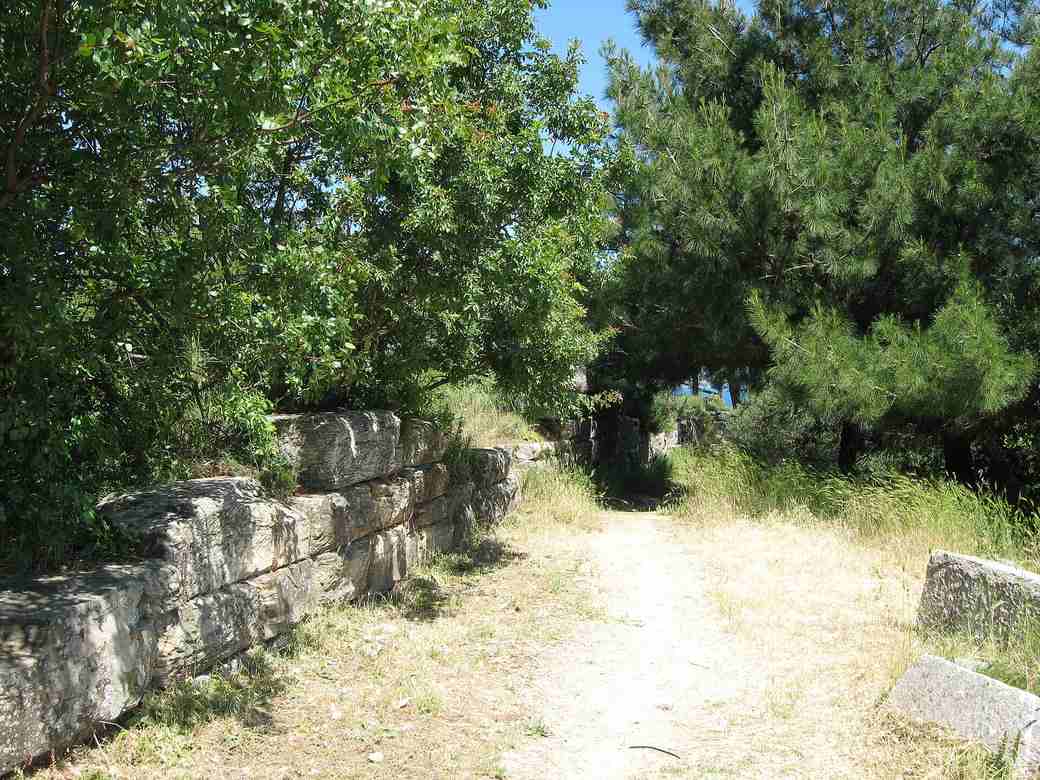
Thassos, a captivating island in the northern Aegean Sea, boasts a rich tapestry of history and natural resources. Known for its white marble, gold, and timber, Thassos attracted settlers from Paros during the Archaic period. These settlers, accompanied by the renowned poet Archilochus, established a prosperous city. Over centuries, Thassos thrived by mining gold and quarrying marble, exporting these treasures across the Aegean. The island raised imposing walls, temples, and theatres, leaving a legacy of architectural splendour. Today, visitors can explore this vibrant history through numerous archaeological sites with My Greece Tours.
Thassos offers a deep dive into the past with its rich historical layers. From ancient settlers and gold mines to Byzantine monasteries and Ottoman influences, each era has left its mark. The sections below cover the island’s journey through time, exploring key sites and events. Visitors can discover the island’s heritage through guided Thassos tours, each offering a unique perspective on its storied past.
What role did settlers from Paros play in Thassos’s history?
Settlers from Paros founded the ancient city of Thassos, bringing their culture and expertise. They established a thriving society, leveraging the island’s natural resources.
The island of Thassos was dramatically transformed when settlers from the Cycladic island of Paros arrived. They brought with them not only their cultural heritage but also significant expertise in mining and quarrying. The settlers, including the poet Archilochus, were drawn by the island’s abundant natural resources. Thassos’s rich deposits of gold and marble were key factors in their decision to settle. These resources played a central role in the island’s economic prosperity and influenced its development. The settlers’ skills in working with marble and extracting gold laid the foundation for Thassos’s wealth and prominence in the region.
The establishment of Thassos by Parian settlers marked the beginning of a new era for the island. They constructed a sophisticated urban centre, complete with temples, an agora, and a theatre. These public structures showcased the settlers’ architectural prowess and cultural influences from their homeland. The city grew into a bustling hub of commerce and culture, attracting traders and artisans from across the Aegean. The strategic location of Thassos further enhanced its appeal, making it a key player in regional trade networks. The legacy of the Parian settlers is still evident in the archaeological remains scattered across the island.
Gold mining on Thassos was a significant economic activity initiated by the Parian settlers. They exploited rich veins of gold located both on the island and the nearby mainland. This mining activity contributed to the island’s wealth and power, allowing Thassos to strike its own coins. These coins served as a testament to the island’s economic independence and influence. The ability to mint coins also facilitated trade, enabling Thassos to exchange goods and services with other regions. The island’s prosperity attracted a diverse population, enriching its cultural tapestry and fostering a vibrant society.
Marble quarrying emerged as another pillar of Thassos’s economy, thanks to the Parian settlers. Renowned for its high-quality white marble, Thassos became a major exporter of this prized material. The marble was used in construction projects across the Aegean, enhancing the island’s reputation. The settlers’ expertise in quarrying and sculpting marble was instrumental in establishing Thassos as a centre of craftsmanship. The quarries are still active today, a testament to the enduring legacy of the settlers’ industry. Visitors can explore these historical sites and gain insight into the island’s industrial heritage.
How did Thassos develop during the Archaic period?
During the Archaic period, Thassos developed into a prosperous city-state. It built strong infrastructures, including walls, temples, and theatres, and engaged actively in trade.
The Archaic period marked a time of significant growth and development for Thassos. The settlers from Paros laid the foundation for a thriving city-state, leveraging the island’s natural resources. Strong walls were constructed to protect the city from invasions and pirate raids. These formidable defences reflected the island’s strategic importance and its need to safeguard its wealth. The construction of monumental temples during this period highlighted the religious and cultural advancements of Thassos. These structures served as centres of worship and community gatherings, reinforcing the social fabric of the island.
The agora in Thassos became a bustling centre of commerce and social interaction during the Archaic period. It played a crucial role in the island’s economy, facilitating trade and the exchange of goods. Merchants from across the Aegean converged at the agora, attracted by the island’s prosperity and strategic location. The agora also served as a political hub, where civic matters were discussed and decisions made. This vibrant marketplace was a testament to the island’s economic vitality and its role as a regional trading power.
The construction of a theatre in Thassos during the Archaic period underscored the island’s cultural development. The theatre became a focal point for artistic and cultural expression, hosting dramatic performances and public gatherings. It provided a space for the community to come together and engage in shared cultural experiences. The theatre’s architecture reflected the influence of Greek design principles, with its semi-circular seating arrangement and acoustic optimisation. This cultural institution played a vital role in the island’s social life, fostering a sense of community identity and pride.
Coin minting was an important economic activity for Thassos during the Archaic period. The ability to strike its own coins signified the island’s economic independence and influence. These coins facilitated trade, enabling Thassos to engage in transactions with other city-states and regions. They also served as a symbol of the island’s prosperity and its role as a regional power. The coins of Thassos were renowned for their quality and craftsmanship, further enhancing the island’s reputation. This period of economic growth laid the foundation for Thassos’s continued development and success.
What was the impact of Athenian and Macedonian control on Thassos?
Athenian and Macedonian control brought political and cultural changes to Thassos. The island experienced shifts in governance and alliances, impacting its autonomy and regional influence.
Thassos came under Athenian control during the classical period, marking a significant shift in its political landscape. The island became a member of the Delian League, a coalition led by Athens. This alliance brought both benefits and challenges to Thassos. Athenian influence permeated various aspects of Thassos’s society, from governance to cultural practices. The island’s strategic location and resources made it a valuable asset for Athens. However, the imposition of Athenian rule also strained Thassos’s autonomy, as it had to adhere to the league’s directives and contribute resources to Athenian campaigns.
Macedonian control over Thassos followed the decline of Athenian influence in the region. The island became part of the expansive Macedonian Empire under the leadership of figures like Alexander the Great. This period saw a continuation of external influence on Thassos’s political and cultural affairs. Macedonian rule introduced new administrative structures and military strategies, impacting the island’s governance. Despite these changes, Thassos managed to retain aspects of its cultural identity and traditions. The Macedonian period also brought opportunities for increased trade and interaction with other parts of the empire.
The transition from Athenian to Macedonian rule had a profound impact on Thassos’s regional alliances. The island navigated shifting political dynamics as it aligned itself with different powers. These changes affected Thassos’s economic and military strategies, as it adapted to the priorities of its new rulers. The island’s strategic importance remained a constant, making it a focal point for competing interests in the region. Thassos’s ability to adapt to these changes was crucial for its survival and continued prosperity.
Cultural exchanges between Thassos and its rulers were a byproduct of Athenian and Macedonian control. The island absorbed influences from these dominant powers, enriching its cultural landscape. Art, architecture, and religious practices reflected a blend of local traditions and external influences. Thassos’s ability to integrate these elements into its cultural fabric demonstrated its resilience and adaptability. These cultural exchanges contributed to the island’s unique identity, which continues to attract scholars and visitors today. The influence of these periods is evident in the archaeological remains and historical records that tell the story of Thassos’s past.
How did Roman rule affect Thassos?
Roman rule brought economic stability and integration into the wider Roman economy. Thassos became a key player in regional trade, benefiting from Roman infrastructure and governance.
Roman rule marked a period of stability and prosperity for Thassos. The island became an integral part of the Roman Empire, benefiting from its extensive trade networks and infrastructure. Roman governance introduced new administrative practices, enhancing the efficiency of local governance. Thassos’s strategic location and natural resources made it a valuable asset for the Roman economy. The island’s exports, particularly marble, found new markets across the empire. Roman influence also permeated local culture, with architectural and artistic styles reflecting Roman aesthetics. This period of stability allowed Thassos to flourish, leaving a lasting legacy on the island.
Trade played a crucial role in Thassos’s economy during Roman rule. The island’s integration into the Roman trade network facilitated the exchange of goods and services. Thassos’s marble and other resources were in high demand, contributing to the island’s economic prosperity. The Roman infrastructure, including roads and ports, enhanced connectivity and accessibility, boosting trade activities. The island’s merchants and artisans thrived, capitalising on the opportunities presented by the Roman market. The economic benefits of Roman rule were significant, establishing Thassos as a key player in regional commerce.
Cultural exchanges between Thassos and the Roman Empire enriched the island’s cultural landscape. Roman art, architecture, and religious practices influenced local traditions, creating a unique cultural fusion. The island’s archaeological sites bear testimony to this cultural exchange, with Roman-style villas, mosaics, and public buildings. These interactions also facilitated the spread of Roman ideas and innovations, impacting various aspects of Thassos’s society. The blending of local and Roman elements contributed to the island’s distinctive cultural identity, which continues to attract historians and archaeologists.
The legacy of Roman rule is evident in the architectural and cultural remnants found on Thassos today. The island’s historical sites, including the Ancient Agora, showcase Roman influences and provide insight into this period of history. Visitors can explore these sites to gain a deeper understanding of Thassos’s Roman past. The preservation of these sites is crucial for understanding the island’s historical development and its role within the Roman Empire. Thassos’s Roman heritage remains a significant aspect of its cultural and historical identity, drawing interest from scholars and tourists alike.
What were the effects of Byzantine rule on Thassos?
Byzantine rule brought religious and architectural transformation to Thassos. Churches and monasteries were built, and pirate raids influenced settlement patterns.
Byzantine rule introduced significant religious and architectural changes to Thassos. The island saw the construction of numerous churches and monasteries, reflecting the influence of Byzantine Christianity. These religious structures became centres of spiritual life and community gatherings. The architectural style of Byzantine buildings, characterised by domes and intricate mosaics, left a lasting impression on Thassos. The island’s religious landscape was transformed, with Christianity becoming a central aspect of Thassos’s cultural identity. The legacy of Byzantine architecture is still visible in the surviving structures, which attract visitors and scholars interested in medieval history.
Pirate raids during the Byzantine era had a profound impact on Thassos’s settlement patterns. The threat of piracy forced many inhabitants to relocate inland, seeking refuge in hidden mountain sites. These inland settlements were strategically chosen for their defensibility, offering protection from coastal raids. The move inland led to the development of new communities and agricultural practices. These adaptations were necessary for the survival of Thassos’s population in the face of external threats. The legacy of these inland settlements is evident in the island’s landscape, with ruins and remnants of these communities still visible.
The monasteries of Thassos played a significant role during the Byzantine period, serving as centres of religious and cultural life. Monks contributed to the preservation of knowledge, copying manuscripts and engaging in scholarly activities. The monasteries also provided social support, offering aid and shelter to those in need. The Monastery of the Archangel Michael is a notable example, with its rich history and spiritual significance. These religious institutions were integral to the island’s community, fostering a sense of unity and identity. The influence of the monasteries extended beyond religion, impacting the social and cultural fabric of Thassos.
Byzantine art and culture left a lasting legacy on Thassos, influencing various aspects of the island’s identity. The intricate mosaics and religious iconography from this period reflect the artistic achievements of Byzantine craftsmen. These artworks provided a visual narrative of religious stories and themes, enriching the cultural heritage of Thassos. The island’s historical sites offer a glimpse into this rich artistic tradition, attracting visitors interested in Byzantine art and history. The preservation of these sites is essential for understanding the cultural evolution of Thassos and its role within the Byzantine Empire. The island’s Byzantine heritage continues to be a source of pride and interest for both locals and visitors.
How did the Ottoman period influence Thassos?
The Ottoman period brought administrative changes and new governance structures to Thassos. The island’s resources were exploited, and it experienced cultural exchanges with the wider Ottoman world.
The Ottoman period introduced significant administrative changes to Thassos. The island became part of the Ottoman Empire’s vast network, governed by new structures and regulations. Ottoman rule brought a different approach to governance, with local leaders appointed to oversee the island’s affairs. These changes impacted the daily life of Thassos’s inhabitants, as they adapted to new systems of administration and taxation. The island’s strategic importance and resources continued to make it a valuable asset within the empire. The influence of Ottoman governance is still evident in certain aspects of Thassos’s cultural and historical landscape.
The exploitation of Thassos’s resources was a central aspect of Ottoman rule. The island’s marble and timber were highly sought after, contributing to the empire’s construction projects and trade. The Ottomans established systems for extracting and exporting these resources, integrating Thassos into their economic network. This period also saw the introduction of new agricultural practices, as the Ottomans sought to maximise the island’s productivity. The exploitation of Thassos’s resources had both positive and negative effects, bringing economic benefits but also straining local communities.
Cultural exchanges between Thassos and the wider Ottoman world enriched the island’s cultural landscape. The influence of Ottoman art, architecture, and cuisine is evident in various aspects of Thassos’s identity. These exchanges introduced new cultural elements, creating a unique blend of local and Ottoman traditions. The island’s architecture from this period reflects Ottoman design principles, with features like domes and courtyards. The cultural fusion resulting from these interactions is a testament to Thassos’s ability to adapt and integrate external influences. This unique cultural heritage continues to attract visitors interested in exploring the island’s diverse history.
The Ottoman period left a lasting impact on Thassos’s social and cultural fabric. The island’s population experienced shifts in demographics and social structures, influenced by Ottoman policies and practices. These changes affected various aspects of daily life, from religious practices to social hierarchies. Thassos’s ability to navigate these changes was crucial for its survival and continued prosperity. The legacy of the Ottoman period is evident in the island’s historical sites and cultural traditions, which reflect the complex interactions between local and Ottoman influences. This rich history is an integral part of Thassos’s identity, offering valuable insights into its past.
What is the modern significance of Thassos’s marble quarries?
The marble quarries of Thassos remain an important economic asset. They continue to produce high-quality marble, contributing to the island’s economy and reputation in the construction industry.
The marble quarries of Thassos hold significant modern economic importance. Known for producing some of the finest white marble, these quarries continue to be a valuable asset for the island. The marble is highly sought after for construction projects worldwide, enhancing Thassos’s reputation in the construction industry. The techniques used in the quarries have evolved over time, incorporating modern technology for efficient extraction and processing. These advancements have increased productivity and quality, ensuring Thassos’s marble remains competitive in the global market. The quarries provide employment opportunities for local residents, contributing to the island’s economy.
The quality of Thassos marble has made it a preferred choice for prestigious architectural projects. Its fine grain and pure white colour make it ideal for both structural and decorative purposes. The marble has been used in significant buildings and monuments, further solidifying Thassos’s reputation as a leading marble producer. The island’s quarries have a long history of marble production, dating back to ancient times. This tradition continues today, with Thassos’s marble being exported to various countries. The enduring demand for Thassos marble highlights its importance as a natural resource and economic driver.
The sustainability of marble quarrying on Thassos is a topic of ongoing interest. Efforts are being made to balance economic benefits with environmental protection. Modern quarrying practices aim to minimise environmental impact, ensuring the long-term viability of the industry. The preservation of Thassos’s natural landscape is a priority, as it contributes to the island’s appeal as a tourist destination. The integration of sustainable practices in the quarrying process reflects a commitment to responsible resource management. These efforts are crucial for maintaining Thassos’s reputation as a leading marble producer while preserving its natural beauty.
The cultural significance of Thassos’s marble quarries extends beyond economic considerations. The marble has played a crucial role in the island’s history, shaping its architectural and cultural heritage. Visitors to Thassos can explore the quarries and gain insight into the island’s industrial history. The Archaeological Museum showcases artefacts and exhibits related to marble quarrying, offering a deeper understanding of its impact on Thassos’s development. The continued operation of the quarries serves as a living testament to the island’s rich history and its ongoing contribution to the global marble industry.
Frequently Asked Questions
What natural resources is Thassos known for?
Thassos is renowned for its rich deposits of white marble, gold, and timber. These natural resources have played a significant role in the island’s historical and economic development, attracting settlers and influencing trade and industry throughout its history.
Who were the early settlers of Thassos?
The early settlers of Thassos were from the Cycladic island of Paros. They established the ancient city during the Archaic period, bringing their cultural and technological expertise in mining and quarrying, which greatly contributed to the island’s prosperity.
How did Thassos become part of the Greek state?
Thassos joined the Greek state in the early twentieth century following the Balkan Wars. The island’s integration into Greece marked a new chapter in its history, aligning it politically and culturally with the modern Greek nation, after centuries of various foreign rules.
What architectural structures are prominent in Thassos?
Prominent architectural structures in Thassos include ancient temples, an agora, a theatre, and Byzantine churches and monasteries. These structures reflect the island’s rich historical and cultural heritage and are key attractions for visitors exploring Thassos’s past.
How did pirate raids affect Thassos?
Pirate raids during the Byzantine era significantly impacted Thassos. They forced many inhabitants to relocate inland for safety, leading to the development of hidden mountain settlements. These raids influenced the island’s settlement patterns and defensive strategies.
What is the significance of the Monastery of the Archangel Michael?
The Monastery of the Archangel Michael is a significant religious site on Thassos. It serves as a centre of spiritual life and community gatherings, reflecting the island’s Byzantine heritage. Its historical and cultural importance attracts visitors interested in Thassos’s religious history.