
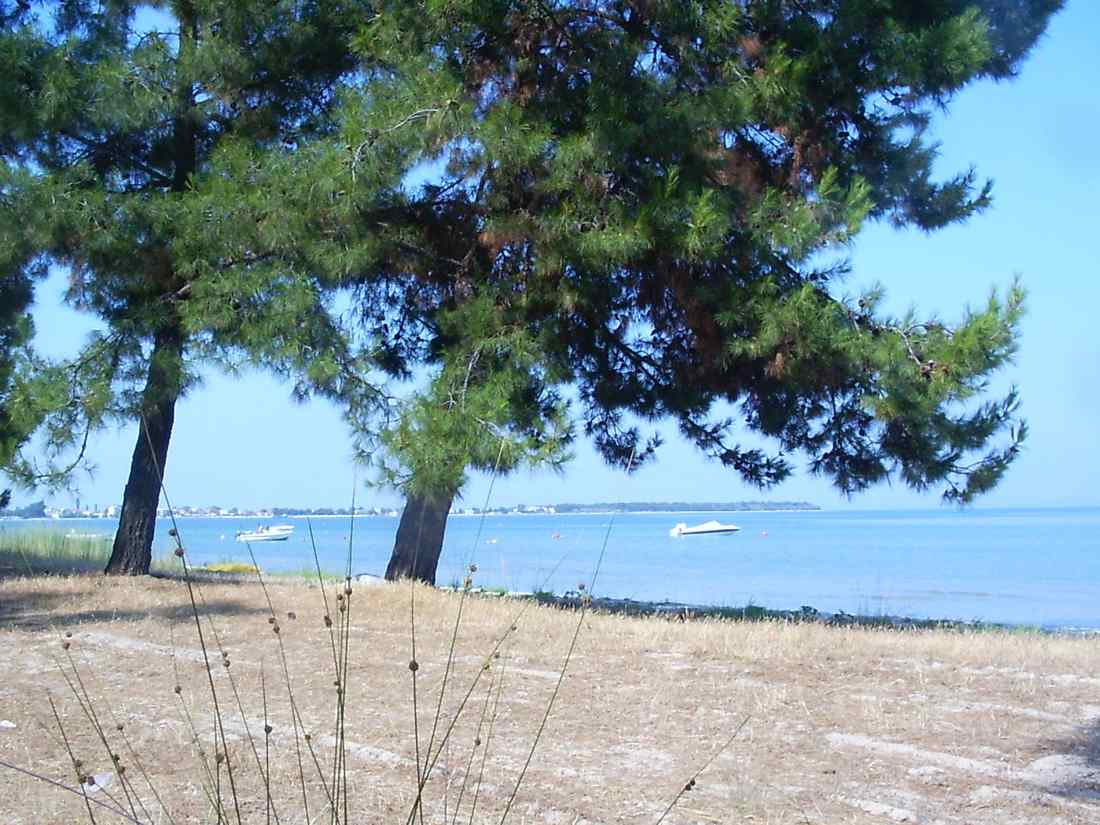
Skala Prinos is a port and resort village on the west coast of Thassos. The village serves as the island’s second ferry harbour, receiving the longer crossing from the mainland city of Kavala. That link makes it a practical arrival point for travellers driving down from northern Greece. A long beach of shingle and sand runs along the front, backed by tavernas and rooms. Olive groves fill the plain behind the shore, feeding the island’s olive-oil and honey trade. The village keeps a calm, working character rather than a purpose-built resort feel. Plan a relaxed west-coast stay and explore the harbour and its surroundings with My Greece Tours.
The village rewards travellers who want an easy mainland connection paired with a quiet shore. The sections below cover the ferry harbour and the Kavala crossing, the origin of the name, the beach and waterfront, the olive-and-honey plain, the case for a west-coast base, and the transport that ties the coast together. Each section answers one clear question and points to what matters on the ground. Regular Thassos tours connect the village with the wider island, from beaches to boat departures and mountain villages. Read on to plan a day, a week, or a full west-coast holiday around this working harbour and its olive-rich plain.
What defines Skala Prinos in Thassos?
Skala Prinos is a port and resort village on the western shore of Thassos. It combines the island’s second ferry harbour, a long shingle-and-sand beach, and an olive-rich plain into a quiet, practical base.
Skala Prinos sits on the west coast of Thassos, facing the mainland across a narrow stretch of sea. The village looks toward Kavala, the port city that anchors this side of northern Greece. Its harbour handles the island’s second ferry route, so arrivals and departures shape the daily rhythm. Behind the quay, a flat coastal plain spreads inland toward the mountains. The layout keeps the beach, the tavernas, and the ferry berth within a short walk of each other. Rooms and small hotels line the shore rather than rising into large complexes. Residents work the land and the sea alongside the summer tourism trade. This blend of harbour, farmland, and beach gives the village its settled, unhurried feel. Skala Prinos reads as a place of everyday island life.
The village grew as the shore settlement of older communities set back in the hills. Farmers and traders needed a landing point for goods moving between the plain and the sea. That practical origin still marks the character of the waterfront today. Skala Prinos never became a large town, so it keeps a village scale. The harbour, beside the capital at Limenas, carries steady ferry traffic through the season. Cars, foot passengers, and freight roll on and off the ramp each day. The quay doubles as a gathering point, where locals watch the boats come and go. Cafes near the berth fill with travellers waiting for a departure. This working port sets the tone for the settlement. The village earns its living from the water and the land.
Days here move between the beach, the harbour, and the plain behind the shore. Swimmers settle on the long strand that fronts the village. Walkers follow quiet lanes inland among olive groves and small holdings. The harbour offers a slow spectacle of ferries loading and unloading through the day. Tavernas along the front serve the daily catch and dishes built on local oil. The pace suits families, older couples, and travellers who prefer calm over crowds. Evenings stay gentle, with dinner by the water and a stroll along the quay. The village rarely feels packed, even at the height of the season. Skala Prinos rewards visitors who value ease of access and a restful shore. This mix of harbour life and farmland gives the stay real texture.
Skala Prinos stands apart from the island’s purpose-built resort strips. The village pairs a functional ferry port with an easy holiday shore. Travellers arriving from the mainland step off the boat and reach the beach within minutes. The olive plain and the honey trade root the place in real island agriculture. Prices along the front tend to sit below those of the glossier resort towns. The village suits a slow week as readily as a one-night ferry stopover. Families value the safe, gently shelving beach and the flat, walkable centre. Independent visitors like the harbour links and the open road in both directions. This balance of access, farmland, and shore defines the village. The place stays true to its roots as a shore settlement.
How do you reach Skala Prinos by ferry from Kavala?
Ferries link Skala Prinos with the mainland city of Kavala. The crossing takes about one and a quarter hours, longer than the island’s other ferry route, and lands cars and foot passengers straight onto the west coast.
Skala Prinos serves as the island’s second ferry harbour, after the main port at Limenas. The route here runs to Kavala, a substantial city on the northern Greek mainland. The crossing covers a longer distance than the shorter hop into Limenas. A sailing takes about one and a quarter hours across the open channel. That timing suits drivers heading south from Kavala and the wider stretch of northern Greece. Detailed notes on how to get to Thassos set out the routes, ports, and connections in full. The Kavala link lands travellers on the quieter west coast rather than the busier north. Cars roll off the ramp and join the ring road within moments. This direct arrival makes the village a natural first stop on the island.
The longer crossing from Kavala carries a clear advantage for road travellers. Kavala sits on the mainland with strong links to the national motorway network. Drivers coming from the north reach the city without a long detour along the coast. Boarding a ferry there sends them straight across to the west side of the island. The route saves the extra land miles needed to reach the alternative port. Passengers settle in for a crossing of about one and a quarter hours. The deck offers open views of the channel and the approaching Thassian shore. The harbour of Skala Prinos grows steadily on the horizon during the sailing. Arrival places cars a short drive from beaches in both directions. This mainland gateway shapes the whole appeal of the west-coast village.
Ferry operations at the harbour follow the pattern of a working island port. Vehicle ferries load cars, camper vans, and lorries down a stern ramp. Foot passengers walk aboard through the same berth beside the vehicles. Ticket booths and a small waiting area sit close to the quay. Sailings run more frequently in high summer and ease off in the cooler months. Travellers with a car reach the boarding queue best by arriving early. The crossing links the island to Kavala’s shops, markets, and onward roads. Return trips let visitors reach the mainland for a day and come back by evening. The predictable rhythm of departures anchors daily life on the waterfront. This steady service keeps the village tied firmly to the mainland.
Arriving at Skala Prinos puts travellers on the calmer flank of Thassos. The west coast catches gentle afternoon light and sheltered swimming water. A short drive north along the ring road reaches Limenas, the capital and main port. A drive south leads toward the resorts of Limenaria and Potos. The village itself offers rooms and tavernas for those who want to stay put on arrival. Drivers can unload, park, and settle before exploring further afield. The ferry link means guests never feel cut off from the mainland. Fresh supplies, spare parts, and day trips all lie a short sailing away. This easy connection is the single strongest reason to base a holiday here. The harbour turns a simple crossing into a doorway onto the whole island.
What is the story behind the name Skala Prinos?
The name marks the village as the skala, or shore landing, of Prinos. It grew as the coastal outlet of the inland Prinos villages, Mikros and Megalos Kazaviti, set in the hills behind the plain.
The word skala means ladder or stairway in Greek, used along this coast for a shore landing. Coastal villages named Skala served as the harbours of older settlements built inland. Skala Prinos followed exactly this pattern as the shore outlet of Prinos. The inland villages of Mikros and Megalos Kazaviti sit up in the hills behind the plain. Their farmers needed a point on the coast to land boats and move produce. The shore settlement grew at the natural landing below the hillside villages. Over generations the coastal skala gathered its own homes, tavernas, and harbour trade. The name preserves this link between the plain, the hills, and the sea. This origin explains why the village pairs a working port with a farming hinterland.
Mikros and Megalos Kazaviti rank among the oldest villages on Thassos. The pair sits amid plane trees, springs, and stone houses on the wooded slopes. Their setting away from the coast once offered safety from raiders and pirates. Families farmed olives, kept bees, and grazed animals on the surrounding land. The coast below served as their outlet to the sea and the wider world. Produce travelled down to the skala for loading onto boats. The villages retain traditional architecture and a quiet, shaded mountain character. A short drive up from the shore reaches their squares and old churches. This inland pair forms the historic root of the coastal village. The two Kazaviti settlements and their skala still function as a linked whole.
The shore-and-hills bond still shapes daily patterns around Skala Prinos. Olive oil pressed from the plain and honey from the hills reach the harbour tavernas. Villagers move between the coast and the upland groves through the working year. The skala handles the modern equivalent of the old produce trade, now by ferry. Visitors sense this layered geography as they drive from the beach into the hills. The plain gives way to terraced groves and then to shaded mountain lanes. Each level of the landscape carries a piece of the village story. The name Prinos ties the whole stretch, from summit to sea, into one place. This continuity gives the village more depth than its size suggests. The past and the present sit close together along this short coast.
Understanding the name unlocks the character of the whole village. Skala Prinos exists because inland farmers needed a door to the sea. That practical bond between plain, hills, and harbour still holds today. The village never set out to be a resort, and it wears its farming roots openly. Travellers who learn the story read the landscape with sharper eyes. The groves, the port, and the hillside villages fall into a clear pattern. This depth rewards curious visitors far beyond a simple beach stop. The name also signals the quiet, unpolished feel that guests come to enjoy. A place built as a working skala keeps that honest character intact. The story of the name is, in truth, the story of the village itself.
What is the beach and waterfront like at Skala Prinos?
A long beach of shingle and sand runs along the front at Skala Prinos. Tavernas, cafes, and rooms line the shore behind it, giving swimmers food, shade, and a place to sleep within steps of the water.
The beach at Skala Prinos stretches in a long band along the village front. Shingle and sand mix underfoot, coarser in places and softer in others. The seabed shelves gently, so swimmers wade out over a firm, clear bottom. West-facing water stays calm through the afternoon and warms in the shallows. The strand sits within easy reach of the harbour and the parking behind the shore. Among the beaches of Thassos, this one trades fine powder sand for quiet and convenience. Trees and low buildings edge the back of the beach, offering patches of shade. The length of the shore spreads bathers out, even on busier summer days. This easy, walkable beach forms the daytime heart of the village.
The waterfront lines the beach with tavernas, cafes, and simple guest rooms. Family-run kitchens grill fresh fish and serve dishes built on local olive oil. Cafes pour coffee through the day and turn to drinks as the sun drops. Rooms above and behind the tavernas put beds within steps of the sand. Shops and a bakery cover the basics for self-catering guests. The front stays relaxed rather than loud, matching the village’s calm character. Tables spill toward the shore, so diners eat almost on the beach itself. Evening light on the west-facing water draws strollers along the quiet promenade. The scale stays small, with no high-rise hotels crowding the shore. This gentle front gives the village its sociable yet peaceful evenings.
Days on the beach follow an easy, unhurried pattern at Skala Prinos. Swimmers settle early before the strongest afternoon sun. Sunbeds and umbrellas appear along parts of the sand through the summer. The calm, clear water suits families with young children and older swimmers alike. Snorkellers explore the rockier edges where fish gather over the stony bottom. Walkers follow the shoreline to quieter stretches beyond the village centre. The gentle shelving and firm footing make wading in comfortable and safe. Refreshment never sits far, with tavernas and cafes lining the back of the beach. Late risers still find open room on the long, uncrowded strand. Afternoons drift between the water, the shade, and a long lunch by the sea. This beach day defines the appeal of the west-coast village.
The beach at Skala Prinos works well as a calm base for wider exploring. The west coast strings a chain of bays north and south of the village. Short drives reach sandy coves, pebble beaches, and sheltered swimming spots along the shore. The ring road links these beaches in a simple, scenic sequence. Travellers rotate between the home beach and fresh stretches each day. The village strand suits lazy mornings, while day trips chase variety further afield. Calm western water tends to warm early and stay settled through the season. Families value the safe shelving here before venturing to livelier resort beaches. This mix of a quiet base and easy beach-hopping keeps a week fresh. The shore rewards visitors who like both routine and discovery.
What grows on the plain around Skala Prinos?
The coastal plain around Skala Prinos holds extensive olive groves. These trees feed the island’s olive-oil and honey trade, while an offshore oil field lies in the sea nearby, adding an industrial note to the farmed landscape.
The plain behind Skala Prinos spreads inland in a broad sweep of olive groves. Thassos has grown olives for its oil across a long agricultural history. The trees on this western plain feed presses that supply the island and beyond. Local honey draws on the same landscape, with hives set among the groves and hills. A closer look at Thassos food shows how oil and honey anchor the island’s kitchen. Tavernas along the shore cook with the oil pressed a short distance inland. The groves also shape the scenery, with silver-green canopies filling the flat land. Farmers tend the trees through the year, from pruning to the winter harvest. This working landscape ties the village firmly to the island’s farming tradition.
Olive oil stands as the signature product of the plain around the village. Thassian oil earns a strong name across northern Greece for its taste and quality. The groves here contribute to that reputation with steady annual harvests. Pressing traditionally follows the winter picking, when the fruit reaches full ripeness. Families and cooperatives run the presses that turn olives into green-gold oil. The oil dresses salads, fries fish, and enriches the slow-cooked dishes of the region. Bottles and tins sell from roadside stalls and village shops near the coast. Visitors carry the oil home as a lasting taste of the island. The link between grove, press, and taverna sits at the heart of the plain. This produce gives Skala Prinos a flavour rooted in its own soil.
Honey and an offshore oil field add further layers to the plain’s economy. Beekeepers set hives among the olive groves and the flowering hillside scrub. Thassian honey draws flavour from pine, herbs, and wildflowers across the land. Jars sell alongside the oil in village shops and at the roadside. Out at sea, an oil field lies offshore from this stretch of coast. Its platforms mark the horizon as an industrial counterpoint to the farmland. The field taps reserves beneath the seabed near the western shore. This unusual pairing sets farmed groves against offshore energy in one view. Greek beach villages rarely hold such a mix of agriculture and heavy industry. The contrast gives the plain around the village a distinctive working edge.
The plain rewards visitors who step back from the beach for an hour. Lanes run inland between olive groves toward the foot of the hills. Cyclists and walkers follow these quiet tracks through the working farmland. The groves shift colour through the seasons, from spring blossom to autumn fruit. Roadside stalls sell oil, honey, and other produce direct from the growers. A drive up into the hills reaches the old Kazaviti villages above the plain. The farmland frames the village and softens the industrial note offshore. Visitors gain a fuller picture of island life beyond the sand and the sea. This agricultural setting distinguishes Skala Prinos from beach-only resorts elsewhere. The plain gives the village both its livelihood and a large part of its charm.
Why choose Skala Prinos as a west-coast base?
Skala Prinos suits travellers who want quiet shores paired with easy mainland access. The ferry to Kavala, the calm beach, the low-key waterfront, and the central ring-road position make it a practical, restful base for touring Thassos.
Skala Prinos makes a strong case as a calm west-coast base on Thassos. The village pairs a quiet shore with a direct ferry link to the mainland. Travellers who value rest over nightlife find the pace here well suited. Guides to where to stay in Thassos often list the west coast for its balance of quiet and access. Rooms, apartments, and small hotels cluster near the beach and the harbour. Prices tend to undercut the busier resort towns on the south coast. The village stays walkable, with the beach, tavernas, and ferry within a short stroll. Nights stay peaceful, broken only by the gentle bustle of the seafront tavernas. This restful setting draws visitors seeking a slower island rhythm.
The west-coast setting brings its own quiet advantages to a stay here. West-facing beaches catch calm afternoon water and long, unhurried sunsets. The coast here draws smaller tour crowds than the headline northern resorts. Families settle into a safe beach and a walkable, low-traffic village centre. Older travellers value the flat terrain and the short distances between essentials. The ferry to the mainland reassures guests who like a quick exit if needed. Drivers use the village as a launch pad for touring the whole island. The calm does not mean dull, as tavernas and cafes keep the front sociable. Guests trade resort polish for authenticity and ease of movement. This blend suits anyone who wants a genuine base rather than a packaged strip.
Skala Prinos sits at a useful point on the island’s ring road. A drive north reaches Limenas, the capital, with its harbour, museum, and old town. A drive south leads to Limenaria and Potos and the string of southern beaches. The mountain villages of the interior climb the slopes directly behind the plain. Day trips fan out in every direction from this central western position. The ferry adds the mainland to that list of easy excursions. Travellers reach beaches, ruins, and hill villages within short, scenic drives. The village works equally well for planned itineraries and spontaneous wandering. Fuel, shops, and services line the route for touring drivers. This connectivity is a core reason to choose the village as a base.
Skala Prinos brings together shore, farmland, and mainland access in one village. Visitors swim, dine, and explore without long drives or heavy crowds. The ferry to Kavala sets the place apart from purely inward-facing resorts. Its ring-road position carries travellers to beaches, villages, and ferry ports alike. The village suits slow, restful weeks and shorter island breaks equally well. Families, couples, and solo travellers each find a comfortable footing here. Prices, calm, and location combine into a strong west-coast choice. A stay here captures both the working and the leisurely sides of Thassos. The olive plain and the quiet beach frame days that never feel rushed. Skala Prinos rewards travellers who want ease, character, and a genuine island base.
How do you get around Skala Prinos and reach the rest of Thassos?
The island ring road runs through Skala Prinos, linking it north to Limenas and south to Limenaria and Potos. Buses, hire cars, and boat trips extend that reach to beaches, villages, and the mainland.
The ring road passes straight through Skala Prinos, tying it to the whole coast. A drive north follows the shore to Limenas, the capital and main ferry port. A drive south reaches Limenaria and Potos and the southern resort beaches. Thassos car rental gives the freedom to explore the island at your own pace. The full loop of the ring road fits comfortably into a single day. Inland roads climb from the plain to the Kazaviti villages and beyond. Drivers reach quiet coves that buses skip along the western and southern shores. Parking near the beach and harbour stays straightforward outside peak hours. Fuel stations sit at intervals along the main coastal route. This road network puts the whole island within easy reach of the village.
Regular buses connect Skala Prinos with the main towns along the ring road. Services run north to Limenas and south toward Limenaria and Potos through the season. Fares stay modest, making the bus a practical choice for car-free travellers. Stops sit close to the harbour and the beachfront in the village. The flat coastal road also suits cyclists riding between neighbouring bays. Timetables thicken in high summer and thin outside the main months. Buses link the beaches, the ferry port, and the larger resort towns. Travellers without a car still reach the bulk of the island by public transport. The service pairs well with ferry arrivals for onward journeys. This bus network keeps the village connected without the need to drive.
Boat trips open a sea-level view of the coast around the village. Operators run day cruises with swimming stops in clear, sheltered water. The western shoreline unfolds from the deck of a small boat. Passengers glide past coves and cliffs that roads never reach. Trips often include lunch, a swim, and time to relax on the water. Departures leave from harbours along the coast through the summer season. The sea route reveals hidden beaches beyond the reach of the ring road. Fishing boats and pleasure craft share the calm western waters. Sea breezes and swimming stops break up the drive-and-beach routine. A day afloat rounds out a stay focused on the shore. This perspective adds another layer to exploring the island from the village.
Skala Prinos works as a compact hub for touring the whole of Thassos. Buses, a hire car, and boat operators cover every kind of trip. The ring road ties the village to the ferry ports at Limenas and Kavala. Day-trippers reach the far side of the island and return by evening. The mix of transport suits both careful planners and spontaneous travellers. Short distances keep fuel costs and travel time low across the island. Families reach beaches without long, tiring drives from the village. Independent visitors value the freedom to shape each day as they please. The mainland ferry extends the range beyond the island itself. The village keeps the island within a short, easy reach. This connectivity stands among the strongest reasons to base a holiday here.
Frequently Asked Questions
Where is Skala Prinos on Thassos?
Skala Prinos lies on the west coast of Thassos, facing the mainland across a narrow channel. The village serves as the island’s second ferry harbour and sits on a flat coastal plain of olive groves. The ring road links it north to Limenas and south to Limenaria and Potos.
How long is the ferry from Kavala to Skala Prinos?
The ferry from Kavala to Skala Prinos takes about one and a quarter hours. This crossing runs longer than the island’s other ferry route into Limenas. It carries cars and foot passengers directly onto the west coast, making the village a practical arrival point for drivers coming from northern Greece.
What does the name Skala Prinos mean?
The name marks the village as the skala, or shore landing, of Prinos. It grew as the coastal outlet of the inland villages of Mikros and Megalos Kazaviti, set in the hills behind the plain. Farmers used the landing to move produce between the hills and the sea.
Is Skala Prinos a good base for a Thassos holiday?
Skala Prinos makes a calm, practical base for a Thassos holiday. The village offers a quiet beach, low-key tavernas, and a direct ferry to the mainland. Its position on the ring road puts beaches, villages, and both ferry ports within short, easy drives across the island.
What is the beach at Skala Prinos like?
The beach at Skala Prinos runs long along the village front, mixing shingle and sand. The seabed shelves gently into calm, west-facing water that suits families and older swimmers. Tavernas, cafes, and rooms line the shore behind, so food and shade sit within easy steps.
What is grown around Skala Prinos?
Olive groves fill the plain around Skala Prinos, feeding the island’s olive-oil and honey trade. Beekeepers set hives among the trees and the hillside scrub. An offshore oil field lies in the sea nearby, adding an industrial note to a landscape otherwise given over to farming.