
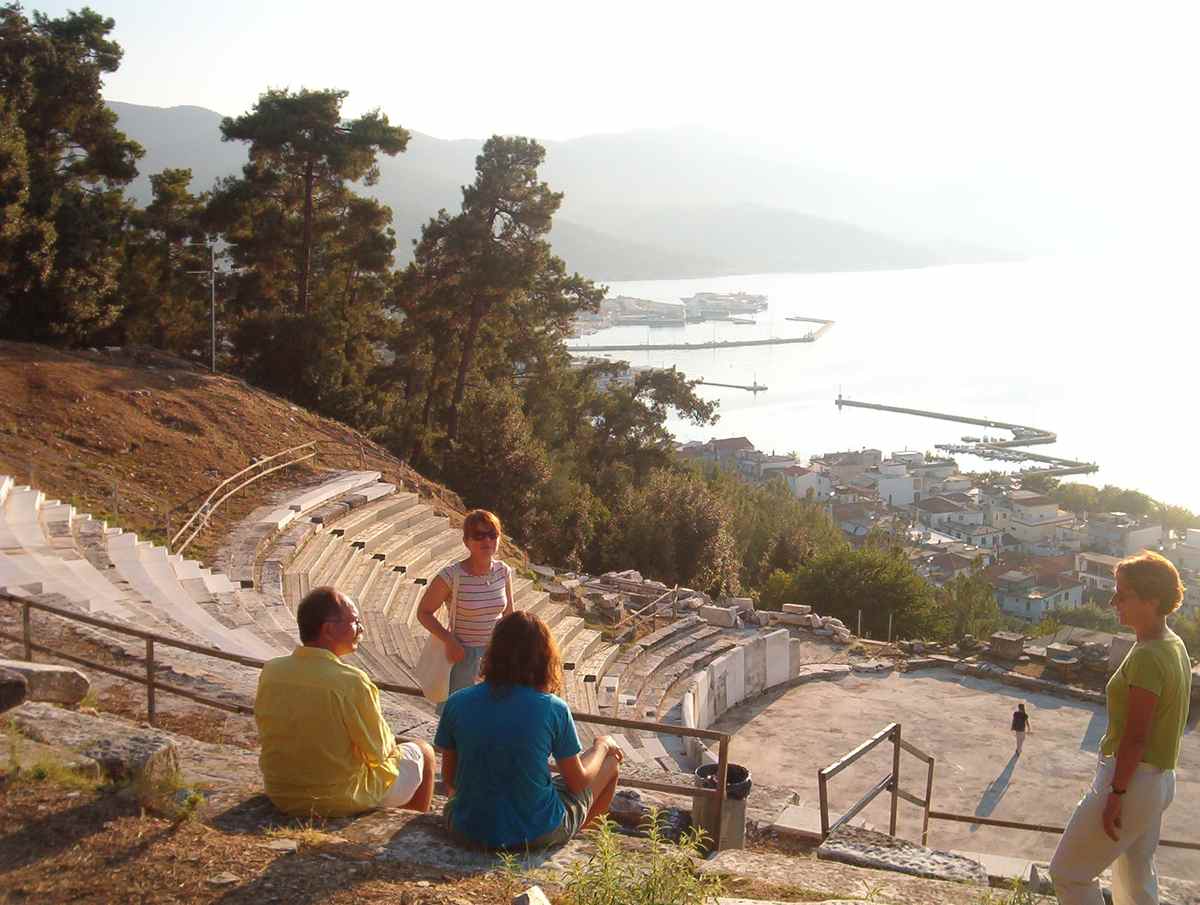
The Ancient Theatre of Thassos is cut into the north-east slope of the acropolis hill above Limenas, the main town and port of the island. Its semicircle of stone seats sits among pine woods and looks down over the sea and the harbour. Builders of the Hellenistic period first carved the tiers into the hillside. Roman engineers later remodelled the auditorium for public spectacles and raised a marble stage building. The theatre now stands within the archaeological zone of the ancient city, reached by a shaded path that climbs from the agora below. Restoration has brought drama and music back to the seats each summer. Travellers reach this hillside monument easily on a wider island tour with My Greece Tours.
The theatre repays the short climb with one of the widest views on the island, framed by pines and open to the water. Its history runs from a Greek performance space to a Roman arena for contests, cut into one green slope. The sections below cover what the theatre is, where it sits on the acropolis, how it was built and remodelled, how you reach it from the agora, what stands around it on the hill, how the summer festival uses the restored seats, and how to plan a visit. Each part links to the town, the museum and the boats below. Planning stays simple with the range of Thassos tours that take in Limenas and its ancient hill.
What is the Ancient Theatre of Thassos?
The Ancient Theatre of Thassos is an ancient open-air theatre cut into the north-east slope of the acropolis hill above Limenas, built in the Hellenistic period and later remodelled by the Romans for public spectacles.
A Greek theatre was an open-air auditorium where citizens gathered for drama, music and public festivals. The Ancient Theatre of Thassos filled that role on the north-east slope of the acropolis hill. Its builders used the natural fall of the ground to hold the tiers of seats. Spectators climbed to their places and looked down on the performing area and the sea beyond. The design gathered a whole community in one curved sweep of stone. The hillside setting spared the effort of raising a free-standing structure. This clever use of the slope gave the theatre both its shape and its wide outlook over the water.
Craftsmen of the Hellenistic period first cut the theatre into the hill. They shaped a semicircle of stone seats that faced down toward the harbour. The early auditorium served the Greek city as a place for plays and public gatherings. Rows of benches rose in tiers, divided by stairways for easy movement. The performing area lay at the foot of the curve, backed by a plain stage. Local marble, the stone that made the island rich, faced the seating banks. The whole work fitted the natural bowl of the slope. This first Greek phase set the plan that every later builder chose to keep.
Engineers of the Roman era reshaped the theatre for a new kind of show. They remodelled the auditorium and raised a marble stage building across the performing space. The arena then hosted spectacles that included gladiatorial fights and contests with wild animals. Barriers protected the front rows from the action below. Fresh masonry strengthened the old Greek seating for the larger crowds. The marble facade gave the stage a formal front onto the arena. This Roman conversion turned a quiet Greek performance space into an arena for the blood sports of the empire, a change still written in the stone.
What survives today is the excavated shell of that long history. The curved banks of seats climb the slope among tall pines, open to the sky. Foundations of the marble stage lie at the foot of the auditorium. Worn blocks and broken steps mark where the tiers once ran unbroken. The site forms part of the wider archaeological zone of the ancient city, fenced and cared for by the state. Wild herbs grow between the stones, and the sea glints below through the trees. This blend of ruin, woodland and sea view gives the theatre a quiet dignity that rewards a slow visit.
Where does the Ancient Theatre of Thassos sit on the acropolis hill?
The Ancient Theatre of Thassos sits on the north-east slope of the acropolis hill, directly above Limenas, set among pine woods, with its semicircle of seats looking down over the town, the harbour and the sea.
The theatre lies on the hillside directly above Limenas, the modern capital built over the ancient city. Its seats face north-east, angled down toward the old harbour and the strait beyond. Pine woods cloak the slope around the auditorium and frame every view from the tiers. The position catches the morning light off the water and a cooling breeze in summer. Spectators in ancient times looked past the stage to real ships in the port below. The same outlook greets visitors today, joining monument and living town in one glance. This close link between the theatre and the streets at sea level is one real pleasure of the climb.
The acropolis hill rises in green terraces behind the town, crowned with grey ancient stone. The theatre occupies a natural hollow partway up the north-east face. Above it stand the temples and sanctuaries of the summit, and below it spreads the civic centre by the shore. Ancient walls climb the slope on either side, linking every level of the old city. The hollow that holds the seats gives shelter from the wind while keeping the view open. Terraced ground steps down from the stage toward the town. This vertical order placed entertainment between the gods on the peak and the market at the water.
A wide panorama opens from the upper rows of the theatre. The harbour of Limenas lies almost directly below, its boats small against the blue. The strait between the island and the mainland fills the middle distance. On a clear day the mountains of the Greek coast rise beyond the water. Pine branches frame the scene and soften the strong summer light. Sunset turns the water gold behind the ruined stage. No other ancient theatre nearby commands a sea view this complete. This outlook was part of the ancient experience, and it remains the image most visitors carry away from the hill.
Massive ancient walls run across the slope near the theatre, part of the fortified circuit of the city. Built from large marble blocks fitted without mortar, they climb from the shore to the summit. Carved gates pierce the circuit at intervals, still bearing reliefs of gods. The theatre sits within this protected line, tied to the wider defences of ancient Thassos. Long stretches of wall stand to head height beside the path. They show how closely the city bound worship, defence and public spectacle on one hill. This ring of masonry frames the theatre as one element in a complete ancient landscape.
How was the theatre built and later remodelled for spectacles?
The theatre began as a Hellenistic Greek auditorium cut into the hillside. Roman builders later remodelled it and added a marble stage building, and the arena then hosted gladiatorial and animal spectacles for the crowds.
Greek builders shaped the first theatre by carving into the living slope of the hill. They cut curved terraces for the seating and faced them with dressed stone and marble. The natural bowl of the ground did the heavy work, holding the audience in a tight semicircle. Stairways divided the tiers into wedge-shaped blocks for easy access. A level performing space, the orchestra, lay at the foot of the seats. Behind it stood a plain stage structure for the actors. Local marble from the island quarries supplied most of the material. This economical method tied the building firmly to its hillside and gave it a lasting shape.
Roman engineers overhauled the theatre to suit the tastes of their age. They rebuilt and extended the seating to hold larger crowds for popular shows. A tall marble stage building rose across the back of the performing area, giving the arena a formal facade. The orchestra was adapted so that contests took place safely in view of every row. Protective barriers separated the audience from the action below. Solid Roman masonry reinforced the older Greek tiers. The marble facade would have gleamed above the sand of the arena floor. This remodelling kept the Greek plan while fitting it for the noisy spectacles the Romans loved.
Public spectacles filled the remodelled arena during the Roman era. Gladiators fought on the sand where Greek actors had once performed tragedy. Contests with wild animals drew crowds to the same curved seats. The shows reflected the culture of the empire, staged even in a small provincial city like Thassos. Spectators packed the tiers under the open sky, shaded only by the pines around them. The marble stage formed a tall backdrop to the action below. The roar of the crowd once carried down the slope to the town. This shift from drama to blood sport marks a real change in how the island used its theatre.
Most of the carved detail from the theatre has left the hillside for safe keeping. Sculpture, inscriptions and architectural fragments from the acropolis fill the galleries of the Archaeological Museum down in the town. Reliefs and statue pieces help scholars date the Greek and Roman phases of the building. The museum sets these finds beside objects from the agora and the sanctuaries nearby. Seeing the carved stone indoors, then the bare foundations on the hill, joins the two halves of the site. The gallery lies only a short walk from the foot of the path. This pairing lets you picture the marble stage complete, dressed in the sculpture now shown under cover below.
How do you reach the theatre from the Ancient Agora?
The theatre is reached on foot by a shaded path that climbs from the Ancient Agora in the town, passing up through the ancient acropolis walls and their carved gates to the seats on the slope.
The walk to the theatre begins at the Ancient Agora, the excavated civic square at the heart of the town. From the ruined stoas a marked path heads uphill toward the acropolis. The route leaves the flat ground of the square and rises into the pines within minutes. Signs and worn steps guide walkers onto the slope. The agora makes a natural starting point, since it gathers the main ruins of the lower city in one place. Visitors often tour the square first, then climb to the theatre above. This order, from market to auditorium, follows the same lines the ancient city was built on.
The path climbs through the ancient walls that ring the acropolis. Massive marble blocks form the circuit, pierced by gates that once controlled the way up. These gates carry carved reliefs of gods and guardian figures. Walkers pass directly beneath the old masonry as they ascend. The stretch through the walls gives a vivid sense of entering the fortified heart of the ancient city. Shade from the pines cools the steeper sections of the route. The climb is short but steep in places, rewarding steady effort. This passage through carved gates and towering walls sets the mood for the theatre above.
A steady walk from the agora to the theatre takes only a short time. Sturdy shoes help on the rough marble steps and the loose stone underfoot. The route gains height quickly, so a slow pace suits the warmer hours. Water and a hat make the summer climb more comfortable. Level spots along the way give reasons to pause and look back over the town. The path is clear and hard to lose, marked by signs and by the worn stone underfoot. This manageable climb puts the theatre within reach of most visitors, and the widening view repays the effort.
The theatre forms one stage of a longer walk across the acropolis. Beyond the seats the path continues upward toward the temples and the summit of the hill. From the top it drops down along the line of the ancient fortifications on the far side. Walkers loop from the agora, through the theatre, over the peak and back to the town. The full circuit takes in walls, gates, sanctuaries and wide sea views. Sound shoes and an early start suit the longer route in summer. This connected trail lets the theatre serve as a short goal or a stop on a fuller walk.
What can you see around the theatre on the acropolis hill?
Around the theatre stand the temples of the acropolis, a medieval fortress, and long stretches of ancient wall with carved gates, while the path climbs on to the summit and down along the old fortifications.
Ancient temples crown the higher ground above the theatre. Sanctuaries to the gods of the city stood on the summit terraces, set apart from the town below. Foundations, column bases and scattered marble mark where they rose. The climb from the seats to these shrines passes rock-cut steps and worn thresholds. Placing the gods on the heights raised worship above the daily life of the port. Little upstanding stone remains, yet the sacred plan of the summit still reads on the ground. The pines lend the ruins a calm, remote air. This chain of hilltop sanctuaries joins the gods on the peak to the theatre on the slope.
A medieval fortress stands on the acropolis, built long after the ancient city fell. Later rulers raised its walls from the ruins of the classical buildings around them. Reused ancient blocks appear throughout the fortress masonry, with old carving still visible on the stone. The stronghold guarded the height and the harbour through the medieval centuries. Its towers and curtain walls survive in part, weathered but clear against the sky. The contrast between Greek, Roman and medieval work on one hill tells a long story of reuse. This later castle shows how the acropolis stayed useful for defence long past the age of the theatre.
Long stretches of ancient wall wind across the slopes around the theatre. The circuit once ringed the whole acropolis and lower city with fitted marble blocks. Carved gates break the line at intervals, decorated with reliefs of protecting gods. Walkers follow the walls for long distances, tracing the edge of ancient Thassos. Towers and bastions strengthen the circuit at key points along the ridge. The scale of the masonry speaks of the wealth and skill of the ancient city. This great ring of defensive stone is among the most complete in the northern Aegean, framing the theatre within a whole fortified landscape.
The path climbs on past the theatre to the very top of the acropolis. From the summit the view opens over the whole town, the harbour and the sea lanes toward the mainland. The route then descends along the ancient fortifications on the seaward side of the hill. Walls, towers and gates line the way down through the pines. The loop rejoins the town near the old harbour, closing a full circuit of the ancient city. Wild herbs and sea breezes follow the walk in every season. This ascent and descent bind the theatre, the temples, the fortress and the walls into one continuous route.
How does the summer festival use the restored theatre?
Restoration has returned the theatre to use for live performances during the summer festival season, when drama and music fill the ancient stone seats under the open sky above the harbour of Limenas.
Restoration work has brought the ruined theatre back into use. Conservators stabilised the ancient seating and rebuilt parts of the tiers for safe access. Careful repairs respected the original Greek and Roman stone while making the auditorium fit for audiences again. The performing area was cleared and levelled for modern staging. Simple, reversible additions carry lighting and seating without harming the ruins. The result keeps the historic character of the theatre intact. Visitors now sit where ancient spectators once sat, on the same curved slope above the sea. This careful revival turned a quiet archaeological site into a living venue once more.
The restored theatre hosts performances through the summer festival season. Drama, concerts and cultural events fill the programme during the warm months. Audiences climb the same path the ancient citizens used, then take their places on the stone tiers. The open sky and the sea view form a backdrop no modern hall can match. Evening light and cooler air make the summer shows a real pleasure. The setting links each performance to the deep history of the place. This seasonal use gives the theatre a second life, drawing residents and visitors up the hill after dark to share old ground.
An evening at the theatre pairs well with the wider pleasures of Limenas. Visitors often spend the day on the water before a show on the hill after dark. Boats leave the harbour below for the coves and beaches along the coast. A relaxed day afloat on a Thassos boat trip fills the afternoon before the climb to the seats. The harbour that once held ancient trading ships now sends out pleasure craft each morning. Coming back to port in good time leaves an easy hour to reach the auditorium. This mix of sea by day and drama by night shows how the theatre still shapes a full day on Thassos.
Attending a performance calls for a little planning. Programmes for the summer season are published locally, and tickets sell through island outlets and online. The climb to the theatre is the same steep path used by daytime visitors, so sensible shoes help. A light layer guards against the cooler air once the sun drops behind the hill. Arriving before dusk allows time to enjoy the view before the show begins. Torches or phone lights ease the walk back down in the dark. This modest effort rewards the audience with a night of culture in a striking ancient venue above the harbour.
How do visitors explore the theatre and plan a trip?
Visitors climb the acropolis path from the town to walk the ruined theatre, combine it with the temples, fortress and walls above, and base themselves in Limenas within easy reach of the site.
The theatre lies within the open archaeological zone of the acropolis, reached on foot from the town. No gate blocks the hillside path, and the walk up forms part of the experience. Allow a good hour to climb, explore the seats and take in the view at an easy pace. Sturdy shoes suit the rough steps and loose stone on the slope. Early morning and late afternoon bring the best light and the coolest air. Shade from the pines helps, though water is wise in summer. This simple visit fits neatly into a morning or evening in Limenas, before the beaches draw you back down.
A full visit joins the theatre with the rest of the acropolis in one walk. The path links the ruined seats to the summit temples, the medieval fortress and the long ancient walls. Half a day covers the whole loop at a relaxed pace, with pauses for the views. Each monument lies within a short climb of the last along the marked route. The circuit tells the story of the hill from Greek sanctuary to medieval stronghold. Sound shoes and an early start make the longer walk comfortable in summer. This compact grouping of theatre, temples, castle and walls makes the acropolis of Thassos rewarding to explore on foot.
Staying in or near Limenas puts the theatre within easy reach. The town offers rooms, studios and small hotels a short walk from the foot of the acropolis path. Our guide to where to stay in Thassos compares the resorts and quieter villages around the island. A base in the capital suits travellers who want the theatre, the agora and the museum close at hand. Beach lovers often choose the south or west coast instead. Buses and hire cars link every corner of the island to the town. This choice of base lets you balance ancient sightseeing on the hill against sand and sea elsewhere.
The theatre rewards a slow, imaginative visit rather than a hurried glance. Picture the tiers full, the marble stage complete and the arena loud with a Roman crowd. The same seats once held Greek audiences watching quiet drama under the open sky. Sea light and pine shade fall across the stone as they did in ancient times. Reading the ruin with its long history in mind brings the bare slope to life. A guided tour of the town and hill adds the detail that unlabelled stones hide. This blend of open ruin, rich history and a rare sea view keeps the theatre central to any visit to Thassos.
Frequently Asked Questions
What is the Ancient Theatre of Thassos?
The Ancient Theatre of Thassos is an ancient open-air theatre cut into the north-east slope of the acropolis hill above Limenas. Built in the Hellenistic period and remodelled by the Romans, it hosted drama, music and later gladiatorial and animal spectacles. Its semicircle of stone seats looks down over the harbour, and restoration has returned it to use for summer performances.
Where is the Ancient Theatre of Thassos?
The theatre sits on the north-east slope of the acropolis hill, directly above Limenas, the main town and port of Thassos. Pine woods surround the seats, which look down over the harbour and the sea. It stands within the archaeological zone of the ancient city, reached on foot by a path that climbs from the agora in the town below.
How do you reach the Ancient Theatre of Thassos?
You reach the theatre on foot from the town. A marked path climbs from the Ancient Agora up through the ancient acropolis walls and their carved gates to the seats on the slope. The walk is short but steep in places, so sturdy shoes help. The route continues higher to the summit temples and the fortress above.
When can you see performances at the theatre?
Performances take place during the summer festival season, after the ancient auditorium was restored for modern use. Drama, music and cultural events fill the programme through the warmer months, staged on the historic stone seats under the open sky. Programmes and tickets are arranged locally, and audiences use the same steep path that daytime visitors climb.
What else can you see near the theatre?
Near the theatre stand the temples of the acropolis, a medieval fortress and long stretches of ancient wall pierced by carved gates. A path continues up to the summit and back down along the fortifications, making a full loop of the hill. The Archaeological Museum in the town holds the sculpture and finds recovered from the acropolis.
How long does a visit to the theatre take?
A visit to the theatre takes about an hour on foot, including the climb from the town and time on the seats. Combining it with the summit temples, the medieval fortress and the ancient walls fills about half a day. The whole acropolis loop lies within a short walk, so no transport is needed once you reach Limenas.