
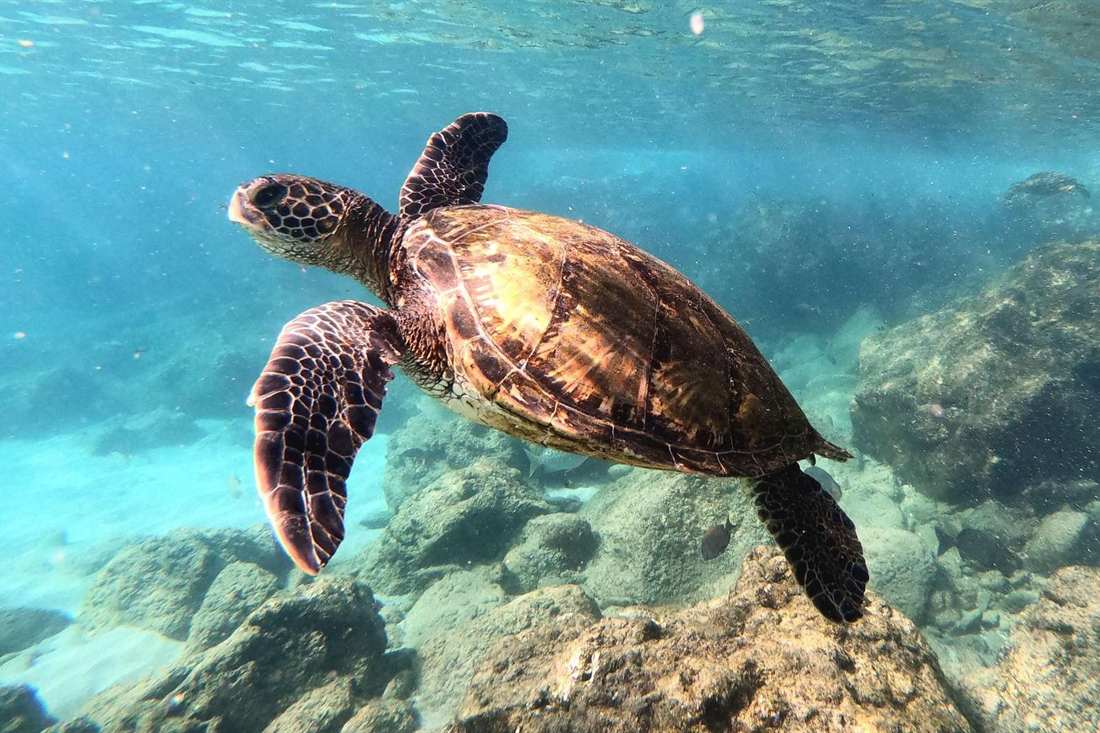
Paphos turtle watching puts wild green turtles and loggerheads in front of you, from a semi-submarine, a glass-bottom boat or a guided snorkel at the shore. Find more trip ideas on Greece Tours.
Below we cover the two species, the season, the trip types and the rules for watching turtles without harming them.
What is Paphos turtle watching?
Paphos turtle watching means looking for wild green turtles and loggerheads in the sea off Paphos. You watch from a cruise boat, a glass-bottom boat or a semi-submarine. A guided snorkel that starts at the shore also counts.
Two of the seven sea turtle species in the world live around Cyprus. Paphos turtle watching centres on the loggerhead and the green turtle. The Fisheries Department says their presence in Cyprus is part of their life cycle. They come to feed, mate and lay eggs.
The department calls the presence of both species proof of the good ecological condition of the island’s marine environment.
GetYourGuide lists five Paphos tours with turtles in the title. They are a sea scooter snorkel, a guided shore snorkel, a semi-submarine cruise, a sunset cruise and a swim cruise. Later sections compare them one by one.
Paphos turtle watching sits beside the wider list of Cyprus tours. That page covers jeep safaris, mountain villages and the other coasts. This page stays with the animals and the choice between trip types.
Which turtles does Paphos turtle watching show?
Paphos turtle watching shows two species: the green turtle (Chelonia mydas) and the loggerhead (Caretta caretta). Both nest in Cyprus. In the Mediterranean, the green turtle breeds almost only in Cyprus and Turkey.
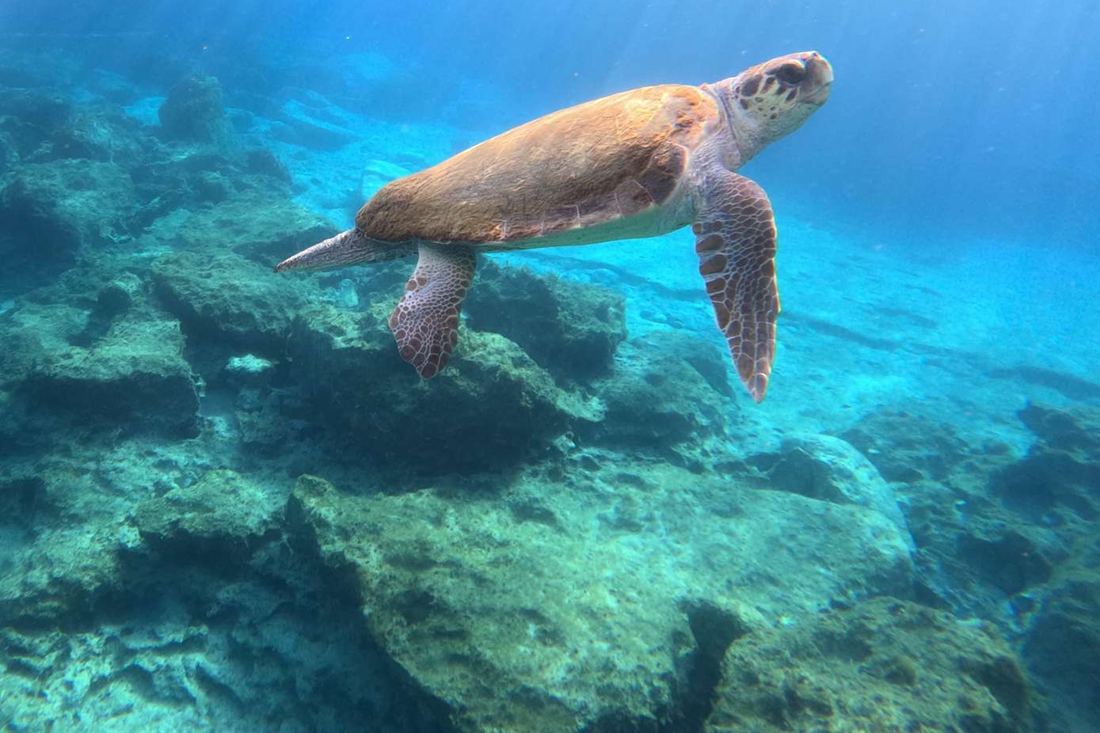
The Fisheries Department adds that loggerheads also lay eggs in Greece and, in smaller numbers, in other Mediterranean countries.
A Cyprus News Agency report classifies the loggerhead as vulnerable and the green turtle as endangered.
The same report says green turtles give birth mainly in the western region of Akamas. That peninsula lies north of Paphos.
The Associated Press reports that Cyprus began its turtle conservation programme long before any country in the European Union.
How do you tell a green turtle from a loggerhead on Paphos turtle watching trips?
Look at the head and the shell colour. A green turtle has a very short snout and an olive to black shell. A loggerhead has a large head and a yellow-orange to reddish-brown shell.
Wikipedia says a green turtle has a very short snout and an unhooked beak. An adult weighs 68 to 190 kilograms on average, and its shell measures 78 to 112 centimetres.
The shell of a mature green turtle is brown, spotted or marbled. Its front flippers carry a single claw.
The loggerhead takes its name from its large head. An adult averages about 135 kilograms, with a shell length of 70 to 95 centimetres.
Size does not separate the two, because the weight ranges overlap. Neither species can pull its head into its shell.
Adult males of both species have longer tails and claws than females. On a male green turtle the tail visibly extends past the shell.
What do turtles do underwater during Paphos turtle watching?
Adult green turtles graze on seagrass, and loggerheads hunt shellfish on the seabed. In routine activity both species dive for four to five minutes. They then surface to breathe for one to three seconds.
Wikipedia calls the green turtle the only aquatic turtle that eats only plants when fully grown. Hatchlings eat meat instead, so a young green turtle feeds differently from an adult.
Green turtles trim only the tops of the seagrass and leave the roots. Wikipedia says this helps the beds grow and shelters fish and crustaceans.
Loggerheads are omnivores. They feed mainly on bottom-dwelling invertebrates such as whelks, conchs and bivalves. Their large, powerful jaws crush the prey.
Because a turtle surfaces for only one to three seconds, the breath is easy to miss. A loggerhead spends up to 85 percent of the day submerged, and its average dive lasts 15 to 30 minutes. A green turtle swims at 2.5 to 3 kilometres an hour. At night, adult green turtles wedge themselves under rocks and ledges to sleep.
What time of day suits Paphos turtle watching?
Late afternoon suits Paphos turtle watching. Paphos Sea Lines says afternoon cruises offer chances to spot turtles emerging in search of food. The Atlantis turtle cruise leaves two hours before sunset.
Wikipedia notes that loggerheads, observed in captivity and in the wild, are active mainly in the day.
The Kingfisher glass-bottom boat lists three Paphos turtle watching departures a day, at 12:30, 15:00 and 16:30. That spread lets you pick a midday or a late-afternoon slot.
Paphos Sea Lines runs its yellow semi-submarine in three versions: a day-time, a pre-sunset and an evening sunset cruise. It lists turtle watching and an open bar on the pre-sunset and sunset trips.
The Atlantis cruise states its plan in one line. It lasts two hours and combines turtle watching, a shipwreck, a swim, snorkeling and the sunset.
Which months suit Paphos turtle watching?
Late spring to November suits Paphos turtle watching. Cyprus Bucketlist says its turtle trips operate from April. It names late spring to November as the strongest turtle season in Paphos.
The Fisheries Department dates the nesting season in Cyprus from late spring until the end of September. Females come ashore in those months.
Wikipedia adds that the Mediterranean is a nursery for young loggerheads. It is also a common place for adults in spring and summer. It gives water temperatures of 27 to 28 degrees Celsius as suitable for nesting females.
April is the earliest start named in the sources for this page. Ask your operator for its first sailing date before you plan Paphos turtle watching around a spring visit.
What do turtles do on the beaches near Paphos in summer?
Females crawl out of the sea at night to lay eggs, from late spring until mid-August. Hatching begins about seven weeks after laying. Baby turtles appear from July until the end of September or the first days of October.
The Fisheries Department says females come ashore on quiet, unlit beaches. Human presence can force a female to abandon her effort and lay her eggs in the sea, which destroys them.
MedTRACS runs the turtle programme for the department. It says a female lays every two to three years, in three to four clutches per season. Digging and covering a green turtle nest takes 60 to 90 minutes, according to Wikipedia. The eggs are round and white, about 45 millimetres across.
Green turtles start and finish nesting about two weeks after loggerheads, says a Fisheries Department officer. Nesting happens mainly on the west coast of Akamas and in Polis Chrysochou Bay.
The department moves nests from tourist beaches, mainly Coral Bay in Paphos, to its hatchery at Lara. Our Akamas tour page follows the Lara turtle beach on land. Paphos turtle watching trips watch the animals at sea.
How old are the turtles you meet on Paphos turtle watching trips?
Mature turtles are 15 years old or more. A loggerhead matures at 15 to 20 years and a green turtle at 25 to 30 years. The Fisheries Department says one or two hatchlings in every thousand live to come back to their birth beach.
A loggerhead hatchling measures about 4.6 centimetres and weighs about 20 grams. Hatchlings dig out together at night, says Wikipedia, so daytime Paphos turtle watching trips miss the emergence. They move towards light, and artificial light near a beach disorients them. Once in the sea, loggerhead hatchlings swim for about 20 hours.
Wikipedia describes natal homing: mature green turtles return to the beach where they hatched. Scientists told the Associated Press that the turtles come back to beaches their ancestors chose thousands of years ago. A thousand hatchlings produce one or two adults. Every adult on a Paphos turtle watching trip has survived long odds.
Nest temperature sets the sex. Wikipedia says loggerhead eggs held at 32 degrees Celsius become females. Eggs at 28 degrees become males, and 30 degrees gives an equal split.
A Fisheries Department officer gave the maturity ages above. The same officer says a loggerhead lays about 80 eggs per round. A green turtle lays about 120. The eggs incubate in the heat of the sun. Young green turtles then spend three to five years in the open ocean before they settle in shallow water.
How large is the nesting population behind Paphos turtle watching?
In one season the biologists of MedTRACS counted over 2,300 nests of both species. More than 300 were green turtle nests, mainly on the west coast of Akamas. That equals 100 or fewer nesting green females.
A nest is not a female. One female lays three to four clutches, so the nest count runs well above the number of mothers.
The Associated Press reports about 1,500 female green turtles that lay eggs in Cyprus and Turkey together. It puts the loggerhead females across the whole Mediterranean at about 6,000.
The same report says the beaches of Cyprus held just 300 nests when the conservation effort began. A Fisheries Department officer adds that foxes destroyed 80 percent of the nests when the project launched.
Simos Demetropoulos says the nest record keeps breaking. He adds that high numbers are not necessarily something to rely on. His colleague Angela Mastrogiacomo names the loss of breeding habitat as the major threat. She lists development, erosion, light pollution and more people on the beaches, mostly due to tourism.
Mastrogiacomo calls 100 nesting females not a big number for a sea the size of the Mediterranean. Special cages protect nests from people and from foxes, and the Fisheries Department assists the programme.
How does Paphos turtle watching compare with Zakynthos?
Zakynthos is the loggerhead capital of the Mediterranean, while Paphos turtle watching shows both loggerheads and green turtles. Wikipedia names Greece the top Mediterranean nesting country, with more than 3,000 nests a year, and Zakynthos its largest site.
Wikipedia ranks Kyparissia Bay second after Zakynthos. It adds that the coasts of Cyprus and Turkey are also common nesting sites.
Greek authorities do not allow planes to take off or land at night on Zakynthos because of the nesting turtles.
For scale, Wikipedia gives Florida more than 67,000 loggerhead nests a year and Oman about 15,000.
The Greek island centres on one species, the loggerhead. Our Zakynthos sea turtles page covers its marine park, while Paphos turtle watching gives you a chance at two species.
Which Paphos turtle watching trips can you book?
GetYourGuide lists five Paphos turtle watching trips by name. They are a sea scooter snorkel, a guided shore snorkel, a semi-submarine cruise, a sunset cruise and a swim cruise. Glass-bottom boats add a sixth format.
- Sea scooter snorkel that starts from the shore
- Guided turtle snorkel from the shore, with GoPro videos
- Semi-submarine cruise with an underwater turtle viewing area
- Sunset cruise with turtle watching and an open bar
- Swim cruise with turtle watching, plus drinks and an Aperol spritz
- Glass-bottom boat with a turtle watching and Blue Lagoon route
Two Paphos turtle watching formats put you in the water from the beach. Three formats keep you on a boat with a swim stop. The glass-bottom boat keeps you on deck and looking down.
Each format has its own section below. The facts come from the operators and from the GetYourGuide listings.
What happens on a Paphos turtle watching snorkel from the shore?
A Paphos turtle watching snorkel starts with a short safety briefing, and you enter the sea directly from the shore. Guides supply the snorkel gear and stay in the water with the group. Cyprus Bucketlist puts the time in the water at about one hour to one hour 15 minutes.
The sea scooter version adds shared scooters that let swimmers glide through the water. Floating noodles are available for extra support.
Cyprus Bucketlist says turtles naturally come close to the coastline to feed and rest, so the trip needs no boat. The guides share information about the turtles and the local underwater environment.
The Paphos turtle watching snorkel gives guests free GoPro photos. The GetYourGuide listing for the same tour promises free turtle photos.
The second shore trip on GetYourGuide is a guided turtle snorkel with GoPro videos. Its listing says guests swim with sea turtles from the shore with a guide.
How does a semi-submarine Paphos turtle watching cruise work?
A semi-submarine has an underwater viewing chamber. On Paphos turtle watching cruises, passengers watch marine life through a glass cabin without getting wet. Paphos Sea Lines describes its yellow boat this way.
The Atlantis boat calls its cabin an underwater observation room. Its operator names turtles, stingrays and other marine life as the animals to watch from it.
The GetYourGuide turtle cruise listing describes a semi-submarine tour with an underwater turtle viewing area. It adds a swim and a snorkel in the sea.
The same listing claims a 99 percent success rate for spotting turtles. That figure is the operator’s own claim.
On the Paphos Sea Lines boat, the crew shares insights about the turtles’ life cycle, migration patterns and conservation efforts. Those insights turn the cruise into a short talk on the animals.
How do the sunset and swim turtle cruises differ?
The sunset cruise adds a 20-minute swim stop and an open bar with beer, wine and soft drinks. The swim cruise adds a 30-minute swim stop at Atlantis Beach and unlimited drinks with an Aperol spritz. Both Paphos turtle watching cruises pass the Vera K shipwreck.
On the GetYourGuide sunset cruise, guests visit the Vera K shipwreck and go in search of turtles. The swim lasts 20 minutes, and the drinks are unlimited beer, wine and soft drinks.
On the swim cruise, guests spot turtles and see the Vera K shipwreck from the underwater cabin. The swim stop lasts 30 minutes at Atlantis Beach.
Paphos Sea Lines lists swim stops at Pirate Cove and Atlantis Beach on its yellow semi-submarine cruises. It also sells a 2-hour afternoon cruise with a 30-minute swim stop at Atlantis Beach.
Pick the swim cruise for the longer swim. Pick the sunset cruise for evening light on your Paphos turtle watching trip.
Can a glass-bottom boat show Paphos turtle watching?
Yes, the Kingfisher glass-bottom boat is advertised as a turtle watching and Blue Lagoon trip. Its skipper is a master diver who explains the local marine life. The boat carries a maximum of 25 people.
The route starts with a 20-minute ride to a shipwreck. The boat then passes the Moulia Reef, where the water is as clear as the Blue Lagoon. It ends at the local Blue Lagoon for a swim.
Kingfisher says its glass is magnified, so you see more clearly than on other boats. It also calls its boat the newest glass-bottom boat in Paphos and says it stays steadier in rough seas. Those are the operator’s own claims.
Kingfisher also claims to be the only glass-bottom boat inside the Blue Lagoon barrier. It gives the depth there as only 1.5 metres.
A glass-bottom boat looks down at the sea floor from deck. Our Paphos boat trip page compares the glass-bottom boats in Paphos harbour in full. The Viator cards below list glass-bottom trips from Paphos.


Which Paphos turtle watching trip suits you?
Confident swimmers suit the shore snorkels, and anyone who wants to stay dry suits the semi-submarine. Cyprus Bucketlist designs its trip for good, confident swimmers. Paphos Sea Lines calls its semi-submarine suitable for all ages.
Pick a shore snorkel for Paphos turtle watching if you swim well. Cyprus Bucketlist says the swim can cover a distance, depending on where the turtles are on the day.
Pick the semi-submarine if you want to watch from a cabin. Pick a sunset or swim cruise if you want drinks and a swim stop in the same two hours.
Pick a glass-bottom boat for a shorter Paphos turtle watching trip with a skipper who explains the marine life. Each format shows turtles from a different angle. You swim beside them, watch through a glass cabin or look down through the hull.
How long do Paphos turtle watching trips last, and where do they start?
The sea scooter snorkel lasts three to four hours, the guided GoPro snorkel four hours and the cruises two hours. The glass-bottom boat takes about one and a half hours. The boats leave Paphos harbour.
For Paphos turtle watching trips, GetYourGuide lists 3 to 4 hours for the sea scooter trip. The guided snorkel with GoPro videos lasts 4 hours. The semi-submarine cruise, the sunset cruise and the swim cruise each last 2 hours.
Kingfisher says its glass-bottom journey takes about one and a half hours and leaves from pier one of Paphos harbour. The Atlantis cruise departs the second pier.
GetYourGuide lists pickup for the sea scooter trip. Check the start point on your voucher, because the pier names above come from the operators’ own sites.
How do you book Paphos turtle watching?
Book through each trip’s listing. GetYourGuide sets cut-offs. Book at least 10 hours ahead for the sea scooter trip. The GoPro snorkel needs 2 hours and the semi-submarine cruise 30 minutes.
The listings for these Paphos turtle watching trips offer free cancellation. Cyprus Bucketlist refunds in full a booking cancelled a day or more ahead of the tour.
The Cyprus Bucketlist trip includes the guide, the snorkel equipment, use of sea scooters, seasonal fruit and bottled water. It also includes transport from the meeting point.
Our Paphos snorkeling page covers shore swims, wrecks and gear for travellers who want to snorkel without a guided trip.
How do you do Paphos turtle watching without harming turtles?
Keep your distance and never feed or chase turtles. The Fisheries Department bans harassment, including offering food to lure turtles for photos. It says to let the animals decide how close they want you to be.
Three groups published a handbook: Enalia Physis, SPOT Marine Life and the IUCN Centre for Mediterranean Cooperation. It sets a minimum distance of 100 metres from sea turtles. Boats slow to a maximum of 5 to 6 knots within 300 metres.
The handbook tells boats to keep engines in neutral if animals approach. It says never to chase, surround, touch, feed or swim directly with wildlife.
The Fisheries Department adds that if a turtle shows sudden movements, you stop your approach and move away. Breaking the harassment law carries up to three years in prison, a fine or both. Cyprus has protected sea turtles and their eggs by law for more than fifty years.
The Green Party reported a turtle caught in the engine of a boat on a tour in the Famagusta region. It called for cruises to stop touring where turtles are present. The biologist Simos Demetropoulos puts it simply: turtles do not want to see us. Ask the crew of any Paphos turtle watching boat how close it goes.
What do travellers ask about Paphos turtle watching?
Are turtle sightings guaranteed on a Paphos turtle watching trip?
No Paphos turtle watching sighting is guaranteed. Cyprus Bucketlist says finding the turtles is part of the adventure. They are wild animals that move freely, so every trip is different.
Which languages do Paphos turtle watching guides speak?
Cyprus Bucketlist lists English and Greek for its snorkel trip. Kingfisher says its glass-bottom crew speaks English, Russian, Greek and German.
What do you do if you find an injured turtle?
Call the Fisheries and Marine Research Department. Cyprus Mail lists the Paphos office at 26 821 680 for office hours and 99 48 96 42 outside them.
Can you see hatchlings on a Paphos turtle watching trip?
Not on a boat or snorkel trip, because these trips watch turtles in the sea. Hatchlings emerge on nesting beaches. The Associated Press reported a group hatching on Lara Beach on a late afternoon in August.
Can you book a private Paphos turtle watching trip?
Yes. GetYourGuide lists a private option for the sea scooter trip. Kingfisher offers private trips and charters on its glass-bottom boat.
Why do turtles look as if they are crying?
Glands behind each eye remove the excess salt from the sea water the turtle swallows. Wikipedia says this gives the false impression that a loggerhead is crying when it is on land.