
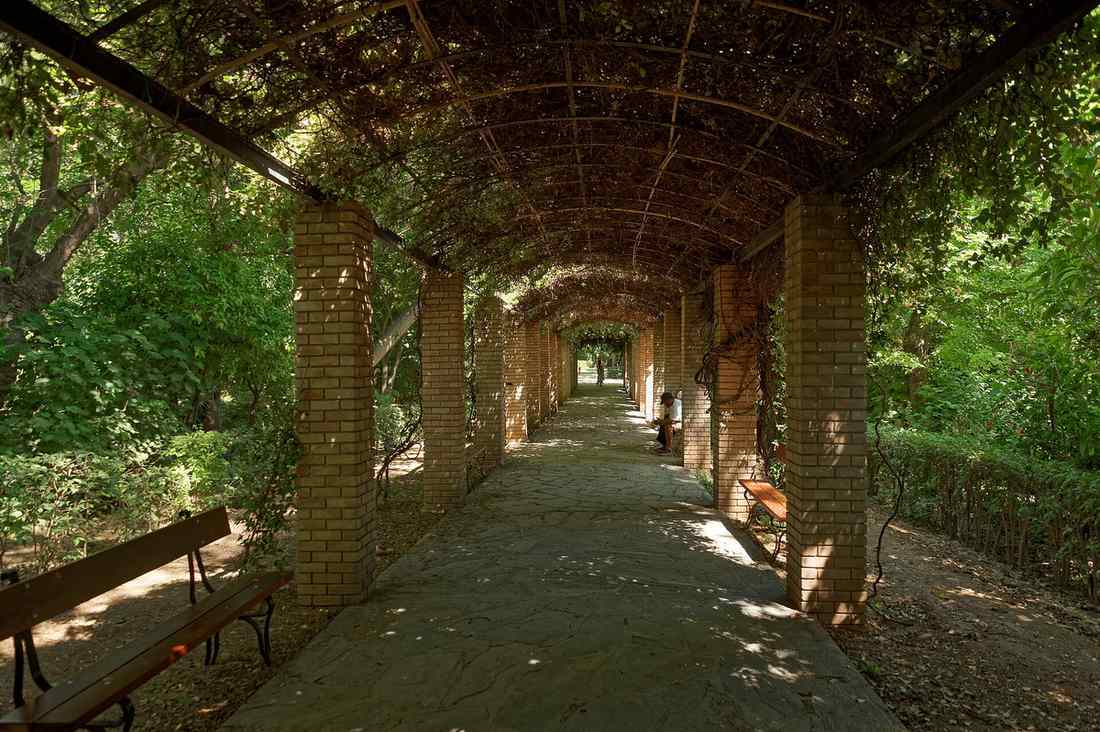
The National Garden of Athens is a free, leafy 24-hectare park beside Syntagma Square and Parliament, with shaded paths, a duck lake, a small zoo, ancient ruins and the elegant Zappeion Hall. Combine a stroll here with skip-the-line sightseeing tickets and central tours from My Greece Tours on your Athens day. Plan the whole trip with Greece Tours.
This green oasis is a restful highlight of the Athens travel guide. The sections below cover what it is, its history, what to see, the Zappeion, children’s attractions, opening hours and how to get there.
What is the National Garden of Athens?
The National Garden is a tranquil 24-hectare public park in the centre of Athens, immediately behind Syntagma Square and the Greek Parliament. Home to over 500 plant species, shaded paths, ponds, ancient ruins, a small zoo and a botanical museum, it was originally the royal garden and offers a peaceful, free escape from the surrounding city.
In the busy heart of the capital, the National Garden provides a cool, green refuge that feels worlds away from the traffic just beyond its hedges. Covering around 24 hectares directly behind the Greek Parliament on Syntagma Square, it is the largest green space in central Athens and a much-loved retreat for residents and visitors alike. Within its bounds wind shaded gravel paths beneath a dense canopy of trees, past ponds, fountains, sub-tropical plantings and quiet corners, sheltering more than five hundred species of plants from around the world along with ducks, turtles, peacocks and other animals. Scattered through the greenery are unexpected treasures: fragments of ancient Roman ruins, classical columns and mosaics, busts of Greek poets and statesmen, a small zoo, a botanical museum and a children’s library.
Originally created in the nineteenth century as the private garden of the royal palace, it was later opened to the public and remains free to enter. For anyone needing a break from sightseeing, a shaded bench here, the sound of birdsong and a stroll among the trees is the perfect antidote to the city. It sits right beside the square in the Syntagma Square guide. Its origins lie with Greek royalty.
What is the history of the National Garden?
The National Garden was created in the late 1830s as the private Royal Garden of Queen Amalia, the first queen of modern Greece, beside the new royal palace that is now Parliament. Amalia personally oversaw its design, importing thousands of plants from around the world. It opened to the public and was renamed the National Garden.
The garden’s elegant layout and rich planting are the legacy of one determined royal gardener. Soon after Athens became the capital of the newly independent Greek state, the young Bavarian-born Queen Amalia, wife of King Otto, set about creating a grand garden beside the new royal palace, the building that today houses the Greek Parliament. Through the late 1830s and 1840s she devoted herself personally to the project, directing its design and importing tens of thousands of plants and seeds from across Greece and around the world, including the rare palms that still line the main entrance on Amalias Avenue, which she is said to have planted herself.
For decades it remained the private Royal Garden of the palace, a secluded retreat for the monarchy. After the monarchy’s fortunes changed, the garden was opened to the public and renamed the National Garden, becoming the shared green heart of the city it remains today. This royal heritage explains its formal walks, its exotic species and the antique columns and sculptures dotted among the greenery. Knowing its origins adds depth to a stroll beneath its old trees. The era is also reflected in the collections of the Benaki Museum. The garden’s features reward exploration.
What can you see in the National Garden?
Highlights of the National Garden include the central duck pond with its waterfowl, the small turtle island, the avenue of palm trees planted by Queen Amalia, ancient Roman ruins and mosaics, busts of Greek poets and statesmen, a sundial, a small zoo, a botanical museum, a children’s library and a peaceful café among the trees.
Wandering the National Garden is a series of small, pleasant discoveries hidden among the greenery. At its heart lies the tranquil central pond, surrounded by lush planting and alive with ducks, swans and other waterfowl, beside the much-loved little turtle island where a colony of tortoises basks in the sun. The grand main entrance on Amalias Avenue opens through a stately avenue of towering Washingtonia palms, the trees associated with Queen Amalia, setting the tone for the formal walks beyond. Scattered through the paths are genuine antiquities, including a Roman floor mosaic and column fragments uncovered within the garden, along with busts and statues of Greek poets, politicians and historical figures that turn a walk into a quiet open-air gallery.
Children and families enjoy the small zoo, with its goats, peacocks and birds, while plant lovers can visit the botanical museum housed in a historic building. There is also a sundial, several fountains, a children’s library and a relaxed open-air café where you can pause for a coffee in the shade. Each turn of the path brings something new, making the garden far more than a simple park. The royal-era statuary echoes the monuments around the city. The Zappeion crowns its southern end.
What is the Zappeion Hall?
The Zappeion is a grand neoclassical hall at the southern edge of the National Garden, built in the 1870s and 1880s as a venue for the revived Olympic Games and now used for conferences, exhibitions and state events. Its elegant semicircular courtyard, gardens and statues effectively extend the park, and it sits near the Panathenaic Stadium and Temple of Olympian Zeus.
At the garden’s southern end stands one of the finest neoclassical buildings in Athens, the elegant Zappeion Hall, effectively a continuation of the park. Built between the 1870s and 1888 and funded by the national benefactors Evangelos and Konstantinos Zappas, it was conceived to support the revival of the Olympic Games and played a role in the first modern Olympics of 1896, later hosting fencing events at the 1896 Games and serving as a press and administrative centre at the Athens Olympics. Designed by the architect Theophil Hansen, the building is famed for its graceful semicircular peristyle courtyard ringed with columns, and today it functions as a prestigious venue for conferences, exhibitions, ceremonies and state occasions, including European Union events.
The landscaped grounds around it, dotted with statues recalling Greek history and mythology, marble walks and a charming café, flow seamlessly out of the National Garden, so a stroll through the park naturally leads to the Zappeion’s stately façade. From here it is only a short walk to the Panathenaic Stadium and the Temple of Olympian Zeus. The building and its gardens make a dignified, photogenic finale to a garden walk. The Olympic story continues in the Panathenaic Stadium guide. Families find plenty here too.
Is the National Garden good for families and children?
Yes, the National Garden is excellent for families, with a small zoo of goats, peacocks and birds, the popular turtle island and duck pond, a children’s playground, a children’s library and shaded space to run and picnic. It offers a free, safe, green break from sightseeing where children can enjoy nature in the city centre.
For families travelling with children, the National Garden is a genuine lifesaver in the middle of a sightseeing-heavy city, offering free, shaded space and plenty to delight younger visitors. Children are drawn first to the animals: the small zoo within the garden keeps wild goats, peacocks, chickens, ducks and other birds, while the central pond and its beloved turtle island let little ones watch waterfowl and tortoises at close range. There is a playground for burning off energy, and a long-established children’s library that has introduced generations of young Athenians to books in a leafy setting. The cool, car-free paths give kids room to walk, run and explore safely, away from the city traffic, and the shady benches and grassy corners are perfect for a rest or a picnic on a hot day.
Combined with the nearby café for ice cream or a drink, this makes the garden an ideal mid-day pause between visits to the Acropolis, the museums and Syntagma. Parents appreciate that it is free, central and genuinely relaxing. For a family day in Athens, it is one of the most useful green spaces in the centre. More family ideas appear in the Athens with kids guide. Planning a visit is easy.
What are the National Garden’s hours, and how do you get there?
The National Garden is free and open daily from sunrise to sunset. Its main entrance is on Amalias Avenue, a short walk from Syntagma metro station on lines 2 and 3 and the airport line. Other entrances lie on Vasilissis Sofias Avenue, by the Zappeion and near the Panathenaic Stadium, so it is very easy to reach on foot.
Visiting the National Garden could hardly be simpler, and it costs nothing. The park is open to the public every day from sunrise to sunset, with no admission fee, so you can drop in whenever you pass, though the gates close at dusk for safety. There are several entrances around its perimeter: the grand main gate stands on Amalias Avenue, the side most visitors use, while further entrances open from Vasilissis Sofias Avenue to the north, beside the Zappeion to the south, and near Herodou Attikou street by the Presidential Mansion and the Panathenaic Stadium, letting you enter and exit close to whichever sights you are combining it with.
The garden is exceptionally central and easy to reach: Syntagma metro station, served by lines 2 and 3 as well as the direct airport line, is only a short walk from the main entrance, and many buses and trolleybuses stop nearby. Because it adjoins Syntagma Square, the Zappeion, the Temple of Olympian Zeus and the Panathenaic Stadium, it slots naturally into a central walking route. For the best experience, visit in the morning or late afternoon when it is cooler and quieter. The wider network is explained in the getting around Athens guide. The questions below cover the points visitors ask most.
Frequently Asked Questions
Is the National Garden of Athens free?
Yes, the National Garden of Athens is completely free to enter, open daily from sunrise to sunset. There is no ticket or admission charge to walk its shaded paths, see the duck pond, turtle island, small zoo and ancient ruins, or visit the botanical museum and children’s library within the park.
What is there to see in the National Garden?
The National Garden has shaded walking paths, a central duck pond, a turtle island, an avenue of palm trees, ancient Roman ruins and mosaics, busts of Greek poets and statesmen, a small zoo, a children’s library, a botanical museum, a playground and a café, plus the elegant Zappeion Hall at its southern edge.
How do you get to the National Garden in Athens?
The National Garden is right beside Syntagma Square, so the easiest way is to walk a few minutes from Syntagma metro station on lines 2 and 3 or the airport line. The main entrance is on Amalias Avenue, with further entrances on Vasilissis Sofias Avenue and near the Zappeion and Panathenaic Stadium.