
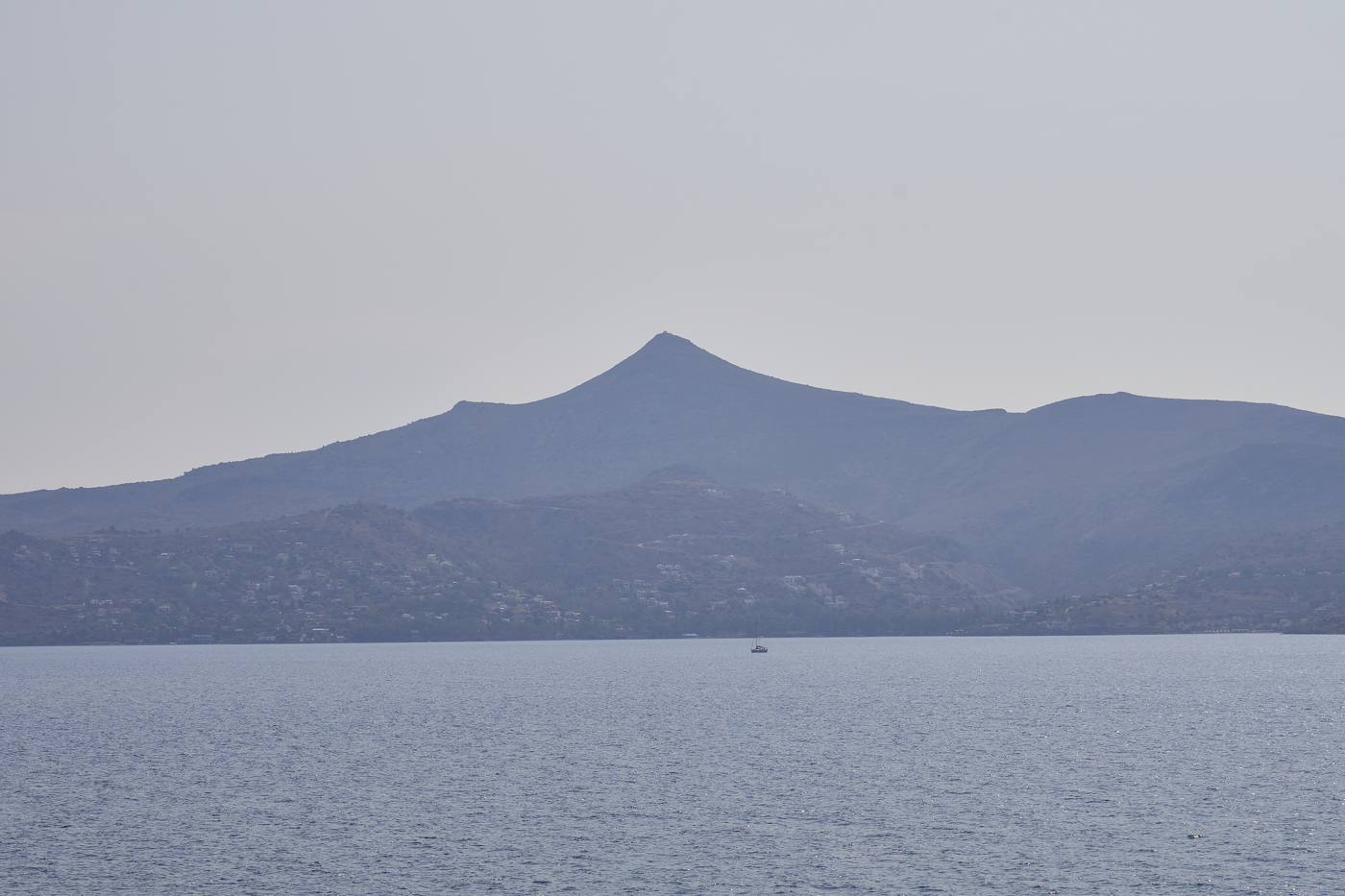
Mount Oros, also known as Ellanio, is the highest peak on Aegina and in the whole Saronic Gulf, rising to 532 metres in the south of the island. As well as being a natural landmark, it is a place of deep history: its summit was an ancient sanctuary of Zeus. The remains of the Temple of Ellanios Zeus still crown the peak. Reaching the top on foot is a rewarding hike, rewarded by spectacular panoramic views over the whole of Aegina, the neighbouring islands and across to Piraeus and the mainland. For walkers and lovers of history and nature, Mount Oros is one of the island’s most memorable experiences. Plan the whole trip with Greece Tours.
This guide covers Mount Oros on Aegina: what it is, how high it stands and where it lies, its ancient sanctuary of Zeus. What the hike to the summit is like, the views from the top, its volcanic geology. How to visit the peak.
What is Mount Oros on Aegina?
Mount Oros, also called Ellanio, is the highest mountain on Aegina and the tallest peak in the Saronic Gulf, at 532 metres.
Mount Oros is the great peak of Aegina, dominating the southern part of the island. At 532 metres it is not only the highest point on Aegina but the highest in the entire Saronic Gulf, making it a prominent landmark visible from far around.
The mountain has great historical and religious significance, having served in antiquity as a sanctuary of Zeus, whose worship was centred on its summit. This blend of nature and ancient history makes Oros a compelling destination for visitors.
How high is Mount Oros and where is it?
Mount Oros stands 532 metres high, making it the tallest peak in the Saronic Gulf.
At 532 metres, Mount Oros towers over the rest of Aegina and the neighbouring islands. Its rounded summit is a familiar sight from the sea and from Athens across the water.
It rises in the south of the island, above villages such as Sfendouri and Pachia Rachi. Its slopes and paths can be approached from this side. Making the peak accessible to walkers setting out to reach the top.
What is the Temple of Ellanios Zeus on Mount Oros?
The summit of Mount Oros was an ancient sanctuary of Ellanios Zeus, one of the most important religious sites on Aegina.
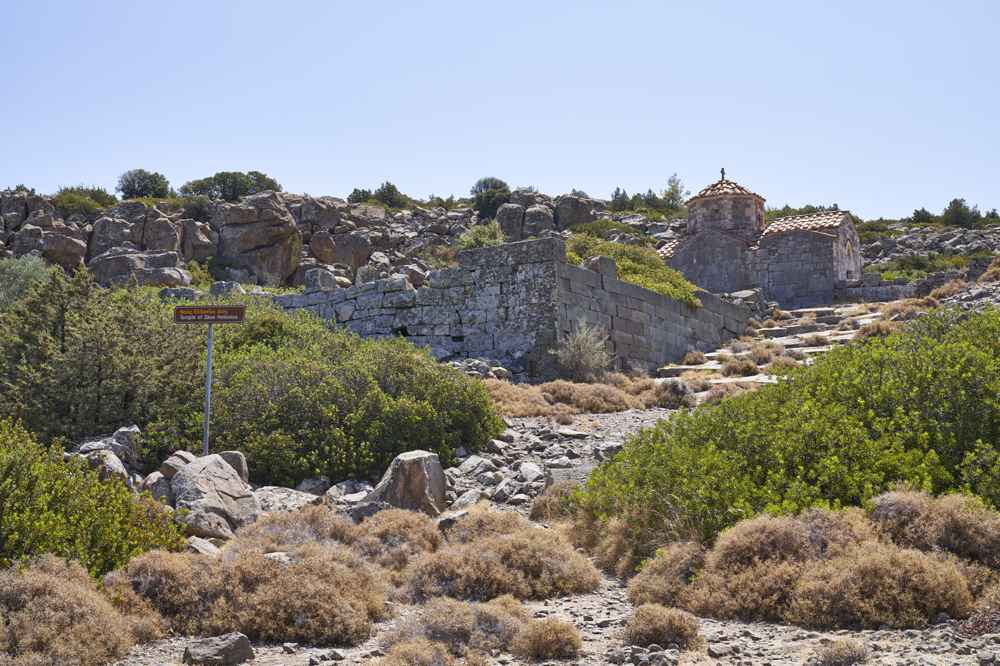
In antiquity the peak of Oros was crowned by the Temple and Altar of Ellanios Zeus. A sanctuary where Zeus was worshipped and, according to ancient writers, an important religious site of the Greek world.
The visible remains include a section of Hellenistic wall and a broad stone staircase leading towards the summit, evocative traces of this ancient cult. For more on the island’s ancient past, see our guide to Aegina’s history.
Can you hike Mount Oros on Aegina?
Yes, you can hike Mount Oros. The climb to the summit takes around an hour and is of moderate difficulty, on a narrow, rocky and uneven path, so good footwear is needed.
Reaching the top of Oros is a rewarding walk. The final climb to the summit takes roughly an hour and requires a reasonable level of fitness. Following a path that is narrow, steep in places, rocky and often thorny. Sturdy boots and long trousers are recommended.
For those wanting a longer outing, a fuller circular hike around the mountain of hours is also possible. Giving a more extended day in this wild, scenic part of the island, well away from the beaches and resorts.
What are the views from the summit of Mount Oros?
The views from the summit of Mount Oros are spectacular.
From the top of Oros the panorama is magnificent. Being the highest peak around, it offers sweeping views over the entire island of Aegina, its coastline and villages laid out beneath you.
Beyond the island, the view stretches across the Saronic Gulf to the surrounding islands and to Piraeus and Athens on the mainland. On a clear day the reward for the climb is one of the finest outlooks in the region.
What is the geology and nature of Mount Oros like?
Mount Oros is volcanic in origin, formed by volcanism two to three million years ago, and is a striking example of igneous terrain near Athens.
Mount Oros owes its existence to the volcanic geology of Aegina. Having been formed by volcanic activity two to three million years ago. It stands as a notable example of igneous rock terrain within easy reach of Athens.
Its slopes are rugged, rocky and covered in low, thorny scrub and wild plants, giving the mountain a wild. Natural feel that contrasts with the gentler, greener parts of the island and its beaches.
How do you visit Mount Oros?
You reach Mount Oros from the south of Aegina, near villages such as Sfendouri and Pachia Rachi, from where paths lead up to the summit.
The mountain is approached from the southern part of the island, near the villages of Sfendouri and Pachia Rachi. Which are reached by car or scooter from Aegina Town. From where walking paths climb towards the peak.
Exposed terrain, it is important to come prepared with sturdy boots, ample water and sun protection. To start earlier in the day, especially in summer. Well prepared, the ascent of Oros is one of the most rewarding of the island’s things to do.
Frequently Asked Questions
How high is Mount Oros on Aegina?
Mount Oros stands 532 metres high, which makes it not only the highest point on the island of Aegina but the tallest peak in the entire Saronic Gulf. Rising in the southern part of the island, it dominates the surrounding landscape and is visible from most of Aegina. From the neighbouring islands. From the sea and mainland around, including Piraeus and Athens. Its considerable height, in an area otherwise made up of lower hills and coast. Is a large part of what makes the mountain such a landmark and its summit such a rewarding place to reach. From the top, the elevation gives sweeping panoramic views in every direction across the gulf.
The mountain is also known by the name Ellanio. Its summit carries the remains of an ancient sanctuary of Zeus. Adding historical importance to its natural prominence as the roof of the Saronic Gulf.
Is the hike up Mount Oros difficult?
The hike up Mount Oros is of moderate difficulty rather than extremely hard, but it does require a reasonable level of fitness and care. The final climb to the 532-metre summit takes around an hour, following a path that is narrow, steep in places, rocky. Uneven and often thorny. It is important to wear sturdy walking boots and long trousers to protect against the rough terrain and scrub. The slopes are exposed with little shade, so ample water, sun protection and an early start, especially in summer, are strongly advised. For keener walkers, a longer circular route around the mountain of hours is also possible.
The climb is well within the reach of reasonably fit walkers. The spectacular panoramic views from the top over the whole of Aegina, the Saronic islands and across to the mainland make it thoroughly worthwhile.
Why was Mount Oros important in ancient times?
Mount Oros was important in ancient times chiefly as a sacred place, being the site of a sanctuary of Ellanios Zeus on its summit. Zeus was worshipped here, and ancient writers regarded it as a significant religious site. With a temple and altar dedicated to the god crowning the highest peak in the Saronic Gulf. The choice of location was fitting, as mountain-top sanctuaries dedicated to Zeus, the sky god. Were common in the ancient Greek world. No setting be more commanding than the roof of the island with its views over the whole region.
Visitors who make the climb can still see evocative remains from this ancient cult, including a section of wall dating from the Hellenistic period and a wide stone staircase leading towards the summit. These traces, set amid the wild landscape at the summit, connect the hiker directly with the religious life of ancient Aegina.