
Choosing between Milos and Nisyros pits two volcanic islands against each other, one a beach-rich Cycladic favourite, the other a small Dodecanese island with a living crater. Plan island tours and tickets through My Greece Tours.
This comparison is a common question in the Milos travel guide. The sections below compare the landscapes, the beaches, the vibe, the access and which island suits you best.
Which is better, Milos or Nisyros?
Milos is better for dramatic beaches, boat trips and a full island holiday, while Nisyros is better for its active volcanic crater, lush greenery and a quiet, authentic feel.
Both islands are volcanic. Milos shows an ancient volcano. Nisyros shows a living one. The story splits them.
Pick Milos for the coast. Coloured coves and caves define it. Boat trips fill the days. The beaches dazzle.
Pick Nisyros for the crater. A caldera floor opens up. Steam vents hiss. The volcano breathes.
Both reward the curious. Milos sells beaches. Nisyros sells the crater. Scale splits them.
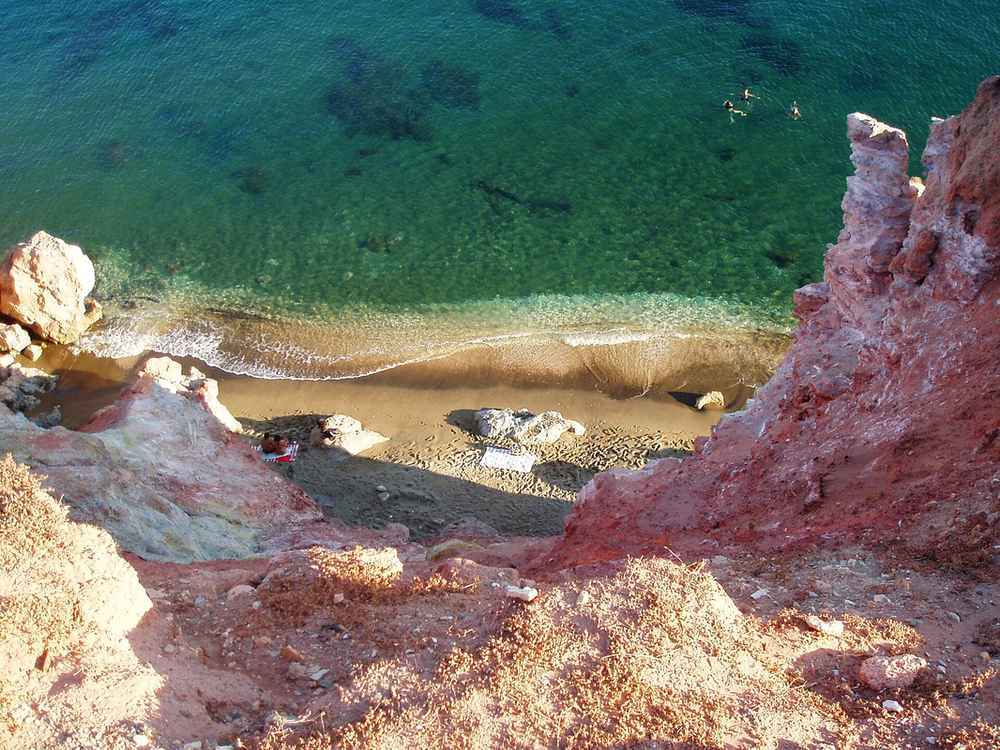
Milos and Nisyros share a volcanic heart but express it very differently. Milos, in the western Cyclades, is a large, beach-rich island where an ancient volcano has left a legacy of coloured cliffs, white moonscapes, sea caves and hot springs, all framing dozens of dramatic beaches and boat trips. It is a full holiday island built around its spectacular coast.
Nisyros, a small island in the Dodecanese, is one of the few places in Greece with a still-active volcano you can walk right into, descending onto the floor of its hydrothermal craters among hissing steam vents and the smell of sulphur. Green, quiet and little-visited, it is an island of geology and calm rather than beaches. Choose Milos for volcanic coves, variety and a beach holiday, and Nisyros for the rare thrill of a living crater on a peaceful, authentic island. The next section compares the landscapes.
How do the landscapes of Milos and Nisyros compare?
Milos has a dry, volcanic coast of coloured cliffs, white rock and sea caves, while Nisyros is a small, round island with a green exterior and a dramatic active caldera at its centre.
Both landscapes are volcanic. Milos shows the aftermath. Nisyros shows the engine. The difference fascinates.
Milos owes its look to old fire. Volcanic rock paints the coast. Cliffs glow red and white. Hot springs warm the shore.
Nisyros owes its heart to live fire. A caldera sinks at the centre. Craters steam and bubble. Green slopes ring it.
The contrast shapes the trip. Milos dazzles on the coast. Nisyros amazes at the crater. Both run volcanic.
Both islands are volcanic, but they reveal it in opposite ways. Milos displays the spectacular aftermath of ancient eruptions: a coast stained in coloured rock and carved into white moonscapes, cliffs, sea caves and hot springs, with the volcanic legacy spread across a large, beach-fringed island. The drama is scenic and concentrated on the shore.
Nisyros puts the living volcano at its centre. A small, round island, green with vegetation on its outer slopes, it sinks at its heart into a broad caldera whose hydrothermal craters still steam, bubble and smell of sulphur, and which visitors can walk down into. It is a place to witness geology in action rather than to lie on beaches. A traveller wanting volcanic scenery and a beach holiday will choose Milos, while one fascinated by a living crater will choose Nisyros. The next section compares the beaches.
Which has better beaches, Milos or Nisyros?
Milos has far better beaches, with dozens of colourful volcanic coves and sea caves, while Nisyros has only a handful of modest, often dark-pebbled volcanic beaches. Milos wins clearly for variety and swimming, Nisyros for its crater rather than its coast.
The beach gap strongly favours Milos. Its coves run into dozens. Nisyros counts a modest few. Variety tips the scale.
Milos wins on beaches. The coloured coves astonish. Sarakiniko glows white. Kleftiko hides its caves.
Nisyros offers modest swims. Dark volcanic pebbles line them. The beaches stay quiet. The crater steals the show.
The choice is plain. Milos craves the camera. Nisyros craves the crater. Beaches favour Milos.
On beaches, Milos is overwhelmingly the stronger. Its volcanic coast holds dozens of coves in a striking range of colours, from the lunar white of Sarakiniko to the cave-pierced cliffs of Kleftiko reached by boat, with sheltered southern bays for calm swimming. The variety and spectacle make it one of the finest beach islands in Greece.
Nisyros is not a beach destination. Its coast offers only a handful of modest, often dark-pebbled volcanic beaches, such as those near Mandraki and the spa hamlet of Pali, which are pleasant for a quiet dip but cannot compare with the Milos coves. The island’s draw is its crater, not its shore. So for a beach holiday the choice is clear: Milos for spectacular, varied beaches and boat trips, and Nisyros only if the living volcano, not the swimming, is your priority. The next section compares the vibe.
How do the vibe and atmosphere of Milos and Nisyros compare?
Milos has a quietly chic, scenery-led Cycladic vibe with a foodie scene and boat trips, while Nisyros feels small, sleepy and deeply authentic, with a pretty main town and few visitors.
The two moods differ in scale. Milos feels chic and lively. Nisyros feels small and sleepy. Visitors shape the gap.
Milos carries a Cycladic buzz. Whitewashed villages charm. The food scene shines. The boat trips draw a crowd.
Nisyros keeps a quiet pace. Mandraki charms by the sea. Day trippers come for the crater. Evenings fall still.
Authenticity marks Nisyros. Tourism stays light. The island sleeps early. The calm runs deep.
In atmosphere, the islands differ in size and energy. Milos has grown into a quietly stylish, down-to-earth Cycladic destination, with whitewashed villages like Plaka, a celebrated food scene and a relaxed crowd drawn by the beaches and boat trips. It is a full holiday island, lively in summer yet still characterful, built around its spectacular coast.
Nisyros is small, sleepy and deeply authentic, with a pretty main town of Mandraki strung along the sea beneath a monastery-topped cliff, and a quiet, traditional pace. Many visitors come only on day trips from neighbouring Kos to see the crater, leaving the island calm and uncrowded, especially in the evenings. Where Milos offers a stylish, scenic beach holiday, Nisyros offers a quiet, geological escape and a glimpse of unhurried island life. The next section helps you choose between them.
That difference in scale and purpose usually settles the choice between a holiday island and a remarkable day out.
How do you get to Milos and Nisyros?
Milos is reached by frequent ferries from Piraeus near Athens and by short domestic flights to its own airport, while Nisyros lies in the Dodecanese and is reached mainly via Kos by boat. Milos is far easier from Athens.
Milos sits in the western Cyclades on a well-served route from the port of Piraeus. Conventional ferries and faster boats connect it to Athens through the season, and a small domestic airport links the island to the capital by a short flight. The port at Adamas handles the arrivals and puts the main beaches, villages and boat-trip harbours within a short drive. A traveller basing a holiday on Athens finds Milos quick to plan and quick to reach, with the coloured coves and the sea caves of Kleftiko a short hop from the moment of arrival.
Nisyros lies far to the southeast in the Dodecanese, between Kos and Tilos, and the journey reflects that distance. The island has no large airport of its own, so travellers reach it via Kos, taking a ferry or a smaller boat across the short strait. That routing makes Nisyros a natural add-on for a holiday already based on Kos or the wider Dodecanese, and it explains why the crater draws day trippers rather than long-stay visitors. The arrival at Mandraki puts the caldera walk and the pretty capital within easy reach.
The access gap favours Milos for a short or first Greek-island trip, and favours Nisyros for travellers already exploring the Dodecanese. Milos pairs easily with Cycladic neighbours such as Sifnos, Serifos and Kimolos on a single hopping route, reached through the same Piraeus gateway. Nisyros connects more naturally with Kos, Tilos and the eastern Dodecanese. The seas between the two clusters make a combined trip awkward, so the choice of gateway usually settles the choice of island.
Which island is better value, Milos or Nisyros?
Nisyros is generally the cheaper island, quiet and little developed with modest prices, while Milos carries higher summer costs as a polished, popular Cycladic destination. Both stay cheaper than Santorini or Mykonos.
Milos has grown into a sought-after Cycladic island, and its summer prices reflect that popularity. Rooms in Adamas, Plaka and Pollonia fill early for the peak weeks, and the best-rated hotels and boat trips command a premium in high season. The island still undercuts the headline cost of Santorini, and the shoulder months of spring and early autumn bring softer rates with warm seas. A visitor who books ahead or travels off-peak keeps the budget in check while still enjoying the coloured coves and the celebrated food scene.
Nisyros runs cheaper across the board, a reflection of its small size and quiet, undeveloped profile. Tavernas in Mandraki serve honest, local food at modest prices, rooms rarely reach Cycladic peaks, and the island’s headline draw is free to enjoy, being the caldera walk into the steaming craters rather than a paid attraction. The volcanic soil supports a local drink and produce that keep meals simple and rooted in the place. For a traveller watching spending, Nisyros stretches a day or a short stay further.
The value verdict tracks the character of each island. Milos asks more for a stylish, scenery-led break with celebrated food and boat trips, and repays it with spectacle across a spectacular coast. Nisyros asks less and hands back a raw, authentic experience built on geology and calm. Neither island is expensive by the standards of the famous Cyclades, so the decision rests on what a traveller wants from the money rather than on cost alone.
How do dining and nightlife compare on Milos and Nisyros?
Milos has a refined food scene and relaxed seaside bars, while Nisyros has simple village tavernas and a very quiet night. Milos suits chic dinners and sunset drinks, and Nisyros suits honest local meals in a sleepy port.
Milos has built a strong reputation for eating well. Fishing villages such as Pollonia and Klima serve fresh seafood at the water’s edge, and Plaka holds stylish tavernas and small restaurants that draw food-minded travellers. The nightlife stays gentle and scenic, centred on sunset bars, cocktails in Adamas and long, unhurried dinners rather than clubs. The mood matches the island, polished and easy rather than raucous, and evenings often end with a slow walk through a lamplit hilltop village above the sea.
Nisyros eats and rests on its own quiet terms. Village tavernas around Mandraki turn out generous, simple plates built on local produce and the island’s volcanic-soil drink, often in settings that feel more like a family table than a restaurant. The nightlife is minimal, a reflection of an island where evenings fall still and the day trippers have sailed back to Kos. A traveller seeking a lively bar scene will not find it here, but one wanting an honest dinner in a sleepy port beneath a floodlit monastery will feel at home.
The dining-and-nightlife contrast captures the two islands neatly. Milos offers refined seaside dinners and relaxed, scenic drinks for couples and food lovers. Nisyros offers simple, genuine meals and a deeply calm night for travellers who value quiet over buzz. A visitor should choose Milos for stylish evenings and a strong food culture, and Nisyros for an unhurried supper and the silence of a small volcanic island after dark. The next section compares what fills the days.
What is there to do on Milos and Nisyros beyond the beach?
Milos fills its days with boat trips, sea caves, the catacombs and hilltop Plaka, while Nisyros rewards the caldera walk, the craters, Mandraki and the hilltop village of Nikia. Milos leans to coastal sightseeing, and Nisyros to its living volcano.
Milos rewards a traveller who steps back from the sand. The signature boat trip circles the coast to Kleftiko and its sea caves, the ancient theatre and early Christian catacombs record the island’s long history, and the hilltop village of Plaka rewards an evening walk with a famous sunset. The old fishing hamlets of Klima and Mandrakia, with their painted boat-house syrmata, give the island a distinctive character, and hot springs and ATV trails round out days that never lack for a next stop.
Nisyros turns its energy to the volcano at its heart. The caldera walk descends onto the crater floor, where the broad bowl of Stefanos lets visitors stand among hissing fumaroles, boiling mud and steaming vents that smell of sulphur. Above it, the hilltop village of Nikia looks down over the caldera from a balcony of white-and-blue houses, and the capital of Mandraki charms with its lanes and the cliffside Panagia Spiliani monastery. The old thermal-baths tradition at Loutra adds a further layer to a small island rich in geology.
The activity contrast mirrors the islands themselves. Milos keeps a traveller busy along a spectacular coast, with boat trips and monuments a short drive apart on a compact holiday island. Nisyros concentrates its wonder in the caldera and the villages that ring it, trading a broad menu of coastal sights for the singular thrill of a living crater. A holiday on Milos revolves around the sea, while a visit to Nisyros revolves around the volcano and the quiet capital beneath it.
When is the best time to visit Milos and Nisyros?
Milos shines from late spring to early autumn, with the shoulder months calmer and cheaper, while Nisyros stays a mild, quiet island best enjoyed in spring and autumn when the caldera walk is comfortable. Both reward avoiding the peak of high summer.
Milos suits a long warm season from late spring to early autumn. The early and late months bring hot days, warm seas and thinner crowds, ideal for boat trips and beach days without the peak-summer rush. The hottest weeks are the busiest and priciest, when rooms and boats book out early across Adamas, Plaka and Pollonia. A visitor who can travel in the shoulder months finds the island at its most relaxed and its best value, with the coloured coves quiet and the light at its clearest.
Nisyros rewards a visit timed for comfort on the crater floor. The caldera is hot and exposed under high summer, so the milder days of spring and autumn make the walk among the craters far more pleasant, with cooler air and softer light over the steaming vents. The island stays quiet year-round, drawing its steady trickle of day trippers from Kos rather than a summer crush, so crowds are rarely the deciding factor. The green outer slopes look their freshest earlier in the season, before the heat dries the hills.
The timing verdict depends on what a traveller wants. Milos rewards a broad window from late spring to early autumn, tilted toward the shoulder months for calm and value across its beaches and boat trips. Nisyros rewards the cooler edges of the season for the caldera walk, while remaining a quiet island whenever a visitor arrives. Either island avoids the worst of the crowds outside the height of summer, so planning around that peak improves the trip on both. The next section helps you choose between them.
Should you choose Milos or Nisyros?
Choose Milos for volcanic beaches, sea caves, boat trips and a full Cycladic holiday, and Nisyros for the rare experience of walking into a living volcanic crater on a small, quiet island.
The verdict rests on what you want. Milos sells a beach holiday. Nisyros sells the living crater. One trip wins.
Choose Milos for the coast. Volcanic beaches headline it. Boat trips seal the deal. The food rewards the night.
Choose Nisyros for the volcano. The crater floor astonishes. The steam vents hiss. The geology thrills.
They sit far apart. Milos anchors the Cyclades. Nisyros anchors the Dodecanese. One trip rarely fits both.
The decision comes down to what you want from the island. Choose Milos for a large volcanic island of dozens of coloured coves, sea caves, hot springs and boat trips, paired with a relaxed, stylish scene and a strong food culture. It rewards travellers who want a full, scenery-led beach holiday with variety and a sense of discovery across a spectacular coast.
Choose Nisyros for the rare and memorable experience of descending into the steaming craters of a living volcano on a small, green, quiet Dodecanese island, ideal for travellers fascinated by geology and seeking calm rather than beaches. The two lie far apart, Milos in the western Cyclades and Nisyros in the Dodecanese, so they do not pair on one trip, and most travellers choose Milos for a holiday while visiting Nisyros as a crater excursion from Kos. Plan your island route through our things to do in Milos guide once you decide.
In truth, Milos and Nisyros are not really rivals but complementary chapters in the story of Greece’s volcanoes. Milos shows the spectacular, beautiful aftermath of ancient fire, a whole island of coloured rock, beaches and boat trips to enjoy over a holiday. Nisyros shows the living engine itself, a steaming crater you can walk into on a small, quiet island better suited to a day than a week. For a beach holiday the choice is firmly Milos, but for travellers fascinated by geology, the ideal is to enjoy Milos as a destination and experience Nisyros separately as a crater excursion while exploring the Dodecanese, seeing both faces of the volcano.
Frequently Asked Questions
Are both Milos and Nisyros volcanic islands?
Yes, both Milos and Nisyros are volcanic islands, but they show it very differently. Milos was shaped by ancient volcanic activity that left a legacy of coloured cliffs, white moonscapes, sea caves and hot springs framing dozens of beaches, but it has no active crater you can visit. Nisyros, in the Dodecanese, is one of the few places in Greece with a still-active volcano, whose hydrothermal craters steam and bubble and can be walked into. So Milos offers volcanic scenery and beaches, while Nisyros offers the rare experience of a living, accessible crater.
Can you walk into the volcano on Nisyros?
Yes, on Nisyros you can walk right down onto the floor of the volcanic caldera and into its hydrothermal craters, which is the island’s main attraction. The largest crater, Stefanos, is a broad, flat-bottomed bowl where visitors can stand among hissing steam vents, bubbling fumaroles and yellow sulphur deposits, with the smell of sulphur in the air and the ground warm underfoot. It is a rare and dramatic chance to experience an active volcano up close. Milos, by contrast, has no such accessible crater, offering instead volcanic beaches, hot springs and coloured cliffs along its coast.
Are Milos and Nisyros far apart?
Yes, Milos and Nisyros are far apart and in different island groups, so combining them on one trip is difficult. Milos lies in the western Cyclades, reached by ferry from Piraeus near Athens or by a domestic flight. Nisyros sits in the Dodecanese near Kos, reached by ferry, and is most often visited as a day trip from Kos to see its volcanic crater. There is no quick or direct connection between the two. Most travellers choose Milos for a Cycladic beach holiday, and experience Nisyros separately as a crater excursion while exploring the Dodecanese.
Which island is easier to reach from Athens?
Milos is easier to reach from Athens. It sits in the western Cyclades on a busy ferry route from the port of Piraeus, with conventional and fast boats through the season and short domestic flights to its small airport. Nisyros lies far to the southeast in the Dodecanese, between Kos and Tilos, and has no large airport of its own, so travellers reach it via Kos by ferry or a smaller boat. For a trip based on Athens, Milos is the quicker and simpler choice, putting the coloured coves and the sea caves of Kleftiko within a short drive of Adamas. Nisyros makes more sense for travellers already touring the Dodecanese from Kos, who can add the caldera and the capital of Mandraki to a wider island route.
Is Milos or Nisyros better for a first trip to Greece?
Milos is the better fit for a first trip to Greece. It delivers the classic Cycladic postcard of white villages, blue sea and colourful volcanic coves, with easy access from Athens, a range of hotels and boat trips, and short distances between its sights. The island balances beaches, food and history in a way that suits a broad first holiday, and the port of Adamas keeps the coast and the villages close together. Nisyros rewards a curious or repeat visitor who wants the rare thrill of walking into a living volcanic crater on a small, quiet island. A first-timer chasing spectacular beaches and easy planning should lean to Milos, while a traveller fascinated by geology will find Nisyros a memorable stop within a Dodecanese trip.
Is Milos or Nisyros better for a day trip?
Nisyros is the classic day trip, best experienced as an excursion from Kos to see its living volcano. Boats cross the short strait, and the day centres on descending into the caldera to walk the crater floor of Stefanos among hissing fumaroles and steaming vents, with time for the capital of Mandraki and its cliffside monastery. The island’s small size suits a single, focused day rather than a long stay. Milos, by contrast, is a full holiday island that rewards a longer stay, with dozens of beaches, the signature Kleftiko boat trip, the catacombs and hilltop Plaka across a larger coast. A Milos boat tour works as a day out, but the island as a whole asks for a proper stay.
Can you visit both Milos and Nisyros on one trip?
Combining Milos and Nisyros on a single trip is difficult because they sit in different island groups with no quick link between them. Milos lies in the western Cyclades, best reached from Piraeus near Athens, while Nisyros sits far to the southeast in the Dodecanese, reached via Kos. Travelling from one to the other usually means routing back through Athens or Piraeus, which eats up valuable holiday time. Most travellers choose one island as a focus and pair it with nearby neighbours instead, hopping Milos with Sifnos, Serifos or Kimolos in the Cyclades, or adding Nisyros to a Dodecanese route built around Kos and Tilos. The practical answer is to treat Milos as a Cycladic beach holiday and Nisyros as a crater excursion within a separate eastern trip.