
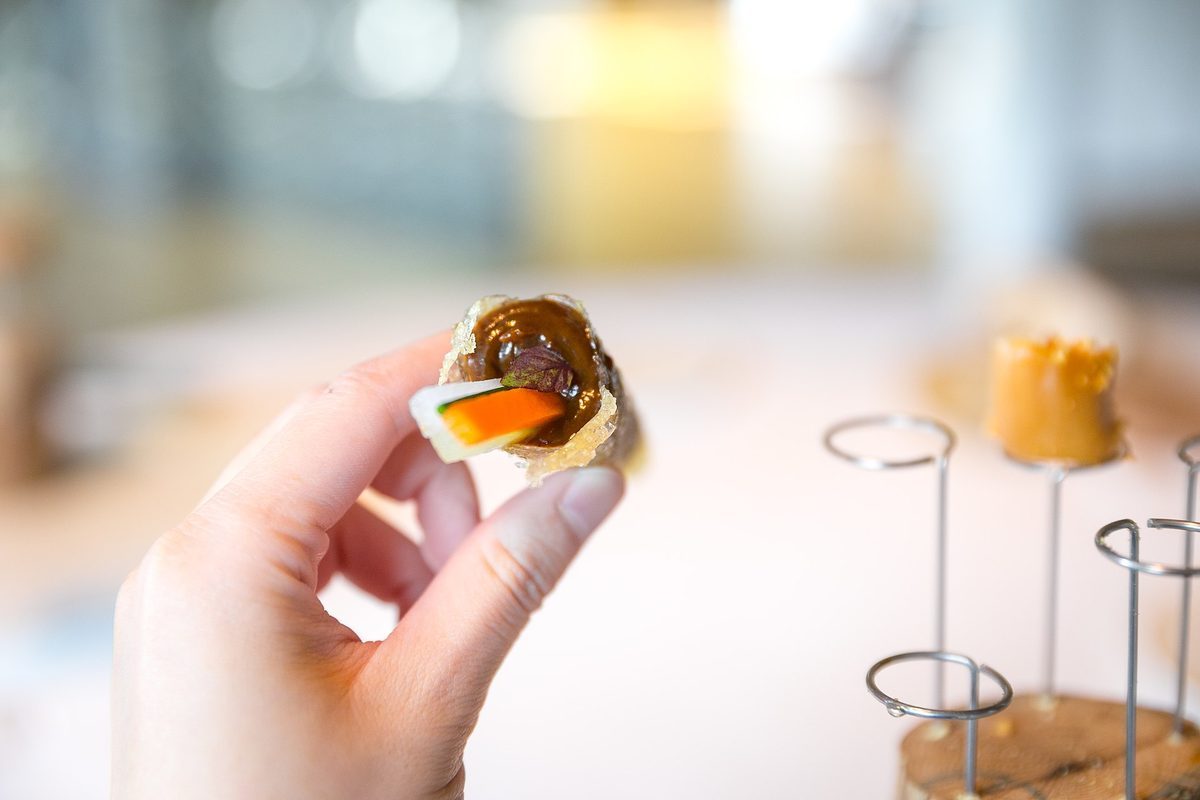
Koufeto is the traditional wedding sweet of Milos, a rich spoon dessert of almonds and honey tied to the island marriage customs. Plan food trips and tours through My Greece Tours.
Koufeto is a sweet thread of the Milos travel guide. The sections below cover what koufeto is, its ingredients, the wedding tradition behind it, how it is made and where to try and buy it.
What is Milos koufeto?
Milos koufeto is the island’s traditional wedding sweet, a rich spoon dessert made mainly of almonds bound in honey, sometimes with pumpkin or quince.
Koufeto is the signature wedding sweet of Milos. Almonds give it body and honey binds it together, and tradition sets it apart from every other Greek dessert. The name itself points to its festive role, since koufeto also means the sugared almond given out at Greek celebrations.
The texture is thick, sticky and glossy. Slow cooking sets the honey firm, the almonds stud the mixture, and a spoon lifts it in a dense, rich portion. This is a concentrated preserve rather than a light pudding, so a small serving satisfies and a little goes a long way.
On Milos the sweet belongs above all to marriage. The mother of the bride traditionally prepares it and offers it to guests at weddings and engagements, and the sweetness stands as a blessing on the couple. The custom has passed down the generations, and the dessert survives as one of the island’s most meaningful local foods.
In culinary terms koufeto counts as a spoon sweet, the Greek glyko koutaliou. This family of preserves is served in small portions on a spoon, often with a glass of cold water or a scoop of yogurt. Tavernas on Milos sometimes bring it out with thick yogurt as a dessert, which balances its intense sweetness.
Koufeto is one of the most distinctive traditional foods of Milos, a rich and sticky sweet deeply tied to the island’s marriage customs. At its heart it is a spoon sweet, the Greek glyko koutaliou, made principally of almonds bound together in honey, sometimes enriched with pumpkin or quince, cooked down into a dense, intensely sweet preserve that is served in small portions on a spoon or in little pieces.
What sets koufeto apart is not just its flavour but its meaning. On Milos it is the traditional wedding sweet, prepared for and offered to guests at weddings as a symbol of a sweet, happy and lasting marriage, a custom passed down through the generations. This combination of a unique local recipe and a living tradition makes koufeto a genuine taste of island heritage. Our Milos food guide covers the wider cuisine, and the next section covers its ingredients.
What is koufeto made of?
Koufeto is made mainly of almonds and honey, the two essential ingredients, often with the addition of pumpkin or quince and a touch of spice.
Two ingredients define koufeto above all. Almonds give the body and honey gives the bind, and this pair leads every recipe. Local sugar and a squeeze of lemon juice usually join them, the lemon sharpening the flavour and helping the preserve set.
Almonds fill the sweet and carry its character. They are typically blanched and roughly chopped, though some cooks leave them whole, and they stud the mixture to give a gentle crunch against the sticky honey. Locally grown almonds are prized for this, since their flavour shines through the finished preserve.
Honey does the essential binding work. Cooked down with the other ingredients, it thickens into a glossy syrup that sets the preserve and carries its deep sweetness. Aromatic local honey is the ideal, and its floral notes are part of what makes island koufeto distinctive.
Beyond this core, the classic Milos version adds sweet white pumpkin. The pumpkin is cut into thin sticks and simmered until soft, giving body and a mellow flavour, and this is a key marker of the island recipe. Some cooks also use quince or a hint of cinnamon or clove for extra fragrance.
The two essential ingredients of koufeto are almonds and honey, and a traditional recipe needs little more. Locally grown almonds, blanched and roughly chopped or left whole, provide the substance and a gentle crunch, while honey, ideally aromatic local honey, is the binder, cooked down with the almonds until it thickens into a dense, glossy, intensely sweet mixture that holds together on a spoon.
Beyond this core, recipes vary from family to family. A common addition is grated pumpkin, which softens the texture and adds body, while some versions use quince or a hint of spice such as cinnamon or clove for extra fragrance. The result in every case is a rich, sticky spoon sweet that showcases the island’s almonds and honey. The simplicity of the ingredients belies the care and slow cooking the sweet requires, and the quality of the local almonds and honey shines through in the finished preserve. Our Milos capers guide covers another island speciality, and the next section covers the wedding tradition.
What is the wedding tradition behind koufeto?
On Milos, koufeto is the traditional wedding sweet, prepared for the celebration and offered to guests to symbolise a sweet, happy and enduring marriage.
Koufeto belongs first and foremost to the wedding. The island prepares it for the celebration, guests share the sweet, and the blessing spreads through the gathering. The mother of the bride traditionally makes and offers it, which ties the dessert to the family at the heart of the day.
The symbolism runs through every ingredient. The honey stands for a sweet and happy life together, while the almonds are a token of fertility and good fortune. Offering koufeto is therefore a wish for the couple, and the rich, lasting sweetness of the preserve mirrors the hope for an enduring marriage.
Making the sweet has traditionally been a communal act. Family and friends gather to prepare it ahead of a wedding, and the recipe and the ritual pass down through the generations. This shared preparation is part of the custom, and it keeps the tradition alive as a living piece of island culture.
Guests receive the sweet as a formal gesture of welcome. A spoonful is offered, the good wishes follow, and the celebration is sweetened in the most literal sense. Tasting koufeto at a Milos wedding is a direct experience of the island’s hospitality and its customs of good fortune.
The heart of koufeto is its role in marriage on Milos, where it is the traditional wedding sweet. Prepared as part of the wedding celebrations, it is offered to guests as a symbol of a sweet, happy and lasting union, the richness and sweetness of the almond-and-honey preserve standing for the good wishes extended to the bride and groom. Sharing koufeto is a gesture of blessing and good fortune.
Like many such customs, the making of koufeto has traditionally been a communal act, with family and friends gathering to prepare the sweet ahead of a wedding, passing the recipe and the ritual down through the generations. While weddings today are often more modern, koufeto endures as a cherished island tradition, and tasting it offers a window into the customs and hospitality of Milos. It is a sweet with a story as rich as its flavour. The next section covers how koufeto is made.
How is koufeto made?
Koufeto is made by slowly cooking almonds in honey, sometimes with grated pumpkin or quince, until the mixture thickens into a dense, sticky preserve.
Koufeto takes patience to make well. The pot simmers slowly, the mixture thickens steadily, and the cook stirs almost throughout. This unhurried method is what develops the dense texture and concentrated flavour, so the sweet cannot be rushed.
The pumpkin sets the base in the island version. Sweet white pumpkin is peeled, cut into thin sticks, and simmered in water with sugar and honey until it turns soft and translucent. Lemon juice goes in to sharpen and to help the syrup set, and the mixture cooks down toward a thick preserve.
The almonds join once the base has thickened. Blanched and often chopped, they are stirred through so they stud the sweet evenly and keep a little bite. A touch of spice such as cinnamon or clove may be added near the end for fragrance, rounding out the flavour.
Long, careful cooking finishes the sweet. The mixture thickens and turns glossy, and the cook watches for the right consistency so it will hold on a spoon once cool without hardening. Off the heat it is left to cool and set, then stored, ready to serve in small spoonfuls.
Making koufeto is a slow, patient process that turns simple ingredients into a rich preserve. The honey is gently heated in a pot, then the blanched almonds, and in many versions grated pumpkin or quince, are added and the mixture is simmered slowly over low heat, stirred almost constantly to stop it catching, until it thickens, darkens and turns glossy. The slow cooking is what develops the dense, sticky texture and concentrated sweetness.
Timing and attention are everything, as the mixture must reach the right consistency to hold together on a spoon once cooled without becoming hard. Spices may be added toward the end for fragrance. Once ready, the koufeto is cooled and stored, to be served in small spoonfuls or pieces. Traditionally made in quantity for a wedding, it can also be prepared on a smaller scale, and the careful, unhurried method is part of what makes it special. The next section covers where to try and buy koufeto on Milos.
Where can you try and buy koufeto on Milos?
You can try koufeto at traditional tavernas, cafes and pastry shops on Milos, sometimes offered as a complimentary sweet after a meal, and buy it jarred from local shops and producers in Adamas and the villages.
Koufeto turns up in several places across the island. Traditional tavernas offer it, cafes and pastry shops serve it, and grocery shops sell it by the jar. Asking for the local wedding sweet by name is the surest way to find it, since availability varies from place to place.
A taverna meal is a common way to meet it. Some tavernas bring out a spoonful at the end of a meal as a complimentary sweet, sometimes alongside thick yogurt that offsets the richness. This small gesture of hospitality is a genuine taste of island custom, offered without being on the menu.
Pastry shops and bakeries make it to a traditional recipe. Their jars line the shelves in the main town and the villages, often produced in small batches by local makers. Buying from a shop that specialises in island sweets is a reliable way to try a properly made version.
The jarred form also travels well as a souvenir. Sealed in a jar, the rich almond-and-honey preserve keeps for a long time and packs easily, so the flavour and the tradition can go home with a visitor. It sits naturally alongside other Milos products such as capers, cheese and honey.
Trying koufeto on Milos is part of experiencing the island’s food culture. It is sometimes offered as a complimentary sweet at the end of a meal in traditional tavernas, a gesture of Greek hospitality, and can be found in cafes, pastry shops and bakeries that make traditional sweets. Asking for the local wedding sweet by name is the best way to seek it out, as recipes and availability vary.
To take some home, look for jarred koufeto in the grocery shops, delicatessens and markets of Adamas and the villages, often made by small local producers. Sealed in a jar, the rich almond-and-honey preserve keeps well and travels easily, making it a distinctive and authentic edible souvenir that carries a genuine piece of island tradition. Pairing it with the island’s other local products, like capers, cheese and honey, makes for a true taste of Milos. Our Milos shopping guide covers local products, and rounds out a food-led visit to the island.
More than just a sweet, koufeto is a small window into the heart of Milos. In its rich almonds and honey you taste the produce of the island, and in its role at weddings you glimpse a tradition of celebration, hospitality and good wishes passed down through generations. Seeking it out, whether offered free at the end of a taverna meal or carried home in a jar, connects a visitor to the living culture of the island in a way that beaches alone cannot. For travellers who like their holidays seasoned with a real sense of place and story, this humble wedding sweet is one of the most memorable flavours Milos has to offer.
How does Milos koufeto differ from the Santorini version?
Milos koufeto cuts the sweet pumpkin into thin sticks, while the Santorini version cuts it into cubes, and both share the base of pumpkin, honey, almonds and lemon.
Koufeto is a spoon sweet found on more than one Cycladic island, and the difference is mostly in the cut. On Milos the sweet white pumpkin is sliced into thin sticks before it is simmered, which gives the finished preserve a particular texture and look. On Santorini the same pumpkin is cut into cubes instead, so the two versions are close cousins rather than separate sweets.
The core ingredients stay the same across both islands. Sweet pumpkin, honey, almonds, sugar and lemon juice form the base, cooked slowly into a rich preserve. Both share the wedding symbolism too, with honey standing for a sweet life and almonds for fertility. Knowing the small differences adds to the pleasure of tasting koufeto, since it turns a spoonful into a lesson in local variation across the Cyclades.
How do you serve and store koufeto?
Serve koufeto in small spoonfuls, often with thick yogurt or a glass of cold water, and store it sealed in a jar in a cool place where it keeps for a long time.
Koufeto is meant for small portions because it is intensely sweet and rich. The traditional way to serve a spoon sweet is a single spoonful on a small dish, sometimes with a glass of cold water alongside. On Milos a taverna may serve it with thick strained yogurt, which balances the honey and turns the sweet into a proper dessert.
Storage is simple thanks to the high honey and sugar content. Sealed in a clean jar and kept in a cool cupboard, koufeto lasts well without refrigeration, which is exactly why it travels so well as a souvenir. A clean, dry spoon each time keeps an opened jar in good condition. Pairing it with the island’s other preserves and products rounds out a food-led visit. Our Milos shopping guide covers local products to take home.
Frequently Asked Questions
What is koufeto from Milos?
Koufeto is the traditional wedding sweet of Milos, a rich spoon dessert made mainly of almonds bound in honey, sometimes with the addition of pumpkin or quince. Sweet, sticky and dense, it is the Greek glyko koutaliou, or spoon sweet, served in small portions. On Milos it is prepared for weddings and offered to guests as a symbol of a sweet, happy and lasting marriage, a custom passed down through the generations. This combination of a unique local recipe of almonds and honey with a living wedding tradition makes koufeto one of the most distinctive and meaningful traditional foods of the island.
What does koufeto taste like?
Koufeto is intensely sweet, rich and sticky, dominated by the flavours of honey and almonds. The honey gives a deep, aromatic sweetness while the almonds add substance and a gentle crunch, and versions made with pumpkin or quince have a softer texture and extra body, sometimes with a hint of spice such as cinnamon. It has the dense, glossy consistency of a concentrated spoon sweet, meant to be enjoyed in small portions on a spoon or in little pieces. The taste is luxurious and old-fashioned, very much a celebratory sweet, which suits its traditional role at island weddings on Milos.
Where can you buy koufeto on Milos?
You can buy koufeto on Milos in the grocery shops, delicatessens, pastry shops and markets of the main town of Adamas and the villages, often made by small local producers and sold in jars. Sealed in a jar, the rich almond-and-honey preserve keeps well and travels easily, making it a distinctive and authentic edible souvenir of the island. You can also try koufeto at traditional tavernas and cafes, where it is sometimes offered as a complimentary sweet after a meal. Pairing it with other local products such as capers, cheese and honey makes for a genuine taste of Milos to enjoy or take home.
What does koufeto symbolise at a wedding?
At a Milos wedding, koufeto symbolises the good wishes extended to the couple, with each ingredient carrying meaning. The honey stands for a sweet, happy life together, while the almonds are a traditional token of fertility and good fortune. The mother of the bride prepares the sweet and offers it to the guests, so the gesture also expresses the family’s hospitality and its blessing on the marriage. Sharing a spoonful is a way for everyone present to take part in wishing the newlyweds a sweet and lasting union. This layered symbolism is why koufeto remains a cherished part of island wedding custom rather than just a dessert.