
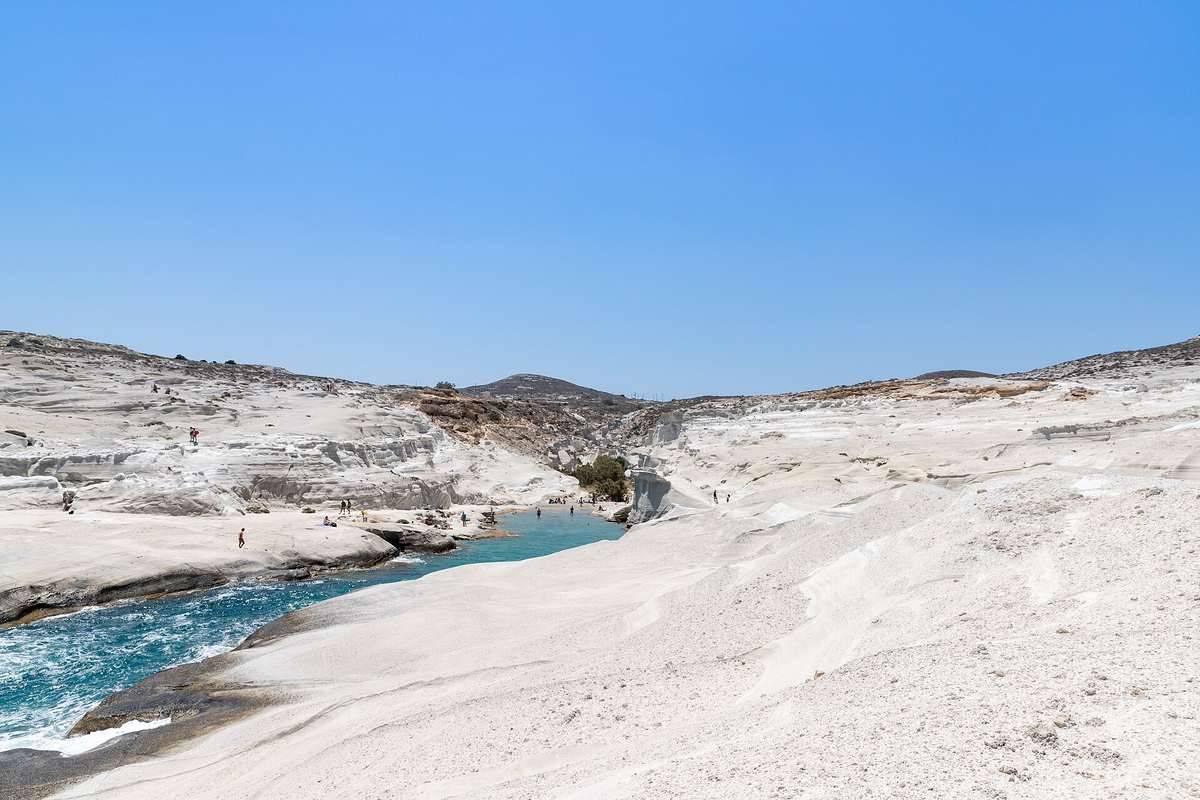
Milos is around 3 to 6 hours by ferry from Mykonos, too far for a day trip but a rewarding overnight or multi-night stop, famous for its volcanic landscapes and beaches like the moon-white Sarakiniko and the boat-only Kleftiko. This guide covers the ferry, why it is not a day trip, what to see and tips. Plan the whole trip with Greece Tours.
Milos is a spectacular island hop from the Mykonos travel guide, best as part of a longer Cyclades trip. The sections below cover it in full.
How do you get from Mykonos to Milos?
You get from Mykonos to Milos by high-speed ferry. The crossing runs around 2 hours 45 minutes to 6 hours, mainly by SeaJets. Ferries leave Mykonos New Port at Tourlos and arrive at Adamas, the port of Milos.
You reach Milos from Mykonos by ferry. This is a longer crossing than the nearby Cyclades hops. Milos lies in the south-west of the island group, away from the main Mykonos routes. The journey time varies by boat and route. It runs from around 2 hours 45 minutes on the fastest direct services to about 6 hours on slower boats. The longer sailings call at intermediate islands along the way. High-speed ferries operate the route mainly from spring to autumn, with up to two crossings daily.
The high-speed vessels carry air-conditioned lounges, numbered seating, snack bars, open decks and pet-friendly facilities. Departures leave from the New Port at Tourlos, about 2.5 kilometres north of Mykonos town. Ferries arrive at Adamas, the main port of Milos on the island’s central bay. The crossing is long and the schedule is limited. Book in advance for summer, when tickets sell out. Plan the trip alongside the guides to the ports and Mykonos to Santorini. A day trip is not feasible.
Can you do Milos as a day trip from Mykonos?
No, a day trip from Mykonos to Milos is not feasible. The crossing is around 3 hours or more each way, with no same-day return ferry. Milos is best visited as an overnight or multi-night stay.
Milos does not work as a day trip from Mykonos. Plan it as an overnight or longer stay instead. The crossing is around 2 hours 45 minutes at its fastest and often longer. There is no return ferry on the same day. That means you cannot visit and come back within a single day. The earliest possible ferry still leaves little time on the island. The journey is long and tiring for little reward. You would also miss the main sights, such as the sea caves of Kleftiko, which need a boat trip of their own.
Milos rewards a stay of at least one or two nights, and ideally more. That time lets you explore its volcanic beaches, take a boat tour, and enjoy the fishing villages at a relaxed pace. Milos fits as a stop on a longer Cyclades island-hopping route rather than a quick excursion. Treat it as part of a multi-island trip. Plan it alongside the guides to day trips, a Mykonos itinerary, and Mykonos island hopping. The reward is worth the journey.
Why visit Milos from Mykonos?
Milos is worth visiting from Mykonos for its volcanic landscapes and beaches. These include the white rocks of Sarakiniko, the boat-only sea caves of Kleftiko, and over 70 beaches. Milos is quieter and cheaper than Mykonos.
Milos makes a rewarding contrast to Mykonos, with a volcanic landscape unlike the rest of Greece. Its volcanic past shaped both the landscapes and the beaches. The signature sight is Sarakiniko, where smooth white volcanic rock forms a lunar-like terrain against the blue sea. Sarakiniko is one of the most photographed spots in the Cyclades. The sea caves and white cliffs of Kleftiko, reachable only by boat, are a second highlight. Milos holds over 70 beaches of every colour, from white and red sand to black volcanic shores. Firopotamos, Tsigrado and Sarakiniko each show a different face of the island’s coast.
The variety makes Milos a draw for beach lovers and boat trips. The island is where the Venus de Milo statue was found, now displayed in the Louvre. Milos is also quieter, more relaxed and cheaper than Mykonos. Its fishing villages, such as Pollonia and Klima, carry colourful boathouses and good tavernas. Pollonia sits on the north-east coast and links by boat to nearby Kimolos. Travellers who want natural drama, distinctive beaches and a calmer island are rewarded here. Compare it with other Cyclades options in the guide to Mykonos vs Naxos. The tips below help plan the trip.
What tips help for visiting Milos from Mykonos?
Book the ferry well ahead for summer and plan at least one or two nights on Milos. Take a boat tour to reach Kleftiko, and hire a car or quad, since the beaches are spread out.
These tips help you make the most of a Milos trip from Mykonos. Book your ferry tickets well ahead, especially in the busy summer season. The long route has limited sailings and tickets sell out. Plan to stay at least one or two nights, and ideally more, rather than attempting an unworkable day trip. That time lets you explore the island’s spread-out attractions properly. A boat tour is the way to see Milos at its best. The sea caves and cliffs of Kleftiko, plus beaches such as Tsigrado and Kleftiko’s coves, are reachable only by boat, so book a day cruise around the island.
Hire a car, scooter or quad to reach the beaches and villages on land, as public transport is limited. The beaches spread across the island, from Firopotamos in the north to Tsigrado in the south. Both the ferry crossing and the boat trips depend on the sea. Aim for calmer, less windy days, because the meltemi wind can disrupt sailings. Keep your plans a little flexible. An overnight stay, a boat tour and your own transport together reward the effort. Plan it alongside the guides to Mykonos weather and car rental. The questions below cover the points travellers ask most.
What is the journey from Mykonos to Milos like?
The journey from Mykonos to Milos is a seasonal ferry across the western Cyclades. It takes around 2 hours 45 minutes on a direct high-speed ferry, or about 6 hours on routes with stops. Direct sailings are limited.
The route from Mykonos to Milos crosses from the eastern to the western Cyclades. Understanding it helps you plan. The fastest option is a direct high-speed ferry, taking around two hours and forty-five minutes. Direct sailings are limited and seasonal. They run mainly in summer and not every day, so check schedules carefully. Many connections are longer, from around four to six hours. They call at intermediate islands such as Paros, Naxos, Ios or Folegandros, or require a change of ferry at one of these hubs. The change adds waiting time.
Milos sits a fair distance from Mykonos by sea and is not a practical day trip. The travel time each way, plus limited and weather-dependent sailings, leaves almost no time on the island for a there-and-back day. Milos rewards an overnight or multi-night stay instead. That lets you explore its volcanic landscapes at a proper pace.
Book ahead for summer and confirm whether your sailing is direct or via a connection. A connection through Paros or Naxos adds a change and waiting time, so a direct sailing saves hours. Ferries arrive at Adamas, the port on the island’s central bay, where car hire and boat tours start. From Adamas you reach Sarakiniko and Plaka within a short drive. Plan it alongside the guide to Mykonos ferries and the how to get to Mykonos overview. The questions below cover the points travellers ask most.
What can you see and do in Milos?
Milos is a volcanic island known for the white rocks of Sarakiniko, the sea caves of Kleftiko reached by boat, over 70 beaches, the fishing village of Klima, and as the place the Venus de Milo statue was found.
Milos is one of the most scenic islands in Greece, so an overnight trip from Mykonos is worth it. Its signature sight is Sarakiniko, a landscape of smooth white volcanic rock shaped by wind and sea into lunar terrain. Sarakiniko draws photographers from around the world. By boat you reach Kleftiko, a cluster of white sea caves and rock formations rising from turquoise water. Kleftiko was once a pirate hideout and is now a spot for swimming, snorkelling and kayaking. The island holds over seventy beaches, from coloured volcanic sands to hidden coves, enough to fill three or four days.
Do not miss the fishing village of Klima, with its rows of syrmata, the boat houses built into the rock at the water’s edge. Climb to the hilltop capital of Plaka for its sunset views and Cycladic lanes. The port town of Adamas anchors the island with tavernas and boat departures. Papafragas, a narrow inlet framed by cliffs, sits near the north coast. Milos is also where the statue of Venus de Milo, the Aphrodite now in the Louvre, was discovered. Its caves, beaches and volcanic scenery make Milos a rewarding contrast to Mykonos. Plan it alongside the guide to day trips. The questions below cover the points travellers ask most.
How many days do you need on Milos?
You need at least two or three days on Milos to see it properly. That covers a boat tour to Kleftiko, the white rocks of Sarakiniko, and beaches by car. Four or five days let you reach the quieter coves.
Milos rewards more time than a single overnight. Two or three days cover the essentials without rushing. Spend one day on a boat tour around the south coast to reach Kleftiko and Tsigrado. Give another day to Sarakiniko and the north-coast inlets like Papafragas and Firopotamos. Use a third day for the villages, Plaka and Klima, and the beaches near Pollonia.
Four or five days suit travellers who want a slower pace. The extra time lets you reach the harder coves, revisit a favourite beach, and wait out a windy day. Milos rewards patience, since the boat tour to Kleftiko depends on calm seas. A longer stay also fits the island into a wider Cyclades route rather than a single stop. Pair it with a base on Naxos or Santorini for a fuller island-hopping trip from Mykonos.
When is the best time to visit Milos from Mykonos?
The best time to visit Milos from Mykonos is late spring and early autumn, in May, June and September. The ferries run, the sea is calm enough for boat trips, and the beaches are less crowded.
Milos suits a shoulder-season visit. Late spring and early autumn bring warm weather and a running ferry schedule. In May, June and September the sea is usually calm enough for the boat trip to Kleftiko. The beaches are quieter than in peak summer, and rooms are easier to book. These months also make the long ferry crossing from Mykonos more comfortable.
High summer, in July and August, is hot and busy. The meltemi wind is stronger then and can disrupt both ferries and boat tours. Book well ahead if you travel in peak season, as the limited sailings fill fast. Check the forecast before a boat tour, since Kleftiko is exposed on windy days. Read the Mykonos weather guide to plan the crossing around calmer conditions.
Frequently Asked Questions
How long does the Mykonos to Milos ferry take?
This crossing takes around 2 hours 45 minutes to 6 hours depending on the boat and route, run mainly by SeaJets from March to October with up to two daily crossings. Ferries leave from Mykonos New Port at Tourlos and arrive at the port of Milos.
Can you do Milos as a day trip from Mykonos?
No, a day trip from Mykonos to Milos is not really feasible, as the crossing is around 3 hours or more each way and there is generally no same-day return ferry. Milos is best visited as an overnight or multi-night stay, ideally as part of a longer Cyclades island-hopping trip.
Why is Milos worth visiting?
Milos is worth visiting for its volcanic landscapes and beaches, including the white rocks of Sarakiniko, the boat-only sea caves of Kleftiko, and over 70 beaches of every colour. Milos is quieter and cheaper than Mykonos and offers a natural contrast to the party island.
Where does the ferry from Mykonos arrive on Milos?
The ferry from Mykonos arrives at Adamas, the main port of Milos on the island’s central bay. Adamas holds tavernas, car hire and boat-tour departures. From there you reach Sarakiniko, Plaka and the beaches by hired car, scooter or quad.
Do you need a boat tour on Milos?
Yes, a boat tour is the way to see the best of Milos. The sea caves of Kleftiko and beaches such as Tsigrado are reachable only by boat. Book a day cruise from Adamas around the south coast, and choose a calm, less windy day.
Is it better to island-hop to Milos or go direct?
Island-hopping suits Milos better than a direct dash from Mykonos. Direct sailings are limited and seasonal. Travellers often connect through Paros or Naxos and stay a night on the way. That turns the long crossing into part of a wider Cyclades trip rather than a rushed transfer.