
Milos and Naxos combine well on one Cyclades trip, pairing volcanic beaches with mountains, long sands and history over a ferry. Plan ferries and tours through My Greece Tours.
Combining the two is a popular plan in the Milos travel guide. The sections below cover why they pair well, how many days for each, the ferry between them, the order to visit and a sample itinerary.
Why combine Milos and Naxos?
Milos and Naxos combine well because both are Cyclades islands linked by ferry, yet they differ in character. Milos brings dramatic volcanic beaches and boat trips, while Naxos brings long sandy beaches, green mountains, villages and ancient sites.
The pair balances each other. Milos brings rocky drama. Naxos brings golden sand. The contrast carries the trip.
Both belong to the Cyclades. Both sit on the ferry lines. Both reward a stay. The pairing flows easily.
Milos leans rocky and dramatic. Its coloured coves headline. Its boat trips dazzle. Its scale stays compact.
Naxos leans green and large. Its mountains rise high. Its sands stretch long. Its villages fill the interior.
Milos and Naxos sit within reach in the Cyclades, and pairing them gives a trip that mixes volcanic drama with green abundance. Milos is the smaller and rockier partner, a compact island whose coloured volcanic coves, sea caves and daily boat trips reward a slow, swim-focused rhythm along a remarkably scenic shore.
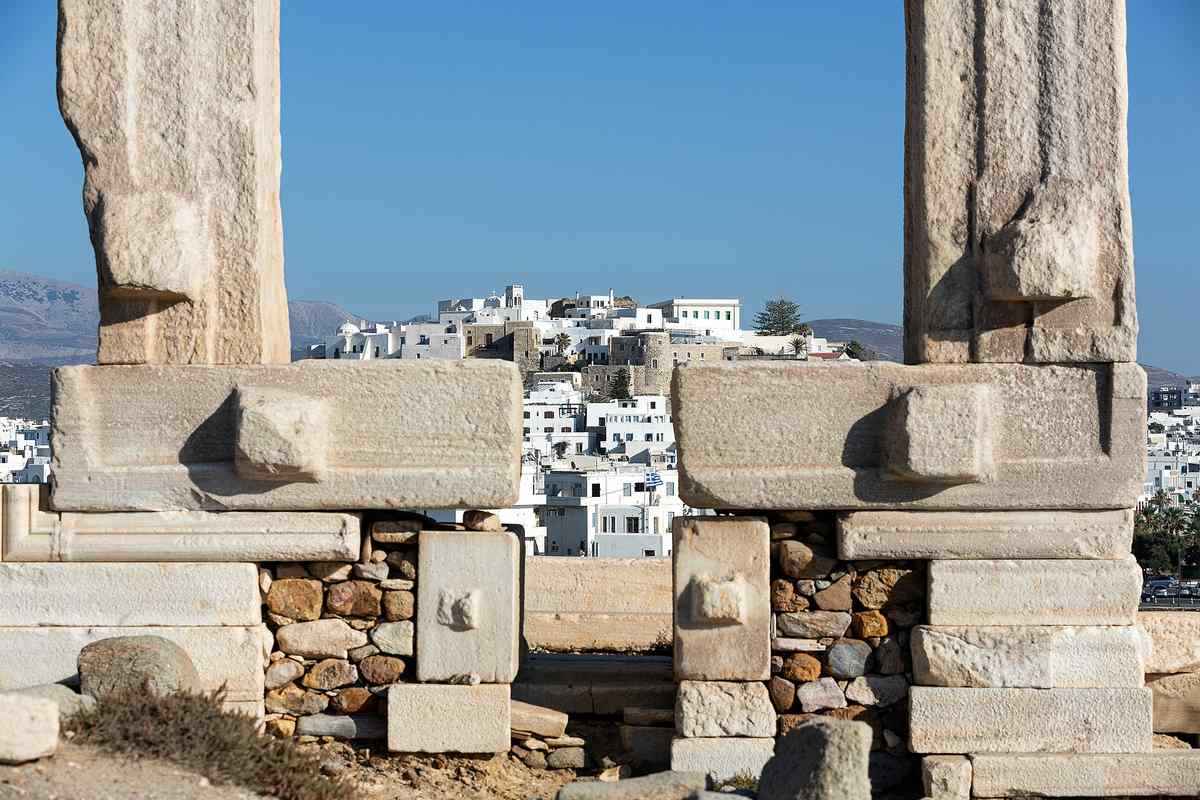
Naxos is the largest of the Cyclades, a green and mountainous island of long golden sandy beaches, fertile valleys, traditional mountain villages and ancient sites like the iconic Portara gateway. Combining the two lets you enjoy the volcanic coves and boat trips of Milos alongside the long sands, mountains and history of Naxos, all linked by a ferry hop. Our Milos vs Naxos comparison weighs them up, and the next section covers how many days for each.
How many days should you spend on Milos and Naxos?
Spend around four days on each island for a balanced week or more, as both reward time.
The split runs even. Four days suit Milos. Four days suit Naxos. The week or more balances well.
Milos needs room to roam. The boat trip fills a day. The coves spread wide. The driving adds up.
Naxos spreads its highlights wide. The beaches stretch south. The villages climb inland. The sites fill the days.
A longer trip eases the rhythm. Add nights to each. Both islands reward it. The pace relaxes.
Both Milos and Naxos reward a proper stay, so an even split of about four nights each, over a week or a little more, works well. Milos earns its share because its attractions sit far apart: a whole day goes to the Kleftiko boat trip, the coloured beaches are scattered around the coast, and the hilltop villages and ancient sites each ask for unhurried time behind the wheel.
Naxos, the largest island in the Cyclades, is equally deserving of time, with its long golden beaches strung along the southwest coast, its traditional mountain villages such as Halki and Apiranthos inland, and ancient sites like the Portara and the kouros statues. Four nights let you sample both the coast and the green interior. With a longer trip, simply add nights to each. Our Milos itinerary guide plans the Milos days, and the next section covers the ferry.
How do you get from Milos to Naxos?
You get from Milos to Naxos by ferry across the Cyclades, with fast catamarans and conventional boats in summer.
Ferries link the islands. Boats run from Adamas. Naxos sits to the northeast. The crossing stays manageable.
Fast boats speed across. Catamarans cut the time. Slower ferries cost less. The choice suits the budget.
Summer brings frequent sailings. Direct links appear. Some routes connect once. Planning helps.
Early booking pays off. Summer crowds the boats. Seats vanish fast. Forward planning wins.
The two islands are joined by summer ferries across the central Cyclades, served by quick catamarans and the slower, cheaper car ferries. Some sailings run straight through while others route via Paros, so journey times vary, though the fast craft make short work of the distance, all leaving from the port of Adamas.
Frequency peaks in the high season, when the Cyclades network hums, so slotting the crossing between your two stays is easy; outside summer the links thin out and want more planning. Reserve seats early at peak times, and leave a little slack in case the meltemi grounds a fast boat for a day. Our guide to how to get to Milos covers the routes, and the next section covers which island to visit first.
Should you visit Milos or Naxos first?
Either order works for Milos and Naxos, as ferries link them both ways.
The order stays flexible. Ferries run both ways. Either island opens well. Logistics often decide.
Milos first eases you in. Its quiet beaches start the trip. The calm settles first. The boat trip leads.
Naxos links widely. Its airport eases departure. Its ferries fan out. Ending there can suit.
Connections shape the call. Flights and ferries align. The schedule guides the order. Both ways reward.
There is no fixed rule about which island comes first, since boats run both directions and either works as an opener or a finale. Practicalities usually decide it: Naxos is the bigger transport hub, with broader ferry links and an airport of its own, which can make it the handier place to begin or end the journey for onward travel.
Plenty of visitors open on Milos, settling into its calm coves and boat days before the greener sprawl of Naxos, though the reverse suits others just as well. Both connect to Piraeus near Athens, and Milos has its own small airport too, so let the timetables for your exact dates make the call. Our things to do in Milos guide covers the Milos leg, and the next section sketches an itinerary.
It also helps to think about the feel of each leg when ordering the trip. Milos sets a calm, scenic tone, ideal for easing in or winding down, with its boat trip and beaches encouraging a slow pace. Naxos brings more variety and a touch more energy, its larger size offering long beach days, mountain drives and ancient sites that reward an active rhythm. Many travellers like to start gently on Milos and build toward the abundance of Naxos, while families and those after extra beach time often weight their days toward the longer sands of Naxos. Whichever order you choose, the short ferry and shared Cycladic setting make the transition between the two islands seamless and the contrast part of the pleasure.
What is a good Milos and Naxos itinerary?
A good week or more spends four nights on Milos for its boat trip, beaches and villages, then four on Naxos for its long beaches, mountain villages and ancient sites, linked by a ferry and bookended by flights or ferries via Athens.
The itinerary splits the trip. Milos takes the first half. Naxos takes the second. A ferry bridges them.
Milos fills four days. A boat trip leads. Beaches and villages follow. Sarakiniko stuns at sunset.
Naxos fills four. The Portara opens it. The beaches fill the days. The mountain villages reward a drive.
Athens frames the trip. Ferries or flights connect. The route flows smoothly. The trip feels complete.
A rewarding plan opens with four nights on Milos. Give the first day to the Kleftiko boat trip and its sea caves, the second to the coloured south-coast beaches of Firiplaka and Paleochori, the third to the catacombs, the ancient theatre and the lanes of Plaka and Klima, and the fourth to a remote cove, ending on the white rock of Sarakiniko at dusk.
Then take the ferry to Naxos for four nights. Use the first day for Naxos Town and the Portara at sunset, the second for the long southwest beaches like Plaka and Agios Prokopios, the third for a drive into the mountain villages of Halki and Apiranthos, and the fourth for a kouros statue, a valley walk or a return to a favourite beach. Bookend the trip with flights or ferries via Athens. With more time, a fifth night on either island lets you slow the pace, add a remote Milos cove or a deeper drive into the Naxos mountains. Plan the Milos half through our Milos itinerary guide.
Combining Milos and Naxos works so well because each island answers what the other lacks. Milos concentrates drama and colour into a compact coast of volcanic coves and boat trips, while Naxos spreads its appeal across long sands, green mountains, traditional villages and ancient sites that reward exploring at leisure. Together they give a trip that mixes intense Cycladic scenery with space, history and variety, all linked by the summer ferry network and bookended easily through Athens. With a week or more to spare, splitting your time between the two delivers a fuller, more rounded picture of the Cyclades than either island could provide alone, and it remains an easy, flexible route to plan.
How often does the ferry run between Milos and Naxos?
The Milos to Naxos route runs year round, rising to roughly seven crossings a week in the tourist season, with at least one ferry a day at the peak.
The route holds a year-round backbone that thickens sharply once the tourist season opens. High summer delivers up to about seven weekly crossings, and the peak months keep at least one ferry a day between the two islands. Off-season sailings drop to a leaner schedule, so shoulder-month and winter travellers gain from checking the exact dates well ahead and building a spare day into the plan.
Journey length depends heavily on the vessel and the routing. The quickest fast craft cover the hop in around three hours and forty-five minutes, while a slower boat calling at an intermediate port can stretch the trip toward six hours and twenty minutes. Fast catamarans from operators such as SeaJets trim the time, and conventional car ferries in the vein of Blue Star Ferries run the cheaper, steadier crossings that suit travellers moving with a rental vehicle.
Vessel choice shapes the experience as much as the clock. Fast catamarans get you between the islands with the least time on the water, which suits a tight schedule or a traveller keen to maximise beach days. Conventional car ferries move at a steadier pace and carry vehicles, an advantage for anyone touring both islands with a rental. Matching the boat to your priorities, then the dates to the timetable, keeps the middle of the trip smooth.
Reserving the crossing ahead pays off through summer, when the central Cyclades network carries its heaviest loads and popular sailings fill early. A booked seat locks the transfer between your two stays and spares the scramble at the port desk. Our guide to how to get to Milos sets out the wider route map, and the next section places both islands inside a longer Cyclades hop.
How do Milos and Naxos fit a wider Cyclades island-hopping route?
Milos and Naxos slot neatly into a beginner-friendly Cyclades chain with Paros and Santorini, a common run being Athens to Paros, Naxos, Milos and Santorini, spending two to four nights on each.
Paros, Naxos, Milos and Santorini form one of the most approachable island-hopping combinations in the Cyclades, linked by frequent summer ferries and served through Athens at each end. A popular sequence leaves Athens for Paros, carries on to Naxos, drops down to Milos and finishes on Santorini, with two to four nights on each island depending on the total length of the holiday. Milos and Naxos anchor the middle of that chain, giving the volcanic coast and the long green interior their own space within a broader loop.
Paros pairs a lively main town with sandy bays and quick links onward, making it a natural first stop out of Athens. Santorini closes the run with its caldera views and dramatic cliff towns, a fitting finale before the flight or ferry home. Slotting Milos and Naxos between them means the route moves from a gentle opener through two full-featured islands to a headline finish, and the shared ferry lines keep every leg simple to book.
The two-to-four-night range per island lets you flex the loop to your dates. A shorter break might give two nights to Paros and Santorini and stretch three or four each to Naxos and Milos, keeping the beach-and-boat heart of the trip generous. A fuller fortnight spreads four nights across all four, leaving room for a boat day on Milos, a mountain drive on Naxos, and unhurried town time on Paros and Santorini. Naxos, the greener and more self-sufficient of the pair, carries the interior variety, while Milos supplies the volcanic coast that headlines the run.
Tailoring the nights to your interests keeps the pace right across four islands. Beach-focused travellers weight their days toward the long southwest sands of Naxos and the coloured coves of Milos, while those chasing towns and views lean into Paros and Santorini. Booking the ferries and rooms ahead through the busy months secures the sequence, since the most-used sailings on this chain sell out early. Our Milos itinerary guide slots the Milos leg into the wider hop.
Frequently Asked Questions
Can you visit both Milos and Naxos in one trip?
Yes, you can easily pair Milos and Naxos in one holiday, as summer ferries join the two Cyclades islands regularly. The appeal lies in their contrast: Milos brings dramatic volcanic coves and boat trips, while Naxos, the largest island in the group, adds long golden sands, green mountains, old hill villages and ancient monuments. A well-balanced week or more gives roughly four nights to each. Reserving the boat and rooms early in high season, and keeping a spare day against rough weather, smooths the whole trip.
How far is Naxos from Milos by ferry?
Naxos lies a manageable hop from Milos across the central Cyclades, reached by quick catamarans and slower car ferries through the summer. Some services sail direct while others connect via Paros, so the duration shifts with the day and the boat, with fast craft the speediest. The frequency is highest in the busy summer months, when joining the two islands is straightforward, while autumn and winter bring fewer crossings that call for closer attention to the timetables.
Is Milos or Naxos better?
Neither island simply wins, since Milos and Naxos appeal to different tastes, which is exactly why they work so well together. Milos shines for dramatic volcanic coves, sea caves, boat trips and a compact, easygoing feel. Naxos shines for sweeping golden sands, green mountains, old villages, ancient monuments and the sheer variety of the largest Cycladic island. The smartest answer for most travellers is to refuse to choose, savouring the volcanic coast of Milos and the sands, peaks and history of Naxos across one trip.
When is the best time to combine Milos and Naxos?
June and September strike the finest balance for a Milos and Naxos trip, delivering warm seas and reliable ferry links without the fiercest crowds of high summer. These shoulder months keep the fast catamarans and car ferries running often enough to time the crossing with ease, while the beaches and villages stay pleasant rather than packed. July and August bring the busiest sailings and the fullest rooms, so travellers set on those weeks gain most from booking the ferry and accommodation well ahead. The route holds a year-round core, yet the leaner autumn and winter timetables reward closer attention to the exact dates.
Do you need to book the Milos to Naxos ferry in advance?
Booking the Milos to Naxos ferry ahead is the safe move through the tourist season, when the central Cyclades network carries heavy loads and popular crossings fill early. Reserving a seat locks the transfer between your two stays and removes the risk of a sold-out sailing forcing a wasted day. Fast catamarans from operators such as SeaJets and conventional car ferries in the vein of Blue Star Ferries both sell out on peak dates, and drivers with a rental vehicle especially benefit from securing space early. Leaving a spare day in the plan also guards against the meltemi wind grounding a fast boat.