
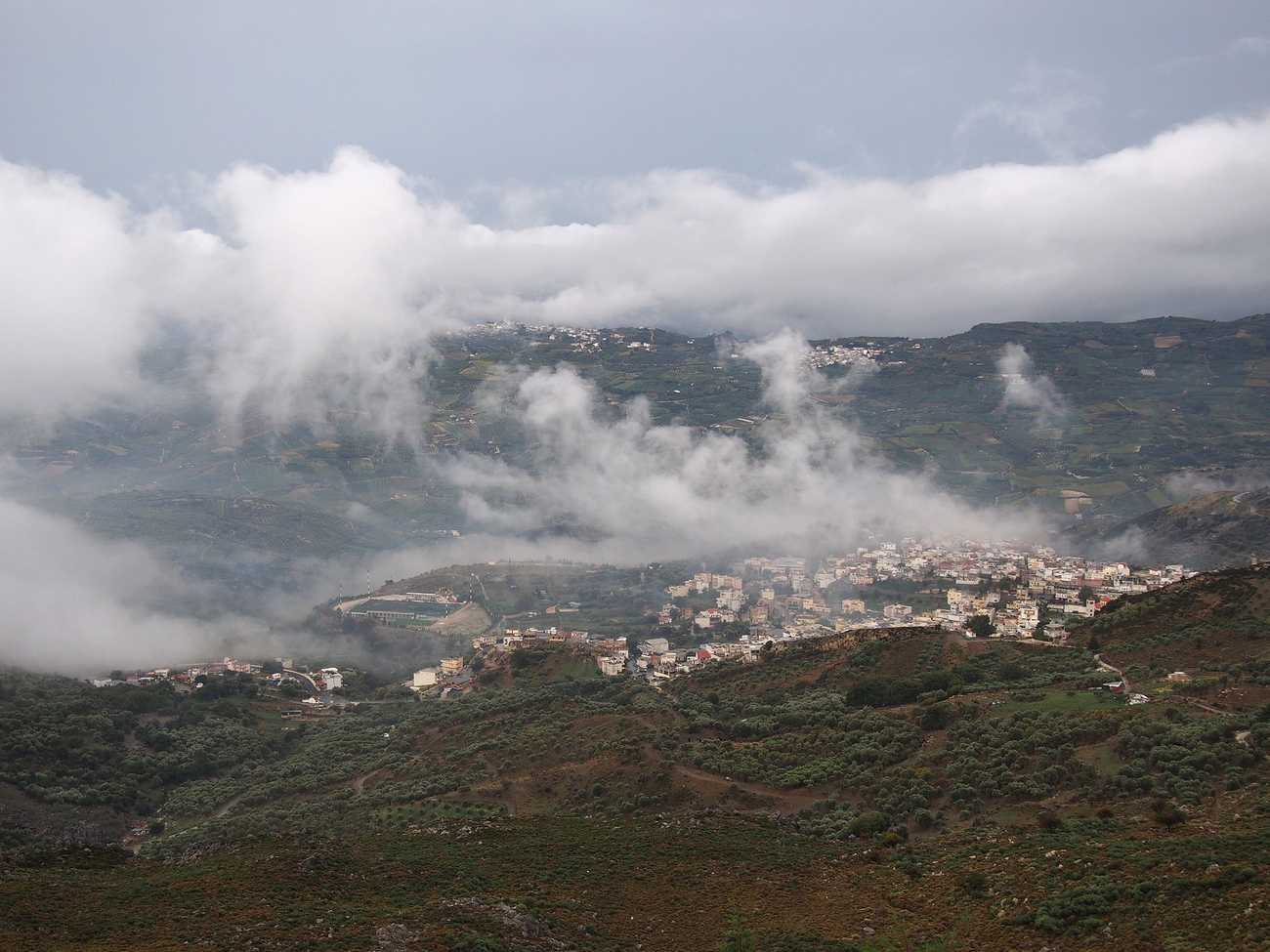
Krousonas is a large mountain village on the eastern slopes of Psiloritis, in the Malevizi region of the Heraklion district of Crete, west of the city of Heraklion. Cherry orchards, vineyards, olive groves and chestnut woods surround its stone houses at a cool altitude that stays fresh through the summer. The village is known across the island for its cherries, its wine and its raki, and for tavernas serving mountain lamb, snails and village dishes. Old churches, the nearby Gorgolainis monastery and mountain paths toward the high peaks give it a highland character rather than a coastal one. Plan your visit with My Greece Tours.
This page sets out what Krousonas is, where it sits on the map of Crete, and what a traveller finds on a day in the village. The sections below cover the location on the Psiloritis slopes and the cherry and wine harvest. They also treat the food on the taverna tables, the mountain paths that climb from the village, and the practical drive from Heraklion. For the wider region and the routes that link these mountain villages, read the Crete travel guide alongside this node, which places Krousonas within the network of Malevizi settlements.
Where is Krousonas in Crete?
Krousonas sits on the eastern slopes of Psiloritis in the Malevizi region, west of Heraklion in the central district of Crete. It is a large inland mountain village ringed by cherry orchards, vineyards and olive groves.
The village occupies a hillside in the Malevizi region, the district that spreads west of Heraklion city across the lower slopes of the Psiloritis massif. Krousonas is one of the larger inland settlements on this side of the mountain, built where the farmland of the foothills meets the steeper ground that rises toward the summit ridge. Cherry orchards, vineyards, olive groves and chestnut woods cover the terraces around the houses, and the altitude keeps the air cooler than the coast through the hot months. The eastern face of Psiloritis forms the backdrop to the village, and the ground continues to climb behind it toward the Nida plateau and the high peaks.
Travellers planning a route through the interior can weigh Krousonas among the things to do in Crete away from the beaches.
Krousonas belongs to a cluster of Malevizi villages strung along the mountain road, each set among orchards and vines at a similar height above the plain. The village keeps a strong identity of its own, with a permanent population, a school, churches and working tavernas rather than the seasonal shell of a resort. Its position on the road up the mountain makes it a natural gateway for walkers heading toward the Psiloritis peaks and the Nida plateau, and a cool stop for drivers crossing the interior. The old lanes climb between stone houses and small squares, and the church bells and orchards mark the seasons.
Krousonas reads as a highland farming village first, a starting point for the mountain second, and a place to eat and rest along the way.
What is Krousonas known for on Crete?
Krousonas is known across Crete for its cherries, its wine and its raki. The orchards ripen in early summer, and a cherry festival marks the harvest. The terraced vineyards supply the wine and the raki.
The cherry orchards are the signature of Krousonas. The trees grow on the cool terraces around the village, and the fruit ripens in early summer when the lower ground has already turned to dust. A cherry festival is held in the village at the height of the harvest, when the orchards are heavy and the crop reaches the markets of Heraklion and beyond. Vineyards share the same terraces. The grapes go to village wine and to the raki distilled in the copper stills after the vintage, the clear spirit that ends most Cretan meals. Olive groves and chestnut woods fill the ground between the vines and the cherry trees.
The produce of these orchards and vines runs through the tavernas and the festivals, and travellers can trace the wider vineyard network through the Crete wineries of the district.
Beyond the fruit and the vine, Krousonas carries a reputation from the island’s history as a centre of resistance, and the village guards that memory in its identity. The cool altitude that suits the cherries also makes the village a summer escape from the coastal heat. Its orchards, springs and shaded lanes draw visitors up from the plain in the hottest weeks. The mountain setting shapes the whole economy of the place: cherries and grapes on the terraces, lamb and snails from the hillsides, walking routes on the peaks above.
This mix of orchard, vineyard and mountain gives Krousonas a role different from the coastal towns, and marks it as one of the inland hidden gems in Crete that reward a detour from the north-coast highway.
What food does Krousonas serve?
Krousonas tavernas serve mountain lamb, snails and village dishes drawn from the surrounding hillsides and orchards. Village wine and raki accompany the meals, and local cherries appear in season. The cooking reflects the highland farming of the Malevizi region.
The tavernas of Krousonas cook from the mountain around them. Lamb raised on the hillsides is the centre of the table, roasted or slow-cooked in the village manner, and snails gathered after the rains join the meat as a Cretan staple. Village dishes built on greens, pulses, olive oil and the produce of the terraces fill out the meal. The cherries of the orchards appear on the table in early summer when the harvest is in. Village wine from the vineyards and raki distilled after the vintage accompany the food, in the pattern that runs through highland Crete.
Travellers who want to understand the wider tradition behind these dishes can read about Cretan food and its roots in the mountain farms and orchards of the interior.
Eating in Krousonas is tied to the altitude and the seasons. The cool ground yields cherries, chestnuts, grapes and mountain greens that shape the menu through the year, and the tavernas lean on this local supply rather than on imported stock. The village keeps the rhythm of a working farming settlement, so the food follows the harvest. Cherries and early fruit come in summer, chestnuts and heavier dishes as the weather turns, lamb and snails across the seasons. This is highland cooking rather than resort fare, served in tavernas that also function as village gathering points.
For drivers crossing the interior of the island, a meal at Krousonas offers a direct taste of Malevizi farming, matched with the village wine and raki that its own terraces produce.
What mountain paths climb from Krousonas?
Mountain paths climb from Krousonas toward the Psiloritis peaks and the Nida plateau on the massif above the village. Old churches and the Gorgolainis monastery mark the lower routes for walkers heading into the highland interior.
Krousonas sits at the foot of the eastern slopes of Psiloritis, and paths lead up from the village into the massif. The trails climb toward the Psiloritis peaks and the Nida plateau, the broad upland basin high on the mountain that walkers cross on the way to the summit ridge. Old churches stand in and around the village, and the Gorgolainis monastery nearby marks the transition from farmland to open mountain. The routes rise from the orchard terraces through rougher ground to the bare high country, and the village serves as a base and starting point for the ascent.
Walkers planning to reach the high plateau and the peaks above can set their bearings from the wider account of Psiloritis, the tallest mountain of the island.
The position on the mountain road gives Krousonas a double role for walkers. From the village, marked and unmarked paths climb toward the Nida plateau and the peaks, while the road itself carries drivers higher into the range. The cool altitude that ripens the cherries also makes the village a comfortable overnight before an early start on the trails, and the tavernas provision the walk. The ground rises quickly behind the houses, so a short climb already reaches open mountain and long views back over the Malevizi terraces toward the coast. For travellers who treat the interior as the point of the trip, Krousonas offers a working village at the trailhead rather than a car park.
It gives a place to return to after a day on the high ground of Psiloritis.
How do you reach Krousonas from Heraklion?
Krousonas lies within a short drive west of Heraklion on the mountain road into the Malevizi region. The route climbs from the coastal plain through a chain of orchard villages toward the slopes of Psiloritis above the village.
The drive to Krousonas runs west out of Heraklion and up into the Malevizi hills. The road leaves the coastal plain and climbs through orchard and vineyard country, passing the string of villages that share the lower slopes, before reaching Krousonas on the eastern flank of Psiloritis. It is a short drive rather than a long haul, which makes the village an easy day trip from the city or a cool stop on a longer mountain loop. Krousonas also lies within reach of the Minoan palace of Knossos on the edge of Heraklion, so a visit pairs naturally with the archaeology of the plain below.
Travellers basing themselves in the regional capital can read about Heraklion before setting out on the road into the mountains.
From Krousonas the same road continues higher into the range, toward the Nida plateau and the paths that climb to the Psiloritis peaks, so the village works as both a destination and a gateway to the high mountain. The altitude and the orchards make it a summer escape from the heat of the coast, close enough to Heraklion for an afternoon yet high enough to feel like the interior. Walkers use it as a trailhead, drivers as a cool lunch stop, and travellers after highland Crete as a taste of the mountain farming villages. The road ties Krousonas to the city, to Knossos and to the peaks in one line.
That line places the village firmly on the map of the central mountains rather than on the edge of the resort coast.
Frequently Asked Questions
When is the best time to visit Krousonas?
Early summer suits a visit to Krousonas, when the cherry orchards ripen and the village holds its cherry festival at the height of the harvest. The cool altitude on the slopes of Psiloritis makes the village a comfortable escape through the hottest weeks, when the coast turns fierce with heat and the orchard terraces stay fresh and green. Spring brings blossom and running springs to the terraces, and autumn brings the grape and chestnut harvests and the raki distilled after the vintage in the copper stills.
Walkers heading for the Nida plateau and the high peaks prefer the settled weather of late spring to early autumn, when the high ground is clear of snow and the paths stay open. The tavernas run through the warmer months, and the festivals of the village cluster around the cherry, grape and chestnut harvests. Each season gives the mountain village a different face, from blossom to fruit to the quiet of the winter cold.
Is Krousonas a good base for hiking Psiloritis?
Krousonas works as a base for walking the eastern side of Psiloritis. Paths climb from the village toward the Nida plateau and the summit ridge, and the road continues higher into the range, so walkers can start on foot from the houses or drive part way up before setting out. The cool altitude makes for a comfortable overnight before an early start, and the tavernas provision the walk with village food, wine and raki. Old churches and the Gorgolainis monastery mark the lower routes as the ground turns from orchard to open mountain.
The village keeps a working population and real services rather than a seasonal shell, which suits walkers who want a proper base rather than a car park at the trailhead. The ground rises quickly behind the houses, so a short climb already reaches open mountain and long views back over the Malevizi terraces toward the distant coast below.
What can you eat and drink in Krousonas?
Krousonas tavernas serve mountain lamb, snails and village dishes built on greens, pulses and olive oil from the surrounding terraces. Cherries from the orchards appear on the table in early summer, and chestnuts join the menu as autumn arrives in the mountains. Village wine from the vineyards and raki distilled after the vintage accompany the meals, following the pattern of highland Crete. The cool altitude and the mix of orchard, vineyard, olive grove and chestnut wood give the village a varied local supply that shapes the cooking through the seasons of the year. This is farming food from the Malevizi mountains rather than resort fare, served in tavernas that also work as village gathering points for the community.
The table draws directly on the terraces around the houses, so the food tastes of the mountain that grows it, from the greens and the lamb to the cherries and the clear raki.