
Athens’s Kotsanas Museum of Ancient Greek Technology displays working reconstructions of astonishing ancient inventions, from the Antikythera Mechanism to robots, automata and the first alarm clock. See it alongside the city’s headline sights with skip-the-line tickets and tours from My Greece Tours for a fascinating, family-friendly visit.
This unique, family-friendly museum is a fascinating stop in the Athens travel guide. The sections below cover what it is, the building, the collections, the highlights, who will enjoy it, practical details and how to get there.
What is the Kotsanas Museum?
A unique museum in central Athens, the Kotsanas collection displays over 100 working reconstructions of ancient Greek inventions, from navigation, medicine and telecommunications to robotics, automation and the famous Antikythera Mechanism. Created by engineer Kostas Kotsanas, the interactive models reveal the surprising sophistication of ancient Greek science and engineering.
One of the most surprising museums in the whole city, the Kotsanas collection reveals a side of the ancient world that most visitors never imagine: its remarkable achievements in science, engineering and invention. The museum is dedicated to the technology of the ancient Greeks, presenting a unique compendium of their ingenuity across an extraordinary range of fields, from navigation, medicine and telecommunications to agriculture, textiles, sport, and even early robotics and automation. At its heart are more than a hundred working, interactive models, all painstakingly researched and built by the engineer and researcher Kostas Kotsanas based on ancient texts and depictions, which bring these long-lost inventions vividly back to life.
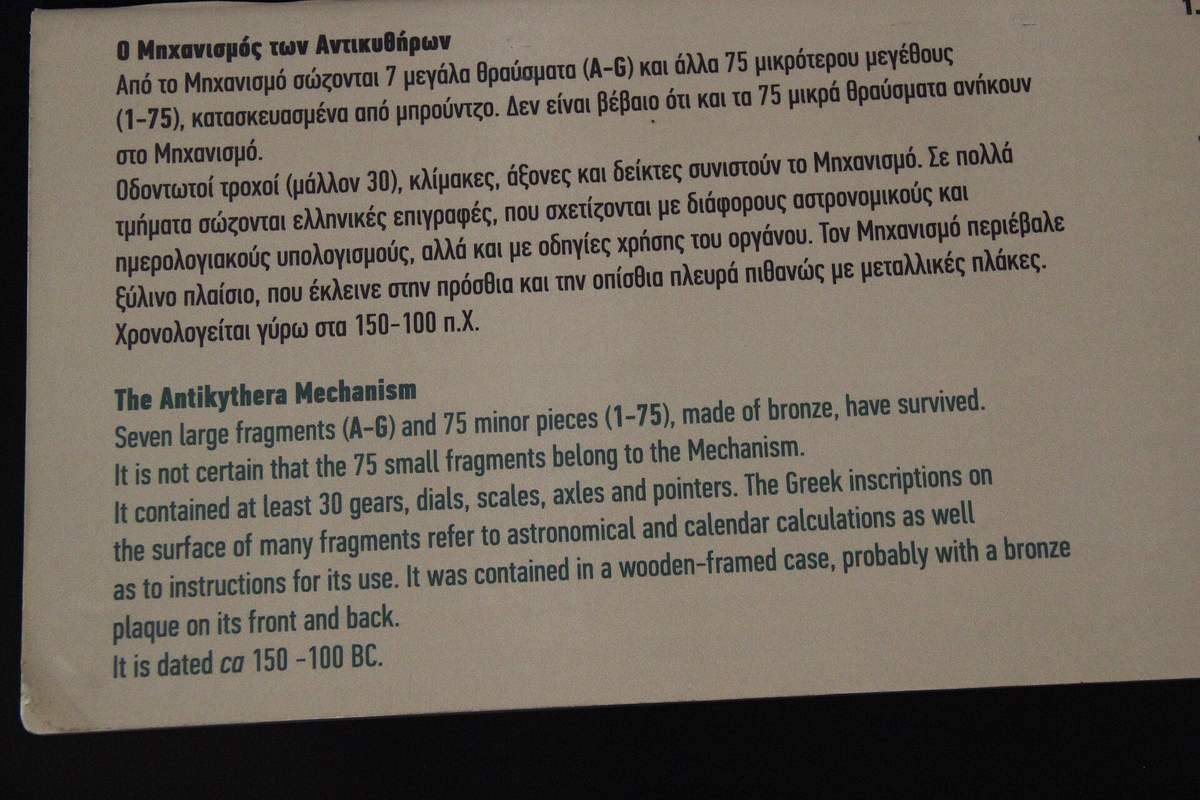
Visitors can see functioning reconstructions of devices that seem astonishingly advanced for their age, including the celebrated Antikythera Mechanism, often described as the first known computer in history. Far from dry or academic, the museum is hands-on, engaging and genuinely eye-opening, overturning the assumption that the ancient Greeks were great only in philosophy and art. For anyone curious about how the ancients actually built, measured and moved their world, it is a revelation. It complements the ancient art of the nearby Museum of Cycladic Art. Its setting is as special as its contents.
What is the museum building like?
The Kotsanas Museum occupies a beautiful three-storey Art Nouveau building in the smart Kolonaki district, about 400 metres from Syntagma Square. The handsome mansion was once the residence of King Alexander of Greece and his wife, Princess Aspasia. Its elegant rooms make a fitting and atmospheric setting for the museum’s working models of ancient Greek technology.
The setting of the Kotsanas Museum adds considerably to the pleasure of a visit, for its collection is housed in a genuinely beautiful and historic building in one of the city’s most elegant neighbourhoods. The museum occupies a graceful three-storey Art Nouveau mansion in the heart of the chic Kolonaki district, only about 400 metres from Syntagma Square and its metro station, making it very easy to reach. The handsome building carries its own royal history, having originally been the residence of King Alexander of Greece and his wife, Princess Aspasia, lending the museum an air of refinement and distinction.
Inside, the elegant period rooms across the three floors provide a fitting and atmospheric backdrop for the displays, with the museum cleverly organised into distinct sections, effectively three museums in one, devoted respectively to ancient technological inventions, to ancient Greek musical instruments and toys, and to ancient weapons and armour. The combination of a beautiful neoclassical-era mansion and ingenious ancient machines creates a memorable contrast and a comfortable, well-presented visit. The setting alone makes it worth seeking out. The district itself is profiled in the Kolonaki guide. The collections are the real marvel.
What collections does the museum hold?
The museum holds over 100 working models of ancient Greek inventions across several themed collections: technology and machines (clocks, automata, robotics, navigation, surveying), the Antikythera Mechanism, and a separate section of around 42 reconstructed ancient Greek musical instruments and games, plus ancient weapons and armour. All are interactive reconstructions built from ancient sources.
The richness and variety of the Kotsanas Museum’s collections are what make it so absorbing, with more than a hundred working reconstructions spanning the full breadth of ancient Greek ingenuity. The core technology collection gathers functioning models of devices for an astonishing range of purposes: precise water clocks and time-keeping instruments, surveying and navigation tools, cranes and lifting machines, hydraulic and pneumatic devices, cryptography and telecommunications systems such as signal beacons, and remarkable early automata and robotics, machines that moved and performed tasks automatically. Pride of place goes to the reconstruction of the Antikythera Mechanism, the intricate geared device used to predict astronomical positions and eclipses, widely regarded as the first analogue computer.
Beyond the machines, the same building houses a separate collection of around 42 fully functional, reassembled ancient Greek musical instruments, along with ancient games and toys, demonstrating the science of sound and play, and a further section devoted to ancient weapons and armour. Crucially, almost everything is interactive: many models can be operated, and staff demonstrate selected exhibits, so you see the inventions actually working. This breadth turns a visit into a journey through the whole sweep of ancient Greek science. The musical heritage echoes across the city’s culture. The standout exhibits reward close attention.
What are the highlights of the Kotsanas Museum?
Highlights of the Kotsanas Museum include the working model of the Antikythera Mechanism, the first known computer; ingenious theatre machinery with rotating scenes and the “deus ex machina” crane; early automata and robots; an alarm clock attributed to Aristotle; precise water clocks; and the collection of reconstructed ancient musical instruments. Live demonstrations of selected models bring the highlights vividly to life.
With so many ingenious devices on show, several exhibits stand out as the highlights that most amaze visitors and reveal the genius of ancient Greek engineering. The undisputed star is the reconstruction of the Antikythera Mechanism, the extraordinary geared astronomical calculator recovered from an ancient shipwreck and often called the world’s first computer, here rebuilt so its workings can be understood. Equally captivating is the ancient theatre machinery, including reconstructions that rival modern stagecraft, with rotating scenes, moving stages and the famous crane that literally lowered a “deus ex machina”, a god, onto the stage in ancient drama. Lovers of curiosities delight in the early automata and robotic devices, such as self-moving servants and mechanical figures, and in the surprising alarm clock attributed to the philosopher Aristotle, alongside an array of precise water clocks for measuring time day and night.
The collection of around 42 reconstructed ancient musical instruments, all playable, is another highlight, demonstrating the Greeks’ mastery of acoustics. Because staff give live demonstrations of selected exhibits at no extra cost, you can watch these marvels actually operate. These working wonders make the museum unforgettable. The inventiveness reflects the wider achievements of ancient Athens. The museum appeals to a wide audience.
Who will enjoy the Kotsanas Museum?
The Kotsanas Museum appeals to families with children, who love the interactive working models, as well as anyone interested in science, engineering, history or ancient Greece. Its hands-on, demonstration-led approach makes it especially good for kids and curious adults alike, and as a compact, air-conditioned indoor museum it is ideal for a hot day or a break from the ancient sites.
One of the great strengths of the Kotsanas Museum is its broad appeal, making it a rewarding stop for many different kinds of visitor. Families with children find it especially delightful, as the interactive, working nature of the exhibits, with models that move, operate and can sometimes be tried, captures young imaginations far more effectively than static displays, turning a museum visit into genuine fun and discovery. Science and engineering enthusiasts of all ages are fascinated by the ingenuity of the ancient devices and the clever reconstructions, while history lovers gain a completely fresh perspective on ancient Greece, seeing it as a civilisation of brilliant inventors and engineers, not just philosophers and sculptors.
The free, staff-led demonstrations of selected exhibits, available in English and Greek, add greatly to the experience and suit curious adults and children alike. Practically, the museum is compact, well-presented and air-conditioned, making it an excellent indoor activity during the fierce summer heat or a welcome change of pace from the open-air archaeological sites. Internationally acclaimed and even nominated for European Museum of the Year, it punches well above its size. For families and the curious, it is a hidden gem. More family ideas appear in the Athens with kids guide. Planning a visit is simple.
How do you visit the Kotsanas Museum?
The Kotsanas Museum is in Kolonaki, about 400 metres from Syntagma Square and metro station. It opens daily, with winter hours around 9am to 5pm and longer summer hours to 8pm. Admission is about €5, including free staff demonstrations and guided tours in English and Greek. Allow one to two hours to explore it, and combine it with nearby Kolonaki and Syntagma.
A visit to the Kotsanas Museum is easy to arrange and excellent value, fitting neatly into a day in central Athens. The museum is located in the smart Kolonaki district, only about 400 metres from Syntagma Square and its metro station on lines 2 and 3, so it is within a short, easy walk of the city’s central hub. It opens daily, generally keeping winter hours of around 9am to 5pm and extended summer hours until about 8pm, though it is wise to check the current times before visiting. Admission is very reasonable, at around €5, which includes the wonderful tour-demonstration of selected exhibits given by staff at no extra cost, available in both English and Greek and a real highlight of the visit.
To explore the collections thoroughly, including the technology, musical instruments and weapons sections, allow around one to two hours, more if you linger over the demonstrations. Because of its central location, the museum combines beautifully with a stroll through Kolonaki’s boutiques and cafés, a visit to nearby museums, or the sights around Syntagma and the National Garden. For an affordable, fascinating and family-friendly visit, it is highly recommended. The local routes are explained in the getting around Athens guide. The questions below cover the points visitors ask most.
Frequently Asked Questions
What is the Kotsanas Museum of Ancient Greek Technology?
The Kotsanas Museum is a museum in central Athens displaying over 100 working reconstructions of ancient Greek inventions, from clocks, automata and robotics to the Antikythera Mechanism, the first known computer. Created by engineer Kostas Kotsanas, its interactive models reveal the surprising sophistication of ancient Greek science and engineering.
Is the Kotsanas Museum good for kids?
Yes, the Kotsanas Museum is excellent for children, as its interactive, working models of ancient inventions are far more engaging than static displays, and staff give free live demonstrations. Hands-on and fascinating, it is one of the best family-friendly museums in Athens and a great air-conditioned indoor activity on a hot day.
Where is the Kotsanas Museum in Athens?
The museum is in the Kolonaki district of central Athens, about 400 metres from Syntagma Square and its metro station, housed in a beautiful three-storey Art Nouveau mansion. It is an easy short walk from the city centre and combines well with Kolonaki and the nearby museums.