
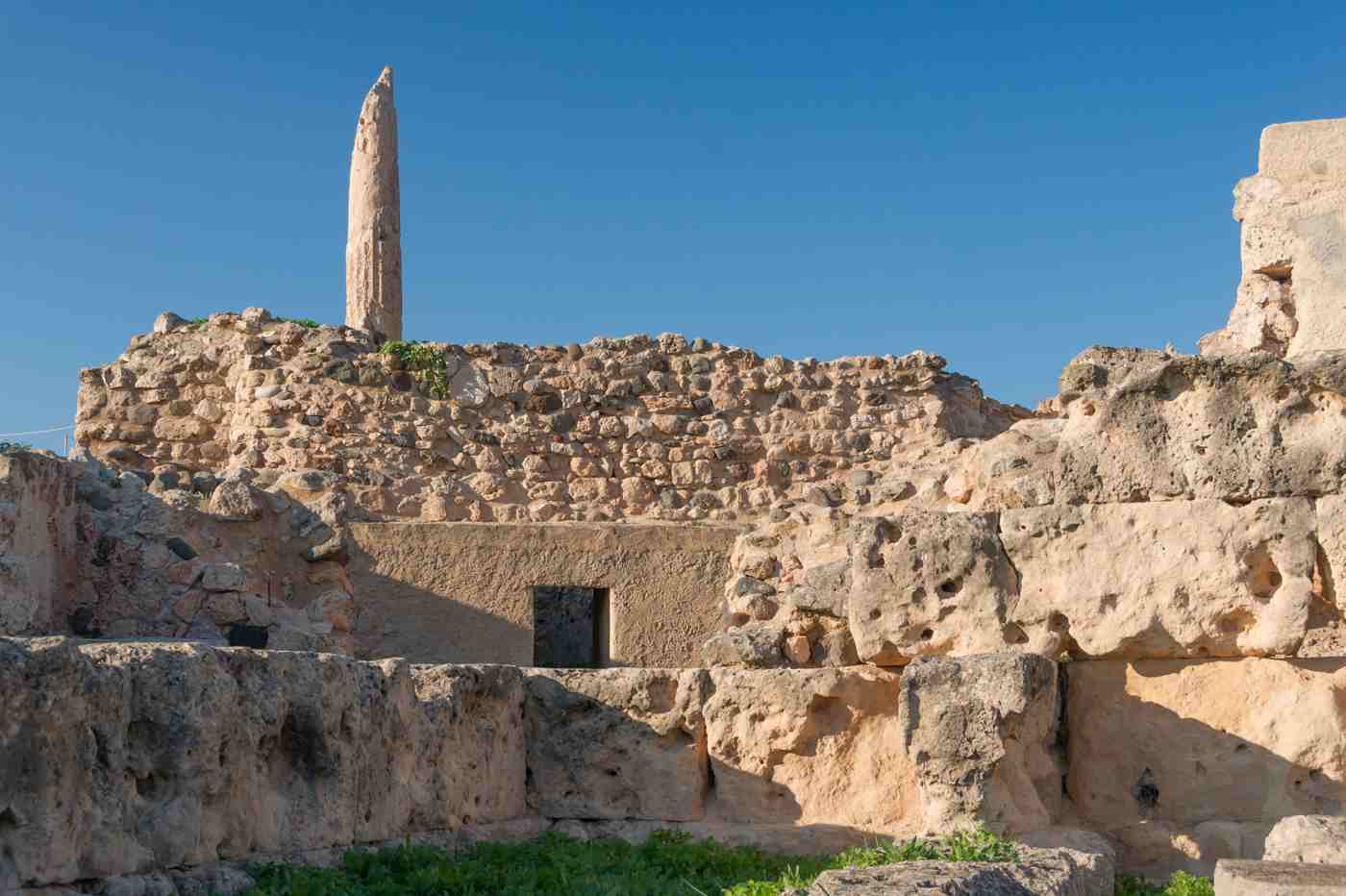
Kolona is the ancient acropolis of Aegina, an archaeological site set on a low hill by the sea just north of the harbour of Aegina Town. Its name, meaning column in Greek, comes from the single tall column that still stands there, the last surviving pillar of an ancient Temple of Apollo. Inhabited continuously for well over four thousand years, from prehistoric times through the island’s golden age as a great sea power. Kolona is one of the oldest and most important sites in the Saronic Gulf. Today visitors can walk among its layered ruins, see finds in the adjoining archaeological museum. Plan the whole trip with Greece Tours.
Enjoy a small beach right beside the site, all within minutes’ walk of the port.
This guide explains everything about Kolona on Aegina: what the site is, why it is called Kolona, what you can see among its ruins and in its museum. Its remarkable history stretching back over four millennia, the beach alongside it. Practical details on visiting this ancient acropolis by the harbour.
What is Kolona in Aegina?
Kolona is the archaeological site of ancient Aegina’s acropolis, on a low hill by the sea just north of Aegina Town’s harbour.
Kolona is the ancient acropolis of Aegina, a hill rising gently by the sea a short walk north of the main harbour in Aegina Town. This was the fortified heart of the island in antiquity and long before. It is now an open archaeological site where the remains of temples. Walls and settlements from many different eras lie layered one upon another.
The site takes its name, Kolona, from the solitary column that still stands on the hill, a lasting remnant of an ancient temple. Compact and easy to visit, with the sea on one side and the town on the other, it combines a deep sense of history with a beautiful coastal setting. Making it one of the essential sights of a visit to Aegina and a place where the island’s ancient greatness is still tangible.
Why is the site called Kolona?
The site is called Kolona, meaning column in Greek, after the single tall column that still stands on the hill.
The name Kolona comes directly from the Greek word for column, and it refers to the one great pillar that still rises on the hilltop. This lone column is all that remains standing of a once-imposing Doric Temple of Apollo that crowned the acropolis in ancient times. Built during the island’s era of wealth and power. Where a whole colonnade once stood, a single column now survives, and it has given its name to the entire site.
For generations of sailors approaching Aegina, this column was a familiar landmark, visible from the sea and marking the position of the harbour and the ancient city. That enduring, solitary pillar has become the emblem of the site and one of the most recognisable images of Aegina. A poignant symbol of the grandeur that once stood here and of the centuries that have passed since.
What can you see at the Kolona archaeological site?
At Kolona you can see the famous single column of the Temple of Apollo, the foundations of temples and ancient buildings, remains of fortification walls and prehistoric settlements, all spread across the seaside hill.
The centrepiece of the site is undoubtedly the surviving column of the Temple of Apollo, standing tall against the sky and sea. Around it lie the foundations and lower courses of the temple itself and of other ancient buildings. Along with stretches of the old fortification walls that once defended the acropolis. The traces of settlements dating back to prehistoric times.
The ruins are richly layered, with remains from different eras overlapping across the site. Information around the area helps visitors make sense of what they are seeing. Even without deep knowledge it is a wonderfully atmospheric place to wander. With the ancient stones, the wildflowers and the sparkling sea combining to evoke the island’s distant past.
What is the Archaeological Museum of Aegina at Kolona?
The Archaeological Museum of Aegina stands beside the Kolona site and is one of the oldest museums in Greece.
Adjoining the archaeological site is the Archaeological Museum of Aegina, which has the distinction of being one of the very oldest museums in the country. Small but rewarding, it gathers together the most important finds unearthed at Kolona and elsewhere on the island, providing the context that brings the ruins outside to life.
Inside, the displays range across the island’s history, with prehistoric and Bronze Age artefacts. Ancient pottery and sculpture. Objects of daily life, many recovered from the very hill on which the museum stands. Visiting the museum and the site together gives a fuller picture of Aegina’s remarkable past. The entrance to Kolona is generally through the museum, so the two form a single, connected experience.
What is the history of the Kolona hill?
Kolona has been inhabited for over four thousand years, since around 3000 BC in the Bronze Age, serving as the acropolis of ancient Aegina.
Few places in Greece have as long a story as Kolona. Archaeological evidence shows that the hill was settled from around 3000 BC in the early Bronze Age. It remained occupied through the centuries that followed. Making it one of the longest continuously inhabited sites in the whole Aegean region and the ancient core of the island.
Kolona stood at the centre of the island’s fortunes during its golden age, when Aegina was a leading maritime and trading power and a rival of Athens. It was in this era of prosperity that the great Temple of Apollo was raised on the hill. For more on that remarkable era and the wider story of the island, see our guide to Aegina’s history, of which Kolona is the tangible, living record.
Is there a beach at Kolona?
Yes, there is a small sandy beach right beside the Kolona archaeological site, known as Kolona beach.
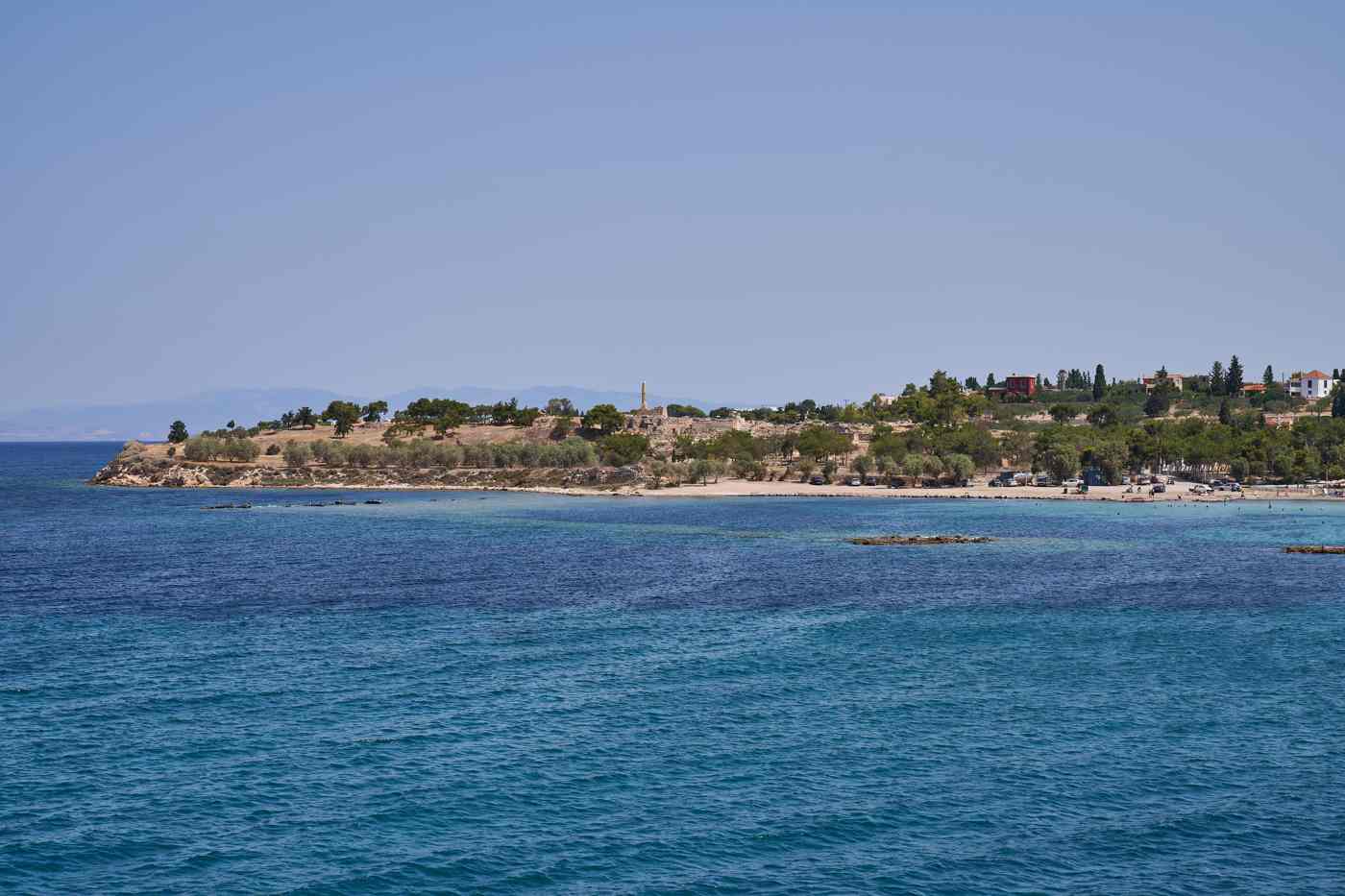
Right next to the archaeological site lies Kolona beach, a small stretch of sand and shingle beside the ancient hill. Its position, just a short walk from the centre of Aegina Town and beneath the historic acropolis. Makes it one of the most convenient places to swim on the island, especially for those staying in or visiting the town.
The sheltered water here is pleasant for a dip, and the setting is unusual, with the ancient column and ruins rising directly above the sand. This makes it easy and appealing to pair a morning exploring the ruins and museum with a refreshing swim. A combination of culture and sea that sums up the relaxed charm of Aegina. For the island’s other beaches, see our guide to the best beaches on Aegina.
How do you visit Kolona on Aegina?
Kolona is an easy walk of minutes north from the harbour of Aegina Town, following signs for the archaeological site and museum.
Reaching Kolona hardly be simpler. From the ferry dock in Aegina Town, it is only a short walk of minutes north along the waterfront to the site, which is clearly signposted, so it is easily done on foot without any need for transport. This closeness to the port makes it a perfect stop at the start or end of a day on the island.
The site and its museum are open to visitors for a modest entrance fee. With access generally through the archaeological museum. An hour or two is enough to take in both the ruins and the exhibits at a relaxed pace. Comfortable shoes and some sun protection are worth having, as the hill is open to the sun. Combining the visit with the neighbouring beach and a wander around the town makes for an easy, rewarding half-day rooted in Aegina’s ancient past.
Frequently Asked Questions
What is the column at Kolona in Aegina?
The column at Kolona is the single surviving pillar of an ancient Doric Temple of Apollo that once stood on the acropolis of Aegina. It is from this lone column that the whole site takes its name, Kolona meaning column in Greek. Built during the island’s era of wealth and power as a great sea-trading state. The temple originally have had a full colonnade. Over the centuries all but one of its columns were lost, leaving the single tall pillar that stands today. For generations of sailors it served as a landmark marking the entrance to Aegina’s harbour. Visible from the sea.
It has become the emblem of the site and one of the most recognisable images of the island. Standing beside it, with the ruins of the temple’s foundations around and the sea beyond. Visitors get a vivid sense of the grandeur that once crowned this ancient hill and of the long history that has passed since it was built.
How old is the site of Kolona?
The site of Kolona is extraordinarily old, with evidence of settlement stretching back to around 3000 BC in the early Bronze Age. Which makes it one of the longest continuously inhabited places in the entire Aegean. For well over four thousand years this seaside hill served as the acropolis and ancient core of Aegina. Occupied through the prehistoric and Bronze Age periods, the island’s classical golden age as a leading maritime power. On into Roman times. Because of this vast span of occupation, the ruins at Kolona are deeply layered, with remains from many different eras overlapping across the hill, from prehistoric settlements and fortification walls to the classical Temple of Apollo whose lone column still stands.
The finds recovered here, many now displayed in the adjacent Archaeological Museum of Aegina, one of the oldest museums in Greece, help tell this remarkable story. For anyone interested in the deep past, Kolona offers a rare chance to stand on a site that has been part of human life for over five thousand years.
Is Kolona worth visiting on Aegina?
Yes, Kolona is well worth visiting and ranks among the top sights of Aegina, particularly for anyone interested in history, though its beautiful seaside setting appeals to everyone. As the ancient acropolis of the island, it offers layered ruins spanning thousands of years, crowned by the famous single column of the Temple of Apollo that gives the site its name, together with an archaeological museum, one of the oldest in Greece, displaying finds from the hill and around the island. Its location is a great advantage: it lies only minutes’ walk north of the harbour in Aegina Town. It is easy to reach on foot and simple to combine with exploring the town.
And there is even a small beach right beside the site for a swim. A visit takes only an hour or two but rewards you with a real sense of Aegina’s ancient importance as a great sea power. For its history, its emblematic column and its lovely coastal position, Kolona is a highlight not to be missed.