
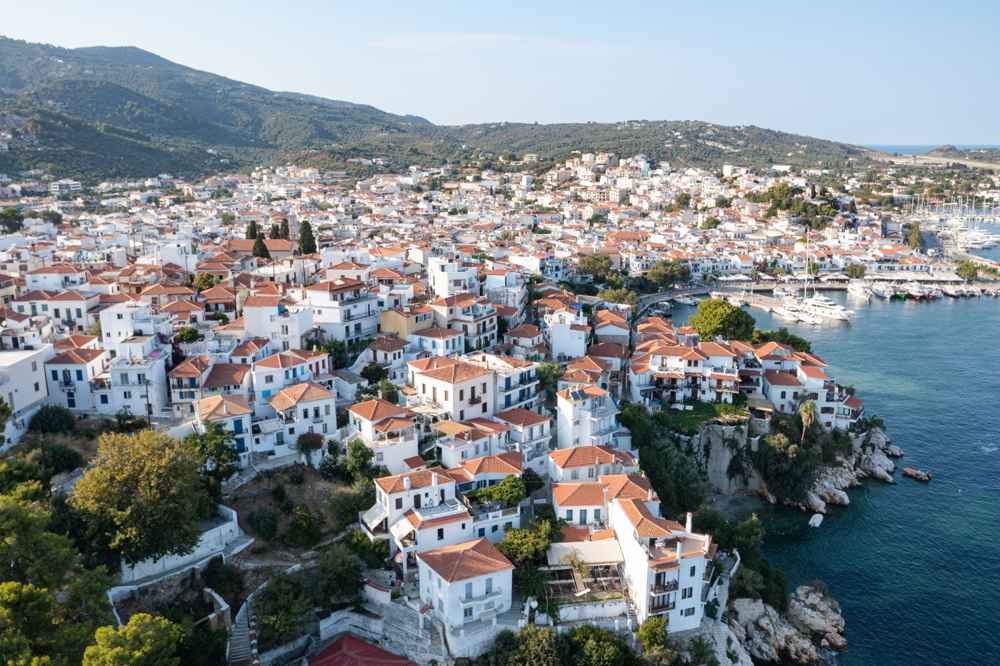
Kechria beach occupies a green, spring-fed valley on the north coast of Skiathos, about 7 km from Skiathos Town over unpaved track. The pebble-and-sand shore faces open water, backed by pines, reeds and running streams. The abandoned monastery of Panagia Kechria, one of the island’s oldest, guards the approach with surviving frescoes. Plan the whole trip with Greece Tours.
This guide maps where Kechria lies and how the valley stays lush, describes the undeveloped beach and its north-facing waves, and explains the meltemi’s effect on swimming. It covers the minimal facilities, what to carry, and the pine-and-reed nature that sets this corner apart from the busy south coast.
Where is Kechria beach on Skiathos and why is its valley green?
Kechria beach lies on the north coast of Skiathos, about 7 km from Skiathos Town, inside a spring-fed valley. Underground water feeds pines, reeds and streams, keeping the ground green through the dry summer.
Kechria sits on the northern shore of Skiathos, tucked between the headlands that shelter its narrow bay. The valley opens toward the sea from the wooded interior, funnelling a stream down to the pebbles. Drivers reach the area on a paved road from the Troulos and Kounistra side, then swap to an unpaved track for the final descent. The distance from Skiathos Town runs about 7 km, though the rough surface stretches the drive to around 25 minutes. The route threads pine hills and terraced ground before the water appears below. Signposts mark the turn toward Panagia Kechria, and the track narrows as it drops.
The bay stays hidden until the last bend, screened by dense green cover on both slopes. The interior ridge blocks any view of the south-coast resorts.
The valley owes its green to springs that rise in the hills above Kechria. Water gathers underground across the pine-covered spine of Skiathos and surfaces here as a small permanent stream. The flow runs down the gully toward the beach even in the driest months of high summer. Reeds crowd the watercourse, and plane trees and oleander line the damp ground beside it. This steady moisture explains the thick vegetation that most north-coast ravines lack. The stream keeps the air cooler in the valley floor than on the exposed track above. Frogs and dragonflies gather near the water, and the greenery draws small birds.
The contrast with the parched hillsides on either side marks the valley out at once. Butterflies work the oleander flowers through the warm season.
Panagia Kechria, the monastery that names the beach, stands on the slope just inland from the shore. It ranks among the oldest religious sites on Skiathos, dating from the Byzantine and post-Byzantine eras. The buildings sit abandoned now, roofless in parts, with walls of stone rising from the pines. Fragments of wall paintings survive inside the church, worn by weather and time yet still legible in places. The complex once held monks who farmed the fertile valley and drew on its reliable water. Its position guarded the northern approach while staying hidden from raiders at sea. The track to the beach passes directly below the ruins, so walkers cross the site on the way down.
The setting ties the shore to centuries of island history.
Kechria stays among the least-visited corners of Skiathos precisely because the road ends in rough track. Bus routes never reach here, and the numbered stops serve only the south coast toward Koukounaries. The valley therefore holds a stillness rare on an island known for lively beaches. Cicadas and the running stream fill the air rather than beach-bar music. The green cover keeps the light soft even at midday, filtered through pine and reed. This isolation shapes the whole visit, from the slow drive to the near-empty sand. The bay reveals itself as a reward for the effort of reaching it. Nature dominates over development in a way the built-up strip cannot match.
The setting rewards those who plan the trip around a vehicle or a walk.
What is Kechria beach on Skiathos actually like?
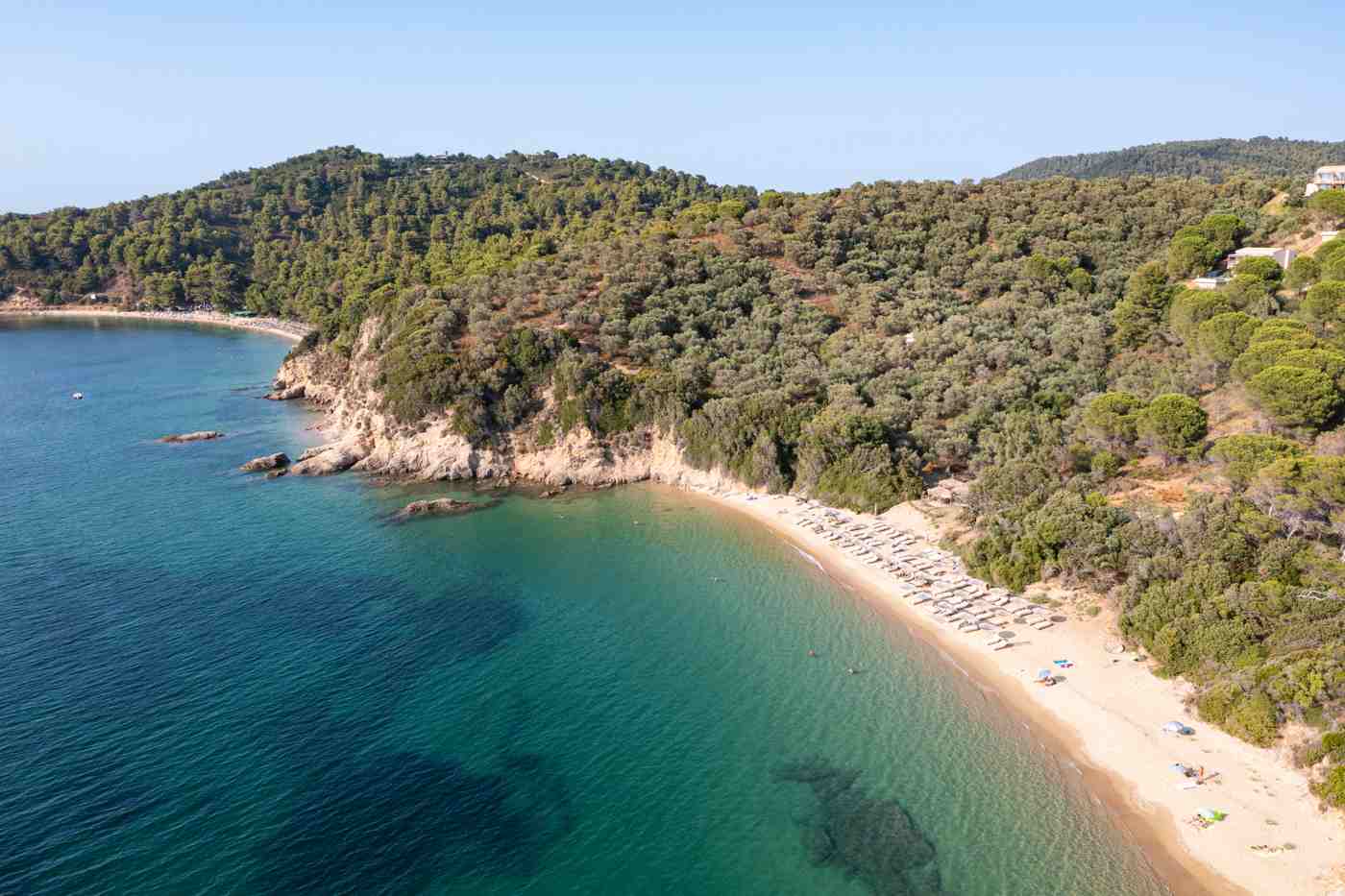
Kechria beach is a mix of pale pebbles and coarse sand along a short north-facing bay. Clear water deepens quickly over a stony bed, and no sunbeds, buildings or paved paths break the undeveloped shore.
The shore at Kechria blends fine grey pebbles near the waterline with patches of coarse sand higher up the bay. This mixed surface separates it from the pure golden sand of the south-coast resorts on Skiathos beaches. The pebbles keep the water clear, since waves stir up little sediment from the stony bed. Entry underfoot stays firm, and swimmers cross a narrow band of stones before the depth drops away. The bay runs a short arc, framed by low rocky points at each end. Green slopes press close behind the sand, and the stream reaches the sea at one corner. The scale stays intimate rather than sweeping, a pocket of shore rather than a long strand.
The setting feels enclosed and quiet. Driftwood collects at the tide line after storms.
Nothing at Kechria resembles an organised beach, and that absence defines the place. No rows of sunbeds or umbrellas line the sand, and no concrete platform backs it. A single seasonal canteen operates at best in peak summer, and often the bay stays empty of any service. Visitors bring their own shade, since the pines behind give only patchy cover near the sand. The lack of paving means the shore meets the valley directly, stones giving way to reeds. Fishing boats sometimes anchor off the points, but no jetty or mooring marks the bay. This raw state draws walkers and drivers who want quiet over comfort.
The undeveloped shore mirrors how much of the north coast looked before tourism reached the south. Litter bins are absent, so visitors carry waste out.
The pebble bed gives Kechria water a clarity that sandy resorts rarely hold. Sunlight reaches the stones about 3 metres down, turning the shallows pale blue over the pale bottom. Snorkellers find rocky edges at both points where fish shelter among the weed. The stony floor stays cool underfoot even when the air bakes above. Bathers use sandals to cross the pebbles, since bare feet find the stones sharp in places. The beach shelves at a moderate angle, so depth arrives within short strides. Calm mornings leave the surface glassy, mirroring the green slopes behind. The clean water is one practical reward for the rough trip in.
The bay repays careful entry with the clearest swimming on the north coast. Afternoon breezes ripple the shallows and cool swimmers quickly.
Reaching the sand at Kechria completes the sense of a place apart from the resort coast. The final track drops steeply through the ruins and the reed beds to the shingle. Cars park on rough ground behind the beach, room for only a handful of vehicles. Walkers arrive on foot from the interior trails, emerging from pines onto the open bay. The stream mouth marks one end, where fresh water meets the salt over the pebbles. Low rock ledges at the flanks give spots to sit away from the waterline. The whole shore takes minutes to walk end to end, so it never feels crowded. This compact, hard-won bay rewards the descent with quiet and clean water.
The effort filters out the casual crowds entirely.
How is swimming at Kechria affected by the meltemi on Skiathos?
Kechria faces open north water, so the meltemi wind drives real waves onto the beach. Calm days give clear, flat swimming, but a blowing meltemi churns the shore and makes entry over the pebbles harder.
The meltemi is the dry north wind that sweeps the Aegean through high summer, and it shapes every north-coast beach on Skiathos. Kechria opens straight into its path, so the bay takes the full run of the sea when the wind blows. Whitecaps build across the strait and roll onto the pebbles in sets. The same wind that shelters the south coast turns Kechria lively and rough. Swells arrive even after the wind eases, since the open water holds the motion. Wind strength climbs through the afternoon on most summer days, then drops toward evening. Morning often gives the calmest window before the meltemi wakes.
Reading the forecast decides whether Kechria swims flat or wild on any given day. The contrast with sheltered bays is stark.
Calm conditions transform Kechria into one of the clearer swims on the north coast. Flat water lets the pebble bed show through to depth, pale and bright under the sun. Swimmers cross the shallows easily and reach open water within short strides. The absence of crowds means the bay stays undisturbed even at midday. Snorkelling works well along the rocky flanks when no swell stirs the bottom. These settled spells often fall in early summer or in the wind’s lulls. The sea warms through the season, reaching comfortable temperatures by midsummer. A calm Kechria rewards the effort of the drive or walk with quiet, clean bathing.
Timing a visit to a windless forecast turns the rough bay into a gentle one. The reward justifies the planning.
A blowing meltemi demands caution at Kechria, since the bay offers no lifeguard and no crowd nearby. Waves break directly on the pebbles, and the backwash drags stones and feet toward deeper water. Entry and exit turn awkward as the shingle shifts under each surge. Undertow strengthens in the middle of the bay when the swell runs high. Strong swimmers still enter on rough days, but weaker bathers stay in the shallows or wait. Children need close watching when the sea churns, given the sudden depth off the stones. The rocky points grow hazardous as waves slam against them. Judging the sea before entering matters more here than on any patrolled south beach.
The empty setting means self-reliance governs a swim in rough conditions. Common sense keeps the visit safe.
Choosing when to swim at Kechria comes down to the wind, not the calendar alone. North-coast bays like this one and neighbouring Aselinos share the meltemi’s rhythm across the season. Travellers pair the two on a settled day, since both sit off the same rough track. A forecast of light wind opens the north coast for clear, flat swimming. A strong meltemi sends bathers back to the sheltered south, where Vromolimnos and Koukounaries stay calm. This flexibility defines a Skiathos beach plan built around the daily wind. Kechria rewards patience with clean water on its good days and drama on its wild ones. Watching the sea state before committing to the drive saves a wasted trip.
The wind, in the end, writes the itinerary here.
What facilities does Kechria beach on Skiathos have and what you bring?
Kechria offers almost no facilities beyond a small seasonal canteen that opens in peak summer at best. Visitors carry water, food, shade and sturdy footwear, since no shops, sunbeds or lifeguards serve this remote north-coast bay.
Facilities at Kechria stop at the barest minimum, and even that runs only in high summer. A small canteen sometimes opens behind the beach, selling cold drinks and light snacks when trade allows. Its hours stay unpredictable, tied to the season and the day’s visitor numbers. No permanent taverna, shop, kiosk or toilet block stands anywhere in the valley. Sunbeds and umbrellas are absent, so shade comes from the pines or from gear carried in. No electricity or fresh-water tap serves the shore beyond the natural stream. The nearest reliable services sit back along the south coast, a rough drive away. Planning around this emptiness is essential rather than optional.
The bay works as a self-contained trip where visitors supply their own comfort entirely. Mobile signal weakens in the enclosed valley too.
Water tops the packing list for Kechria, since no tap or shop sells it at the shore. Two litres per person suits a summer day on the exposed north coast. Food matters just as much, because the canteen cannot be relied on to open. Sandwiches, fruit and salted snacks travel well and cover a full day at the bay. A cool bag keeps supplies fresh through the heat of midday. Sun protection ranks next, with a hat, high-factor cream and sunglasses against the strong glare. A beach umbrella or shade tent earns its space, given the patchy tree cover. Sturdy sandals protect feet on the pebbles and on the rough track down.
A small first-aid kit covers cuts from the stones. Preparation makes the difference here.
Getting to Kechria shapes the packing as much as the beach itself does. The unpaved track suits a jeep, quad or careful scooter rather than a low hire car. Ground clearance matters on the rutted final stretch down through the valley. Fuel up before leaving the south coast, since no station stands anywhere near. A full tank counts, given the slow crawl over the rough surface both ways. Walkers reach Kechria on signed trails from the interior, a route that ends at an empty bay. Boots or trail shoes suit the stony paths better than sandals for that approach. Start early to beat the midday heat on the exposed descent.
The remoteness means a breakdown or a twist leaves little help nearby. Self-sufficiency stays the rule.
Leaving Kechria as clean as you found it completes the visit to an undeveloped shore. No bins stand at the beach, so all rubbish travels back out in the bag it came in. The valley’s stream and greenery stay healthy only when visitors carry their waste away. Pack a rubbish bag with the food and water at the start. Time the trip for morning arrival, before the meltemi rises and the heat peaks. Allow a slow drive each way, so the day never feels rushed on the track. Tell someone your plan, given the thin phone signal and the isolation. Respect the monastery ruins on the path down, walking around the frescoed walls rather than through them.
These simple habits keep Kechria wild for the next arrivals. Careful visitors protect the valley.
What makes the Kechria valley on Skiathos so green and lush?
Kechria’s valley stays green because permanent springs feed a stream through the ravine year-round.
Stone pines dominate the Kechria valley, the same Aleppo and umbrella species that cloak much of the Skiathos interior. Their canopy closes over the track and the stream, throwing shade across the descent to the beach. Resin scents the warm air, strongest where the sun heats the bark at midday. The trees grow tall on the moist valley floor, taller than the stunted pines on the dry ridges. Roots grip the banks of the stream and hold the soil against winter rains. Fallen needles carpet the ground soft underfoot along the paths. The pine cover shelters the whole ravine from the worst of the sun and wind.
This green roof marks the valley out from the open hillsides around it. The forest reaches almost to the pebbles.
Reeds and running water form the heart of the Kechria valley, unusual for a Greek island in high summer. The permanent stream threads the ravine floor and reaches the sea at one end of the bay. Tall reed beds crowd the banks, green and dense where the ground stays wet. Plane trees and oleander thrive alongside, plants that demand steady moisture to survive the heat. The flow slows into shallow pools that hold water long after mainland streams dry out. This freshwater ribbon supports frogs, dragonflies and small birds through the driest months. The sound of running water carries along the track, rare on a summer Aegean beach.
The stream also cools the valley air below the temperature on the exposed slopes. Life gathers wherever the water runs.
Walking the Kechria valley reveals the green world at close range, a reward on its own for reaching the bay. Signed trails link the beach to the interior and to the abandoned monastery on the slope. The paths cross the stream, pass under the pines and thread the reed beds toward the sand. A route through here ranks among the most rewarding stretches of hiking on Skiathos, trading dry ridge for shaded ravine. Birds call from the canopy, and the water keeps the air fresh even at midday. The Panagia Kechria ruins add a historic pause partway down the descent. Spring brings wildflowers and the fullest flow, while autumn softens the light.
Proper shoes handle the stony ground, and the shade eases the effort. The walk binds nature and shore together.
The lush Kechria valley stands as one of the greenest corners of the whole Sporades, not just of Skiathos. Its permanent water sets it apart from the parched ravines that scar most Aegean islands. This microclimate of shade and moisture supports plants and creatures the dry hills cannot hold. The contrast sharpens the moment the track drops from the bare ridge into the green gully. Pine resin, reed rustle and running water replace the dust and glare of the interior above. The valley shelters the beach, feeds it fresh water, and frames it in living green. This union of forest, stream and undeveloped shore defines the character of Kechria.
The green north valley rewards the effort of reaching it with a rare kind of quiet. Few island bays feel this wild.
What can you see at the abandoned Panagia Kechria monastery on Skiathos?
Panagia Kechria monastery stands roofless above the valley, ranking among Skiathos’s oldest religious sites. Surviving wall frescoes, a stone church shell and old monk cells mark a foundation tied to the island’s Byzantine and monastic past.
The monastery of Panagia Kechria sits on a slope above the valley that carries its name. Builders raised it in stone during the Byzantine centuries, making it one of the oldest religious foundations on Skiathos. The main church has lost its roof, so daylight now falls across the nave and the weathered walls. Thick masonry, arched doorways and the outline of old monk cells still define the plan. Fig trees and reeds crowd the abandoned courtyard, and the spring that feeds the valley runs close by. The setting explains the choice of site: water, shelter and distance from coastal pirate raiders. Walkers pass the ruin on the way down to the beach.
The short detour rewards the effort with a quiet, roofless sanctuary at the head of the green valley.
Frescoes survive on the inner walls despite the missing roof and long neglect at Kechria. Painted saints, haloed figures and fragments of religious scenes remain visible where the old plaster has held. Weather has faded the colours, yet the drawing and the ochre and red tones still read clearly at close range. The images follow Orthodox iconographic patterns common to churches across the Aegean islands. Damp, salt air and open exposure threaten what endures, so the painted surfaces flake year by year. Visitors who reach the monastery must look without touching, because contact speeds the loss of the plaster. No guardrails, guides or lighting exist here, and the frescoes sit open to anyone who walks in.
This raw, unmanaged state is part of what makes Panagia Kechria a rare stop on the island.
The Kechria monastery belongs to a monastic tradition that once covered Skiathos and the Northern Sporades. Monks settled inland valleys and hilltops to farm, pray and stay clear of coastal raids. Panagia Kechria drew its community to the spring-fed hollow, where crops and livestock had water through the dry summer. The foundation later declined, and the monks left the buildings to the weather and the surrounding pines. Skiathos Town, about 9 kilometres east, absorbed much of the island’s later religious life at Evangelistria monastery. Kechria stayed remote and slid into ruin instead of renewal. The stone shell now marks the head of the valley, a landmark for walkers and drivers heading north.
Its abandonment, rather than restoration, keeps the site tied to the wild landscape around it and away from tour routes.
Reaching the monastery means following the same rough valley route that leads down to Kechria beach. The ruin stands beside the track, so drivers and walkers pass it without a separate climb. A short scramble brings you to the church doorway and the open, roofless interior. Shade from the surrounding pines makes the spot cooler than the exposed shore below it. Nothing is sold or staffed here, so carry water and expect no signage inside the walls. Photographers work with the contrast of dark stone, green foliage and bright sky through the missing roof. The monastery pairs naturally with a swim, turning a beach trip into a half-day of history and landscape.
Respecting the fragile frescoes and the loose masonry keeps the ruin standing safely for the walkers who follow later.
How do you drive the access road and track to Kechria beach on Skiathos?
The Kechria road leaves the island’s central spine and drops north as tarmac, then turns to a rough dirt-and-stone track. The final stretch demands a jeep, quad or slow, careful scooter, roughly 9 kilometres from Skiathos Town.
The route to Kechria branches off the main road that crosses the interior of Skiathos. Signposts for Kechria mark the turning, and the first section runs on tarmac through the pine forest. The surface then breaks down into compacted dirt, loose stone and exposed rock as the track descends the valley. Ruts, washboard ripples and the occasional water channel slow every vehicle to walking pace in places. The gradient steepens toward the coast, so brakes and low gears matter on the way down. Rain turns the clay sections slick, and summer heat bakes them into hard, rutted ground. Drivers cover roughly 9 kilometres from Skiathos Town, most of it slow.
The valley floor and the ruined monastery finally come into view down below the trees.
Vehicle choice decides how comfortable the Kechria track feels from start to finish. A four-wheel-drive jeep handles the ruts and loose stone with the most clearance and grip. Quad bikes suit the terrain too, and riders reach the valley on them. A standard hire car scrapes its underside on the rock and risks real damage, so most contracts forbid the unpaved sections. Riders on a scooter can manage in dry conditions, but only slowly and with sure footing on the gravel. Booking the right vehicle through a Skiathos car rental desk avoids a stranded afternoon and a broken sump. Ask the agency directly which categories they clear for dirt roads.
The wrong car turns a short trip into an expensive recovery from the north coast.
The drivable track ends near the valley floor, close to the abandoned monastery and the reed beds. A rough clearing serves as informal parking, with room for a handful of vehicles among the trees. From there a short walking path continues to the shoreline, crossing the stream bed and the last of the pines. Shade at the parking spot keeps vehicles cooler than an exposed coastal car park would. No barrier, attendant or fee controls the area, so arrive early on busy days to find space. The final walk to the water takes only minutes over uneven, stony ground. Sturdy shoes help on the loose stones between the car and the sand.
Leaving valuables out of sight is wise, since the isolated clearing sees no supervision through the day.
Timing the drive around the weather and the light improves the whole trip to Kechria. Morning runs avoid the afternoon heat that bakes the exposed track and the treeless upper slopes. Dry days keep the clay sections firm, while rain makes the descent greasy and the ruts deeper. Dust hangs in the still air behind vehicles, so leaving a gap on the track keeps the view clear. The road carries little traffic, and the passing places on the narrow sections are few. Sounding a horn on the blind bends warns anyone climbing the other way. Fuel, water and a charged phone matter, because no services line the route to the coast.
Allowing about 30 to 40 minutes each way from Skiathos Town, plus swimming time, shapes a relaxed half-day rather than a rushed dash.
How do you reach Kechria beach on foot along Skiathos’s signed trails?
Signed footpaths link Kechria with the interior of Skiathos, branching from the Kastro trail network and the cross-island tracks. Walkers descend the pine valley on marked routes, reaching the beach in about one to two hours.
Skiathos carries a network of waymarked footpaths that thread the forested interior toward the north coast. A set of these routes feed into the Kechria valley from the higher ground near the centre of the island. Painted marks, cairns and wooden signs guide walkers where the track narrows under the pines. The paths follow old mule routes that once linked the monastery and inland farms to the shore. Gradients stay moderate on the descent, though loose stone and roots demand steady attention. The forest gives shade for much of the way, a relief that the exposed beach cannot match. Walkers reach the monastery first, then continue down the dry streambed toward the sand.
The signed approach turns Kechria into a destination for hikers as much as for drivers with a jeep.
One approach starts near the island’s main cross road and drops through pine woodland into the valley head. Another links the Kastro path along the north coast, letting walkers combine the ruined old capital with Kechria in one outing. Distances run from about 4 to 7 kilometres depending on the starting point and junction choices. Water sources are unreliable, so carrying one and a half to two litres per person matters in the heat. The streambed in the valley floods after rain and dries to bare stones through summer. Following the painted waymarks prevents wrong turns where sheep tracks cross the main path.
A printed map or an offline GPS track backs up the signs where the paint has faded. The reward at the bottom is a swim before the long climb back inland.
Footwear and timing shape a safe walk to Kechria more than raw fitness does. Closed trail shoes grip the loose stone and protect against the low thorny scrub beside the path. Early starts beat the midday heat on the exposed upper sections before the forest closes in overhead. The return climb from sea level is the hard part, so saving energy and water for it pays off. Shade thins near the coast, and the last stretch to the beach crosses open, treeless ground. A sun hat, high-factor cream and a swim to cool down help on the ascent. Walkers must tell someone their route, because the phone signal drops inside the valley.
Allowing three to four hours for the round trip, plus beach time, keeps the outing unhurried and well within daylight.
Combining the hike with a swim makes Kechria a full day out rather than a quick stop. Walkers can drop down from the interior, rest and swim at the beach, then climb back the same way. Fitter groups link Kechria with the Kastro headland and the coastal path for a longer loop. The monastery ruin sits directly on the route, adding history to the exercise without a detour. Carrying food is essential, since no reliable canteen operates on the shore below. Litter has no bins here, so everything packed in must leave again in the pack. The quiet of the valley, broken only by cicadas and running water, rewards the effort of walking.
Planning the return leg for late afternoon avoids the fierce midday sun on the exposed climb back home.
How does Kechria beach compare with the organised south-coast beaches of Skiathos?
Kechria stays wild and undeveloped, unlike the sunbedded south-coast beaches of Skiathos. It offers no rows of loungers, bars or watersports, trading easy comfort for solitude, north-facing water and a green valley setting far from resort crowds.
The south coast of Skiathos holds the island’s organised, resort-style beaches. Koukounaries, Banana and Vromolimnos line up sunbeds, umbrellas, beach bars and watersports along their sheltered bays. Regular buses run from Skiathos Town to this coast, so crowds arrive without a car. The water there faces south, away from the meltemi, giving calmer swimming through the summer. Facilities, food and shade come ready-made, which suits families and visitors without transport. Kechria offers none of this infrastructure and sits on the opposite, northern shore. Reaching it takes a rough drive or a hike rather than a simple bus ride. The contrast is deliberate for independent visitors.
The south trades solitude for comfort, while Kechria trades comfort for an empty, natural shore backed by its spring-fed valley.
Aselinos gives a useful middle point between the polished south and wild Kechria. Aselinos beach sits on the southwest coast and is reached by a partly paved road. It keeps a taverna and rented sunbeds, yet holds far more open space than Koukounaries. Big Aselinos catches the wind on breezy days, much as Kechria does on its northern shore. Both beaches keep a rural, low-rise feel next to reeds and farmland rather than hotels. The difference is access and services: Aselinos has parking, food and a smoother road, while Kechria has neither of these. Visitors testing the quieter side of Skiathos often try Aselinos first, then push on to Kechria once the rough track feels manageable.
The two beaches together map the island’s undeveloped western and northern edges for the curious traveller.
Water conditions separate Kechria sharply from the southern bays of the island. The north-facing beach takes the meltemi head-on, so waves and cooler, clearer water arrive when the wind blows from the north. South-coast beaches sit in the wind shadow and stay glassy on the very same days. This makes Kechria a fine choice when a southerly blows and the popular bays chop up, and a poor one under a hard meltemi. Seagrass and pebbles mix with the sand at Kechria, while Koukounaries offers fine pale sand from end to end. Snorkellers find clearer water and rockier edges on the north coast when the sea lies flat.
Reading the daily wind direction decides which coast swims better, and the two shores of Skiathos often trade places overnight.
Choice between the two coasts comes down to what a day actually needs. Families with small children, no car and a wish for shade and snacks fit the organised south. Independent visitors with a jeep, a picnic and a taste for empty shoreline lean toward Kechria. The south fills by late morning in peak weeks, while Kechria rarely sees more than a scatter of people. Photographers and walkers prefer the northern valley for its ruined monastery, pines and running water. Sun-and-service beachgoers prefer the loungers and bars of Koukounaries instead. Repeat visitors do both across a week on Skiathos. They use the bus south on windy days and the rough track north when the meltemi drops.
The island rewards mixing the polished and the wild rather than choosing only one.
Who does Kechria beach suit, and when is the best season and time to visit?
Kechria suits independent travellers with a jeep or hiking boots who value solitude over facilities. Late spring and early autumn bring the greenest valley and calmest north-coast sea, while mornings on southerly-wind days give the best swimming.
Kechria rewards a specific kind of visitor rather than the general beach crowd. Independent travellers who hire a jeep or quad reach it easily and treat the rough track as part of the appeal. Walkers and hikers value the signed trails, the pine shade and the ruined monastery along the way down. Photographers come for the green valley, the running water and the roofless church against the sky. Couples and small groups seeking quiet find a shoreline without music, touts or sunbed rows. The beach suits confident swimmers comfortable with waves and a natural, unguarded shore. It works less well for families needing shade, snacks and calm shallows, who fit the southern resorts better.
Knowing this before the drive north prevents disappointment at the empty, service-free coast when they arrive.
Season shapes both the valley and the sea at Kechria through the year. Late spring fills the spring-fed hollow with green reeds, running water and flowering scrub before the summer heat dries it. Early autumn brings warm sea, thinner crowds and softer light after the peak weeks fade away. High summer heats the exposed track and the treeless upper slopes, so early starts matter then. The north-facing beach swims best when the meltemi drops or a southerly wind flattens the water. Winter and early spring leave the track muddy and the seasonal canteen, if any, firmly shut. The greenest, most comfortable window runs through late spring, June and September into early October.
Matching the visit to these shoulder months gives the valley at its lushest and the sea at its calmest.
Time of day and wind direction decide how good a Kechria trip turns out. Mornings stay cooler on the exposed track and give calmer sea before the afternoon breeze builds. Checking the forecast for wind direction is the key step, because a northerly meltemi churns this coast. Southerly or light winds leave the north beaches clear and swimmable, and that is the day to go. Afternoon light warms the valley and the monastery stone for photographs on the way out. Midday sun beats hardest on the treeless clearing and the upper road, so shade and water matter. Planning the swim for late morning and the walk back for cooler hours balances heat and light.
The wind, more than the calendar, sets the ideal day for a visit to Kechria.
Preparation turns Kechria from a gamble into a rewarding day on the north coast. Carrying two litres of water per person, food and sun protection covers the missing services. A charged phone, a paper map and sturdy shoes back up the rough drive or the walk in. Leaving early secures parking in the small clearing and beats the heat on the exposed track. Packing out all litter keeps the valley clean, since no bins stand on the shore. Respecting the fragile monastery frescoes and the loose walls protects the site for later walkers. Checking the wind before setting off decides whether the sea will be swimmable that day.
Visitors who plan around water, wind and daylight leave Kechria counting it among the quietest, greenest corners of Skiathos.
Frequently Asked Questions
What type of car do you reach Kechria beach?
A four-wheel-drive jeep is the safest vehicle for reaching Kechria beach. The access road leaves the tarmac and becomes a rough track of dirt, loose stone and exposed rock for its final stretch. A jeep clears the ruts and steep, uneven sections without grounding its underside. Quad bikes handle the same terrain well and are a common choice for the north-coast beaches. A standard hire car risks scraping its sump and bodywork on the rock, and most rental contracts ban the unpaved sections outright. Scooters can manage in dry weather but only at walking pace, and the gravel makes them unstable on the descent.
Rain turns the clay stretches slippery and deepens the ruts, so conditions matter as much as the vehicle itself. Confirming with the rental agency which categories they clear for dirt roads avoids both damage and a voided insurance policy. Booking a jeep or quad, rather than a car, matches the terrain and keeps the trip trouble-free.
Is Kechria beach suitable for young children?
Kechria suits older children and confident young swimmers more than toddlers or families needing easy comfort. The beach has no lifeguard, no shallow roped-off zone and no facilities, so parents must supervise closely. North-facing water means waves and cooler, sometimes choppy conditions when the meltemi blows, which unsettles small children. Calm, southerly-wind days bring gentler water that suits kids who already swim well. The rough access track and the short walk over stones to the shore make prams and heavy beach gear awkward. Shade is limited to the tree line and the valley edge, so a beach tent or umbrella is essential for children. Carrying water, snacks and any nappies matters, because nothing is sold reliably on site.
Families wanting sunbeds, a canteen and calm shallows fit the organised south-coast beaches better. Parents who bring their own shade, food and water, and pick a calm day, can give older children a quiet, natural beach experience at Kechria.
Is there any shade at Kechria beach?
Shade at Kechria is limited and comes mainly from the pine trees and the valley edge behind the sand. The open shoreline itself has no natural cover through the middle of the day, so the sun reaches across most of the beach. Trees near the back of the beach and around the parking clearing give welcome patches of shade for a picnic or a rest. Bringing an umbrella or a beach tent is the reliable way to stay covered, since no sunbeds or parasols are rented here. The valley walls and vegetation cast longer shadows in early morning and late afternoon, the coolest and most comfortable hours.
Midday sun beats hardest on the exposed sand and along the treeless upper track above. High-factor sun cream, a hat and plenty of water matter because the north coast offers no built shelter. Arriving early lets visitors claim the shaded corners under the pines before the sun climbs high over the valley and the exposed beach.
Is Kechria beach good for snorkelling?
Snorkelling at Kechria works best on calm, southerly-wind days when the north-facing water lies flat and clear. Rocky edges and seagrass beds at the sides of the bay hold small fish, and the mixed pebble-and-sand bottom keeps the water clean. Clarity drops fast when the meltemi blows from the north and stirs sand and weed into the water. The rockier margins give more to see than the open sandy centre, so snorkellers work along the edges of the cove. Bringing your own mask, snorkel and fins is essential, because no shop or rental operates on this remote shore. Water shoes protect the feet from the pebbles and any sea urchins on the rocks.
The absence of boats and crowds keeps the underwater scene undisturbed compared with the busy south-coast bays. Checking the wind before setting out decides the visibility, and a flat, clear day rewards snorkellers with the quiet, rocky north coast at its best.
What happens at Kechria beach on windy meltemi days?
Wind direction decides whether Kechria is swimmable on any given day. The beach faces north, so a northerly meltemi drives waves straight onto the open shore and churns the water. On strong meltemi days the sea turns rough and cloudy, and the sheltered south-coast beaches swim far better. Southerly or light winds leave Kechria calm, clear and ideal, often on the same day the southern bays chop up instead. Checking a reliable wind forecast the evening before is the key planning step for any north-coast trip. The two coasts of Skiathos frequently trade places, so a bad day at Kechria is often a good day at Koukounaries and the reverse.
Dust also lifts on the exposed track in strong wind, adding to the discomfort of the long drive in. Choosing the coast to match the day, rather than fixing the plan in advance, gives the calmest swimming. Flexible visitors simply read the wind forecast and pick whichever shore the weather favours that particular morning.
What are the nearest alternative beaches to Kechria?
Aselinos is the closest alternative in character to Kechria, sitting on the southwest coast with a taverna, rented sunbeds and a partly paved access road. Big Aselinos catches wind like Kechria but offers parking and food, making it an easier quiet-beach day option. Koukounaries, Banana and Vromolimnos on the south coast provide fully organised, serviced beaches with buses, bars and calm, sheltered water for days when the meltemi rules out the exposed north. Mandraki and the Elias beaches, reached by a rough track and a short walk on the northwest coast, share Kechria’s undeveloped, natural feel. Lalaria, the white-pebble cove at the island’s northern tip, is reachable only by boat and pairs well with a Kastro trip.
Visitors basing a day around the north and west coasts can string a chain of these quiet beaches together. Choosing among them depends on the wind, the vehicle available and how much comfort or solitude the whole day calls for on Skiathos.
Which months are quietest at Kechria beach?
Late spring, June, September and early October are the quietest comfortable months at Kechria. These shoulder weeks bring warm sea, thinner crowds and a green, spring-fed valley before or after the peak summer heat. July and August draw the most visitors to Skiathos, yet Kechria’s rough access keeps it far emptier than the bus-served south-coast beaches even then. Late spring shows the valley at its lushest, with running water, reeds and flowering scrub along the streambed. Early autumn holds warm water and softer light while the summer tourist numbers fall away. Winter and early spring leave the track muddy and any seasonal canteen shut, so services and access both suffer.
Weekdays stay noticeably quieter than weekends across the season, and early mornings beat the midday arrivals. Visitors seeking solitude aim for the shoulder months and the early hours, when the valley, the monastery and the beach see the fewest people and the most agreeable weather.