
A Katakolo wine tasting is a visit to a winery near the cruise port of Katakolo, in the Ilia region of the western Peloponnese, with a cellar tour and a tasting of local wines, sold alone or with Ancient Olympia. Tours across the rest of the country are listed on Greece Tours.
The sections below cover the wineries near the port, the Mercouri Estate, the tasting formats, timing around a cruise call, the Olympia combinations, honey and olive oil, the local wines, two-winery excursions, food, reaching a winery from the pier, the season, who it suits and booking, with links into the Olympia pages. The tours shown are checked on GetYourGuide and Viator.
What is Katakolo wine tasting?
Katakolo wine tasting is a short winery visit that begins at the cruise pier in Katakolo, a seaside village in western Ilia, and pours the wines of the Ilia and Letrini zones, with the Mercouri Estate at Korakochori standing 2 km from the port.
A driver or guide meets you at the pier and drives inland to a family estate. Katakolo wine tasting then follows a fixed pattern: a walk through the vines, a look at the production rooms and the barrel cellar, and a seat at a table where the estate pours its own bottles. The visit runs two to four hours, and the nearest estate is about seven minutes away by road.
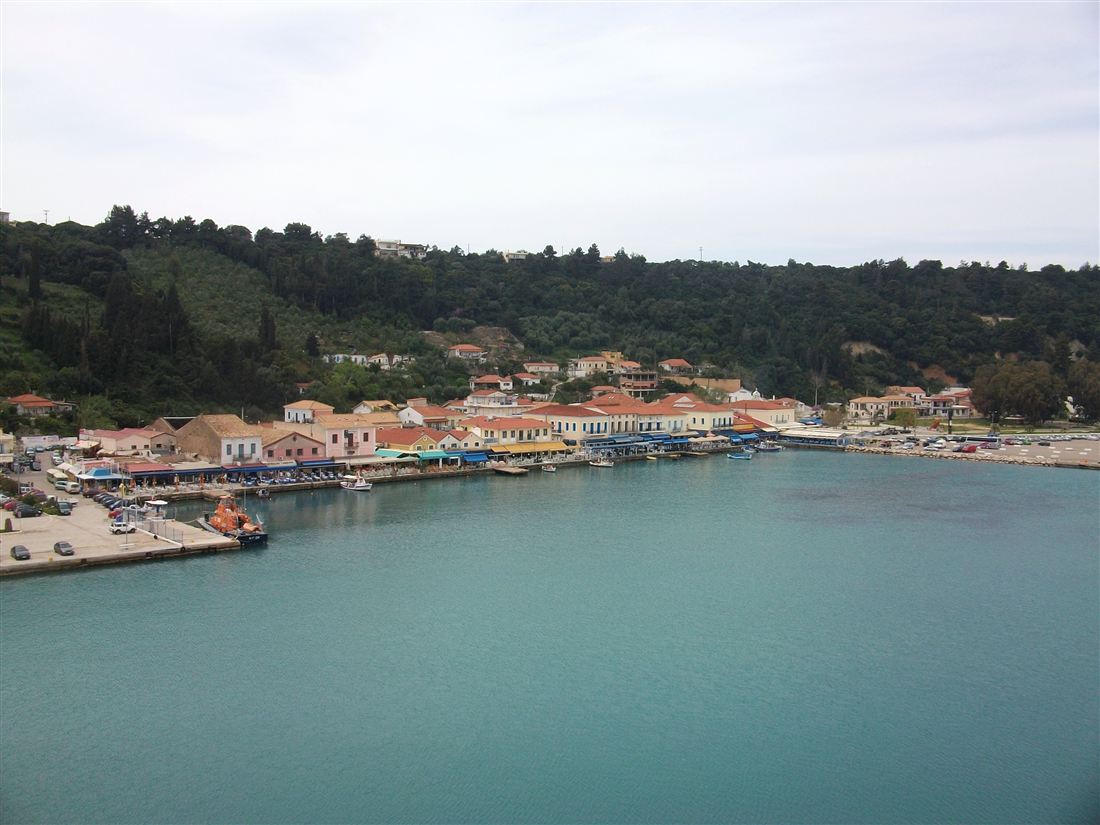
Katakolo is a village of 511 residents, 11 km west of Pyrgos and 320 km northwest of Athens. The port carries the name of the shipowner John Latsis and ranks as the second busiest cruise port in Greece after Piraeus. Ships tie up minutes from the main street, so a Katakolo wine tasting needs no ferry and no long transfer.
The wine comes from the farmland around the port. Korakochori, Koskina, Lantzohi and Paleohori all hold vineyards within a half-hour drive, and the bottles carry the PGI Ilia and PGI Letrini labels. A Katakolo wine tasting differs from a tasting arranged around Olympia itself: it starts at the water, fits a port call, and joins the town’s museums and beaches to the estates inland. For the town itself, see the guide to Katakolo port and its beaches.
Groups stay small on the wine routes. Private cars carry one booking party, small-group tours cap their numbers, and a Katakolo wine tasting arranged directly with an estate can be a table for two or a coach party. Estates ask for advance notice, which keeps the tasting room calm when the group arrives.
- A meeting point on the pier or at the port gate, minutes from the ship
- A drive of 2 to 12 km to the first estate
- A walk through vines, olive groves or a barrel cellar
- A guided pour of estate wines at a shaded table
- Time to buy bottles before the drive back to Katakolo
Which wineries are within reach of a Katakolo wine tasting?
Four estates sit within a short drive of the pier, so a Katakolo wine tasting reaches the Mercouri Estate at Korakochori, the Drouva winery outside Pyrgos, Olympia Land at Koskina and Ktima Brintzikis at Lantzohi, plus Ktima Stavropoulos further north.
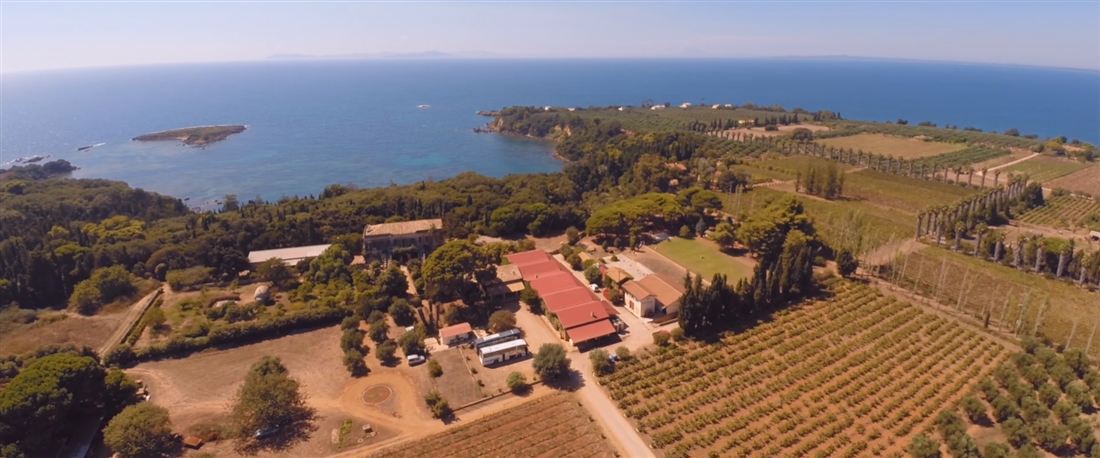
The Mercouri Estate lies on the plateau of the Ichthis peninsula beside Korakochori, 2 km from Katakolo, 12 km from Pyrgos and 32 km from Ancient Olympia. Local drivers put the trip at about seven minutes, which makes it the nearest stop on a Katakolo wine tasting route. The family has made wine, olive oil and currants on the site for more than 150 years, and the first Refosco vines came from northern Italy.
The Drouva winery works on the edge of Pyrgos, about 40 years into its own history of winemaking from estate grapes. The family turned an old brick drying house and a warehouse into fermentation and maturation rooms, modernised them without bank loans, and released the Fonikas range. Ioulia Drouva studied oenology and now runs a boutique cellar that also makes sparkling wine. A Katakolo wine tasting that pairs Drouva with Olympia Land covers two generations of Ilia winemaking in one morning.
Olympia Land Estate stands at Koskina, a short drive from Ancient Olympia, with the Kladeos River running through the property at an altitude of 120 metres. The family revived the vineyard and now farms 100 acres of Assyrtiko, Malagousia, Agiorgitiko, Avgoustiatis, Chardonnay, Merlot and Syrah. It is the first certified visitable winery in Greece, and a Katakolo wine tasting here can add olive oil and olives to the wine.
Ktima Brintzikis sits near Lantzohi, in the Olympia basin, on clay soils fed by local streams. The estate farms Roditis, Tinaktorogos, Malagouzia, Fileri, Assyrtiko, Avgoustiatis, Agiorgitiko and Merlot, and was named the first green winery in Greece, with geothermal energy for its tanks and solar panels for its power. Visitors taste under the Abelon label. Ktima Stavropoulos, a boutique family producer on the northwestern coast, is a longer addition to a Katakolo wine tasting.
What does a Katakolo wine tasting at the Mercouri Estate include?
A Katakolo wine tasting at the Mercouri Estate includes a walk through vineyards and olive groves beside the sea, the old production rooms and barrel cellars, the estate folklore museum and its small chapel, and a tasting under old pine trees.
Theodoros Mercouri bought the land and planted the first Refosco vineyard with cuttings from northern Italy. In the late nineteenth century, ships collected oak barrels of estate red wine from the private bay below the house. The Refosco grape became known across Ilia as Mercouri, and the family still farms the same headland at Korakochori, two kilometres from the pier where a Katakolo wine tasting begins.
The tour takes in the working side of the estate: the vineyards that surround the winery, the olive groves, the production halls and the underground cellars lined with French oak barrels. More than 15 grape varieties grow here, among them a self-rooted Refosco planting that is about 150 years old. A Katakolo wine tasting at this address is a farm visit as much as a cellar visit.
The folklore museum fills the old stables with rural tools and instruments from the estate’s past, and the family chapel stands a short walk away. Peacocks, turtles and Skyrian horses share the grounds, and guests can walk down through the trees to the beach below the house. Tastings are held under old pine trees with the Ionian Sea and Zakynthos in view, which is the part of a Katakolo wine tasting that guests remember longest.
The estate opens daily except Sundays, from 09:00 to 15:00, and asks groups to call or write ahead. Bottles and olive oil are sold on site, so a Katakolo wine tasting can end with a box for the ship. The estate oil is a cold-extracted extra virgin from Koroneiki olives grown in groves more than a century old.
- The vineyard walk, past more than 15 grape varieties
- The production rooms and the barrel cellar
- The folklore museum in the old stables
- The family chapel and the wooded grounds
- A tasting under the pines, with sea views
Which Katakolo wine tasting formats can you book?
Bookable formats run from a two-hour private tasting to a full-day excursion: winery-only tastings, two-winery tours, Olympia with a winery, honey farm and winery combinations, olive oil mill visits, and private boutique cars with a driver-guide.
The shortest option is a winery-only tour. A private two-winery excursion from the John Latsis port runs two to four hours, with the driver waiting at the gate from 09:00, a minivan with air conditioning and WiFi, and about 1 hour 40 minutes at each estate. Meals and soft drinks sit outside the listed inclusions, so a Katakolo wine tasting of this shape suits travellers who pack light.
Olympia with a winery is the standard shape. A four-hour excursion covers the archaeological site and museum, a winery and the beach. A five-hour half-day version adds free time in Olympia village before the tasting. Both leave the pier by road, drive 35 km inland and return to the same gate, which keeps a Katakolo wine tasting inside a normal port call.
Honey and wine combine in three listings. A four-hour shore excursion visits Ancient Olympia, Klio’s Honey Farm and a winery in that order. A five-and-a-half-hour agrotourism tour adds an olive oil mill and a beach stop with a drink. A seven-hour day covers the site, the museum, the honey farm, a winery and a beach. Each of these adds a farm stop to the cellar stop on a Katakolo wine tasting day.
Private boutique formats suit travellers who want the day shaped around one car. Drivers collect guests at the port or at a nearby hotel, licensed guides and archaeology graduates are available on request, and the itinerary stops where the group asks. A small-group boutique expedition adds a guided hour at Olympia, an hour in the village, 50 minutes at an olive oil mill and an hour of wine tasting.
- Winery-only tasting, two to four hours
- Two-winery tour with tastings at both estates
- Olympia site and museum plus one winery
- Honey farm, olive oil mill and winery in one day
- Private car with a driver-guide and flexible stops
How does a Katakolo wine tasting fit a cruise ship call?
A Katakolo wine tasting fits a cruise call because the nearest estate is 2 km from the pier, Pyrgos is 11 km away and the Olympia estates sit about 35 km inland, so a four-hour tour returns with hours to spare.
Operators build their schedules around the ship. Listings state that the day is timed to the arrival and that the driver returns guests to the port before departure, and private cars follow the vessel’s timetable. On a call of eight hours ashore, a Katakolo wine tasting of four hours leaves time for the main street and the duty-free shop on the pier.
Match the format to the hours. A two-winery private tour needs two to four hours. An Olympia, winery and beach excursion needs four hours. Olympia with a honey farm and a winery takes five to five and a half hours. A seven-hour day with the site, the museum, the farm, the winery and the beach suits a long call, and a Katakolo wine tasting of that length leaves no slack in the schedule.
Distance decides the plan. The Mercouri Estate is a seven-minute drive, so a Katakolo wine tasting there sits inside a short call. Olympia is 35 km inland, about 40 minutes each way, so a winery near Olympia adds an hour and a half of driving to any itinerary. Beach stops at Agios Ilias, also called Saint Andrew, and Plakes beach fill the last hour.
Large ships sometimes anchor and tender guests ashore, so the walk from the landing point to the town takes longer than the walk from the pier. The port opens onto the main street, the town centre starts about 50 metres from the piers, and the railway station stands about 200 metres from the port gates. A Katakolo wine tasting that stays inside Ilia keeps the return simple.
- Two to four hours: two wineries, no Olympia
- Four hours: Olympia, one winery and the beach
- Five to five and a half hours: Olympia, honey farm, winery
- Seven hours: site, museum, honey farm, winery and beach

Which Katakolo wine tasting tours add Ancient Olympia?
Half-day Katakolo wine tasting tours pair the archaeological site and museum of Olympia with a winery: four-hour and five-hour excursions run the ruins first, then the tasting, then the beach or a return to the pier.
The Olympia stop covers the sanctuary of Zeus, the Temple of Hera, the stadium and the archaeological museum. A licensed guide walks groups through the site on the boutique expedition, with an hour inside the ruins and a further hour of free time in the village for lunch, coffee or shopping. Entrance tickets to the site are included on that listing and excluded on others.
The usual order puts Olympia first and the winery second, so a Katakolo wine tasting falls in the middle of the day. The four-hour excursion reaches the museum, then the site, then a winery near Olympia for 30 minutes of tasting with vegetable snacks, then the beach. A private tour can reverse the order and start with the vines while the ruins are quiet.
The road inland is short. Olympia lies about 35 km from the pier, a drive of roughly 40 minutes each way, and the local train covers the same route in 45 minutes from Monday to Saturday. Travellers who plan the day themselves can compare the options on the page about getting from Katakolo to Olympia and book a guided tour of Ancient Olympia for the ruins.
Guiding differs between formats. Driver-guides give live commentary from the vehicle and hand out a guidebook, while licensed guides inside the site are listed as an extra on a number of excursions. Private tours with an archaeology graduate can be arranged on request. Whichever you choose, a Katakolo wine tasting combined with Olympia fills a half day and leaves the evening free.


Which Katakolo wine tasting tours add a honey farm or olive oil?
Three Katakolo wine tasting tours add a honey farm or an olive oil mill: a four-hour Olympia, honey farm and winery excursion, a five-and-a-half-hour agrotourism tour with honey, wine and oil, and a seven-hour day.
Klio’s Honey Farm sits close to Ancient Olympia. Klio the beekeeper walks guests through her garden of fruit trees and vegetables and through a private collection of beekeeping equipment, then pours honey and prepares traditional sweets with honey from her own hives in front of the group. The farm receives visitors by arrangement, so the stop is booked through a Katakolo wine tasting tour.
The five-and-a-half-hour agrotourism tour begins with pickup by a driver-guide, covers the archaeological site and museum, then visits a honey farm guided by its owner, a winery and an olive oil mill with a short tour of production. The day ends at a beach for a swim and a drink before the return drive to Katakolo.
Olive oil appears on two formats. The small-group boutique expedition spends 50 minutes at the Olympian Koufolias olive oil mill between Olympia and a wine tasting at Abelon by Ktima Brintziki. Estates also pour their own oil: the Mercouri Estate presses Koroneiki olives from groves more than a century old, and Olympia Land offers wine, olive oil and olives at one table. For mills and presses, see olive oil tasting near Olympia.
The seven-hour version adds the longest list: the site, the museum, Klio’s Honey Farm, Agriturismo Magna Grecia and a pass by Agios Ilias beach. Honey, olive oil and wine all appear at the tasting stops, while the honey farm charge, the agriturismo tasting and the site tickets sit outside the listed inclusions. A Katakolo wine tasting that includes a farm suits travellers who want the countryside as well as the cellar.


Which wines and local grapes does a Katakolo wine tasting pour?
A Katakolo wine tasting pours the local wines of Ilia: Refosco from Korakochori, Mavrodaphne, Avgoustiatis, Roditis, Assyrtiko and Robola, sold under the PGI Ilia, PGI Letrini and PGI Pisatis labels, alongside naturally sweet dessert wines.
Two zones matter at the table. PGI Ilia allows a wide mix of local and international grapes, among them Refosco, Mavrodaphne, Avgoustiatis, Tinaktorogos, Assyrtiko and Roditis. PGI Letrini, also written Letrinon, is known for reds built on Refosco and Mavrodaphne. PGI Pisatis covers part of the same farmland, and PGI Peloponnese covers the whole peninsula, so the label on a Katakolo wine tasting bottle tells you which zone applies.
The Mercouri Estate shows the range. Domaine Mercouri blends Refosco with Mavrodaphne and matures for 10 to 12 months in French oak, then six months in bottle. Cava Mercouri uses 80% Refosco dal Peduncolo Rosso and 20% Mavrodaphne, with 18 months in new French barrels. Refosco Mercouri comes from the historic self-rooted planting, Daphne Nera is pure Mavrodaphne, and Antares blends Avgoustiatis with Mourvedre.
Whites, rosé and sweet wines fill the rest of the flight. Foloi mixes red Roditis with Viognier; Foloi Fumé is pure red Roditis finished on the lees in new French oak; Kallisto pairs Assyrtiko with Robola; Coma Berenices is Viognier; Albariño is a single-vineyard white. Lampadias is a rosé of Agiorgitiko and Syrah, while Belvedere and Chortais are sweet wines from sun-cured grapes, one of Malvasia Aromatica and one of Mavrodaphne with Corinth currant.
Other estates pour their own local grapes. Olympia Land farms Assyrtiko, Malagousia, Agiorgitiko, Avgoustiatis, Chardonnay, Merlot and Syrah at Koskina. Ktima Brintzikis works with Roditis, Tinaktorogos, Malagouzia, Fileri, Assyrtiko, Avgoustiatis, Agiorgitiko and Merlot. Refosco itself came from northern Italy and grows in France as Mondeuse Noire; for the wider picture of grapes and estates around the sanctuary, read the Olympia wine tasting guide. A Katakolo wine tasting that follows the labels covers both zones in one sitting.
- Refosco, the estate grape of Korakochori
- Mavrodaphne, dry red and sweet
- Avgoustiatis, a local Ilia red
- Roditis, Assyrtiko and Robola for whites
- Agiorgitiko and Syrah for rosé
- Malvasia Aromatica and Corinth currant for dessert wines


What does a two-winery Katakolo wine tasting shore excursion cover?
A two-winery Katakolo wine tasting shore excursion drives from the pier to Olympia Land at Koskina and to the Drouva winery outside Pyrgos, with a guided tasting at each estate and a return timed to the ship.
The four-hour version meets guests just outside the cruise terminal and uses an air-conditioned minivan with an English-speaking driver and host. Tastings follow each winery’s own programme, bottled water is provided, and personal purchases, lunch unless it is added as an option, and gratuities are excluded. The schedule is built around the ship’s arrival and leaves time before departure.
The private version runs two to four hours and starts at the John Latsis port at 09:00, where the driver waits at the gate. The minivan carries WiFi, entrance fees to both estates are listed, and each stop takes about 1 hour 40 minutes. Meals and soft drinks are excluded, and the operator guarantees the return to the port before the ship leaves, which is the point of a two-winery Katakolo wine tasting shore excursion.
Inside the estates, a two-winery Katakolo wine tasting shows two scales of production. Olympia Land runs a modern facility at Koskina with vineyards around the winery and a tasting room that serves wine, oil and olives. Drouva works from converted farm buildings on the edge of Pyrgos, where the family explains traditional methods and the newer equipment that followed.
Two stops work because the estates sit at different distances. Koskina lies near Ancient Olympia, roughly 35 km inland, while the Drouva winery stands about 11 km from the pier on the Pyrgos road. Both fit inside a half day and both are visited in a single loop, so a two-winery Katakolo wine tasting shore excursion suits travellers who want two cellars rather than one.
What food comes with a Katakolo wine tasting?
Food with a Katakolo wine tasting is simple and local: bread, cheese, olives and vegetable snacks at the winery table, honey and homemade sweets at the bee farm, and small cooked portions on the agriturismo tours.
Wineries keep the table light. Olympia Land serves its wines with olive oil and olives produced on the estate, and the tasting setting moves between a garden in the warm months and a stone mansion at other times. The Mercouri Estate ends visits with a sampling of estate products under the pines, where guests can also buy oil and wine, and bread and cheese join the platter on a Katakolo wine tasting at either estate.
Tours add dishes. The four-hour Olympia, winery and beach excursion serves wine with traditional vegetable snacks and small portions of cooked food during a 30-minute winery stop. The agriturismo winery on the same road, Agriturismo Magna Grecia, pairs its tasting with vegetable snacks and taste portions of a cooked meal, which guests pay for separately on a number of listings.
The honey farm supplies the sweet course. At Klio’s farm, guests taste honey from the family’s hives and watch traditional sweets being prepared with that honey, alongside fruit from the garden. A Katakolo wine tasting that includes the farm therefore covers savoury and sweet in one stop, and the honey jars travel home easily.
Lunch falls in Olympia village on the longer routes, where the tours build in an hour of free time for a taverna, a coffee or an ice cream. Back at the port, the main street offers waterfront tavernas serving moussaka, souvlaki and dolmades, and a Katakolo wine tasting booked for the morning ends with an afternoon at the table. Travellers who want to cook the dishes themselves can look at the cooking class in Olympia.

How do you reach a Katakolo wine tasting from the pier without a tour?
Without a tour, you can reach a Katakolo wine tasting by taxi from the pier, by the little train that stops at the Mercouri Estate, or on foot into town, though the Olympia estates need a car.
Taxis wait at the port, and the Mercouri Estate is the practical target: 2 to 3 km away, about seven minutes by road. Agree the fare and a firm pickup time at the estate before you leave, because the lane to Korakochori has no taxi rank. Booked Katakolo port transfers work in the same way, with a fixed price and a driver who waits, and a Katakolo wine tasting at Korakochori can be arranged on the spot because the estate receives visitors daily except Sundays.
The tourist fun train gives the simplest route. It runs a 30-minute guided loop through the countryside with two stops, the Mercouri winery and Agios Andreas beach, and trains come back every 30 minutes so the same ticket allows re-boarding. The winery stop covers a tasting and a look at the estate and its wine museum; the beach stop has sunbeds, a restaurant and bars.
Walking covers the town. The pier opens straight onto the waterfront, the town centre begins about 50 metres from the piers, and the main street with its shops and cafes sits less than five minutes away. Plakes beach, also called Reneta, is about 200 metres from the port, and the railway station is about 200 metres from the port gates, so a Katakolo wine tasting arranged with a taxi is the only extra step.
Public transport reaches Olympia but not the estates. The bus runs from Katakolo to Pyrgos, 13 km, and then from Pyrgos to Olympia, 17 km, with a change in each direction. The train covers Katakolo to Olympia in 45 minutes from Monday to Saturday. A car hire desk stands two minutes from the port entrance, which opens longer days such as Kaiafas Lake and puts a self-drive Katakolo wine tasting within reach.
Which months suit a Katakolo wine tasting?
Late spring and early autumn suit a Katakolo wine tasting: cruise ships call from April to October, July and August are the driest and hottest months, and the grape harvest runs from mid-August to late October.
The climate is hot-summer Mediterranean. The mean daily maximum reaches 21°C across the year, rain falls mainly from November to February, with about 140 mm in December and under 3 mm in July and August. A Katakolo wine tasting in late spring or early autumn therefore runs in mild air with green fields around the vines.
The cruise calendar sets the outer limits. Ships call between April and October, with the heaviest traffic in July and August, so the pier is busiest in high summer. Harvest gives the seasons their character: grape picking starts in mid-August and continues to late October, and the olive harvest follows from October into January.
Opening days matter as much as weather. The Mercouri Estate receives visitors daily except Sundays from 09:00 to 15:00, and Olympia Land opens Monday to Saturday from 10:00 to 15:00. Estates ask for advance notice, and others confirm only by email, so a Katakolo wine tasting booked weeks ahead runs more smoothly than one arranged at the pier.
What you see changes month by month. Vines carry full leaf in late spring, harvest activity fills the yards in September, and olive mills run through late autumn and early winter. Summer heat pushes tours to the morning, which also suits cruise arrivals. A Katakolo wine tasting in October combines warm sea, empty roads and the start of the olive season.
- April and late spring: green vines, mild air, steady calls
- June: long days, dry roads, quieter estates
- July and August: heat, peak crowds, morning tours
- September: harvest work in the vineyards
- October: last ships, olive picking begins
Who suits a Katakolo wine tasting?
A Katakolo wine tasting suits cruise passengers with four hours ashore, couples and small private groups, and travellers who want a short countryside stop, while non-drinkers can taste oil, honey and olives instead of wine.
Cruise passengers form the main group. Excursions are timed to the ship, private cars follow the departure, and half-day formats leave the afternoon free for the town. A number of listings carry wheelchair accessibility, including the four-hour honey farm excursion and the two-winery tour, while the small-group boutique expedition states that wheelchair users cannot be accommodated.
Couples and small parties do well on private formats. The car carries only the booking group, the driver waits with a name sign, bottled water and WiFi are included, and the itinerary can stop for photographs or a longer tasting. A Katakolo wine tasting built this way fits two people as easily as a family of six, and the plan can change mid-morning without a group vote.
Non-drinkers are not left out. The honey farm pours honey and prepares sweets, the olive oil mill explains pressing, the beach stop adds a swim, and the Olympia routes include the site and museum. Greek law requires customers to prove they are over 18 before buying alcohol, and a number of tastings are reserved for guests of legal drinking age, so a Katakolo wine tasting works for a group that drinks and for one that does not.
Families with children travel on the agrotourism routes, where the farm, the animals and the beach hold attention. Infant seats and wheelchair-accessible transport appear on the half-day excursion. Travellers who prefer water to wine can spend the port call on Plakes beach, 200 metres from the pier, and still join the group at the winery table.
- Cruise passengers with four hours or more ashore
- Couples and private groups in a single car
- Small groups on the boutique olive oil and wine route
- Non-drinkers who prefer honey, oil and olives
- Families with children on the farm and beach routes
How do you book and cancel a Katakolo wine tasting?
You book a Katakolo wine tasting online before the cruise or at the pier, choosing a private car or a small group, and you cancel free of charge up to 24 hours before the start on the listings checked.
Online booking works well. Each listing sets out the duration, the stops, the meeting point and what is included, so a Katakolo wine tasting can be compared before the cruise. Meeting points are specific: outside the main coast guard building with a name sign, near the big blue sign at the port exit, by the first exit from the port, or along the seaside road at the sign near a taverna.
Cancellation terms are generous. The shore excursions and winery tours checked offer free cancellation up to 24 hours before the experience starts, with a full refund. Private drivers confirm the ship’s departure time in advance, so the return is planned before the day begins, and a Katakolo wine tasting booked with a private car can be moved if the itinerary changes.
Estate visits need their own booking. The Mercouri Estate asks visitors to call or write in advance for tours of the winery, the vineyards and the museum. Olympia Land confirms bookings by email and gives priority to guests with reservations, while walk-in visitors join available groups or wait for the next tour. Opening hours run from 09:00 or 10:00 to 15:00, so a Katakolo wine tasting fits a morning or an early afternoon.
Before you pay, check four details: whether winery entrance fees, licensed guides, meals and honey farm charges are included or extra; whether site and museum tickets are covered; how the vehicle group is sized; and how much time the tour leaves before all-aboard. A Katakolo wine tasting booked with those answers settled needs no changes on the day.
Frequently Asked Questions
How long does a Katakolo wine tasting take?
A Katakolo wine tasting fills a morning or an afternoon in the standard formats. Winery-only tours run two to four hours, Olympia with a winery and a beach takes about four hours, Olympia with a honey farm and a winery takes five to five and a half hours, and the longest day with the site, the museum, the farm and the beach runs about seven hours.
Which winery is closest to the pier for a Katakolo wine tasting?
The Mercouri Estate at Korakochori is the closest, 2 km from Katakolo and about seven minutes by road on the Ichthis peninsula. The tourist fun train stops at the estate, and taxis reach it from the port. The Drouva winery near Pyrgos is about 11 km away, and the Olympia estates lie roughly 35 km inland.
Do you need to book a Katakolo wine tasting before the cruise?
Booking ahead secures the format you want, because private cars and small groups have limited seats and estates ask for notice. The Mercouri Estate requests a call or an email before a visit, and Olympia Land confirms bookings by email. Walk-in visitors join available groups or wait for the next tour. Free cancellation up to 24 hours before the start limits the risk.
Can children join a Katakolo wine tasting?
Children travel on the farm and beach routes, where the honey farm, the olive mill, the animals and the sea fill the day. Wine is poured only to guests of legal drinking age, and Greek law requires customers to prove they are over 18 before buying alcohol. Infant seats and wheelchair-accessible transport are listed on certain excursions, so families can plan the day around the whole group.
Which wines do first-time visitors try on a Katakolo wine tasting?
Start with Refosco, the grape that made Korakochori known across Ilia, then compare it with Mavrodaphne in a dry red and in the sweet Chortais style. Whites from Roditis, Assyrtiko and Robola follow, and the rosé of Agiorgitiko and Syrah closes the flight. Estates pour their own bottles, so the list changes with the winery.