
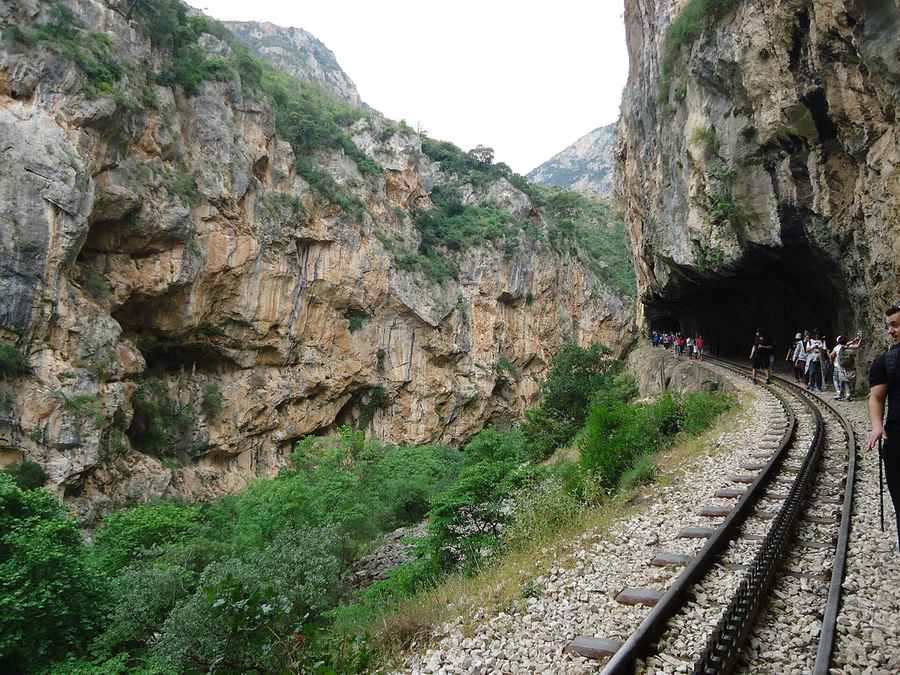
A Kalavryta day trip from Athens reaches a beautiful mountain town in the Peloponnese, home of the scenic Odontotos rack railway through the Vouraikos Gorge, the magical Cave of the Lakes, historic monasteries and a moving wartime history. Make the journey easy with a guided tour or tickets from My Greece Tours.
This mountain-and-cave escape is a rewarding option in the Athens travel guide. The sections below cover whether it is worth it, the Odontotos rack railway, the Cave of the Lakes, the monasteries, the town and its history, how to get there, and tips for the visit.
Is Kalavryta worth a day trip from Athens?
Yes, Kalavryta rewards travellers who love mountains, nature and history. It sits high in the Peloponnese, about three hours west of Athens, and offers the Odontotos rack railway, the Cave of the Lakes and historic monasteries. The distance suits a guided tour or overnight trip.
For travellers drawn to mountain scenery, natural wonders and history rather than beaches and ancient ruins, Kalavryta makes a beautiful and rewarding, if lengthy, day trip from Athens. The town sits high in the rugged mountains of the northern Peloponnese, around two hundred kilometres west of Athens, reached by a drive of roughly three hours, so a same-day return is feasible but long. The reward is a destination rich in variety: Kalavryta is famous above all for the spectacular Odontotos rack railway, a charming cog train that climbs through the dramatic Vouraikos Gorge, and for the nearby Cave of the Lakes, an extraordinary cavern of underground lakes.
The area also holds monasteries of great significance in the Greek War of Independence, ski slopes that draw crowds in winter, and a deeply moving memorial to a wartime tragedy. This combination of scenic railway, cave, history and mountain air makes Kalavryta a fascinating and unusual excursion, especially appealing in autumn and winter. Given the distance and the number of sights, it is best enjoyed on an organised tour or as an overnight trip. Its most famous attraction runs on rails.
What is the Odontotos rack railway?
The Odontotos is a historic rack-and-pinion railway, the highest in Greece, climbing from coastal Diakopto through the Vouraikos Gorge to Kalavryta on a toothed cog rail. The ride past cliffs, waterfalls and tunnels is a highlight, but the line sometimes closes for maintenance.
The signature attraction of Kalavryta, and one of the most charming train rides in Greece, is the Odontotos rack railway, a historic narrow-gauge cog railway that ranks as the highest and most mountainous line in the country. It climbs around twenty-two kilometres from the seaside town of Diakopto, on the Gulf of Corinth, up to Kalavryta, ascending the slopes of Mount Helmos.
To manage the steep gradients, the line uses a rack-and-pinion system, a toothed central rail that the train’s cog wheel grips, which gives it the name Odontotos, meaning toothed. The great appeal is the journey itself. It threads through the Vouraikos Gorge, a narrow ravine where the little train winds alongside the rushing river, passing sheer cliffs, waterfalls, bridges and tunnels carved into the rock, in a scenic ride of around an hour each way.
It is a genuinely memorable experience for all ages. One important practical note: the railway is periodically suspended for maintenance or due to damage, so it is essential to check that the service is actually running, and book ahead, before building your trip around it. When operating, it is the star of the day. The mountains also hide an underground marvel.
What is the Cave of the Lakes?
The Cave of the Lakes, near Kastria a short drive from Kalavryta, is a cavern famous for its rare cascading underground lakes among stalactites and stalagmites. A walkway leads through lit chambers past terraced lakes formed by an underground river.
A short drive from Kalavryta, near the village of Kastria, lies one of the most remarkable caves in Greece, the Cave of the Lakes, a natural wonder that adds variety to a day in the area. What sets it apart from ordinary show caves is its series of underground lakes, a rare formation of terraced, cascading pools arranged at different levels through the cavern. They were created over millennia by an underground river that fills them in the wet months.
Beyond the lakes, the cave is richly decorated with the splendours of the underground world: stalactites hanging from the ceiling, stalagmites rising from the floor, and columns, curtains and delicate stone formations, all dramatically illuminated to striking effect.
A constructed walkway and bridges allow visitors to explore the cave safely on foot, winding through its chambers and past the beautiful terraced lakes, a cool and otherworldly experience. The Cave of the Lakes is genuinely impressive and quite unlike anywhere else, and combining it with the rack railway and the mountain scenery makes for a wonderfully varied day. It is a highlight of the region. The area is also steeped in religious and patriotic history.
What monasteries and history does the area hold?
The Monastery of Agia Lavra is revered as where the Greek War of Independence was proclaimed against Ottoman rule. The cliff-set Mega Spilaion Monastery is one of the oldest in Greece. The town also marks a wartime massacre with a memorial and museum.
Beyond its natural attractions, the Kalavryta area is profoundly significant in Greek history, adding depth and emotion to a visit. Most revered is the Monastery of Agia Lavra, a short distance from the town, which holds a sacred place in the national story as the spot where, by tradition, the Greek War of Independence was proclaimed in eighteen twenty-one, when the bishop raised the banner of revolt against centuries of Ottoman rule, making it a cradle of modern Greek freedom. Nearby clings the spectacular Mega Spilaion Monastery, one of the oldest monasteries in Greece, dramatically built into a sheer cliff face high above the gorge, with a long and storied history.
The town of Kalavryta itself, however, carries a far darker and more recent memory, for it was the scene of a terrible massacre in nineteen forty-three, when occupying forces killed much of the male population in reprisal during the Second World War, a tragedy that the town solemnly commemorates with a moving memorial on the hill and a museum dedicated to the Holocaust of Kalavryta. These sites of faith, freedom and sorrow give the visit a powerful resonance beyond its scenery. They are deeply affecting. The town and surroundings reward exploration.
What is the town like, and how do you get there?
Kalavryta is a traditional mountain town of stone houses, squares and tavernas serving hearty Peloponnesian food, with a ski resort nearby in winter. Drive about three hours west from Athens via the Corinth Canal, or take an organised tour combining railway, cave and monasteries.
The town of Kalavryta rewards a relaxed wander, with its stone-built houses, central squares, cafés and tavernas serving hearty Peloponnesian mountain fare. Forested peaks give it a cosy alpine character, particularly appealing in the cooler months. In winter, the nearby Kalavryta ski centre on Mount Helmos draws crowds of skiers.
Getting to Kalavryta from Athens takes some effort. By car it is roughly a three-hour drive west, crossing the Corinth Canal and heading through the Peloponnese, often via the coastal town of Diakopto where the rack railway begins. Many visitors prefer an organised tour from Athens that bundles the train ride, the Cave of the Lakes, the monasteries and the town into one full day, removing the driving and logistics.
There is so much to see and the journey is long, so an early start is essential for a day trip, and an overnight stay makes for a far more relaxed and rewarding visit. The autumn and winter months are especially atmospheric here, when the mountains may be dusted with snow and the town takes on a cosy, festive feel. For those who make the effort, the combination of train, cave, monasteries and mountain town delivers one of the most varied and rewarding day trips in all of Greece. The wider routes appear in the day trips from Athens guide. The questions below cover the points visitors ask most.
When is the best time to visit Kalavryta?
Autumn and winter are the most atmospheric times to visit Kalavryta, when the mountains turn crisp and snow-dusted and the ski centre opens. Spring brings green slopes and wildflowers, while summer offers a cool escape from the Athens heat.
Kalavryta is a mountain destination, so its character shifts with the seasons. The cooler months suit it best. In late autumn and winter the peaks of Mount Helmos often carry snow, the town takes on a cosy alpine feel, and the nearby ski centre draws weekend crowds.
Spring is quieter and green, with wildflowers on the slopes and comfortable walking weather along the gorge. Summer turns the town into a cool retreat from the heat of the lowlands, a welcome contrast to the beaches most Athens day-trippers choose. Whatever the season, confirm that the rack railway and the Cave of the Lakes are open before you travel, as both close at times for works or seasonal reasons.
What is the Kalavryta ski centre?
The Kalavryta ski centre sits on Mount Helmos, a short drive from the town, and is one of the larger ski resorts in southern Greece. It offers runs for different levels, lifts and a day lodge, drawing skiers from Athens through the winter.
High on Mount Helmos above the town lies one of the best-known winter-sports areas in the southern half of Greece. The Kalavryta ski centre has pistes graded for beginners through to more confident skiers, served by lifts, with a lodge for warming up and eating. Its proximity to Athens makes it a favourite winter escape for city families.
The season depends on snowfall, typically running through the coldest months. Out of season the road up the mountain still rewards the drive, opening long views over the surrounding peaks and gorges. Pairing the ski centre with the rack railway makes for a full winter day, though the distance from Athens again favours an early start or an overnight stay.
What does a Kalavryta day trip itinerary look like?
A typical Kalavryta day starts early from Athens, rides the rack railway from Diakopto up the Vouraikos Gorge, then visits the Cave of the Lakes and the monasteries, with lunch in the town. Guided tours bundle these stops; independent drivers should book the train ahead.
The sheer variety around Kalavryta rewards a planned route rather than a wander. Most visitors leave Athens at dawn to make the most of the long day. A common approach is to drive first to Diakopto on the coast and ride the Odontotos up through the gorge, arriving in Kalavryta by mid-morning.
From the town, the Cave of the Lakes and the two historic monasteries lie within short drives, so an afternoon covers them comfortably. A relaxed lunch in a Kalavryta taverna breaks up the day. Organised tours from Athens fold the train, the cave and the monasteries into a single itinerary, sparing you the driving; independent visitors gain flexibility but should reserve the railway in advance, since it can sell out or close for works.
Frequently Asked Questions
How far is Kalavryta from Athens?
Kalavryta lies around 200 kilometres west of Athens, high in the mountains of the northern Peloponnese, roughly a 3-hour drive each way via the Corinth Canal and Diakopto. There is no convenient direct train from Athens, so it is reached by car or organised tour. The distance and the number of sights make it best as an early-start day trip or, ideally, an overnight stay.
What is the Odontotos rack railway?
The Odontotos is a historic cog railway, the highest and most mountainous in Greece, that climbs about 22 km from the coastal town of Diakopto up through the spectacular Vouraikos Gorge to Kalavryta, using a toothed rack rail to ascend the steep slopes past cliffs, waterfalls and tunnels. The scenic ride is a highlight, but the railway is sometimes suspended for maintenance, so check it is running before you go.
What is there to do in Kalavryta?
In Kalavryta you can ride the scenic Odontotos rack railway through the Vouraikos Gorge, explore the spectacular Cave of the Lakes with its underground lakes, visit the historic monasteries of Agia Lavra and Mega Spilaion linked to the eighteen twenty-one revolution, see the moving WWII memorial and museum, wander the pretty mountain town with its tavernas, and ski at the nearby resort in winter.