
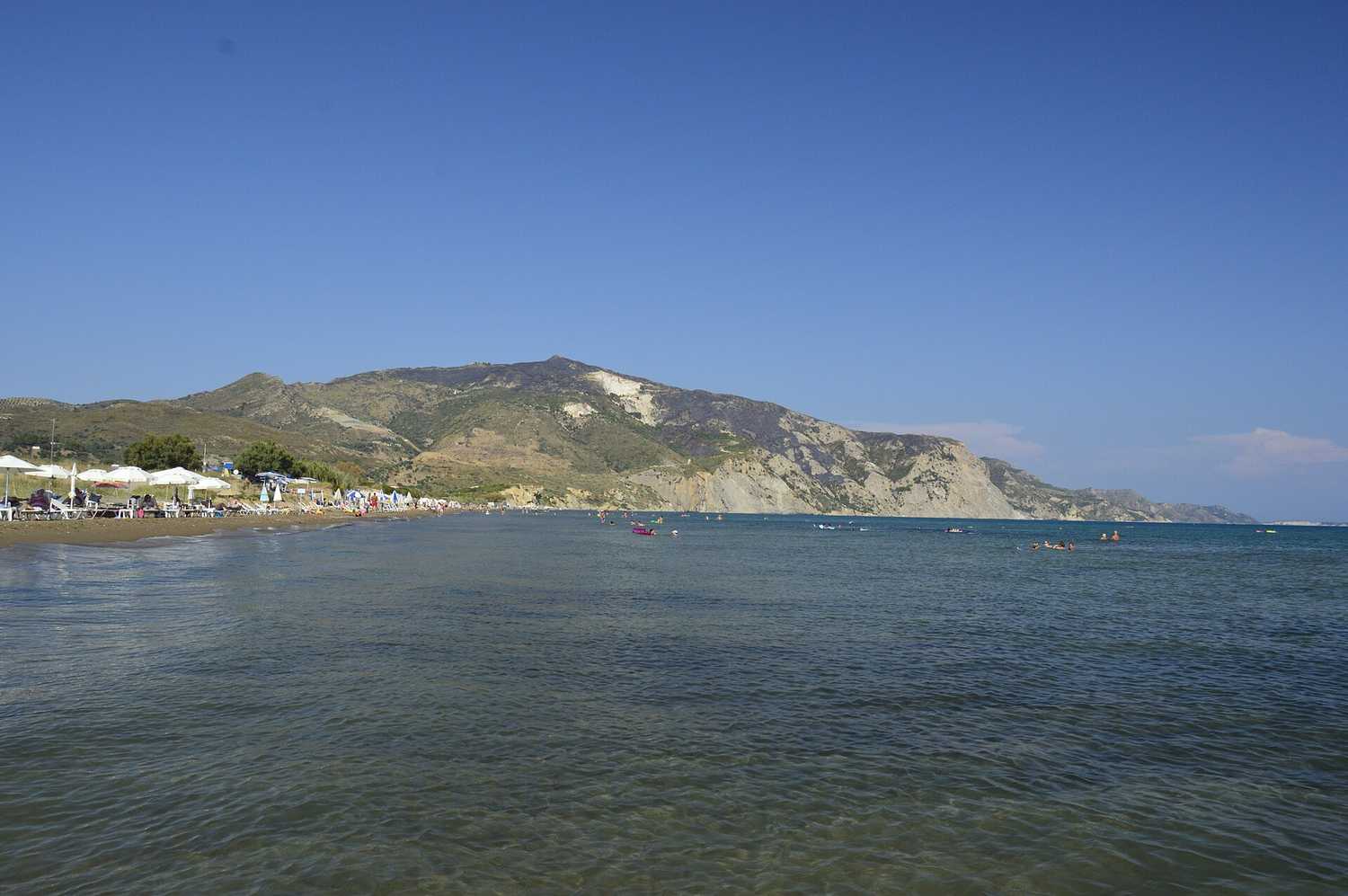
Kalamaki Beach sits at the eastern end of Laganas Bay on the Ionian island of Zakynthos, right next to the resort that shares its name. The long stretch of soft, golden sand slopes gently into shallow water, making it ideal for families and swimmers alike. This shoreline belongs to the National Marine Park of Zakynthos, established to protect the endangered loggerhead sea turtles that come ashore each nesting season. Turtles lay their eggs on the very same sand where visitors swim by day. Conservation rules close the beach after dusk and restrict umbrellas on the upper shore. Kalamaki blends an easy, relaxed beach holiday with the turtle conservation story of the island. Plan your visit with My Greece Tours.
The resort of Kalamaki behind the beach offers a calmer family base than Laganas, sitting close to both the airport and the island’s bustling capital, Zakynthos Town. Low cliffs frame one end of the shore, adding natural character to the golden landscape. By day, visitors enjoy sunbeds, waterfront tavernas and a notably quieter feel than neighboring strips along the bay. The sections below cover everything from turtle nesting rules to practical travel advice for visiting this protected coastline responsibly. For broader island planning, consult our Zakynthos travel guide before setting out.
Where exactly is Kalamaki Beach on Zakynthos?
Kalamaki Beach sits at the eastern end of Laganas Bay on the southern coast of Zakynthos, right next to the resort of Kalamaki. Low cliffs rise at one end. The beach is sandy with shallow water.
Kalamaki Beach occupies the eastern end of Laganas Bay on the island of Zakynthos, next to the resort sharing its name. The long stretch of soft golden sand meets shallow, warm water, creating a family-friendly swimming spot that draws visitors throughout the summer. Low cliffs back one end, giving the shoreline extra visual interest and a sense of shelter. The resort of Kalamaki sits directly behind the beach and provides a quieter, calmer alternative to neighboring Laganas. Visitors staying here stay close to the airport and the island’s capital, Zakynthos Town. the loggerhead turtles that nest along this coast are the reason the National Marine Park of Zakynthos exists.
These protected creatures come ashore each nesting season to lay their eggs on the very same golden sand where holidaymakers swim by day.
Laganas Bay curves along the southern edge of Zakynthos, and Kalamaki Beach marks its easternmost sandy stretch along this protected coastline. The bay forms the heart of the National Marine Park, set aside to protect nesting loggerhead turtles that return each season. Kalamaki’s long golden sand and gentle shallows make it one of the most pleasant swimming spots on this southern coast. The resort directly behind the beach offers tavernas, accommodation and a relaxed, unhurried pace that appeals to families and couples alike. It is notably quieter than Laganas Beach, which sits just around the bay and draws a younger, livelier crowd of partygoers.
Visitors looking for a calm base near the airport and Zakynthos Town find Kalamaki an easy and convenient choice for a low-key Greek island holiday.
Kalamaki Beach lies on the southern coast of the island at the eastern edge of Laganas Bay. The sand forms part of the long shoreline that curves around the great southern bay. A short drive from the capital reaches the beach in about fifteen minutes. The resort of Kalamaki sits on the low ground behind the sand, away from the loud southern strip. The beach shares its bay with the protected turtle waters of the national marine park. Soft sand and shallow water run along the open shore toward the neighbouring beaches. The eastern position gives the beach calm morning conditions before the day warms.
The setting on the rim of the marine park shapes both the character of the sand and the rules that govern it.
Why does the National Marine Park protect Kalamaki Beach?
The beach is an important loggerhead sea turtle nesting site inside the National Marine Park of Zakynthos. Rules close the beach at night during the nesting season. Umbrellas are limited and digging on the upper sand is restricted.
The National Marine Park of Zakynthos was created to shield the loggerhead turtles that nest on the southern shores of the island. Kalamaki Beach is one of these protected nesting grounds, and the sand here is monitored throughout the season. Beach closures begin at dusk to give nesting females a quiet, dark environment to come ashore and lay their eggs. During daylight hours, the beach stays open to the public, but umbrellas are limited to designated areas. Digging in the upper sand is restricted to protect buried clutches of eggs from disturbance. Kalamaki is part of a network of protected nesting beaches that includes Laganas and other sandy stretches around the bay.
Compared with other Zakynthos beaches, Kalamaki offers visitors a clear example of conservation and tourism working side by side on the same sand.
The nesting season runs through the warm summer months on Zakynthos, and the marine park covers the entire bay of Laganas. Kalamaki shares its protected status with neighboring nesting sites that line the coast along the southern shore. Each of these beaches plays an essential role in keeping the local turtle population stable and healthy. Park rangers mark nests with protective cages and carefully monitor hatchling journeys down to the sea. Visitors who respect the rules, stay off the sand at night and avoid disturbing the upper beach, contribute directly to the survival of this endangered species.
The marine park also takes in Marathonisi, a small islet in the bay that provides another key nesting area for the turtles. Kalamaki and its neighboring shores together form one of the most important loggerhead nesting habitats in the entire Mediterranean.
Kalamaki forms one of the key nesting beaches inside the national marine park of Zakynthos. Female Caretta caretta turtles come ashore here to bury their eggs in the warm sand each summer. The park protects the sand, the dunes, and the shallow water where the turtles feed and breed. The southern bay holds the most important loggerhead nesting grounds in the whole Mediterranean. Park wardens patrol the beach and mark the buried nests with protective cages. The rules limit development and lighting along the shore to keep the nights dark. This protection shields the turtles at the most vulnerable stage of their life cycle.
The status as a core nesting beach places Kalamaki at the heart of the conservation effort across Laganas Bay.
What rules should visitors follow during turtle nesting season on Zakynthos?
The beach closes at night during the nesting season to protect loggerhead turtles. Umbrellas are limited and digging on the upper sand is restricted. Visitors must leave before dusk and avoid disturbing marked nesting areas on the shore.
Rules at Kalamaki are enforced by the marine park authority and apply across all the nesting beaches in Laganas Bay throughout the season. The beach shuts to the public from dusk until dawn through the nesting months, giving turtles a dark and undisturbed path to their preferred nesting sites. During the day, sunbeds and umbrellas are allowed only in designated zones away from the upper sand where nests are found and marked by rangers. Digging holes or building sandcastles on the upper beach is not permitted, as buried eggs lie just beneath the surface and are easily crushed. These rules mirror those at Gerakas Beach, another protected nesting site on the eastern side of the bay.
Together these measures give the turtles the best possible chance of successful nesting and hatching each year.
Visitors often ask about the possibility of seeing turtles in the water near Kalamaki. Boat trips depart from the marinas around Laganas Bay and offer a chance to spot turtles swimming between the protected nesting beaches scattered along the shore. These tours follow strict guidelines to avoid disturbing the animals, keeping a safe distance and cutting engines whenever turtles are spotted nearby. Kalamaki itself is primarily a swimming and sunbathing beach. The bay around it serves as the main stage for Zakynthos boat tours focused on the marine park and its remarkable wildlife. The long golden sand and warm shallow water are perfect for a relaxed day on the shore.
The combination of conservation rules and respectful tourism keeps this stretch of coast alive with nesting turtles each season.
Nesting season on Kalamaki runs from June through August and brings strict rules to the beach. The sand closes from dusk to dawn so the nesting females and hatchlings stay undisturbed. Roped cages mark the active nests, and visitors must never cross or touch them. The park bans lights on the beach after dark, including torches, phone screens, and car headlights. Digging near the dunes is forbidden to protect the buried eggs. Quiet on the beach at night helps the turtles complete their nesting. Wardens patrol the sand and can issue heavy fines for broken rules.
Respect for the cages, the darkness, and the closed hours gives the loggerhead turtles the space they need to breed on the shore.
What is the resort of Kalamaki like as a holiday base?
Kalamaki resort is a calm family base behind the beach, close to the airport and Zakynthos Town. It offers tavernas and accommodation with a quieter feel than Laganas. The relaxed pace suits families seeking an easy beach holiday.
The resort of Kalamaki sits directly behind its namesake beach and offers a calmer alternative to the busy strips of Laganas. Accommodation ranges from family-run apartments to small hotels, and the pace is relaxed and unhurried. Tavernas serve Greek and international food along the main road, and small shops cater to everyday holiday needs. The resort is a short drive from the airport and even closer to Zakynthos Town. This makes it a convenient spot for travelers who want quick transfers and easy access to the capital. Families and couples tend to choose Kalamaki for its quiet nights and proximity to the beach.
The low cliffs at one end of the shore add a scenic backdrop, and the golden sand stretches out invitingly in front of the resort.
Kalamaki appeals to visitors looking for a straightforward, relaxed beach holiday without the noise and crowds of larger resorts. The beach is the main attraction, with its soft golden sand, shallow water and sunbeds available by day. Low cliffs at one end of the shore give the landscape character, and the water is calm and clear. The resort behind the beach has tavernas serving fresh Greek food, and the evenings are quiet compared to the bars of Laganas. The location near the airport means transfers are short, and the capital, Zakynthos Town, is just down the road. Families appreciate the safe swimming and the easygoing atmosphere.
Kalamaki blends the simplicity of a Greek beach holiday with the added draw of the marine park and its nesting turtles right on the doorstep.
The resort of Kalamaki sits on the low ground behind the beach as a calm holiday base. The village keeps a quieter feel than the party strip of nearby Laganas. Tavernas, cafes, and small shops line the streets a short walk from the sand. Family-run apartments and studios spread across the low hillside above the shore. The position places the marine park, the turtle beaches, and the capital within easy reach. Buses run the short route to the capital and the neighbouring resorts through the season. Evenings on Kalamaki stay relaxed, with unhurried dinners and gentle strolls to the beach.
The balance of a protected shore and a low-key village makes Kalamaki a steady base for a quiet family stay.
How does Kalamaki Beach compare to other nearby shores?
Kalamaki offers a quieter feel than nearby Laganas, with golden sand and shallow water inside the marine park. It has sunbeds and tavernas by day but closes at night for turtle nesting. Low cliffs frame one end of the beach.
Kalamaki shares the same sweeping bay as Laganas but keeps a distinctly calmer character. The sand is long, soft and golden, and the water stays shallow for a good distance from the shore. Sunbeds and umbrellas are available during the day, though their numbers are limited by marine park rules. Tavernas near the beach serve meals and drinks, giving visitors everything they need for a relaxed day. The low cliffs at one end add visual variety and a sense of shelter. The beach closes at night during the nesting season, which means no evening beach parties or late-night swimming. This rule sets Kalamaki apart from neighboring Laganas, where nightlife carries on into the early hours.
Visitors who prefer quiet days and early nights will find Kalamaki the better fit for a relaxed Greek island holiday.
Compared with the long, busy stretch of Laganas to the west, Kalamaki feels intimate and unhurried. The golden sand is just as inviting, and the shallow water is equally safe for children. The difference lies in the atmosphere and the rules. Kalamaki sits fully inside the marine park, and the nightly closures during nesting season keep the beach peaceful and natural. Laganas draws a younger crowd with its bars and clubs along the seafront. Kalamaki attracts families and couples who want sunbeds by day and quiet taverna evenings. The resort behind the beach offers accommodation, restaurants and shops within walking distance. The proximity to the airport is another advantage, keeping transfer times short.
Kalamaki gives visitors the best of the southern Zakynthos coast without the noise and intensity of its larger neighbor.
Kalamaki shares Laganas Bay with the long, busy beach of Laganas to the west. Laganas draws the party crowd, while Kalamaki keeps a calmer, family character. Both beaches serve as loggerhead nesting grounds under the same marine park rules. The neighbouring shore of Dafni lies further east as a wild, undeveloped turtle beach. Kalamaki offers more facilities than Dafni yet more quiet than Laganas. The soft sand and shallow water match the family beaches along the eastern coast. The turtle protection sets these southern beaches apart from the organised resorts of the north.
Visitors who want a balance of calm sand, easy facilities, and a real chance to see turtle tracks find that mix on the shore at Kalamaki.
Frequently Asked Questions
Can you swim at Kalamaki Beach during the day?
Kalamaki Beach is open to swimmers during daylight hours throughout the season. The water is shallow, calm and warm, making it an excellent spot for families with children and for less confident swimmers. The long stretch of soft golden sand slopes gently into the sea, so the depth increases gradually rather than dropping off suddenly. Sunbeds and umbrellas are available on the beach during the day, though their numbers are limited by marine park regulations to protect the nesting turtles. Tavernas near the beach serve food and cold drinks, so visitors can spend a full day on the sand without venturing far.
The beach closes at dusk during the nesting season, which means swimming is not permitted after dark. This rule exists to give the loggerhead turtles a quiet, dark environment for coming ashore to nest. Daytime visitors get the best of both worlds at Kalamaki. They enjoy a beautiful sandy beach and also contribute to turtle conservation by respecting the rules.
When is turtle nesting season at Kalamaki Beach?
The nesting season for loggerhead turtles on Kalamaki Beach and the rest of Laganas Bay runs through the warmest months of the year. Female turtles come ashore at night to dig nests in the sand and lay their eggs, returning to the sea before dawn. The marine park monitors the beach throughout this period, marking nests with protective cages and tracking hatchling numbers. The beach closes to the public from dusk until dawn to give the turtles an undisturbed path to their nesting sites. During the day, the beach operates as normal, with sunbeds and tavernas available for visitors. Restrictions on digging and the limited number of umbrellas on the upper sand also stay in force.
Hatchlings emerge from the nests later in the season and make their way to the sea under cover of darkness. Marine park stations near the nesting beaches provide information about the rules and the biology of the turtles.
Is Kalamaki Beach good for families with children?
Kalamaki Beach is an excellent choice for families with children. The water is shallow and calm, with a gentle sandy bottom that makes paddling and swimming safe and easy for little ones. The soft golden sand is perfect for building castles, though visitors should remember that digging on the upper beach is restricted to protect turtle nests buried beneath the surface. The resort of Kalamaki sits right behind the beach and offers family-friendly accommodation, tavernas and small shops within easy walking distance. The atmosphere is calm and quiet, especially compared to the busier resort of Laganas just around the bay.
The beach closes at night, which means families with young children are unlikely to be disturbed by late-night noise or beach parties. The location near the airport means short transfer times, a real advantage for parents traveling with tired children after a flight. Kalamaki gives families a safe, relaxed base with a beautiful sandy beach on their doorstep and the fascinating bonus of a working marine park all around them.
Can you see turtle tracks on Kalamaki Beach?
Yes, turtle tracks appear on the sand at Kalamaki Beach through the loggerhead nesting season on Zakynthos. Female Caretta caretta turtles come ashore between midnight and dawn to lay their eggs, so by morning their tracks are fresh in the sand. The distinctive marks look like twin flipper trails that run from the water up to the buried nest, similar to a tractor tread. The best chance to spot fresh tracks comes with an early arrival between seven and eight in the morning during June and July. Park wardens mark the active nests with roped cages that visitors must never cross or touch.
The nests stay in place through the incubation period until the hatchlings emerge from late July into September. Lights, digging, and noise near the dunes are all banned to protect the eggs and the nesting females. Visitors who walk the beach early, keep their distance from the cages, and follow the marine park rules give themselves the best chance to see the tracks while they respect the turtles that made them.