
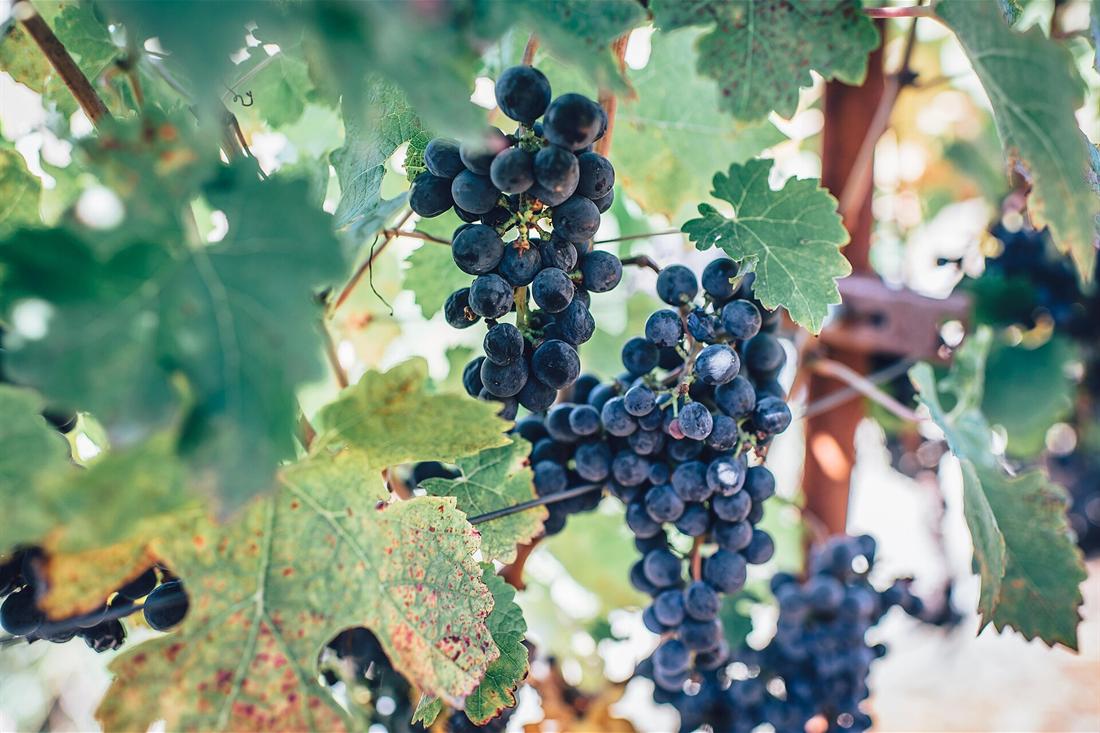
An Ithaca wine tasting pours the wines of the small Ionian island that Homer named as the home of Odysseus, from hillside vines above Vathy bay to the cellars of its villages. Our Greece Tours homepage gathers island tours and tastings across the country.
This page covers where to taste and book, the grapes in the glass, the island wine makers, the wine of the Odyssey, the vineyard villages, the harvest season, the steps of a tasting, planning the day and the questions visitors ask.
What is an Ithaca wine tasting?
Wine on this island comes from native vines, bottled in small batches by the producers themselves. An Ithaca wine tasting pours those local bottles. In the south, the village of Perachori holds rare vines of the Ionian Islands.
Ithaki, as Greeks name Ithaca, lies just northeast of Kefalonia in the Ionian Sea. Paxi alone is smaller among the seven main Ionian Islands. For the rest of the island, see our Ithaca guide.
The Ionian group includes Corfu, Paxos, Lefkada, Kefalonia, Ithaca, Zakynthos and Kythira. A regional wine website calls the group the land of Robola and Mavrodaphne, two grapes tied to Kefalonia.
The Municipality of Ithaca lists family wines from indigenous vine varieties among the main products of the island’s growers. It counts 16 native varieties, and they feed every Ithaca wine tasting. Three of the rarest, near-extinct Ionian natives have settled on Ithaca.
Perachori lies on the slopes of Mount Petaleiko, 240 metres above sea level and 3 kilometres from Vathy. A travel website says the village is known for wine production and has a wide area of vineyards.
Production stays small. The Municipality says the vines are scarce and give small harvests. Only a small share of the 16 varieties make a single-grape wine. Blending more than one grape takes experience, knowledge and passion, in its words.
The Municipality says producers bottle the wine themselves, in small installations, and sell only part of it. A Greek wine publication calls local wine production scarce, so an Ithaca wine tasting works with limited stock.
Outside an Ithaca wine tasting, bottles reach the liquor stores and cellars of Ithaca and Kefalonia. Buyers can also order in advance from the producers. The Municipality says two wines are poured on the island: a Mavrodafni and a white.
Which Ithaca wine tasting tours can you book?
For an Ithaca wine tasting, Ithaca Travel Greece sells a private Sunset-Wine Tour with stargazing. Elliniko Panorama lists a 7-day group trip with a tasting of local wines. GetYourGuide lists a 2-day island overnight.
Ithaca Travel Greece is a tourist office at the port of Vathy. Its own website offers stays, boat trips with Odyssey Boats, guided hikes, sea kayaking, car transfers and history tours.
The Ithaca Sunset-Wine Tour is listed on the Magpie travel marketplace. This Ithaca wine tasting starts at Pernarakia, above the village of Exogi. The spot sits 340 metres above sea level. The office’s island-tour page describes panoramic views from there across northern Ithaca and towards Kefalonia.
The route also stops at Kathara Monastery and at the village of Stavros. The island-tour page of the same office puts the monastery at around 800 metres above sea level.
The sunset tour lasts 4 to 5 hours. The listing includes private transportation and alcoholic beverages. It is a private activity, so only your group takes part. The tour needs good weather.
If bad weather forces a cancellation, the listing offers a different date or a full refund. A full refund also applies when you cancel at least 24 hours before the start.
The same office runs an Island Tour of 4 hours, with the departure time set by arrangement. Its page names no wine stop, so it is a sightseeing tour and not an Ithaca wine tasting.
Elliniko Panorama, a Greek travel agency, lists a 7-day group trip to Ithaca on its own page. The programme adds an Ithaca wine tasting of local cheeses and wines, plus villages such as Perachori. The page shows a dated June departure, so ask the agency about the next one.
GetYourGuide lists a two-day overnight escape on Ithaca, themed on island legends and flavours, as a multi-day trip, filed under Stavros, Ithaca. The description names the School of Homer, a traditional meal and a sunrise over Vathy Bay. The sunrise view is from the Monastery of Kathara.
The listing marks pickup as available and shows free cancellation. Bookings close 40 minutes before the start. It is an island overnight rather than a tasting listing.
The sources checked name no Ithaca winery with a tasting offer on its own page. These sellers are the ones that can be named for an Ithaca wine tasting.
A restaurant is another place to taste. The Municipality says Thiako wine and Mavrodafni are served in restaurants in Ithaca. Limited production makes them hard to find, and the Municipality advises guests to ask for them.


Which grape varieties fill an Ithaca wine tasting?
Papadiko, Avgoulato, Koritsanos, Goulina, Mavroudi and Kotsilia head the Municipality’s list of native vines for an Ithaca wine tasting. Three rare ones, Skylopnikti, Cretan and Xynopodia, survive in Perachori. The island has 16 native varieties in all.
Papadiko is the vine variety the Municipality ranks first for popularity. It is a short plant, and its grapes are eaten fresh or used for wine. Avgoulato gives fruit for both uses as well.
Koritsanos is a highly productive variety native to Perachori, and the Municipality calls its white wine delicious. Goulina, also from Perachori, is highly productive, resists disease and has a distinctive aroma.
The white-fruited vines form the majority of the native varieties, so white wine dominates an Ithaca wine tasting. Mavroudi is the black-grape exception. It stays rare in vineyards because disease infects it easily. The Municipality says it blends well with other grapes.
Kotsilia is an old native vine from Perachori. A Kotsilia pour gives an Ithaca wine tasting a full white wine. Koufaki gives table grapes in strong, medium-sized clusters, with a slightly sour flavour. It is mainly used in blends with other grapes.
Boubouli is not a particularly productive variety, but it gives white grapes of good quality and grows dense foliage.
Three native varieties in Perachori are threatened with extinction. Skylopnikti gives black grapes but white wine. The Municipality calls it a vine of great strength, almost unaffected by disease.
Cretan is a very rare native with long stems and white grapes. Its white wine is always blended with other grapes. Xynopodia is a productive vine with bright green foliage and thick grapes in large clusters.
Xynopodia berries are large and seeded, so the vine is mainly used for winemaking. They can also be eaten fresh. Village gardens hold Mavro Aetonychi, Tourkopoula, Eftakilo and White Aetonychi.
Tourkopoula is seedless. Eftakilo is seeded, with large fruit suited to winemaking. White Aetonychi gives large clusters. Chontromavrodafni grows in Perachori, is a relative of Mavrodaphne and serves for wine and as a table grape.
Thiako is the name for both the red and the white varieties of Ithaca, says the regional wine website. A Thiako glass at an Ithaca wine tasting can therefore be red or white.
The neighbouring islands give an Ithaca wine tasting its wider context. Kefalonia has the leading wine production of the Ionian islands, measured by marketing, exports and number of wineries.
Robola is a white grape grown primarily on Kefalonia. It makes PDO (Protected Designation of Origin) dry white wines. The vines climb the rocky limestone slopes of Mount Ainos, at altitudes from 300 to 800 metres. The Venetians called it Vino di Sasso, the wine of the rocks.
The regional website describes Robola wine as flinty and mineral, with medium body and balanced acidity. Wikipedia adds a dry style and a distinct lemon note.
Mavrodaphne is a black grape. Kefalonia grows it mainly on the Paliki peninsula, in deeper sandy and clay soils. The PDO Mavrodaphne of Kefalonia is a sweet wine. Dry Mavrodaphne carries a PGI (Protected Geographical Indication).
Wikipedia lists caramel, chocolate, coffee, raisin and plum among the aromas of Mavrodaphni wine. The regional website calls dry Mavrodaphne a red with fruity character and solid body. Wikipedia calls Mavrodaphni wine dark and almost opaque, with a purple colour. Kefalonia also holds a PDO for sweet Muscat wines.
Vostilidi, Tsaousi, Moschatella and Zakynthino are Kefalonia’s other local grapes. Lefkada has the smallest wine production of the group. Its dominant variety is the red Vertzami, which gives wines with high acidity and high phenolic levels.
Altitude shapes Vertzami, which grows from sea level to 500 metres. Lefkada’s rare whites, Chlori and Vardea, are being rescued from extinction by local producers.
The well-known local grapes of Corfu are the white Kakotrigis and the red Petrokoritho. Kakotrigis gives dry wines with high alcohol and acidity, and it is difficult to grow.
Zakynthos has the warmest climate of the group. Its Verdea is a dry white blend of local varieties such as Skiadopoulo, Goustolidi and Pavlos. It has high acidity and high alcohol. Avgoustiatis is its leading red variety.
Keep the split in mind at an Ithaca wine tasting. Papadiko, Koritsanos, Kotsilia and the rare Perachori vines are Ithacan. Robola, Vertzami and Kakotrigis belong to the neighbouring islands.
Which wineries welcome visitors for an Ithaca wine tasting?
Small family producers make Ithaca’s wine, and the island’s tourism pages list no winery hours. Buyers find bottles in shops and cellars, or order them straight from producers. So an Ithaca wine tasting means asking a producer first.
The Municipality of Ithaca calls family wine from native vines one of the island’s main products. Growers farm mainly for their own needs. They put a little wine aside to offer guests. That guest wine is where an Ithaca wine tasting begins on this island. The municipality’s page on the island’s people lists vine-growers among those who stay.
A Greek wine-tourism site, Oinikes Exerevnisis, says wine making on Ithaca has a long history and tradition. It adds that vine growing and wine making are still village-level, amateur work. That sets the scale of an Ithaca wine tasting: household producers with small output.
According to the municipality, growers bottle the wine themselves in small plants with the proper specifications. They market only part of the output. Wine shops and cellars on both islands stock it. Another route is a reservation made ahead with the producer.
Travel.gr, a Greek travel portal, says Ithaca’s producers bottle mainly for their own use and market a smaller share. Its Greek wine feature adds that the island’s own vines rarely give a single-grape wine. Output is small, so the wines are hard to find unless you visit the island. That small output shapes every Ithaca wine tasting.
Wineland Ithaca is a named vineyard business in the Brouzi area near Vathy. Ithacatourist.com lists two apartments there, Semeli and Pasithea, set inside a traditional family-owned vineyard. The listing describes a stay among the vines, not a winery or a tasting room.
The provincial Pera Pigadi road runs past the vineyard, and Kaminia Beach is minutes away, the listing says. For an Ithaca wine tasting, Wineland Ithaca works as a base among vines rather than a cellar door.
Hotel Mentor’s guide to local products says Ithaca has a group of organic farmers. They work 700 acres of olives and vineyards. The guide names the certifying bodies as DIO and Fisiologiki. It lists the island’s two wines, Mavrodafni and a white, among the certified organic products.
Wines of Greece names one appellation that takes in Ithacan grapes: PDO Mavrodaphne of Cephalonia. It calls this the only PDO or PGI wine of the Cephalonia district that grapes from neighbouring Ithaca also join. A bottle with that label can hold Ithacan grapes, so an Ithaca wine tasting can reach a Kefalonia label.
The sourced routes to local wine are therefore the shop, the cellar and a reservation with the producer. Contact a producer before you plan an Ithaca wine tasting. The municipal page gives no cellar address or opening hours.
How does Homer’s Odyssey link to an Ithaca wine tasting?
Homer ties Ithaca to wine in three books, which gives an Ithaca wine tasting its story. In Book Thirteen, Athena describes the island’s crops and vineyards. In Book Two, old wine waits in Odysseus’s storeroom. In Book Twenty-Four, his father Laertes tends a vineyard.
In Book Thirteen, Odysseus has woken on a shore he does not know. Athena, disguised as a young shepherd, tells him where he stands. She calls Ithaca rugged and narrow, yet not poor. It carries crops in plenty and good vineyards, she says. A.S. Kline’s translation places this in lines 216 to 255.
Samuel Butler’s prose version says the island “grows any quantity of corn and also wine”. That speech gives an Ithaca wine tasting a Homeric starting point.
Book Nine holds a second vine passage, and it is not about Ithaca. In lines 105 to 151, Odysseus describes a fertile island outside the Cyclopes’ harbour, where vines never fail. He calls Ithaca itself a rugged land that raises fine young men. Keep this passage apart when you plan an Ithaca wine tasting, because it describes a different island.
In Book Two, lines 337 to 381, Telemachus goes down to his father’s storeroom. Huge jars of sweet, unmixed wine stand in rows along the wall. They wait for Odysseus to return, and a stewardess guards the room.
Telemachus asks the stewardess to draw twelve jars of wine for his voyage. He wants wine of the finest quality, short only of the store she keeps for his father. She swears to keep the plan secret. He then sails to Sparta and Pylos for news of Odysseus.
Earlier, in Book Two, lines 35 to 84, Telemachus speaks to the Ithacan assembly. He says the suitors drink the household’s wine day after day. Their feasting is draining the family stores. In these scenes wine is household wealth, kept in jars and guarded by a stewardess.
In Book Twenty-Four, lines 205 to 301, Odysseus finds Laertes alone in a well-kept vineyard, hoeing round a vine. His sons and workers have gone to gather stone for the vineyard wall. Odysseus praises the old man’s care of the fig, vine, olive and pear.
To prove who he is, Odysseus recalls the trees his father once gave him as a boy. They were pears, apples and figs. Laertes also promised him fifty rows of vines, each ripening at its own time. This passage sits in lines 302 to 355.
These scenes show vines as part of a working Ithacan farm, next to figs and olives. No scene names a grape or a winery. They give an Ithaca wine tasting a story, not a list of producers.
The island’s later wine history starts with Venice. Venice took Ithaca under a treaty of the early sixteenth century. The island was almost empty then, so Venice offered incentives to settlers from nearby islands and the mainland.
WineTourismGreece says merchants from Italy, France and Britain shaped the Ionian Islands during Venetian rule. They helped vine growing and wine exports to Italy. Venice also encouraged raisin growing for export, which spread table grapes across the islands.
The Wine Makers Show says Venetian and then British rule led to wine trade and production across the Ionian Islands. It adds that wine here never earned big money. That suits an Ithaca wine tasting built on small family batches.
Britain took Ithaca during the Napoleonic wars. A treaty after them made the Ionian Islands a British protectorate. Both wine sources speak of the Ionian Islands as a whole. Ithaca’s own share of that trade is not stated.
Which villages frame an Ithaca wine tasting?
Perachori in southern Ithaca ties closest to the island’s vines, so an Ithaca wine tasting centres on it. Exogi in the north has a trade past in wine and raisins. Anogi and Stavros have village pages that mention no vineyards.
Perachori is the village to know for an Ithaca wine tasting. The municipality calls it the safe homeland of rare vines of the Ionian Islands. Its village page lists wine among the high-quality local goods, beside olive oil and honey.
The road to an Ithaca wine tasting in Perachori starts in the capital. The village is built like a high amphitheatre above Vathy, and a winding road climbs to its whitewashed courtyards. From the highest point, Agnantio, the view reaches Lefkada and Zakynthos.
Greeka counts 360 inhabitants in Perachori, who mainly work in agriculture and farming. The municipality describes the villagers as hardworking. A good number of them are seamen or farmers, it says.
Hotel Mentor’s local guide also names Perachori for its local wine. The municipality and the hotel guide therefore point to the same village for an Ithaca wine tasting.
The north works differently. Marmakas is the island’s largest olive-oil area, the municipality says. Perachori in the south is where the rare vines grow, so an Ithaca wine tasting points south.
Exogi is the northernmost village of Ithaca. It stands at 340 metres on the north-western peninsula, 22 km from Vathy. Venetians founded it in the early 16th century, and it was then the island’s third settlement. For an Ithaca wine tasting, the north offers history more than a cellar visit.
Today Exogi has 45 permanent residents. In the middle of the 18th century it had around 1,400. That larger Exogi produced flax, oil, wine and raisins, the municipality says. For an Ithaca wine tasting, this is the trade story of the north.
Ships took these goods out of Frikes harbour. The land around Exogi was terraced into the “hanging gardens”, so no space stayed uncultivated. The village square looks over terraced slopes once used to grow raisins.
Frikes lies 19 km from Vathy and 3 km from Stavros. The municipality says it was first inhabited in the 16th century. Hill dwellers used its natural harbour for trade with Lefkada and mainland Greece.
Anogi stands on the eastern slopes of Mount Niritos, 830 metres above sea level. Stavros is the main village and commercial capital of the north, 17 km from Vathy. Their municipal pages cover churches, views and a bust of Ulysses. Neither page mentions a vineyard, so they stay off the Ithaca wine tasting route.
When is the right season for an Ithaca wine tasting?
Early autumn and late July suit an Ithaca wine tasting. Greece’s national tourism site names September as the traditional grape harvest month. Perachori holds its wine festival on the last Saturday of July.
Visit Greece, the national tourism site, calls September the traditional wine grape harvesting month. It says the whole family, with neighbours and friends, works together to finish the demanding job. A harvest-season Ithaca wine tasting falls in that working month.
Autumn weather is unstable, so growers finish the vineyard work before sudden rain ruins the crop. Ithaca’s municipal climate table backs this up. September brings 50 millimetres of rain on 3 days, and October brings 124 millimetres on 8 days.
A September Ithaca wine tasting meets mild air. The table lists an average high of 26.8 degrees Celsius and an average low of 19.0. The surface of the sea holds 23 to 24 degrees.
October cools further, with an average high of 23.0 degrees and an average low of 16.0. Pack a light jacket for the evening at an October Ithaca wine tasting.
Summer is dry. The municipality calls Ithaca’s summers hot, rainless and humid. It says the surrounding sea keeps the island cooler than the mainland. The annual rainfall is 1,025 millimetres, but July receives only 1 millimetre.
Perachori holds its wine festival on the last Saturday of July, in the yard of the old primary school. The municipality calls it the largest festival celebration in the southern part of the island.
Wine is offered freely to all visitors, with a small symbolic charge for taking part. Dancing to a live band lasts all night, and the village looks down on Vathy from the mountainside.
The July table gives an average temperature of 25.5 degrees and an average low of 20.2. The all-night dancing therefore happens in warm air. The sea surface holds 23 to 24 degrees that month as well.
The municipal festival list names one event for wine, the Perachori festival. Other village feasts pour local wine too, which gives an Ithaca wine tasting more than one date to aim for.
In Anogi on 14 August, the villagers run the feast themselves. They offer visitors as much of their own wine as can be drunk, according to the municipality.
Harvest customs add a second layer. Every year on 6 August, winemakers used to fill a basket with the first ripe grapes. They sent it to church for a blessing, and a priest said a prayer on the first harvest day.
Growers left a small part of the vineyard unharvested as a sign of thanks. From the vineyard, the grapes went to the patitiri, the wine press. Visit Greece says people once crushed them by foot, and the wine fermented in wooden barrels for three months.
Visit Greece names two saints’ feasts for the start of wine tasting. One is Agios Dimitrios on 26 October. The other is Agios Georgios Methistis on 3 November. Methistis comes from the Greek word methisos, meaning drunk.
Choose September for the harvest, late July for a festival night, or late October for the saints’ feasts. Each season gives an Ithaca wine tasting a different setting.
What happens during an Ithaca wine tasting?
A tasting follows a repeatable routine. The Court of Master Sommeliers names three steps, look, smell and taste, and swirling belongs to the smell step. Wikipedia counts five: colour, swirl, smell, taste and savour.
The Court of Master Sommeliers lists the basic kit: clean, clear glasses, water, a dump cup and good lighting. A white background helps with colour. Use glasses of the same size and shape when you taste more than one wine.
Chill white wines before tasting and serve reds slightly cooler than room temperature, says the same school. These choices keep the setting consistent, which makes the glasses easier to compare. Use the same routine at an Ithaca wine tasting.
Look first. Hold the glass by the stem so your hand does not warm the wine. Tilt it away from you at about 45 degrees over a white surface, such as paper or a napkin.
Note how deep or pale the colour is and how clear the wine looks. Colour hints at age, grape variety, growing climate and production. Red wine shifts from deep purple toward garnet as it ages, and white wine darkens.
The streaks that run down the glass after swirling are called legs or tears. They hint at alcohol level and sometimes sugar, but they do not show quality.
Swirl the glass before you smell, because the movement releases the aromas. Wikipedia says the nose of a wine is the major determinant of the flavour you perceive in the mouth.
Start broad when you smell: is it fruit, or something else? Then narrow down to fruit, non-fruit and new oak. Non-fruit covers flowers, herbs, spices and vegetables. New oak brings vanilla, baking spice, toast or smoke.
Aromas come from four sources: the grape variety, the growing place, the cellar choices and development in the bottle. If your mouth waters as you smell, the wine has vibrant acidity.
At an Ithaca wine tasting, take a small sip and let the wine reach every part of your mouth. The first sip wakes up the palate. The second sip is the one to taste with intention.
Judge flavour and structure separately. Flavour is what the wine tastes like: fruit, earth, spice or herbs. Structure is how it feels: sweetness, acidity, tannin, alcohol and body. Tannin dries the cheeks and gums.
Wikipedia adds a fifth step to the routine, savour. Hold the wine in your mouth briefly so it saturates the taste buds. Then note the finish, which is the aftertaste.
The order of the glasses matters. Wine Folly says no rules exist, but palates change as we taste. Bold wines overwhelm the palate, and delicate wines served later get lost.
Wine Folly lists this serving order: sparkling wine, light white, bold white, rosé, light red, bold red and sweet wine.
Wine Spectator’s advice column recommends tasting from lightest to heaviest, then from driest to sweetest. Sweeter wines tend to have a longer finish. The sweet flavour can linger and make a dry red seem bitter or sour.
Ask the host of your Ithaca wine tasting which order the glasses follow. Wine Folly’s basic format uses four to eight wines that share a theme.
Write notes from the first glass of your Ithaca wine tasting. The Court of Master Sommeliers says notes give you a personal record. They also sharpen your memory for what you smell and taste.
Group tasting helps too. Hearing how others describe the same wine adds vocabulary, and comparing notes shows what you missed on your own.
Keep the room quiet at an Ithaca wine tasting and avoid strong perfume or pungent foods nearby. The Court of Master Sommeliers says these overshadow the delicate fruit and non-fruit aromas.
Spitting protects judgment. Wikipedia says intoxication affects the taster’s judgment. So tasters spit out the wine after assessing it at formal tastings, where dozens of wines are tried.
Spitting at a winery is not considered rude, even in front of the owner. It is polite to ask where to spit before you begin. Wine Folly lists spit cups as an optional item on the table.


How do you plan a day around an Ithaca wine tasting?
Base the day in Vathy, the island’s capital, and arrange the ride home before the first glass. The municipal transport page says taxis run 24 hours. It advises having one waiting at the harbour in July and August.
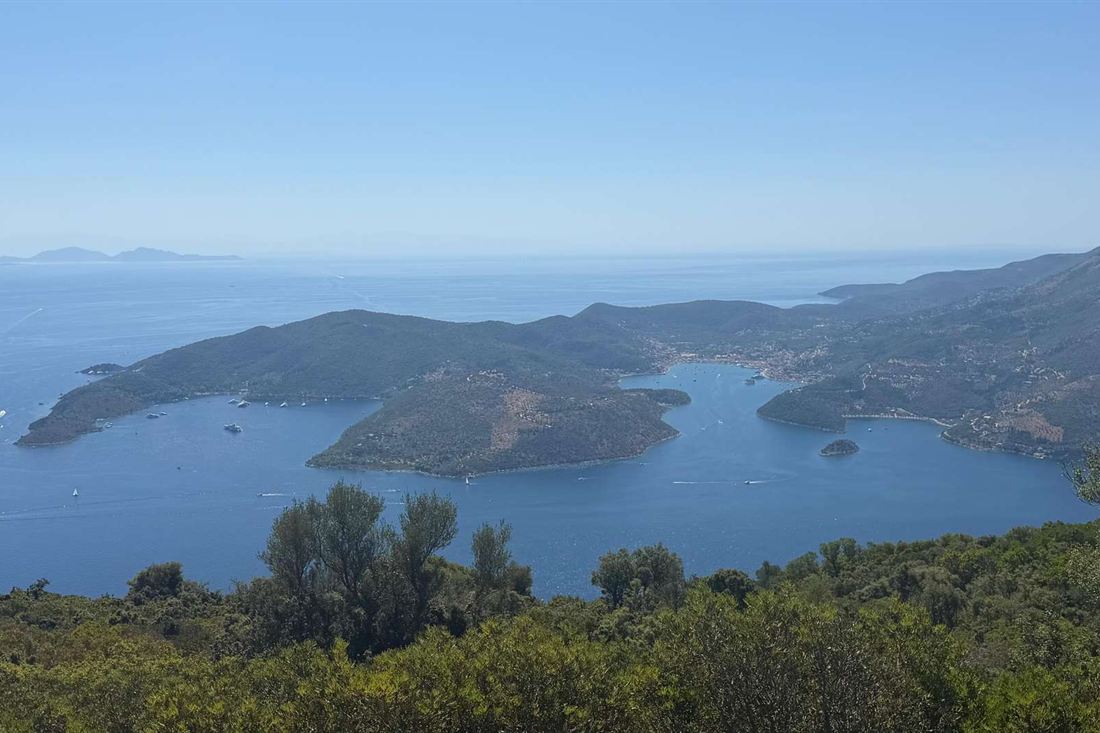
Vathy sits in the innermost part of its gulf and fans out like an amphitheatre, says the municipality. It lists hotels, pensions, apartments and rooms to rent there, and describes the night life as tranquil.
Taxis wait in the ports of Piso Aetos and Frikes. The page calls them the only transport to and from those harbours for travellers without a vehicle. It lists taxi and minibus operators in Vathy, Stavros and Lachos.
Short on time? Read our Ithaca day trip from Kefalonia page for a one-day plan, then slot the tasting into it.
Wind shapes the afternoon of an Ithaca wine tasting. In spring and summer the main wind is the north-western Mistral. On summer mornings until midday the air is calm or carries a slight south-east breeze.
At about 1 pm the wind turns north-western, with strong gusts at first, says the municipal weather page. An early start therefore meets the calm hours.
Check the law before an Ithaca wine tasting. The European Transport Safety Council gives Greece a legal blood alcohol limit of 0.5 grams per litre for standard drivers. The limit is 0.2 grams per litre for novice and professional drivers.
Wikipedia says tasters spit the wine. Even so, tasting twenty to twenty-five samples can still intoxicate, depending on the alcohol content. Book a taxi or name a driver who will not taste.
Book the return before you book the tasting. Treat the legal limit as a ceiling, never as a target for an Ithaca wine tasting.
Carry water to an Ithaca wine tasting. Both the Court of Master Sommeliers and Wine Folly put water on the tasting table. Wine Folly adds wine tasting mats to its list of table items.
Keep notes and the booking confirmation together. Notes help you compare glasses, and the confirmation shows the meeting point you agreed with the organiser.
What do travellers ask about an Ithaca wine tasting?
Travellers ask about age limits, customs allowances, airline rules, access and clothing. Each answer below rests on a municipal, customs, airline or wine-education source. Check the original page before you travel.
Can children join an Ithaca wine tasting?
Wikipedia’s table of drinking ages gives Greece a purchase age of 18, in bars and in shops. It adds that Greek law bars minors from drinking alcohol in public. Check the organiser’s own age rule before booking.
Can I buy bottles to take home from an Ithaca wine tasting?
Inside the EU, customs need no proof of personal use for up to 90 litres of wine. Of those 90 litres, up to 60 can be sparkling. Entering the EU from outside, the duty-free allowance is 4 litres of still wine.
Can I carry wine bottles on a flight?
Finnair allows up to 5 litres of alcohol, at a maximum of 70 percent, in unopened original bottles. In the United States, TSA sets no checked-bag limit for drinks of 24 percent alcohol or less. Ask your own airline.
Is an Ithaca wine tasting wheelchair accessible?
Access depends on the organiser, so ask about steps, vehicle height and surfaces before you book. The municipality describes Vathy as built like an amphitheatre, with stone-paved alleys.
What do I wear to an Ithaca wine tasting?
Dress for the season. The July table gives an average temperature of 25.5 degrees and an average low of 20.2. Wear light clothes with a thin layer for the evening. Leave strong perfume at home.