
Across nine listings, an Istanbul Turkish bath lasts from half an hour to three hours. Eight historic bathhouses still run sessions, among them Cağaloğlu, Çemberlitaş and Süleymaniye.
The T1 tram stops at Sultanahmet and Çemberlitaş, so the oldest baths sit a short walk from the line. Anyone who also wants a coast or island route can open the Greece Tours homepage and pick a region from there.
What is an Istanbul Turkish bath and where does the custom come from?
An Istanbul Turkish bath is a hammam, a steam bath for public washing. The custom comes from the Islamic world and was inherited from the Roman thermae. Visitors move through rooms of rising heat, then wash with soap and running water.
Wikipedia’s article on the hammam says Westerners call a hammam a Turkish bath. The English phrase comes from foreign travel writers. They presented the hammam as something essentially Turkish. Ottoman speakers did not describe their baths that way. The word Turk was considered derogatory until the nineteenth century.
This page still uses the phrase Istanbul Turkish bath, because it is the phrase visitors search for. The bathhouses themselves carry the word hamam in their names, as in Cağaloğlu Hamamı and Süleymaniye Hamam.
The word hammam comes from the Arabic root H-M-M, which gives meanings tied to heat. It names the Istanbul Turkish bath. From Arabic it passed into Persian and Turkish. The name of the building already says what it does: it heats you.
The idea is older than Islam. Wikipedia says public bathhouses were a prominent civic institution in Roman and Hellenistic culture. They stood across the Mediterranean world. They stayed important in early Byzantine cities up to around the middle of the sixth century.
The earliest known Islamic forerunners of an Istanbul Turkish bath stand in Syria and Jordan. Wikipedia dates them to the Umayyad period, the seventh and eighth centuries. Muslims kept the walk from cold room to hot room. They dropped the cold plunge and the exercise yard of the classical bathhouse.
Islam also changed how people wash. Wikipedia says bathers use running water instead of sitting in standing water, and that Islam requires this. It links the bathhouse to the washing before prayer, called wudu and ghusl. It notes that one scholar doubts the link was strong in early Islam.
Why did an Istanbul Turkish bath matter so much to daily life? Wikipedia gives three reasons: ritual washing, hygiene in an age before private plumbing, and a meeting place for each sex. People also visited before weddings and religious holidays, and to celebrate births.
A large number of hammams were charitable parts of bigger religious and civic complexes. Wikipedia says they earned income to keep up nearby mosques. The bath was a working piece of the neighbourhood, not a luxury.
Ottoman rulers built hammams in almost every city they held. Wikipedia says the baths grew in number and ambition in Istanbul. The city had royal patronage, a large population and plentiful water.
Istanbul’s Greek inhabitants had kept an Eastern Roman bath culture. Wikipedia names the Baths of Zeuxippus as one early example. An Istanbul Turkish bath therefore stands on Roman, Byzantine and Ottoman layers at once.
No fetched source gives a count of bathhouses in Ottoman Istanbul. Wikipedia only says that far fewer hammams run in Turkey today than in the past. One travel blog says a visitor to Istanbul today has hundreds of hammam options. Treat both as unnumbered.
What does the building of an Istanbul Turkish bath look like inside? Wikipedia lists the classic order of rooms: an undressing room, a cold room, a warm room and a hot room. The Turkish names are the camekân, the soğukluk, the ılıklık and the hararet. The hararet is also called the sıcaklık.
In an Ottoman bath the cold room is dropped, or merged with the changing hall. Wikipedia says the camekân can be the largest domed chamber. It has a central fountain called a şadırvan and wooden galleries around it. Bathers drink tea, coffee or sherbet there.
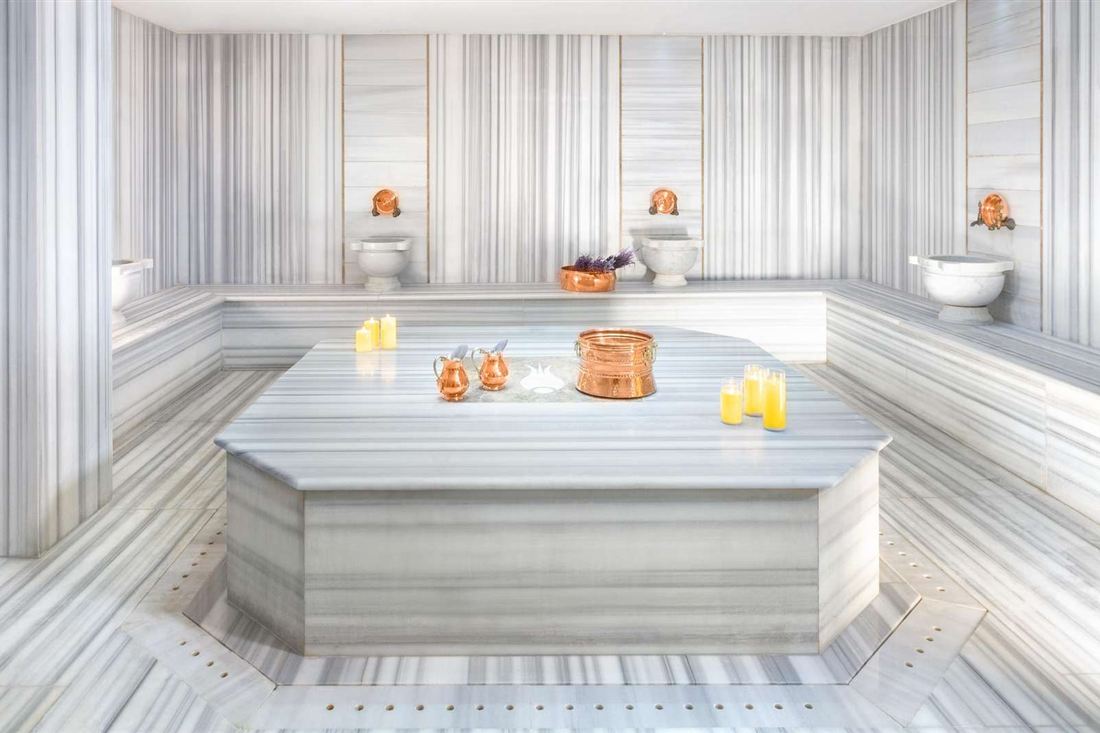
The hot room gets the richest decoration. Its centre holds a large heated marble table called the göbektaşı, the navel stone, where customers lie down. Small domed corner chambers, called halvets, were used for private bathing.
Heat for an Istanbul Turkish bath came from furnaces behind the hot room. Wikipedia says a cauldron above the fire heated the water. Hot air and smoke ran through conduits under the floor, the Roman hypocaust system. Turkish hammams burned wood shavings and olive pits from other trades.
Wikipedia credits the sixteenth-century architect Mimar Sinan with a number of the major hammams of Istanbul. It places them in the era of classical Ottoman architecture. An Istanbul Turkish bath in one of them is a visit to a working piece of that style.
Hammams, and so the Istanbul Turkish bath, stayed a vital part of urban life until the early twentieth century. Then indoor plumbing in private homes made public baths unnecessary for hygiene. In Turkey a number of historic hammams still run, for locals or for tourists. Wikipedia says two neglected ones were renovated and returned to their original function.
If a bath is one stop in a longer trip, the Istanbul tours page lists the city’s other tours. The next section follows an Istanbul Turkish bath from the first towel to the last cup of tea.
What happens during an Istanbul Turkish bath from the warm room to the rest area?
A session follows one order: change and wrap, sit in the heat, and get scrubbed with a mitt. Then comes a foam wash, a rinse and a rest with tea. Massage and masks are add-ons sold on top of that core.
Wikipedia describes the modern hammam in one line. Visitors undress but keep a modesty garment or loincloth. They move into progressively hotter rooms until they sweat. Staff wash them with soap and vigorous rubbing, and they end by rinsing in warm water. The blogs and listings used for this page follow that frame for an Istanbul Turkish bath.
Step one of an Istanbul Turkish bath is the change. A travel blog on a couple’s visit describes a private changing cabin. Guests undress there and put on a thin cotton wrap and slippers. Another blog describes small changing rooms around a hall. Each has a bench, hooks and a key for the door.
Step two of an Istanbul Turkish bath is the heat. The couple’s blog says they lay on the heated central slab in a hot marble room. The writer puts the room at 38 to 40 degrees Celsius with 65 to 70 percent humidity. Water was handed out. Guests were free to splash cool water or step out.
The second blog adds a detail. Its bathing hall had a sauna door in one corner. The attendant told the guest to stay inside for a set time. Then the guest returned to the marble slab. Bathhouses differ here, so ask what the heat step looks like.
Step three is the scrub, the heart of an Istanbul Turkish bath. Wikipedia names the tool as the kese, a rough mitten. In the second blog, the guest lay face down on her towel on the slab. The attendant scrubbed the back, then the front, then the arms.
Both blogs report the same result from the scrub. A large amount of dead skin comes off under the mitt. One writer says the mitt is rough but did not hurt. After the scrub, the second blog sends the guest to a shower before the next step.
Step four is the foam wash. The second blog describes a bucket of warm, sudsy water and a washcloth. The whole body is washed in the same order as the scrub, with a massage mixed in.
The couple’s blog describes a special cloth dipped in soapy water. It pours clouds of foam over the guest and ends with a gentle soap massage. The foam wash is the second part of an Istanbul Turkish bath that both blogs single out.
Step five of an Istanbul Turkish bath is the rinse. The couple’s blog says a final rinse followed the foam. The second blog adds that the shower area had shampoo and conditioner, so guests wash their own hair. Wikipedia says the session ends with the bather washing in warm water.
Step six of an Istanbul Turkish bath is the rest. The couple’s blog describes a cooling room with free refreshments, then a return to the cabin to dress. The second blog describes a small, deep pool and the sauna, open as long as the guest likes. A warm dry towel and Turkish tea wait at the front.
One bathhouse’s own booking page for its Istanbul Turkish bath describes a relaxing lounge. It offers free herbal tea, Turkish delight, Ottoman sherbet, juice and cake. At the bathhouses that state it, the tea step is part of the visit, not an extra.
What counts as core and what counts as an add-on? The same bathhouse page puts the sauna, steam, kese scrub and foam massage in its base package. Its larger packages add a massage, foot reflexology and clay or mud masks. A GetYourGuide listing offers an optional 30-minute massage on top of the bath.
Wikipedia describes a hammam massage as more than gentle stroking. It involves vigorous kneading and joint cracking. Wikipedia adds that hammams aimed at tourists also offer spa-style massage. A massage is therefore a choice inside an Istanbul Turkish bath, not a given.
Who does the washing? Wikipedia says male attendants wash the men, and female attendants wash the women. The couple’s blog calls the male attendant a tellak and the female attendant a natır in separate-sex halls. That blog’s mixed-sex bathhouse used male attendants for everyone.
Sources differ on the attendant, because the bathhouses differ. Read the bathhouse page for its attendant rule when choosing an Istanbul Turkish bath. The next sections cover the kinds of bath and the rules of the hall.
Which kinds of Istanbul Turkish bath can you book: public, private, VIP or couples?
Listings and bathhouse pages sort an Istanbul Turkish bath into five kinds. These are shared public halls, private rooms, VIP packages, couples sessions and spa-style baths with a pool or sauna. The words differ from page to page, so read what each one includes.
The classic Istanbul Turkish bath is a public bath with shared halls. A travel blog says the majority of Istanbul hammams separate men and women, by section or by time slot. Wikipedia says Hürrem Sultan and Bayezid II were “double” hammams. They were two of the larger hammams of Istanbul, with separate facilities for women and men.
The Kılıç Ali Paşa home page shows the split in its opening hours. It lists one block of hours for women and a later block for men, every day. So an Istanbul Turkish bath can split the genders by clock instead of by wall. The Çemberlitaş data file and a Cağaloğlu listing both say the attendants share the gender of the visitor.
A private Istanbul Turkish bath is sold to one party instead of a shared hall. Two GetYourGuide listings with private in the title carry the label “Private group”. A third listing, also titled private, carries the label “Small group”. Check the label on the listing, not only the title.
Between public and private, an Istanbul Turkish bath can offer a middle step. The Acemoglu listing offers a public, semi-private or private bath. A Gedikpasa listing sells a privacy add-on called the Halvet section. Wikipedia explains the word: a halvet is a self-contained cubicle for privacy, and the Hürrem Sultan hot room has four.
VIP is the least clear word. One GetYourGuide listing offers a public, private or VIP bath, but its summary does not say what VIP adds. The Çemberlitaş data file uses “VIP Plus” for its top package and calls it a special package. Ask the seller what VIP includes when an Istanbul Turkish bath is sold under that name.
A couples session needs a bathhouse that lets men and women bathe together. Süleymaniye’s own page carries the labels “Couples & Families Only” and “Shared Experience”. Wikipedia names it as the single Istanbul hamam with joint bathing for both sexes. A travel blog written by a couple chose it because it caters to couples and tourists.
The Acemoglu listing says its bath is among a small group of mixed-gender baths in Turkey. That does not match Wikipedia’s word “single”, so the two sources differ. Confirm the mixed session with the bathhouse when a couple wants an Istanbul Turkish bath together.
An Istanbul Turkish bath handles massage in two ways. Kılıç Ali Paşa’s page says the traditional ritual does not include a massage. An oil massage needs a separate reservation and takes place in a specially designed room. A listing for a bath with foam and oil massage puts the massage in the title.
Hürrem Sultan’s own page lists four rituals of 45, 60, 80 and 110 minutes. The 45-minute ritual covers the scrub, the bubble wash and a hair wash. The 60-minute one adds a clay mask. The 80-minute ritual adds an aromatherapy massage with oil in the massage room.
Two GetYourGuide listings treat the massage as a choice. The Acemoglu listing offers an optional 30-minute massage. A luxury hammam listing says selected packages include a 30 or 60-minute massage. Read the package line of each Istanbul Turkish bath before you compare them.
Spa-style baths add a pool and a sauna. A listing for a Taksim bath mentions a swimming pool. A luxury listing names a cave-style pool and sauna access, with a face mask, and gives 1.5 to 3 hours. Wikipedia says restored or modernised hammams show differing degrees of historical authenticity.
Which historic bathhouses of Istanbul still run a Turkish bath today?
Cağaloğlu, Çemberlitaş, Süleymaniye, Hürrem Sultan and Kılıç Ali Paşa all run baths today. So do Acemoğlu, Gedikpaşa and Çinili. Other old bathhouses in the city now hold shops, a museum or stage shows.
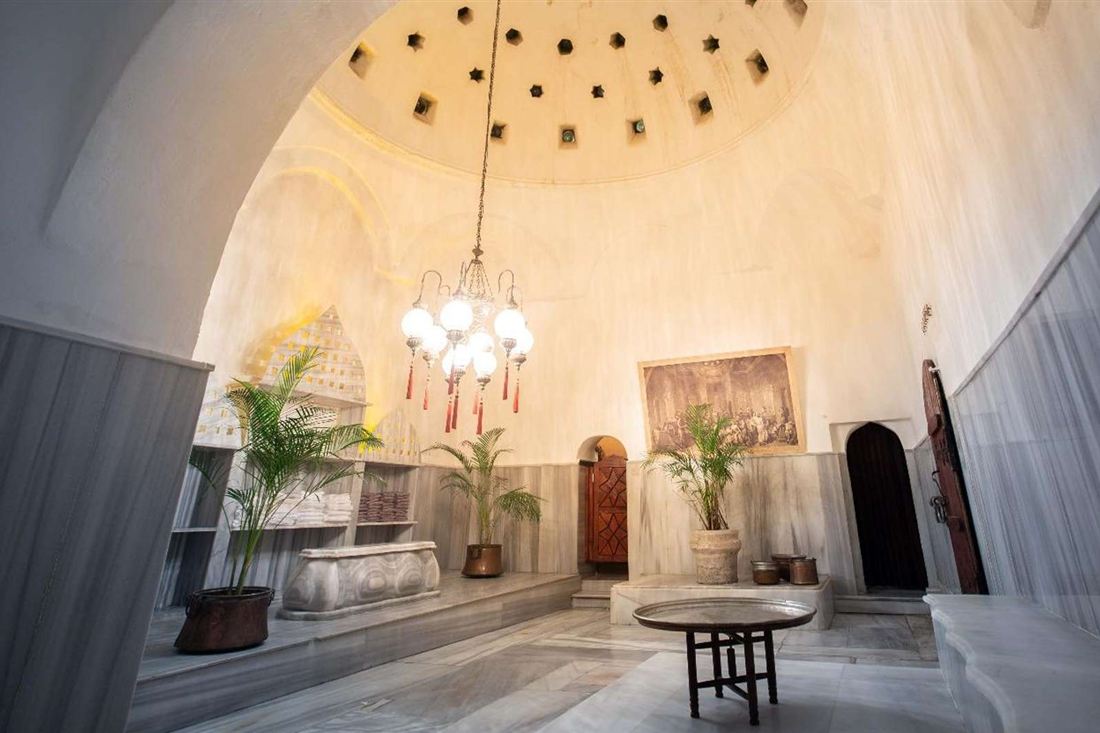
Cağaloğlu stands in Sultanahmet. Wikipedia says it was finished in the eighteenth century and was one of the last major hamams built in Istanbul. The Ottoman Baroque style marks its decoration. It was built to raise revenue for the library of Sultan Mahmud I, which stood inside the Ayasofya Mosque.
Wikipedia adds that the clientele of Cağaloğlu today is almost entirely tourists. A visit here is an Istanbul Turkish bath in a building that raised money for a sultan’s library.
Çemberlitaş is an Istanbul Turkish bath that Nurbanu Sultan commissioned. Builders finished it in the sixteenth century. Its hot room has twelve columns, yet the niches around the walls make it look twelve-sided. A heated marble slab lies in the centre. Wikipedia says foreign visitors now make up almost all of its guests.
Mimar Sinan is the architect named in the usual accounts of Çemberlitaş. Wikipedia notes that his own list of works names it once. That mention sits in the fifth volume, written after his death. For that reason Wikipedia points to the team of architects who worked under him.
Süleymaniye is an Istanbul Turkish bath inside the Süleymaniye Mosque complex, and Sinan built it in the sixteenth century. Wikipedia says workers from the nearby foundries used it, so people called it the metalworkers’ bath. A private cubicle that Sinan is said to have used while he lived nearby is still preserved.
The Hürrem Sultan bathhouse stands beside Hagia Sophia, on the site of the old Baths of Zeuxippus. Wikipedia calls it the largest hammam that Sinan designed. The building is 75 metres long and has a cross-shaped hot room with fountains in the corner loggias.
It was closed for a long time and used as a warehouse. A three-year restoration then returned it to bathing. This Istanbul Turkish bath is therefore a rebuilt service in a sixteenth-century shell, not an unbroken line of daily use.
Kılıç Ali Paşa stands in Tophane, in Beyoğlu, as part of a complex built for a Grand Admiral. Wikipedia says its hot room is hexagonal. It adds that this plan differs from the layout Sinan used in his other surviving hamams. So does the placement of the cool rooms.
The GetYourGuide listing for Acemoğlu says Fatih Sultan Mehmed built it. It calls the bath one of the oldest in Istanbul. The Gedikpaşa listing calls its bath the oldest in the city and gives it a ceiling 16 metres high.
Wikipedia’s article on the Tahtakale Hamam cites a scholar. He argues that the Tahtakale is the oldest surviving hamam structure in the city. The two sources do not agree on which bath is the oldest. Treat “oldest” in a listing as the seller’s claim.
Çinili stands in Zeyrek. Wikipedia dates it to the sixteenth century and credits Sinan. A travel blog says a 13-year restoration ended in a reopening as a hammam, a museum and a library. An Istanbul Turkish bath there comes with a museum visit.
Other old bathhouses no longer run baths. Wikipedia says the Tahtakale Hamam and the Mahmut Pasha Hamam now hold shops. The Bayezid II Hamam is a museum of hamam culture. The Küçük Mustafa Paşa Hamam hosts art exhibitions, and the Hoca Paşa Hamam stages whirling dervish shows.
What do you wear, and what do you bring, to an Istanbul Turkish bath?
A visitor to an Istanbul Turkish bath brings almost nothing. Çemberlitaş Hamamı’s own page lists a towel, soap, shampoo, slippers and a changing cabin as part of entry. Rumeli Hamam’s page adds shorts, bathrobes and lockers to its list.
The wrap of an Istanbul Turkish bath is the peştemal. Wikipedia’s article on it calls it a traditional towel used in hammams. The article suggests Ottoman culture designed it to help bathers keep their privacy. It also says the cloth dries faster than thicker towels.
Wikipedia’s article on the hammam compares the peştemal to a pareo and describes a cloth of silk, cotton or both. The same article says the wooden clogs once worn on wet floors, the nalın, now sit in museums. Today the pages of an Istanbul Turkish bath list slippers instead.
Çemberlitaş Hamamı’s page says every package includes the wrap, bath slippers and access to the hamam areas. Gedikpaşa Hamamı’s page calls the peştemal the symbolic hammam towel. Both pages treat the wrap as the basic item of dress in the bath hall.
What you wear under the wrap in an Istanbul Turkish bath depends on the bathhouse you pick. Wikipedia says hammam visitors undress down to a modesty garment or loincloth. It adds that in more conservative areas fewer women bathe in only underwear. In tourist areas a larger share of women bathe naked.
A travel blog on Süleymaniye Hamamı describes the habit there. The men wore nothing under the wrap, and the women kept their underwear on, without a bra. A blog on Zeyrek Çinili Hamam says the changing room handed out disposable underwear, top and bottom. The writer wore only the bottoms.
Swimwear is an option where the page says so. Çemberlitaş Hamamı lets guests bring their own. Rumeli Hamam says to bring swimwear if you own it, and it supplies shorts if you do not. A blog on Gedikpaşa Hamamı says a bikini works for anyone who dislikes public nudity.
Settle the swimwear question with the bathhouse first. Every Istanbul Turkish bath sets its own custom, and the pages above differ.
The same Gedikpaşa blog describes the changing room: a bench, hooks and a key. An attendant handed over the wrap and a scrub mitt. The writer locked the door behind her and carried the key into the bath hall.
She says to leave jewellery at home or in the locker. She also says to put in contact lenses, so you can see the hall. Both tips come from a visit in the Sultanahmet area. Check them against the rules of your own bathhouse.
The washing supplies of an Istanbul Turkish bath stay with the bathhouse. The Gedikpaşa blog found shampoo and conditioner in the shower for washing your own hair. A large, dry towel waited at the end, and the tea room had hair dryers and mirrors. Rumeli Hamam’s page lists a hair dryer too.
Water needs no packing either. The blog on Süleymaniye Hamamı says staff gave out water inside the hot room. The one choice left is between the bare wrap and swimwear.
A visitor review on the Çemberlitaş Hamamı page praises the secure locker, the slippers and the garments the bathhouse provided. A locker and a cabin key mean phones, cards and watches have a safe place while you bathe. The pages list no items to leave out. The hotel safe is the plain choice for the rest.
Which rules and manners apply inside an Istanbul Turkish bath?
Learn who bathes where before you go in. Çemberlitaş Hamamı runs separate men’s and women’s sections with attendants of the same gender. Other bathhouses split the day into men’s hours and women’s hours. A page has to say when an Istanbul Turkish bath is mixed.
A travel blog on Gedikpaşa Hamamı says Istanbul hammams come in two types. One has separate areas. The other has separate times for men and women. The blog tells readers to check which type they have chosen. A GetYourGuide listing for Gedikpaşa describes separate sections with a same-gender therapist. The listing also offers a Halvet section for more privacy.
Wikipedia’s article on the hammam says separate hours or facilities for the two sexes appeared from around the tenth century. It names Bayezid II Hamam and Haseki Hürrem Sultan Hamam as large Istanbul baths built as double hammams. A GetYourGuide listing calls Acemoğlu Hammam one of the rare mixed-gender baths in Turkey.
Couples have more than one route into an Istanbul Turkish bath. A blog says Süleymaniye Hamamı offers hammams for couples. Rumeli Hamam’s page says it can arrange a private couple room with two female therapists. It can also place a husband with a male therapist and a wife with a female therapist in separate rooms.
Check the setup before you book an Istanbul Turkish bath for two. The page of each bathhouse says which rooms it has.
Respect for privacy is part of the manners at an Istanbul Turkish bath. Rumeli Hamam’s page says it can arrange a fully private women-only time. Its example is a woman in a hijab who wants no man to see her. Attendants match the guest, according to Wikipedia. Male staff wash men, and female staff wash women.
In an Istanbul Turkish bath the attendant leads the session, and the guest follows. In the Gedikpaşa blog the attendant took the writer’s towel and laid it on the marble. She told the writer to lie face down. Later she asked her to turn over, then to sit up.
A review on the Çemberlitaş page says the attendant explained when to sit up and turn over. The Gedikpaşa attendant asked whether it was the writer’s first time at a hammam. When the answer was yes, she took charge of the order.
The Gedikpaşa blogger’s attendant spoke little English and used short phrases such as “sauna 10 minutes”. The Zeyrek Çinili blog says the team there explained the process step by step.
The heat is yours to manage in an Istanbul Turkish bath. The Süleymaniye blog says guests splashed cool water on themselves or stepped out of the hot room to cool down. The Gedikpaşa blogger left the sauna when she grew too hot.
Tipping at an Istanbul Turkish bath is a custom, and the sources give the habit but no single rule. The Gedikpaşa blog tells guests to leave a tip for the person who washed them on the way out. Wikivoyage’s Turkey guide calls tipping at a Turkish bath customary.
The guide says to split the tip among all the attendants. This page gives no amount, so ask at the desk.
No bathhouse page I read states a photography rule. The Gedikpaşa blogger photographed the hall only because she was the only woman there, and the steam spoiled the shots.
The Zeyrek Çinili blogger had the hall to herself and says the bathhouse gave her access with a camera. In a shared hall of an Istanbul Turkish bath, ask the staff first.
Keep the hall of an Istanbul Turkish bath calm. The Zeyrek Çinili blog calls the hammam a quiet space where people relax. Wikivoyage’s Turkey guide says hammams vary greatly in cleanliness, so choose with care. The same blog names a small library above the reception as a quiet place to sit and rest.
How long does an Istanbul Turkish bath take and when are bathhouses open?
An Istanbul Turkish bath runs from 30 minutes to 3 hours across the nine GetYourGuide listings read for this guide. Each listing gives its own range. The bathhouses publish their own opening hours, and those hours differ from one building to the next.
A GetYourGuide listing for the Old City states 50 to 125 minutes for a private bath with massage. The Acemoğlu listing states 45 to 80 minutes. The Cağaloğlu listing states 45 to 135 minutes. The Gedikpaşa listing states 1 to 2 hours. The longest listing states 1.5 to 3 hours.
The bathhouses split the time into blocks. The Süleymaniye info page lists four. The first is 15 minutes of welcome. Next come 30 minutes of warming on the marble stone and 30 minutes of scrub and soap massage. The last is 30 minutes of refreshments. Its FAQ gives about 90 minutes in total.
The Gedikpaşa page gives a shorter ritual for its Istanbul Turkish bath. It has a 15-minute hot marble rest, a 10-minute kese scrub and a 20-minute foam massage. The Kılıç Ali Paşa page describes a light scrub of 15 to 20 minutes. The Çemberlitaş data file lists the kese and foam wash as a 15-minute service.
The Çemberlitaş file also lists entry to the heated rooms with no time limit. A travel blog says Gedikpaşa lets guests stay in the pool and sauna after the wash. A bathhouse in Küçük Ayasofya lists massages of 30, 40 and 50 minutes in its packages.
A second travel blog describes a visit to the Süleymaniye bathhouse. It reports about 30 minutes on the heated slab and a wash of about 30 minutes. The full visit took about 90 minutes. That matches the bathhouse FAQ. A 90-minute Istanbul Turkish bath is a safe number for the day plan.
Opening hours, as each bathhouse page states them:
- Çemberlitaş: its site data lists every day from 06:00 to midnight.
- Cağaloğlu: 09:00 to 22:00 from Monday to Thursday, and 09:00 to 23:00 from Friday to Sunday.
- Gedikpaşa: the same two blocks of hours as Cağaloğlu, 09:00 to 22:00 and 09:00 to 23:00.
- Kılıç Ali Paşa: open every day, with women from 08:00 to 16:00 and men from 16:45 to 23:30.
- Süleymaniye: couples and families from 10:00 to 21:00, and men only from 06:00 to 10:00 every morning except Sunday.
Hours change, so read the bathhouse page before you go. A travel blog says Gedikpaşa stayed open until midnight on its visit, but the bathhouse page lists 22:00 and 23:00. No page read for this guide names a last-entry time. The Süleymaniye page asks guests to arrive 15 minutes before the slot.
Closing days and seasons are thin in the sources. Çemberlitaş and Kılıç Ali Paşa both state that they open every day. The Cağaloğlu home page carries a notice of winter hours, 11:00 to 21:00. The Süleymaniye home page carried a notice of a holiday closure. No page gives busy or quiet hours for an Istanbul Turkish bath.
A bath fits a sightseeing day as a break. One travel blog took its Istanbul Turkish bath after days of nonstop walking. The Çemberlitaş data file places the bathhouse near Sultanahmet and the Grand Bazaar. A GetYourGuide listing for the Acemoğlu bathhouse points to the landmarks close by.
Who needs to take care before an Istanbul Turkish bath?
Adults with heart conditions, asthma or blood-pressure problems, and pregnant women, read the health rules of the bathhouse first. The Süleymaniye page says its high heat and humidity are not recommended for these groups. Ask the bathhouse if your page is silent.
The Süleymaniye page lists the hot room of its Istanbul Turkish bath at 38 to 40 degrees Celsius. A travel blog about the same bathhouse adds a humidity of 65 to 70 percent. The page asks guests to tell the staff in advance about conditions such as high blood pressure or heart problems.
On pregnancy, the Süleymaniye FAQ does not recommend entry after the second month and tells guests to consult a doctor. The Çemberlitaş data file and the Cağaloğlu, Gedikpaşa and Kılıç Ali Paşa pages list no medical rules. A silent page is a reason to write or call before booking an Istanbul Turkish bath.
Wikipedia’s article on the sauna covers a dry hot room, not a hammam. It still names heat risks. Alcohol and dehydration raise the risk of sudden death. High blood pressure is a reason to shorten the session. Pregnant women can use a sauna while the core temperature stays under 39 degrees Celsius.
Alcohol is out in the bathhouses read here. The Süleymaniye page bans smoking and alcohol. The Kılıç Ali Paşa page allows no alcoholic drink on the premises under any circumstance. Water and tea are free at the Kılıç Ali Paşa bathhouse. A travel blog reports that guests at the Süleymaniye bathhouse received water.
The floor needs care in an Istanbul Turkish bath. The Süleymaniye FAQ warns that the floor of the bath area can be slippery. Its info page says the marble floors are slippery and tells guests to walk carefully in the slippers provided.
The hot room of an Istanbul Turkish bath has an exit. The Kılıç Ali Paşa page sends uncomfortable guests to the cooler outer room, the soğukluk. The Süleymaniye page lets guests pour warm or cool water over themselves or step into the cooling area. Its FAQ says not to use the bath if the heat makes you feel worse.
Wikipedia’s article on the sauna advises users to leave if they feel faint or ill. It also warns that rapid cooling in very cold water stresses the circulation. A travel blog calls the Gedikpaşa pool cold but not uncomfortably cold. A gradual entry is the careful choice after an Istanbul Turkish bath.
Age limits for an Istanbul Turkish bath differ by building. The Süleymaniye page admits no child under 16. Guests of 16 and over enter with both parents. A bathhouse in Küçük Ayasofya accepts children of 5 to 12 years. Under-fives stay with a parent there. The Gedikpaşa page lists a softer child ritual for ages 6 to 10.
A travel blog lists more child packages. Zeyrek Çinili takes ages 6 to 11. Ayasofya Hürrem Sultan takes ages 6 to 12. Kılıç Ali Paşa takes ages 4 to 12. The same blog does not bring a child under 4 or 5 to a hammam, because the room is warm.
No bathhouse page read for this guide sets a maximum age. Mobility is the other check for an Istanbul Turkish bath. The Süleymaniye FAQ states that the building has no ramp or service rooms suitable for disabled access. Three GetYourGuide listings carry the tag wheelchair accessible.
How do you book an Istanbul Turkish bath and get to the bathhouse?
Book an Istanbul Turkish bath online, on the bathhouse’s own site or on a GetYourGuide listing. Pick a date and a time slot. The historic baths stand in Sultanahmet, Çemberlitaş and Cağaloğlu, and the T1 tram has stops at Sultanahmet and Çemberlitaş.
The Cağaloğlu Hamamı site runs a reservation form. You choose the service, the date, the hour and the number of men and women. The form also asks for the hotel where you stay and your nationality. Each Istanbul Turkish bath site builds its own form, so the steps differ from one bathhouse to the next.
A Sultanahmet bathhouse’s form asks whether the party is male, female, a couple or a family with a child. It asks for a WhatsApp number as the first contact method.
That form takes a booking in steps: date and time, guest details, then a summary. The page says no prepayment is needed and the guest pays at the bath. The Cağaloğlu and Süleymaniye pages describe a deposit instead. The payment rule depends on the bathhouse.
Two bathhouse pages rule out a walk-in. The Sultanahmet page says online reservation is required and walk-ins are not taken. The Süleymaniye Hamam page says it works strictly by appointment and advises booking two to three days ahead.
The Çemberlitaş Hamamı page asks you to call or send a WhatsApp message to check current availability.
None of the bathhouse pages read for this guide promises a free slot to a person who simply turns up. Phone the bath first, or book a slot for your Istanbul Turkish bath online.
All nine GetYourGuide listings checked for this page carry the label Free cancellation. Eight of them add a booking cut-off. It runs from 35 minutes to 22 hours before the start, with steps at one, two and 10 hours. The listings do not state how early a free cancellation must be made, so read that line before you pay.
A bathhouse’s own page can be stricter than a listing. The Cağaloğlu reservation page asks for cancellations and date changes at least 48 hours ahead. After that it keeps the deposit. The Süleymaniye page calls its deposit non-refundable and says it cannot be moved to another date.
Arrive early for an Istanbul Turkish bath. The Süleymaniye page asks guests to come 15 minutes before the slot. It cancels the booking when a guest is more than 15 minutes late, and the deposit is not returned.
Group size shapes the choice of an Istanbul Turkish bath. Two GetYourGuide listings carry the label Private group, and three more say a private option is available. The Süleymaniye page describes a shared, communal hall and not a private room. A Sultanahmet bathhouse’s page offers a private couple room.
The listings differ on language too, so check it before you book an Istanbul Turkish bath. Six of the nine name English only, one names English and Spanish, and one names English, German, Russian and Turkish. One lists no language.
Hotel pickup is stated by one source in this guide. A Sultanahmet bathhouse’s page offers free pick-up and drop-off from hotels in Fatih, Sultanahmet, Beyoğlu, Karaköy and Zeytinburnu. None of the nine listing frames states a pickup or a meeting point. Read the meeting-point text on the listing before you book an Istanbul Turkish bath.
Wikipedia places the Cağaloğlu Hamam in Sultanahmet. It also says the Çemberlitaş Hamam is close to the Çemberlitaş stop on the T1 tram. The bathhouse’s own page calls it a short walk. The Süleymaniye Hamam sits in Fatih, on a hill that faces the Golden Horn.
The T1 line runs from Kabataş to Bağcılar via Eminönü, says Wikipedia. Its stops include Karaköy, Eminönü, Gülhane, Sultanahmet, Çemberlitaş and Beyazıt. At Kabataş it meets the funicular to Taksim in Beyoğlu, where a GetYourGuide listing places one Istanbul Turkish bath.
A travel blog puts the Ayasofya Hürrem Sultan Hamamı in Sultanahmet, near Hagia Sophia. No source gives a walking time, so check a map. If the bath closes a day at the monument, our page on Hagia Sophia tickets covers the visit before it.
Wikipedia lists the M11 metro for Istanbul Airport and the M4 metro for Sabiha Gökçen Airport. If your Istanbul Turkish bath trip starts at either airport, our Turkey tours page shows what else to plan.
Check the seller before any payment for an Istanbul Turkish bath. The Süleymaniye page says it confirms bookings only through its own automated system on its official site. Match the bathhouse name, the date, the time slot and the group size on the confirmation to your choice. None of the pages read for this guide describes a printed voucher.
What do travellers ask about an Istanbul Turkish bath?
Travellers ask about mixed sections, card payment, bridal parties, wheelchair access, cruise days and the sauna. Bathhouse pages, GetYourGuide listings and Wikipedia answer each one differently. Each answer below names its source type and says where sources differ.
Is an Istanbul Turkish bath open to women and men together?
Not at every bath. Wikipedia calls the Cağaloğlu Hamam a double hamam with separate sections for men and women. A Sultanahmet bathhouse’s page offers a private couple room, or separate rooms for a husband and a wife, on request.
Can you pay by card at an Istanbul Turkish bath?
Sources differ. A Sultanahmet bathhouse’s page accepts Visa, Mastercard, American Express and phone payments with no extra fee. It takes euros, dollars or lira. The Süleymaniye reservation page says payment is cash only. Ask the bath before you go.
Can you book an Istanbul Turkish bath for a bridal party?
The Çemberlitaş page says it organizes Bride Hamam celebrations, with menu and no-menu options. It asks you to confirm the date and time in advance. The Cağaloğlu site calls the bridal bath an Ottoman tradition and answers through a quote request.
Is an Istanbul Turkish bath accessible for a wheelchair user?
Three GetYourGuide listings carry the label Wheelchair accessible. The frames do not say which route the label covers. The Cağaloğlu history page says the men’s section is reached by a staircase of 10 steps. Ask the bathhouse about steps.
Can you book an Istanbul Turkish bath from a cruise ship?
None of the pages read for this guide lists a cruise-port pickup. Wikipedia says a tram service for cruise passengers was announced from a Galataport stop to Beyazıt. One GetYourGuide listing closes bookings 35 minutes before the start.
Can you use the sauna again after an Istanbul Turkish bath?
A Sultanahmet bathhouse’s page says guests can re-use the sauna after the program. It also lists free sauna and steam room time after a massage. No other page read for this guide states this rule.