
Ikaria carries one of the longest and most distinctive histories in the north Aegean. The island grew around ancient Oinoe, its old capital near modern Kampos, and around the coastal settlements of Therma and Drakanon. Ancient writers praised its Pramnian wine and a sanctuary of Artemis near Nas. Later centuries brought Byzantine, Genoese and Ottoman rule, plus waves of pirate raids that reshaped how people lived. Islanders withdrew inland, built hidden villages, and forged a private, self-reliant culture that endures. Modern Ikaria earned worldwide fame as a Blue Zone of remarkable longevity. Explore this layered story and plan your own visit with My Greece Tours.
This guide walks through each major era in clear stages, from the ancient world to the present day. Pair it with the wider Ikaria travel guide to connect the history with the beaches, villages and hot springs you can still visit. The sections below cover ancient Ikaria and its wine, the medieval island under Byzantine and Genoese hands, the pirate raids that pushed settlement inland, the short-lived Free State and union with Greece, and the modern longevity story. Each section answers a practical question first, then adds context so the timeline stays easy to follow.
What was ancient Ikaria known for?
Ancient Ikaria was known for its capital Oinoe near modern Kampos, its prized Pramnian wine, and a sanctuary of Artemis Tauropolos near Nas. Coastal Therma and Drakanon anchored the island’s early settlement and trade.
Ancient Ikaria centered on Oinoe, a city near modern Kampos that served as the island’s capital. The name Oinoe links to wine, and the connection was no accident. Ikaria produced the famed Pramnian wine, a dark, strong vintage praised by ancient poets and physicians. Traders carried it across the Aegean, and it gave the island an early reputation far beyond its shores. The Ikaria mythology surrounding the fall of Icarus into the nearby sea added a legendary aura to a place already valued for its vineyards. Two other settlements, Therma and Drakanon, sat in the southeast. Therma drew visitors to its hot springs, a draw that still shapes island tourism, while Drakanon guarded the eastern approaches by sea.
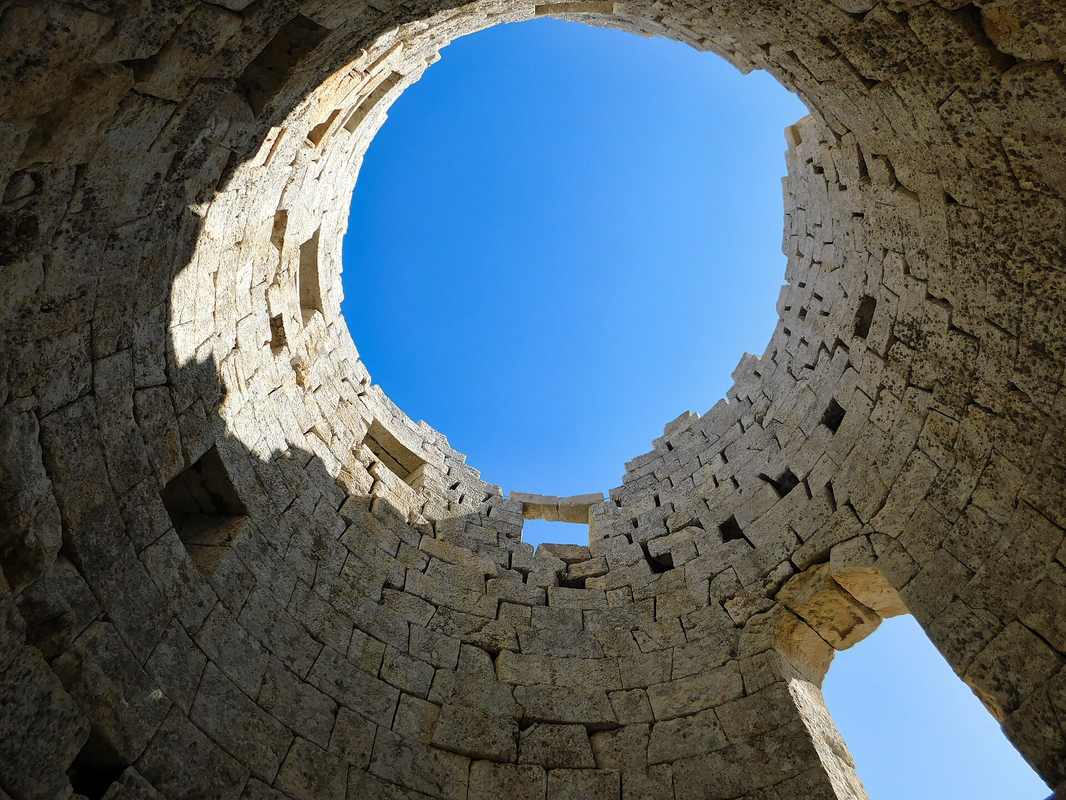
Religion held a firm place in ancient island life. A sanctuary of Artemis Tauropolos stood near Nas, on the wild northwest coast, where a river met the sea in a sheltered cove. Pilgrims and sailors stopped there, and the ruins of the temple still mark the spot. The defensive Drakano Tower rose in the Hellenistic period near Drakanon, and its round stone shell survives in strong condition today. Ancient Ikaria therefore combined commerce, worship and coastal defense. Wine funded the settlements, the Artemis cult tied the island to wider Greek religion, and towers watched the sea lanes. These strands set the pattern for everything that followed on the island.
How did the medieval period shape Ikaria?
Medieval Ikaria passed from Byzantine control to Genoese rule and later Ottoman authority. Distant governors, thin defenses and repeated raids left the island poor and exposed, pushing communities toward isolation and self-reliance rather than coastal growth.
Byzantine rule brought Ikaria into a Christian, Greek-speaking world governed from Constantinople. Churches and small settlements dotted the island, and a scattering of fortifications guarded key points. The empire’s reach over such a remote island stayed limited, and central protection often arrived late or not at all. Byzantine authority eventually gave way to Genoese control during the long contest for the Aegean. The Genoese ran the island as a distant holding, prizing trade routes over local welfare. Investment in defense and infrastructure remained slight. Ikaria’s rugged terrain, with steep ridges and few natural harbors, discouraged large fortress towns.
The island slipped further from the centers of power, and its people grew used to managing their own affairs with little outside help.
Ottoman rule followed, and the pattern of distant, light governance continued. Ikaria paid its taxes and kept a low profile, avoiding the attention that might bring soldiers or heavy demands. Poverty was widespread, yet it carried a strange protection. Rulers saw little worth seizing, and pirates found few rich targets. Life turned inward, organized around family, church and mutual aid among villages. This long medieval stretch built the habits that later defined the island’s character. Visitors drawn to the modern range of things to do in Ikaria still sense that inward, unhurried rhythm in the mountain settlements. The medieval centuries did not bring grand monuments, yet they forged a resilient, close-knit society that outlasted every ruler.
Why did pirate raids push Ikarians to live inland?
Repeated pirate raids made the Ikaria coast dangerous, so islanders abandoned the shore. They built hidden inland villages and low, camouflaged anti-pirate houses, creating a dispersed, secretive settlement pattern that protected families from sudden attacks by sea.
Pirate raids struck the Aegean hard during the later medieval and Ottoman centuries. Corsairs prowled the sea lanes, and coastal villages made easy prey. Ikarians responded by pulling back from the shore entirely. They moved settlement up into the folds of the mountains, out of sight from passing ships. Villages spread thinly across ridges and hollows rather than clustering in one exposed spot. This dispersal made the island hard to raid, since attackers could not find a single rich target. The coast, once home to Oinoe and Therma, emptied of permanent life.
People kept fields and flocks inland and reached the sea only when needed, always ready to vanish back into the hills at the first sign of danger.
Architecture followed the same logic. Ikarians built low stone houses, often set against boulders or half-buried in the slope, with flat roofs that blended into the rock. These anti-pirate houses stayed almost invisible from the sea. Chimneys were hidden or omitted so no smoke would betray a home. The design demanded that families live quietly and self-sufficiently, sharing little with strangers. This shaped a culture that prized privacy, independence and mutual trust among neighbors. The dispersed village pattern and camouflaged homes remain a defining feature of the island. Travelers today can still trace this heritage while touring near Agios Kirykos and the inland settlements.
The pirate era, harsh as it was, gave Ikaria the self-reliant social fabric that outsiders still notice.
What was the Free State of Ikaria?
The Free State of Ikaria was a short-lived independent state the islanders declared after throwing off Ottoman rule. It governed itself for only a few months before uniting with the Kingdom of Greece, ending centuries of foreign control.
The end of Ottoman rule came through local action rather than a large foreign army. Ikarians rose against the small Ottoman garrison and expelled it from the island. With no immediate power ready to take charge, the islanders governed themselves. They declared a free and independent state, chose their own leaders, and organized basic administration, defense and finance on their own terms. The little republic printed its own stamps and raised its own flag. This bold move reflected the very self-reliance that centuries of distant rule and pirate raids had bred. The islanders had long managed without protectors, so running their own affairs felt natural even in a moment of upheaval and uncertainty about the future.
Independence proved brief. The Free State lasted only a few months before the island formally united with the Kingdom of Greece. The islanders had always sought union with the Greek nation rather than lasting separation, and the free republic was a bridge toward that goal. The episode remains a proud chapter in local memory, celebrated as proof of Ikarian courage and independence. It also cemented the island’s place within modern Greece while preserving its distinct identity. The story connects naturally with the older strands of Ikaria mythology and legend that already set the island apart. The Free State closed the long era of foreign rule and opened Ikaria’s modern chapter as part of the Greek state.
Why is modern Ikaria famous as a Blue Zone?
Modern Ikaria is famous as a Blue Zone, one of a few places worldwide with exceptional numbers of long-lived residents. Its diet, active mountain life, strong community bonds and unhurried pace draw researchers and visitors seeking longevity.
Ikaria entered global attention as a Blue Zone, a term for regions with unusually high numbers of people who reach very old age in good health. Researchers studied the island’s residents and pointed to several linked factors. A plant-rich diet of wild greens, beans, olive oil, herbal teas and modest wine anchors daily meals. Steep terrain keeps people walking, gardening and moving well into old age. Strong family and village ties reduce isolation, and the island’s relaxed sense of time lowers daily stress. These patterns did not appear by design. They grew from the same inland, self-reliant culture that pirate raids and centuries of poverty had shaped, now recast as a recipe for a long, healthy life.
The Blue Zone fame reshaped how the world sees Ikaria and how visitors experience it. Travelers come to walk the mountain paths, taste the local produce, soak in the hot springs at Therma and join the famous night festivals that bind the community. The island markets its longevity heritage while guarding the calm that made it possible. History and health now sit side by side as reasons to visit. The ancient wine, the hidden villages, the Free State and the Blue Zone story form one continuous thread. Modern Ikaria therefore offers more than a beach holiday.
It presents a living case study in how landscape, history and community can produce one of the healthiest and most resilient societies in Greece.
Frequently Asked Questions
What was ancient Ikaria known for?
Ancient Ikaria was known above all for its Pramnian wine, a strong dark vintage that ancient poets and doctors praised and traders shipped across the Aegean. The island’s capital, Oinoe, stood near modern Kampos, and its very name tied the place to winemaking. Religion mattered too. A sanctuary of Artemis Tauropolos stood near Nas on the northwest coast, drawing pilgrims and sailors to a sheltered river cove. Coastal Therma offered healing hot springs, while Drakanon guarded the southeast, where the round Hellenistic Drakano tower still stands in strong condition. Legend added further fame, since the myth of Icarus placed his fall in the sea beside the island.
Ancient Ikaria therefore combined prized wine, an important cult of Artemis, healing springs and coastal defense. These strands gave the small island a reputation that reached far beyond its rugged shores in the ancient Greek world.
Why did Ikarians build their villages inland?
Ikarians built their villages inland to escape relentless pirate raids that made the coast deadly. Corsairs prowled the Aegean during the later medieval and Ottoman centuries, and shore settlements offered easy plunder. Islanders responded by abandoning the coast and moving up into the mountains, out of view from passing ships. They spread their homes thinly across ridges and hollows instead of clustering in one exposed town, so raiders could never find a single rich target. Their houses reflected the same fear. Families built low stone dwellings set against boulders or half-buried in slopes, with flat roofs that blended into the rock and hidden chimneys that released no telltale smoke.
These camouflaged anti-pirate houses stayed almost invisible from the sea. The pattern demanded quiet, self-sufficient living and forged a culture that valued privacy, independence and trust among neighbors. This dispersed, secretive settlement style still defines the island and shapes its distinctive character.
What was the Free State of Ikaria?
The Free State of Ikaria was a short-lived independent republic the islanders created after they expelled the Ottoman garrison from their island. With no other power ready to step in, Ikarians governed themselves, choosing leaders and organizing defense, finance and administration on their own terms. The tiny state even printed its own stamps and raised its own flag as marks of sovereignty. This confident act flowed from centuries of self-reliance, since distant rulers and constant pirate threats had long forced the islanders to manage without protectors. Independence lasted only a few months.
The Ikarians had always wanted union with the Greek nation rather than permanent separation, so the free republic served as a bridge toward joining the Kingdom of Greece. The island then formally united with Greece, ending the long era of foreign rule. The episode remains a proud symbol of Ikarian courage and independence, celebrated as a defining moment in the island’s modern story.