
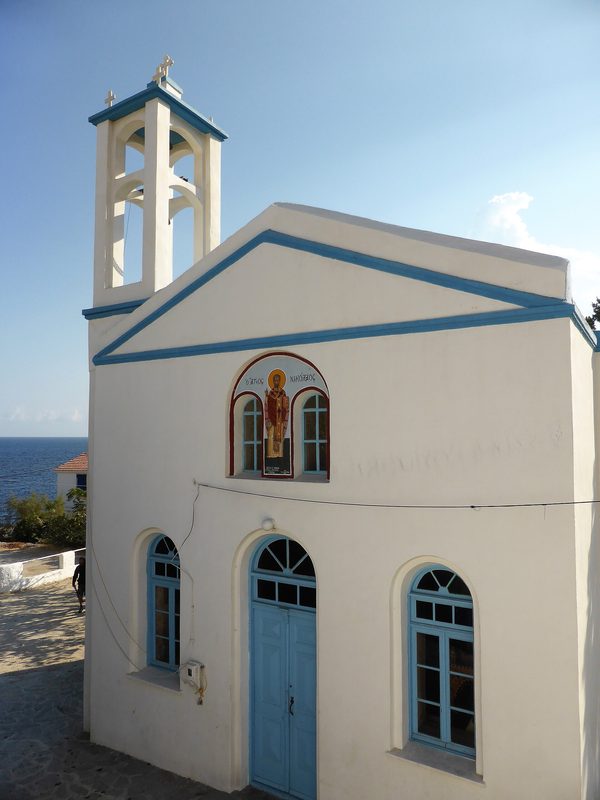
Gialiskari is a small sheltered bay on the northwest coast of Ikaria, tucked just west of the resort village of Armenistis. Its calm, sandy shore and the little whitewashed chapel on a stone jetty make it one of the most recognisable spots on the island. The bay faces away from the strongest north winds, so the water stays gentle when neighbouring beaches turn rough. Fishing boats bob at anchor, tavernas line the waterfront, and families spread out on the soft sand. This guide explains what makes Gialiskari special, how to reach it and how to fold it into a wider island trip planned with My Greece Tours.
Gialiskari works best as one stop within a wider northwest-coast plan, and our Ikaria travel guide sets it in context alongside the neighbouring resorts and coves. The bay sits within easy reach of Mesakti, Livadi and the wider Armenistis area, so a single base covers a range of beaches. The sections below cover what and where Gialiskari is, the chapel and jetty that give it its identity, why the bay stays calm and family-friendly, the boats, tavernas and facilities on the front, and the practical steps for visiting and pairing it with the surrounding coast for a full day out.
What and where is Gialiskari Beach in Ikaria?
Gialiskari is a small sandy bay on Ikaria’s northwest coast, just west of Armenistis village. It sits near the larger Mesakti and Livadi beaches and forms part of the island’s most popular stretch of shoreline.
Gialiskari lies on the north side of Ikaria, a mountainous Greek island in the north Aegean. The bay opens west of the fishing village of Armenistis, the main resort hub of this coast. The shore curves into a compact, protected inlet backed by low hills and greenery. Soft golden sand meets shallow water at the shoreline, and the seabed drops away gradually rather than steeply. The setting places it within the same coastal cluster as the broad Mesakti beach and the quieter Livadi to the east. This concentration of coves makes the northwest the busiest swimming region on the island.
A short walk or drive links Gialiskari to each of its neighbours, which is why visitors often treat the whole stretch as one destination.
The bay draws its name and its fame from a combination of scale and shelter. Gialiskari is smaller than the wide open beaches nearby, and that intimacy is part of its appeal. Visitors reach it along the coastal road that threads through Armenistis and the surrounding hamlets. The wider region rewards a slow approach, and the broader Ikaria beaches vary from open surf to tucked-away inlets like this one. Gialiskari holds a firm place among the island’s photographed spots thanks to its chapel and harbour scene. Travellers pair it with the resort life of nearby Armenistis, using the village for food, drinks and rooms while spending beach hours on the calm sand of the bay itself.
What is the chapel and jetty at Gialiskari?
The landmark is a small whitewashed chapel of Agios Nikolaos standing at the end of a short stone jetty. It marks the harbour entrance and ranks among the most photographed sights on the whole island.
The chapel of Agios Nikolaos gives Gialiskari its signature image. The little white church sits at the tip of a low stone breakwater that reaches into the bay. Agios Nikolaos is the patron saint of sailors and fishermen, a fitting dedication for a working harbour. The jetty shelters moored boats and doubles as a walkway out to the chapel. Visitors stroll along the stone causeway with the sea on both sides, reaching the church at the far end. The whitewash stands bright against the blue water and sky, and the simple form contrasts with the green hills behind.
The scene ranks among the most recognisable on Ikaria and appears in a wealth of photographs of the northwest coast throughout the summer season.
The chapel repays a visit at different times of day. Morning light sets the white walls glowing, and the calm early water mirrors the structure. Late afternoon brings warmer tones and quieter surroundings once beach crowds thin. The short walk out along the jetty gives clear views back across the bay toward the sand and the tavernas. Boats rest in the sheltered water around the causeway, adding to the harbour character. The dedication to Agios Nikolaos ties the spot to the island’s long fishing tradition. Visitors treat the chapel as the focal point of any trip to Gialiskari, combining a swim with a walk to the church.
The compact scale keeps everything within a handful of minutes’ reach, so the chapel, the sand and the waterfront tavernas all sit side by side.
Why is Gialiskari sheltered and good for families?
The bay faces away from the worst of the meltemi north wind, so it stays calmer than the exposed neighbouring beaches. Soft sand and a shallow, gradual entry make it a reliable family choice.
The meltemi is the strong seasonal north wind that sweeps the Aegean through high summer. A variety of north-facing Ikaria beaches take the full force of it, turning rough with waves and swell. Gialiskari sits in a protected pocket that faces away from the worst of this wind. The bay and its breakwater cut the swell, leaving the water noticeably calmer than the open shore nearby. This shelter matters most on the days when Mesakti and other exposed beaches grow choppy. Swimmers find gentler conditions here even when the wider sea is stirred up.
The contrast is one reason the bay stays busy through the windy weeks of the season, drawing visitors who want a dependable swim rather than a wrestle with the surf.
The calm water pairs with a beach profile suited to children. Soft sand covers the shore, and the entry into the sea is shallow and gradual rather than a sudden drop. Young children paddle safely near the edge while parents keep watch from the sand. Families rank Gialiskari highly for exactly this reason, choosing it over the rougher open beaches on windy days. The sheltered feel also suits less confident swimmers and older visitors. Shade options and nearby tavernas add to the ease of a family day. The contrast with wilder spots such as Nas beach is clear, since that dramatic river-mouth cove trades calm shallows for rugged scenery.
Gialiskari instead offers gentle, reliable swimming close to the resort comforts of the coast.
What facilities, boats and tavernas will I find at Gialiskari?
Tavernas line the waterfront and fishing boats moor in the sheltered harbour. The bay offers casual seaside dining beside the sand, and visitors combine a swim with a meal by the water.
The waterfront at Gialiskari carries a cluster of tavernas set close to the sand. Tables sit near the water, giving diners views across the bay to the chapel and the moored boats. The menus lean on the island’s fishing catch and Greek staples, matched to the harbour setting. Fishing boats shelter in the calm water behind the breakwater, and their presence underlines the working character of the bay. The mix of small harbour, sand and eateries creates an easy rhythm to a visit. Swimmers move between the sea and a shaded table without a long walk.
The compact layout keeps food, sand and the chapel within a handful of steps of one another, which suits families and anyone wanting a relaxed half day by the water rather than a purely wild beach.
The bay sits close to the fuller services of Armenistis, so anything not found on the sand is a short hop away. The resort village supplies shops, more tavernas, cafes and rooms, backing up the simpler waterfront at Gialiskari itself. Visitors basing themselves nearby find the bay an easy daily swim spot. Choices for accommodation across the coast are wide, and our guide to where to stay in Ikaria covers the options around Armenistis and beyond. The harbour boats and tavernas give the bay a lived-in feel rather than a resort gloss. Parking near the sand fills fast in the peak summer weeks, so an early arrival helps.
A little planning turns the modest facilities into a comfortable base for a full beach day.
How do I visit Gialiskari and pair it with Armenistis in Ikaria?
Reach Gialiskari by car along the northwest coast road just west of Armenistis. Arrive early in high summer for parking, then combine the bay with the village and the neighbouring Mesakti beach.
A car gives the easiest access to Gialiskari and the wider northwest coast of Ikaria. The bay sits just west of Armenistis on the main coastal road, a short drive from the village centre. Parking near the sand is limited and fills fast through the peak summer weeks. An early start secures a space and the calmer morning water at the same time. Visitors without a car reach the area by local bus or taxi, then walk the short distances between the coves. The compact spacing of Gialiskari, Mesakti and Livadi means one base covers an array of beaches on foot or with a brief drive.
This clustering is the practical heart of a northwest-coast day, letting a single trip take in the harbour, the chapel and the open sand.
Gialiskari pairs naturally with the surrounding attractions for a full day out. The resort of Armenistis supplies meals, drinks and rooms a handful of minutes away, while the broad Mesakti beach lies within easy reach for open swimming and surf. A typical plan splits time between the sheltered bay and the wider sand, matched to the wind on the day. Calmer days suit the open beaches, and windier ones send swimmers back to the shelter of Gialiskari. The chapel walk and a harbour-front meal round out the visit. Building the day around this cluster gives variety without long drives.
Travellers planning the route with My Greece Tours slot the bay between the village and its neighbours, treating the whole northwest strip as one connected destination rather than a set of separate stops.
Frequently Asked Questions
Is Gialiskari good for families with children?
Gialiskari ranks among the best family beaches on Ikaria. The bay sits in a sheltered pocket that faces away from the strongest north winds, so the water stays calmer than the exposed beaches nearby. Soft sand covers the shore, and the entry into the sea is shallow and gradual rather than a sudden drop. Young children paddle safely near the edge while parents watch from the sand. The calm conditions hold up even on days when Mesakti and other open beaches turn choppy in the meltemi wind. Tavernas line the waterfront a handful of steps from the sand, so meals and shade are close at hand.
The compact layout keeps the swimming, food and the chapel walk all within easy reach. Parking near the sand fills fast in high summer, so an early arrival helps a family settle in. The mix of gentle water, soft sand and nearby comforts makes it a dependable choice.
What is the chapel at Gialiskari?
The chapel at Gialiskari is a small whitewashed church dedicated to Agios Nikolaos, the patron saint of sailors and fishermen. It stands at the end of a short stone jetty that reaches into the bay from the shore. The breakwater shelters the moored fishing boats and doubles as a walkway out to the church. Visitors stroll along the stone causeway with the sea on both sides, reaching the chapel at the far end. The bright white walls stand out against the blue water and the green hills behind, which makes the scene one of the most photographed on the whole island.
The dedication ties the spot to Ikaria’s long fishing tradition and gives the working harbour its focal point. Morning and late afternoon bring the best light and the quietest surroundings for a walk out to the church. The chapel, the sand and the tavernas all sit within a handful of minutes of one another, so a visit combines a swim with the short jetty walk.
How does Gialiskari compare to Mesakti beach?
Gialiskari and Mesakti sit close together on Ikaria’s northwest coast but offer different experiences. Mesakti is a broad, open beach with a long stretch of sand and lively surf, exposed to the north wind that sweeps the Aegean in summer. That exposure brings waves and swell on windy days, which draws surfers and strong swimmers but can unsettle young children. Gialiskari, by contrast, sits in a sheltered bay that faces away from the worst of the meltemi. The breakwater and the shape of the inlet keep its water calmer and its entry shallow, which suits families and gentler swimmers. Mesakti wins on scale and open space, while Gialiskari wins on shelter, charm and its landmark chapel.
A variety of visitors use the two together, matching the beach to the wind on the day. Calmer days suit the open sweep of Mesakti, and windier ones send swimmers to the protected water of Gialiskari a short distance west.