
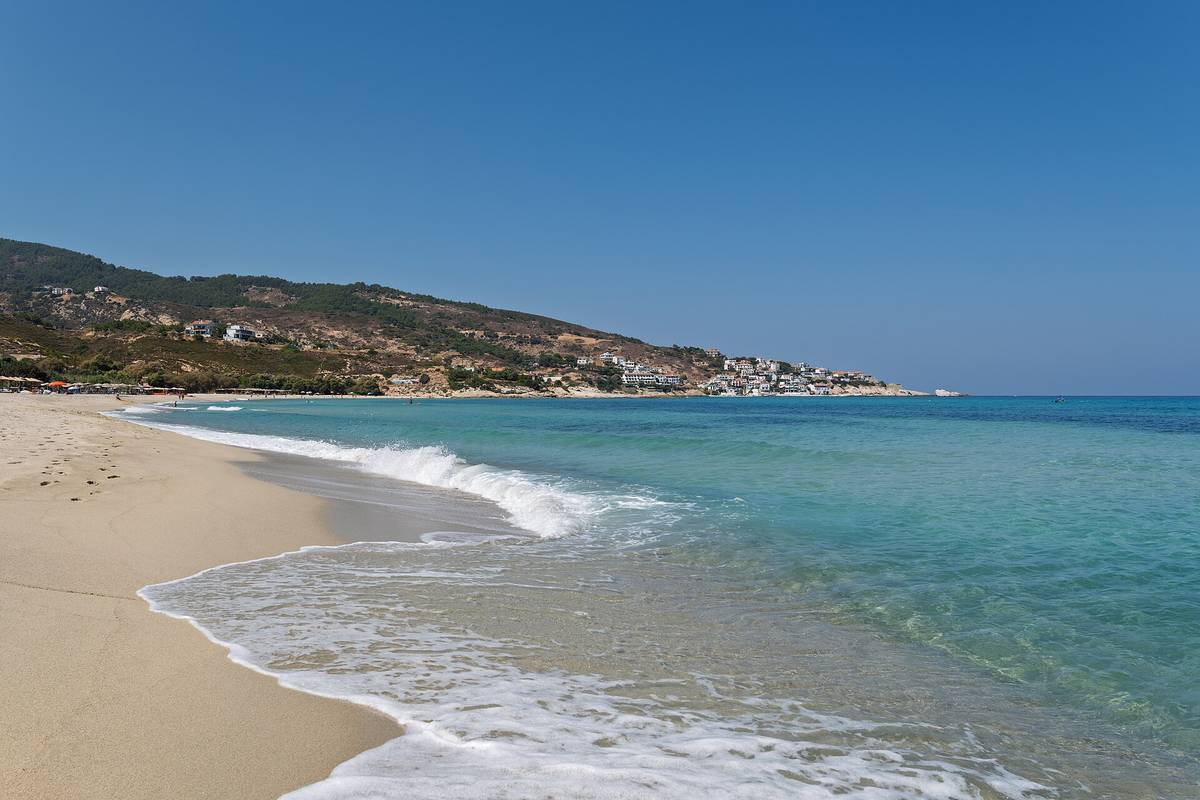
Ikaria stretches long and narrow across the north Aegean, and its coastline swaps character every headland. The north coast around Armenistis holds long sandy beaches with real Aegean swell, while the south hides pebble coves reached on foot. Swimmers chase the deep turquoise water of Seychelles, families favour the sheltered sand of Gialiskari, and surfers watch the meltemi build waves at Mesakti. This guide maps the coast honestly, so you match each beach to the day you want and the wind that day brings. Plan your swimming days around the coast and the weather with My Greece Tours.
Ikaria rewards travellers who read the map before packing a towel. The northwest cluster near Armenistis puts sand, surf and a sheltered chapel bay within a short drive of each other. The south coast trades facilities for drama, and the northeast mixes shallow family sand with warm spring water at Therma. The sections below cover the famous coves, the Armenistis sands, the southern and eastern shores, wind strategy, and how to pick by traveller type. Pair this beach map with our Ikaria travel guide to slot swimming days into a wider island itinerary that works around ferries and weather.
Which are the most famous beaches in Ikaria?
Seychelles and Nas rank as Ikaria’s signature beaches. Seychelles sits on the south coast near Manganitis with white pebbles and turquoise water. Nas lies on the northwest below the ancient Temple of Artemis where the Halari gorge meets the sea.
Seychelles, written Seϊχέλλες locally, hides on the south coast near Manganitis. White pebbles ring a small cove where huge boulders split the shallows into turquoise pools. You reach it on foot down a rocky path from the road above, so wear proper shoes and carry your own water. The cove holds no cantina, no sunbeds and no shade past mid-morning, which keeps the crowd thin and the water clear. Strong swimmers love the depth between the boulders, where the water reads almost tropical on a still morning. Families with small children find the scramble down harder work than the swim rewards. Pack light, arrive early, and treat it as a swimming mission rather than a lounging day.
Afternoon boats sometimes anchor offshore, though the cove stays quiet on foot. This beach anchors most lists of things to do in Ikaria.
Nas guards the northwest coast past Armenistis, a pebble cove tucked where the Halari river gorge cuts down to the sea. The ruins of the ancient Temple of Artemis sit on the bluff above, giving the beach a rare mix of history and swimming. A cluster of tavernas lines the clifftop, so lunch and shade wait a short climb from the water. The cove faces open sea, and the current at the river mouth can pull, so keep children in the calm inner pool. Sunset light here draws photographers along the gorge, and the pebble shore holds warmth into the evening.
Freshwater from the Halari cools the swim near the river mouth, then the sea warms as you push out. Read the full Nas beach guide before you go, and the companion Seychelles beach guide for the southern cove.
What beaches surround Armenistis in northwest Ikaria?
Armenistis anchors Ikaria’s beach coast with Livadi and Mesakti, two long sandy stretches with Aegean swell. Gialiskari sits just west, a sheltered sandy bay with a small chapel on a jetty, calmer than its exposed neighbours.
Livadi and Mesakti run as twin sandy beaches just east of Armenistis village. Both face the open north Aegean, so they catch swell and build genuine surf when the meltemi blows. The sand is broad and golden, backed by tamarisk trees that throw shade through the afternoon. Cantinas serve cold drinks and light food, and a handful of sunbeds line the front rows. Currents here run stronger than they look on a calm morning, and lifeguard cover is limited, so read the flags and the water before diving in. Bodyboarders and surfers gather at Mesakti on windy days. Confident swimmers get long clean water, while cautious swimmers should wait for a flat sea.
These sands sit close to village rooms and studios, so check where to stay in Ikaria.
Gialiskari lies a short walk or drive west of Mesakti and reads as the gentle sibling. A curved sandy bay wraps around calm water, and a whitewashed chapel stands at the end of a small stone jetty, one of the island’s most photographed corners. The bay faces away from the worst of the meltemi, so it stays swimmable on days when Livadi churns. Fishing boats bob in the shelter, and tavernas along the front turn the beach into an easy full-day base. Shallow entry and soft sand make it the northwest choice for families with young children. Parking fills fast in high summer, so arrive before noon or walk in from the village.
The village of Armenistis puts food, rooms and three contrasting beaches within one compact walk, working well as a beach base.
Where are the best southern and eastern beaches in Ikaria?
Kampos near the ancient site, Faros in the northeast, and Therma near Agios Kirykos define Ikaria’s other coasts. Faros offers sand and shallows, Kampos pairs swimming with archaeology, and Therma mixes sea water with warm spring flow.
Kampos, also spelled Kambos, sits on the north coast beside one of Ikaria’s key ancient sites, the remains of the old capital Oinoe. The beach mixes sand and fine shingle along a calm bay, and a small museum in the village holds finds from the surrounding fields. Swimming here pairs naturally with a morning of archaeology, then a taverna lunch under the plane trees. Faros claims the far northeast, a long stretch of sand with shallow, warm water that suits paddling and unhurried afternoons. A pine backdrop and a lagoon-like river mouth give it a softer feel than the surf coast. Both beaches reward travellers wanting calm water and a slower rhythm than the exposed Armenistis sands.
Distances between coasts are real, so plan drives with time to spare.
Therma sits just east of the port town Agios Kirykos and turns Ikaria’s famous radioactive hot springs into a coastal ritual. Warm spring water seeps into the sea along the pebble shore, so you can float where hot and cold currents braid together. Small spa bathhouses line the front for a proper soak, and the village keeps a quiet, old-fashioned mood far from the beach-club scene. The swimming here is about the warm water and the wellness tradition rather than long sand. Agios Kirykos, the island’s main ferry gateway, sits minutes away, which makes Therma an easy first or last swim of a trip.
The mineral water suits sore muscles after a hiking day, which fits Ikaria’s slow, health-minded reputation. Combine a spring soak with the wider list of things to do in Ikaria for a balanced eastern day.
How does the meltemi wind shape swimming in Ikaria?
The meltemi, a strong northerly summer wind, hammers Ikaria’s north coast and leaves the south sheltered. Swimmers respond by moving from exposed Livadi and Mesakti toward Seychelles, Manganitis and the southern coves, chasing calmer and safer water on windy days.
The meltemi is the defining fact of an Ikaria beach holiday. This dry northerly wind sweeps the Aegean through the peak summer weeks, and Ikaria’s long east-west spine means the two coasts react very differently. North-facing sands like Livadi and Mesakti take the wind head-on, building surf, chop and stronger currents that turn a gentle swim into a workout. The same day on the south coast can be glassy and calm. Reading a simple wind forecast before choosing a beach saves a wasted drive. A north wind pushes you south toward Seychelles and Manganitis; a rare south wind flips the logic and sends you back to Armenistis.
Locals plan their whole beach day around this single variable, and visitors who copy them swim in better water.
Wind also changes which beaches suit which swimmers on any given day. Children and nervous swimmers belong on the sheltered coast, in Gialiskari’s calm bay or Faros’s shallows, whenever the meltemi runs hard. Surfers and bodyboarders do the opposite and chase the wind to Mesakti for the cleanest waves. Shade matters as much as swell, since the same wind that raises waves also strips heat, so a windy sandy beach can feel cooler than a still southern cove. Carry a light windbreak and secure loose gear on exposed sand, because gusts lift towels and umbrellas without warning.
Checking the flags, watching how the water breaks, and staying inside marked calm zones keep a windy Ikaria day both fun and safe. Timing helps too, and the meltemi often eases at dawn, opening a calm window on the north sands.
Which Ikaria beaches suit families, swimmers and surfers?
Families favour Gialiskari and Faros for their calm, shallow sand. Strong swimmers head to Seychelles and Nas for the deep, clear water between boulders. Surfers and bodyboarders chase the meltemi swell at Mesakti and Livadi near Armenistis village.
Match the beach to the traveller and the day improves at once. Families with young children want shallow entry, soft sand and shade, which points to Gialiskari’s sheltered bay and Faros’s warm shallows in the northeast. Both stay calm on most days and sit near tavernas for easy lunches. Swimmers who want depth, clarity and a sense of adventure earn the reward at Seychelles, where boulders carve turquoise pools, and at Nas, where the open cove drops away quickly below the temple bluff. These spots trade facilities for water quality, so pack supplies.
A single island holds a beach for every kind of swimmer if you plan the drive around the coast and the wind rather than the guidebook order. Toilets, cafes and shade cluster on the developed north sands, so factor comfort into the choice with younger children.
Surfers, bodyboarders and confident open-water swimmers get their best days on the exposed north coast. Mesakti and Livadi near Armenistis build the clearest wind-driven waves, and the broad sand gives room to launch and land. These beaches demand respect, since currents strengthen fast and cover is thin, so match your ability to the sea state honestly. Pairing beach type with base location saves driving time, which is why choosing where to stay in Ikaria matters just like the beach shortlist itself. A traveller basing in Armenistis reaches sand, surf and a calm bay within minutes, while a base near Agios Kirykos puts Therma’s warm springs and southern coves closer to the towel.
Renting a car turns the whole coast into a menu, letting you switch shores with the wind rather than fixing on one beach. Families often anchor near Gialiskari.
Frequently Asked Questions
What is the best beach in Ikaria overall?
Seychelles near Manganitis tops most Ikaria beach shortlists for its white pebbles, huge boulders and deep turquoise water. The catch is access and comfort, since you reach it on foot down a rocky path and find no cantina, sunbeds or shade once the morning sun climbs. Strong swimmers rate it the island’s finest swim. Nas on the northwest coast rivals it, pairing a pebble cove with the ruins of the Temple of Artemis and clifftop tavernas for lunch. The honest answer depends on your priorities. Pick Seychelles for the clearest water and a swimming adventure, Nas for scenery plus food, Gialiskari for calm family sand, and Mesakti for surf.
No single beach wins every category, and Ikaria’s long coast means the meltemi wind often decides which shore swims best on the day you visit. Water shoes and an early start improve any pebble cove. Match the beach to the wind and your group, and Ikaria delivers a strong swimming day whatever your priorities.
Are Ikaria beaches organised with sunbeds and facilities?
Ikaria runs lighter on beach organisation than the big resort islands, which is part of its appeal. The Armenistis coast is the most developed, with cantinas, front-row sunbeds and tavernas backing Livadi, Mesakti and Gialiskari. Kampos and Faros keep a relaxed village feel with tavernas nearby but limited sunbed rows. The famous coves reward you with the opposite trade. Seychelles has no facilities at all, no shade and no food, so you carry water, snacks and sun protection down the path yourself. Nas keeps tavernas on the clifftop above the pebbles rather than on the sand. Therma near Agios Kirykos offers small spa bathhouses instead of a beach-club scene.
Lifeguard cover is limited island-wide, so read flags and judge the sea yourself. Bring cash for cantinas, reef-safe sunscreen, water shoes for pebble coves, and a light windbreak for the exposed north coast on windy days. A car helps you reach quieter beaches and switch coasts with the forecast. Ikaria rewards travellers who arrive prepared rather than expecting a resort setup.
Does Ikaria have sandy beaches or mostly pebbles?
Ikaria has both, and the split follows the coast. The north around Armenistis holds the island’s real sand, with Livadi, Mesakti and Gialiskari offering broad golden stretches backed by tamarisk trees. Faros in the northeast and Kampos on the north coast add more sand and shingle mixes with shallow, calmer water that suits families and paddlers. The pebble side belongs to the famous coves. Seychelles is white pebbles among boulders, and Nas is a pebble cove at the mouth of the Halari gorge, both prized for water clarity rather than soft lounging. Water shoes make pebble beaches far more comfortable and protect against sea urchins on rocky entries.
A first-time visitor wanting classic sand should base near Armenistis, while a swimmer chasing turquoise water accepts pebbles for the reward. The meltemi wind still overrides the choice, pushing you between sandy north and sheltered south depending on the forecast. Carrying both a beach towel and water shoes covers you for either surface on the same trip.