
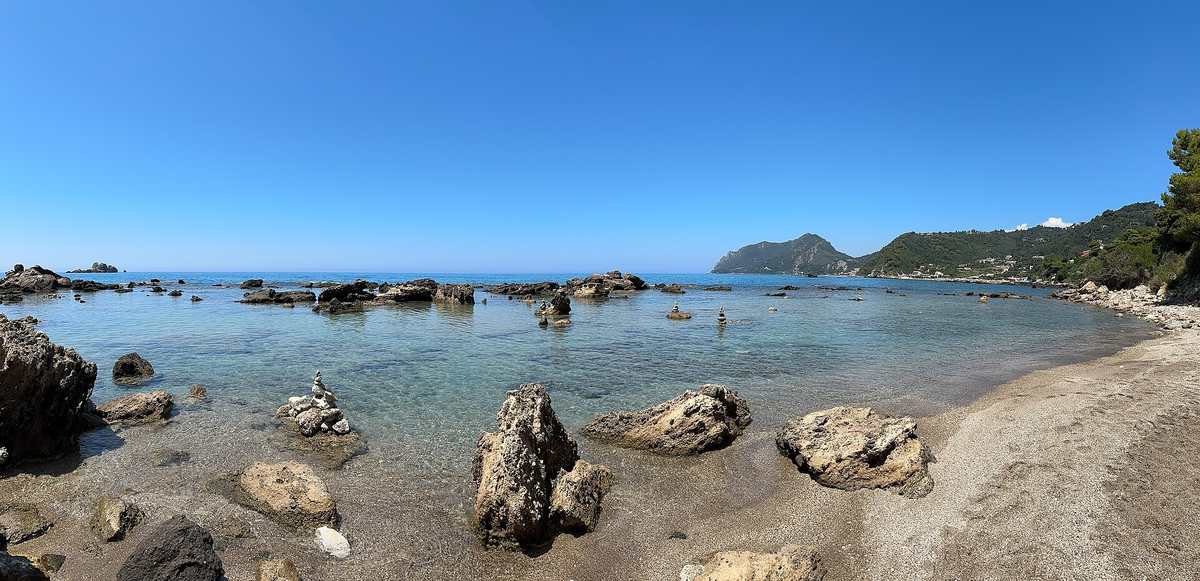
Armenistis sits on Ikaria’s northwest coast, the island’s main tourist village and a former fishing harbour. The small port curves around a bay flanked by two long sandy beaches, Livadi and Mesakti, with the cove at Nas a short drive west. The village keeps a relaxed, unpolished character that draws independent travellers, hikers and surfers who come for the swell that builds at Mesakti. Rooms and studios cluster near the water, from simple to comfortable, and tavernas line the harbour front. Armenistis works as the island’s best all-round base, close to beaches and to the mountain trails above. Plan your Ikaria trip with My Greece Tours.
This guide explains where Armenistis lies, what its beaches offer, and how the harbour, food and nightlife fit together. It covers the village as a base and the ways to move around the island, plus practical timing for a visit. Read it alongside the wider Ikaria travel guide to place Armenistis within the whole island and its regions. The sections below cover the geography of the village, the sand at Livadi, Mesakti and Nas, the port scene after dark, transport choices, and the seasons that suit different travellers. Each answer stays practical and grounded in what Armenistis actually delivers on the ground.
What and where is Armenistis in Ikaria?
Armenistis is the main tourist village on Ikaria’s northwest coast, a former fishing harbour turned holiday base. It sits beside the Livadi and Mesakti beaches, a short distance west of the cove at Nas and below the Rahes mountain villages.
Armenistis grew from a working fishing port into the island’s principal holiday village, keeping the compact harbour at its heart. The settlement wraps around a small bay on the north-facing coast, exposed to the meltemi wind that shapes its beach and surf character. Whitewashed rooms, studios and tavernas rise on the slope behind the port, giving many stays a clear view of the water. The village stays low and unforced, without large resorts or a heavy commercial strip. That restraint is a large part of its pull for travellers who want an authentic island feel.
Reaching Armenistis usually means a drive of roughly forty-five minutes to an hour from the port town of Agios Kirykos, following the coastal road across the north of the island.
Geography places Armenistis at a useful hinge point on Ikaria. The beaches of Livadi and Mesakti stretch directly east of the harbour, while Nas lies a short trip to the west at the mouth of the Halaris gorge. The Rahes highland villages, including Christos Rahon, sit on the slopes above, linked to the coast by road and by footpath. This position lets a visitor swim in the morning and walk pine forest trails by afternoon. Details on lodging patterns appear in the guide to where to stay in Ikaria, which sets Armenistis against the island’s other bases and explains why the northwest coast draws steady summer interest.
Which beaches sit next to Armenistis in Ikaria?
Livadi and Mesakti flank the harbour directly, two long stretches of sand facing the open north Aegean. Nas lies a short drive west at a river mouth. All three rank among the island’s most visited swimming spots near the village.
Livadi and Mesakti run side by side east of the port, separated by a low rocky point, forming the sandy core of the Armenistis coast. Both face north, so they catch the meltemi and the surf it raises, which turns Mesakti into a magnet for surfers and bodyboarders in high summer. The same swell demands respect, and swimmers watch for strong currents on windy days. Golden sand and shallow entry make calmer mornings ideal for families and slower swimmers. A short walk from the harbour reaches the sand, so a stay in the village puts these beaches within easy range.
The wider picture of the coastline appears in the roundup of Ikaria beaches, useful for planning a full swimming itinerary.
Mesakti earns its own dedicated coverage because of its size and its surf reputation on the north coast. The long open beach stretches beside the village and shelves gently, drawing a summer crowd yet rarely feeling crammed. Read the focused guide to Mesakti beach for wind patterns and access notes. West of Armenistis, the cove at Nas offers a different mood, a smaller pebble-and-sand beach set below cliffs where the Halaris river meets the sea. The dedicated page on Nas beach details the walk down, the ancient temple ruins above the shore and the tavernas perched on the ridge. Each beach rewards a separate visit.
What is the harbour, food and nightlife like?
The small harbour holds tavernas, cafes and low-key bars along the waterfront. Food centres on fresh fish and Ikarian home cooking. Nightlife stays relaxed and informal, with drinks by the water rather than large clubs or a heavy party scene.
The Armenistis waterfront forms the social heart of the village, a curve of tavernas and cafes that fill through the evening. Menus lean on the day’s catch, grilled fish and octopus, alongside island staples such as goat, garden vegetables and local wine. Ikaria carries a reputation for longevity, and the plain, seasonal cooking here reflects that unhurried food culture. Tables spill toward the quay, so diners eat with the boats and the sound of the water beside them. Prices and exact menus shift by season and by taverna, and the pace stays deliberately slow.
A meal in Armenistis tends to stretch across the whole evening, matching the rhythm the island is known for and rewarding travellers who settle in rather than rush.
Nightlife in Armenistis keeps the same low-key tone as the food. A handful of bars along the harbour serve drinks late into the night, some playing music, without the scale of a resort club circuit. The scene draws a mix of independent travellers, walkers and surfers, and conversation tends to carry across the small port. Ikaria’s famous summer panigiria, the village festivals held on saints’ days across the island, offer a livelier alternative, with communal food, wine and dancing that can run until dawn. These take place in the surrounding villages rather than in Armenistis itself, and reaching them is a strong reason to arrange car rental in Ikaria for the length of a stay.
Why does Armenistis work as an Ikaria base and how do you get around?
Armenistis suits a base because it combines beaches, food and trail access in one relaxed village. Getting around the island relies mainly on a rental car, since bus services are limited and distances between regions are significant on mountain roads.
Armenistis earns its place as the island’s best all-round base through position and balance. The village puts sandy beaches within a short walk, tavernas along the harbour, and the Round of Rahes footpath network on the slopes directly above. That trail system links the Rahes villages through pine forest, stone paths and old springs, and Armenistis serves as a natural launch point for day hikes. A traveller can pair morning swims with afternoon walks without shifting accommodation. The village also sits far enough from the airport and the main ferry port to feel removed from transit bustle, yet close enough to reach both within an hour by road.
This mix of coast, food and mountain access is hard to match elsewhere on the island.
Moving around Ikaria almost always calls for your own vehicle. Public buses run, but schedules are sparse and do not connect every beach or village on a useful timetable, so relying on them limits a trip. A rental car opens the whole island, from the north coast beaches to the south coast villages and the mountain interior, and lets you reach the panigiria festivals held after dark. The roads climb and twist across steep terrain, so drives take longer than the map distances suggest, and unhurried planning helps. Arranging transport early matters in peak season, and the practical options appear in the guide to car rental in Ikaria.
Scooters suit shorter hops, though a car handles the mountain roads with more comfort.
When should you visit Armenistis and what should you know?
Summer from June to September brings warm seas, open tavernas and the meltemi swell at Mesakti. July and August peak for crowds and festivals. Late spring and early autumn stay quieter, with mild weather and many services still running.
Timing shapes an Armenistis trip more than most island choices. The high season runs from June through September, when the sea warms, every taverna opens and the village fills with independent travellers and surfers. July and August mark the busiest weeks, coinciding with the panigiria festivals and the strongest meltemi winds that raise the surf at Mesakti. The wind can whip the north coast beaches on exposed days, so sheltered coves like Nas serve as calmer alternatives when the meltemi blows hard. Booking a room ahead pays off across these peak weeks, since the village stays compact and popular.
The relaxed, unpolished mood holds even at the height of summer, one reason the place keeps a loyal following among those who return.
Late spring and early autumn reward travellers who prefer a quieter Armenistis. May, early June, late September and early October bring mild temperatures, warm enough seas and open tavernas, without the peak-season density. The meltemi eases outside high summer, so the beaches at Livadi and Mesakti calm down for gentler swimming. Choosing a base still comes down to matching the village to your plans, and the guide to where to stay in Ikaria weighs Armenistis against the island’s other options. Pack for hiking as well as the beach, carry water on the Rahes trails, and allow extra time for the mountain roads. A relaxed schedule fits the island’s slow tempo and gets the most from a stay.
Frequently Asked Questions
Is Armenistis a good base for exploring Ikaria?
Armenistis ranks as the island’s best all-round base for a first or general visit. The village pairs sandy beaches at Livadi and Mesakti with a harbour full of tavernas and cafes, and it sits directly below the Round of Rahes mountain trails. That combination lets a traveller swim, eat well and hike from a single spot without changing accommodation. The relaxed, unpolished character suits independent travellers, walkers and surfers who want an authentic feel over resort polish. Its northwest-coast position keeps it within roughly an hour of both the airport and the main ferry port, close enough for transfers yet removed from transit bustle.
A rental car extends its reach to the south coast, the interior and the night festivals. Travellers who want quieter, more remote corners might base elsewhere for part of a trip, but Armenistis covers the widest range of interests from one place and makes a reliable first choice on the island.
What beaches are near Armenistis in Ikaria?
Three beaches sit within easy reach of Armenistis, each with a distinct character. Livadi and Mesakti stretch directly east of the harbour, two long sandy strands facing the open north Aegean and separated by a low rocky point. Both catch the meltemi wind, which raises the surf that draws bodyboarders and surfers to Mesakti in high summer, while calm mornings suit families and relaxed swimmers. The same north exposure means swimmers watch for currents on windy days. West of the village, a short drive leads to Nas, a smaller pebble-and-sand cove set below cliffs where the Halaris river meets the sea, with ancient temple ruins above the shore and tavernas on the ridge.
All three lie close enough to visit from a single base, and a walk from the harbour reaches Livadi and Mesakti directly. Sheltered Nas serves as a calmer swap when the meltemi whips the exposed north-coast sand on windy afternoons.
Do you need a car to stay in Armenistis?
A rental car is strongly advised for a stay in Armenistis and for exploring Ikaria as a whole. The village itself is walkable, with beaches, tavernas and rooms all within a short stroll of the harbour, so a car is not essential for daily village life. Reaching the rest of the island is a different matter. Public buses run, but schedules are sparse and do not connect every beach or village on a practical timetable, which leaves travellers stranded without their own transport. A car opens the north and south coasts, the mountain interior and the Rahes villages, and it makes the panigiria festivals held after dark reachable.
The roads climb and twist across steep terrain, so journeys take longer than map distances suggest, and easy driving pays off. Booking transport early matters in peak season. Scooters handle shorter hops, though a car copes better with the mountain roads and suits families or longer stays across the island.