
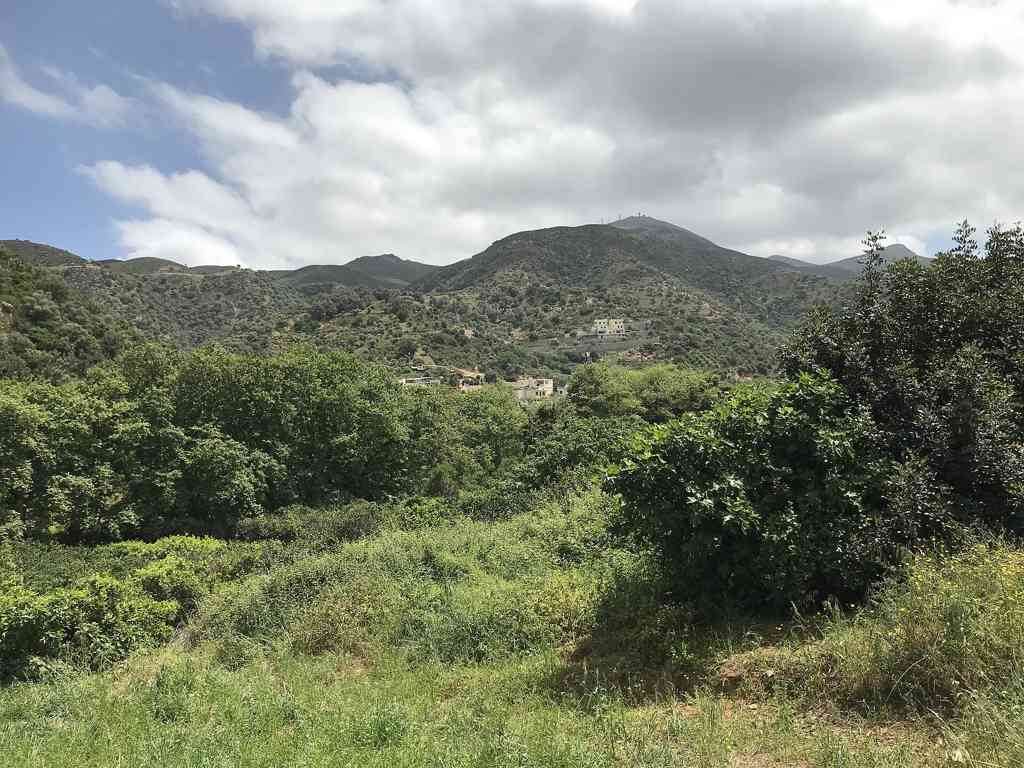
Fodele unfolds in a verdant valley west of Heraklion, where orange and lemon groves cascade down hillsides and a cool river threads through the village centre. This small settlement claims fame as the birthplace of Domenikos Theotokopoulos, the Renaissance master known worldwide as El Greco. Visitors step into a restored stone house that serves as a museum dedicated to the painter, wander beneath citrus canopies, and pause at a Byzantine church adorned with ancient frescoes. Tavernas cluster along the shaded waterside, roadside stalls offer local honey and embroidery, and a short drive descends to a quiet coastal beach. Plan your escape to this green refuge with My Greece Tours.
Fodele offers respite from the busy north-coast highway, blending art history with agricultural tradition in a landscape defined by running water and citrus shade. The village sits in the Heraklion region, close enough to the capital for an easy detour yet remote enough to feel worlds apart from the resort strips. The sections below cover the El Greco museum and Byzantine heritage, the orchards and river that define the valley, practical advice for reaching the village, and the nearby beach that completes a day trip. For broader island context, consult our Crete travel guide.
What is the connection between Fodele and El Greco in Crete?
Fodele is widely recognized as the birthplace of Domenikos Theotokopoulos, the painter known as El Greco. A restored stone house near the village centre now operates as a small museum celebrating his legacy and early life.
The museum occupies a traditional Cretan dwelling built from local stone, its thick walls and narrow windows typical of rural architecture in the Heraklion region. Inside, reproductions of El Greco’s most celebrated canvases hang alongside biographical panels that trace his journey from this quiet valley to Toledo, where he created his visionary religious works. The house itself predates the sixteenth century, and scholars continue to debate the precise location of his birth, yet the village has embraced its role as custodian of his memory. Visitors walk through modest rooms arranged around a courtyard, imagining the early influences that shaped a boy who would revolutionize European painting.
The setting reinforces the contrast between Fodele’s pastoral calm and the cosmopolitan centres where El Greco later worked. Admission remains inexpensive, and the museum rarely sees crowds, allowing quiet contemplation of the painter’s roots.
Beyond the museum, the village celebrates its artistic heritage through street signs, plaques and a bronze bust set in a small square shaded by plane trees. Local tavernas display prints of El Greco’s work, and craft stalls sell postcards and calendars featuring his elongated figures and dramatic chiaroscuro. The connection to the painter has not transformed Fodele into a tourist trap; instead, it adds a layer of cultural prestige to a settlement that remains firmly agricultural. Orange groves still dominate the economy, and the rhythm of harvest dictates village life more than any pilgrimage calendar.
Exploring things to do in Crete often leads travellers to better-known sites, yet Fodele offers an intimate encounter with the island’s contribution to world art, free from the crowds that gather at Knossos or the Venetian harbour in Chania.
What makes the landscape and agriculture of Fodele distinctive?
Fodele sits in a lush valley filled with orange and lemon groves, watered by a river that runs year-round. The abundance of citrus trees and flowing water creates a green microclimate rare along Crete’s arid north coast.
The valley benefits from springs that emerge high in the surrounding hills, feeding the river that bisects the village and irrigates the terraced orchards below. Orange trees grow in dense rows, their dark foliage contrasting with the pale limestone slopes that frame the basin. During late winter and early spring, the scent of citrus blossom fills the air, and by autumn the branches bow under the weight of ripe fruit. Farmers harvest the oranges by hand, packing them into wooden crates that appear at roadside stalls throughout the village. Lemon trees occupy the steeper plots, their year-round fruiting cycle ensuring a constant supply for local kitchens and markets.
The river itself runs shallow and clear, its banks lined with plane trees and oleander that provide deep shade even at midday.
Stalls along the main road sell honey produced from hives set among the citrus groves, the nectar imparting a delicate floral note to the amber liquid. Embroidered linens and lace also appear for sale, traditional crafts that village women continue to practice in the cooler months. Tavernas source their produce from the surrounding farms, serving salads dressed with local olive oil and desserts sweetened with Fodele honey. The agricultural character of the village remains intact, a working landscape rather than a preserved museum piece. Visitors driving between Heraklion and the western resorts often stop to buy fruit, stretch their legs beside the river, and enjoy a coffee beneath the plane trees before continuing along the coast.
What historical and religious sites can visitors explore in Fodele, Crete?
The Byzantine church of the Panagia stands among the trees, its interior decorated with old frescoes. The small sanctuary offers a glimpse of medieval religious art and complements the El Greco museum in tracing the village’s cultural heritage.
The church occupies a quiet spot upstream from the main village cluster, reached by a footpath that follows the riverbank through groves of orange and walnut trees. Its stone walls date to the Byzantine period, and the frescoes inside depict scenes from the life of the Virgin Mary in the stylized manner characteristic of Orthodox iconography. Time and humidity have faded the pigments, yet enough detail survives to appreciate the skill of the anonymous artists who painted them centuries ago. The church remains active, serving the local congregation for feast-day liturgies and baptisms. Visitors are welcome outside service times, and a donation box near the entrance invites contributions toward maintenance.
The cool, dim interior provides relief from the summer heat, and the scent of incense lingers in the air.
Exploring the church and museum together reveals the continuity of artistic tradition on Crete, from medieval frescoes to the revolutionary canvases El Greco produced after leaving the island. The village itself preserves traditional architecture in its older houses, their stone construction and wooden balconies echoing building techniques refined over generations. Fodele does not boast the monumental Venetian fortifications found in Rethymno or the palatial ruins of Knossos, yet its modest scale allows visitors to appreciate the textures of everyday rural life. The combination of running water, religious heritage and artistic legacy creates a layered experience that rewards slow exploration rather than a hurried photo stop on the way to a beach resort.
How do you reach Fodele and what facilities does the village offer?
Fodele lies on the old north-coast road west of Heraklion, easily reached by car or bus. The village offers tavernas, cafes, roadside stalls and the El Greco museum, with parking available near the main square.
Driving from Heraklion takes roughly thirty minutes, following the coastal highway west toward Rethymno and then turning inland at the signposted junction. The road climbs gently into the valley, winding between orchards and crossing the river on a low stone bridge before reaching the village centre. Public buses connecting Heraklion with western towns stop at the junction, and from there a short walk or taxi ride covers the remaining distance. Parking spaces line the main street and cluster near the museum, though on summer weekends finding a spot may require patience. The village remains compact enough to explore on foot, with the church, museum, tavernas and stalls all within a few hundred metres of one another.
Tavernas serve traditional Cretan food beneath vine-covered pergolas, their menus featuring grilled meats, fresh salads and local cheeses accompanied by house wine. Prices stay modest, reflecting the village’s working character rather than resort economics. Cafes offer Greek coffee, cold frappes and pastries, their terraces overlooking the river and shaded by plane trees. Roadside stalls operate on an honour system outside peak hours, with boxes for payment left beside crates of oranges and jars of honey. The village lacks hotels, so most visitors arrive on day trips, though guesthouses in the surrounding hills cater to those seeking rural tranquillity.
Fodele functions as a refreshing interlude rather than a destination in itself, best combined with a visit to the nearby beach or integrated into a longer coastal drive.
What is Fodele beach like and how does it complement a village visit?
Fodele beach lies a short drive downhill from the village, offering a quiet pebble-and-sand shore on the north coast. The beach provides a coastal counterpoint to the inland valley, completing a half-day excursion.
The road descends through olive groves and scrubland, emerging at a small cove where the river reaches the sea. The beach stretches for a few hundred metres, its surface a mix of coarse sand and smooth pebbles worn by winter storms. Tamarisk trees fringe the back of the shore, providing patches of shade for those who arrive without umbrellas. The water deepens gradually, making swimming safe for families, and the relative isolation means crowds remain light even in high summer. A simple taverna operates near the parking area, serving grilled fish, salads and cold drinks to beachgoers. Sunbeds and umbrellas are available for hire, though many visitors spread towels directly on the sand.
Combining the village and beach creates a balanced itinerary that mixes cultural exploration with seaside relaxation, a pattern typical of the hidden gems in Crete that reward travellers willing to venture off the main tourist circuits. The beach lacks the dramatic scenery of southern-coast coves or the amenities of organized resort strips, yet its simplicity appeals to those seeking authenticity over infrastructure. Visiting during the best time to visit Crete in late spring or early autumn ensures comfortable temperatures for both walking the village paths and swimming in the sea.
The proximity of mountain and coast, citrus groves and saltwater, art history and agricultural tradition makes Fodele a microcosm of Cretan diversity, compressed into a single valley and accessible within an hour of the island’s main airport.
Frequently Asked Questions
Is Fodele worth visiting if I only have a short time in Crete?
Fodele works well as a brief stop rather than a full-day destination, making it ideal for travellers with limited time who want to experience rural Crete without a major detour. The village sits directly on the route between Heraklion and the western resorts, so pulling off the highway for an hour or two adds minimal travel time. You can tour the El Greco museum, walk along the river, buy fresh oranges from a roadside stall, and enjoy a coffee beneath the plane trees, all within ninety minutes. The experience offers a counterpoint to archaeological sites and beach resorts, revealing the agricultural rhythms and artistic heritage that shape Cretan identity.
Combining Fodele with the nearby beach extends the visit to a half day, providing both cultural and coastal elements in a compact itinerary that does not require backtracking or complicated logistics.
What should I buy as a souvenir from Fodele?
Oranges and lemons from the village groves make practical, authentic souvenirs that capture the essence of Fodele’s landscape. Farmers sell the fruit directly from roadside stalls, often at prices far below supermarket rates, and the flavour of tree-ripened citrus surpasses anything found in commercial outlets. Jars of local honey, produced from hives set among the orange blossoms, offer another edible memento that travels well and reflects the valley’s agricultural character. Embroidered linens and lace appear at craft stalls, handmade by village women using traditional patterns passed down through generations. These textiles require more luggage space but provide a lasting reminder of Cretan craftsmanship.
Postcards and prints featuring El Greco’s paintings are available near the museum, suitable for those who prefer lightweight keepsakes. The village does not cater to mass tourism, so souvenir options remain limited to genuine local products rather than generic trinkets.
Can I swim at Fodele beach year-round?
Swimming at Fodele beach is most comfortable from late spring through early autumn, when sea temperatures rise above twenty degrees Celsius and the weather remains reliably sunny. The beach faces north, so it receives less shelter from winter storms than southern-coast coves, and waves can build during periods of strong winds. Winter swimming is possible for hardy individuals accustomed to cooler water, yet the lack of facilities and the exposed aspect make it less appealing than summer visits. The taverna near the parking area operates seasonally, typically closing by late October and reopening in April, so winter visitors should bring their own refreshments.
Spring and autumn offer the best balance of pleasant water temperatures, light crowds and comfortable air temperatures for walking between the village and the shore. High summer sees the beach at its busiest, though even then the numbers remain modest compared to organized resort beaches, preserving the quiet character that makes Fodele an appealing escape from the main tourist zones.