
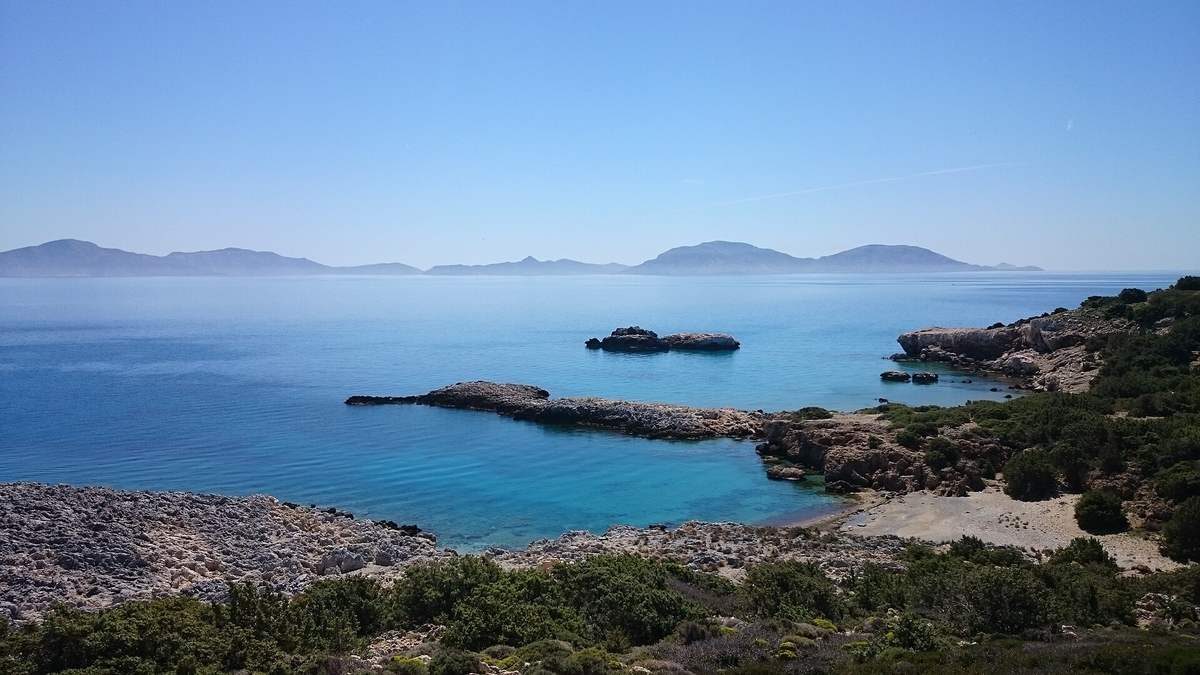
Faros sits at the far northeastern tip of Ikaria, a long sweep of sand at the end of Cape Drakano. The water runs shallow, warm, and calm here, a gentle counterpoint to the wave-swept beaches of the north coast. A screen of pines rises behind the sand, and a river mouth softens the shoreline into a lagoon-like curve. The beach stretches long and wide, giving swimmers room to spread out and wade far from shore. The ancient Drakano tower and a lighthouse stand on the cape nearby, so a swim pairs with a short walk to a monument. Plan the drive east and the beach day around it with My Greece Tours.
This page fits into a wider picture of the island’s east coast and its quieter shores. Read it alongside our Ikaria travel guide for context on the island as a whole. Faros rewards travelers who want unhurried swimming over dramatic surf. The sand, the shallows, and the calm water make it a natural choice for families and slow beach days. The sections below cover what and where Faros is, the texture of its sand and shallows, why it suits children, the Drakano tower and lighthouse that frame the cape, and how to reach the beach and combine it with the east.
What and where is Faros beach in Ikaria?
Faros is a long sandy beach at the far northeastern tip of Ikaria, near Cape Drakano. It sits a drive east of Agios Kirykos, backed by pines and edged by a river mouth that lends it a calm, lagoon-like character.
Faros marks the eastern end of Ikaria, where the island narrows toward Cape Drakano and the open Aegean. The beach spreads across the base of the cape, a broad band of sand facing sheltered water. Pines stand behind the shore, and a small river reaches the sea at one edge, feeding the shallow, lagoon-like pools that give the beach its gentle feel. The setting differs sharply from the exposed north coast, where swell and wind shape the swimming. Travelers comparing shores across the island can weigh Faros against the many options in our roundup of Ikaria beaches, which spans the wild north and the calmer east and south.
The drive to Faros runs east from the port town, following the coast toward the tip of the island. The road passes the airport and then narrows toward the cape, ending near the sand and the monument that crowns the headland. Faros reads as a destination in its own right, a place you set out for rather than stumble upon. The distance from the main resorts keeps crowds thin outside the peak weeks. Visitors basing themselves near the harbor of Agios Kirykos can reach the beach in a straightforward drive, making Faros an easy half-day trip from the eastern side of Ikaria.
What are the sand, shallows, and calm water like at Faros?
The sand runs long and wide, and the water stays shallow, warm, and calm. Swimmers can wade far from shore over a gentle bottom. The river mouth and pine backdrop deepen the lagoon-like, sheltered feel of the beach.
The defining trait of Faros is its shallow water. The bottom shelves out slowly, so the sea stays waist-deep well beyond the shoreline. The water warms quickly in this sheltered pocket, and the surface stays calm on most days. The sand is soft underfoot and broad, running long enough that groups rarely feel crowded even on busy afternoons. The river mouth adds a band of still, brackish water where the freshwater meets the sea. This lagoon-like edge draws waders and children who prefer quiet pools to open surf. The pines behind the sand throw patches of shade, a welcome contrast to beaches where the sun bears down with no natural cover at all along the shore.
The calm at Faros stands out against the north coast, where beaches face the prevailing wind and the sea often churns with whitecaps. Swimmers who find the northern shores too rough turn east for the settled water here. The gentle conditions also make Faros a relaxed spot for floating, snorkeling near the shallows, and long unhurried swims. Divers drawn to the island’s clearer, deeper sites usually head elsewhere, and our guide to diving in Ikaria points toward the rockier stretches better suited to that. Faros suits the traveler who wants an easy sea rather than a challenging one, a place to wade in without bracing against the waves.
Why does Faros suit families with children?
Faros suits families because the water stays shallow and calm, letting children wade and play in safety. The long, soft sand gives room to spread out, and pine shade and the river mouth add sheltered spots away from the open sea.
Families gravitate to Faros for the same reason unhurried swimmers do: the water is forgiving. Children can wade out a long way and still touch the bottom, and the calm surface means parents watch without worrying about sudden swell. The broad sand gives space for building, digging, and playing well back from the waterline. The river mouth creates a shallow, sheltered pool that reads almost like a natural paddling area, ideal for the youngest visitors. Shade from the pines lets families set up out of the midday sun, an important detail on an island where many beaches offer little natural cover. These features together make Faros one of the gentler beach choices along the eastern coast of Ikaria.
The distance from the busiest resorts also works in a family’s favor. Faros stays quieter than the beaches nearer the ports, so groups with small children find room and calm rather than crowds. The eastern location pairs well with a slow morning at the sand and an easy afternoon exploring the cape. Parents can walk the short path to the Drakano tower and lighthouse while older children take in the view. Bring water, snacks, and shade, since facilities are limited at this remote tip of the island. Faros rewards families who plan a self-contained day, with everything they need packed for a relaxed outing far from the main tourist strip of Ikaria.
What are the Drakano tower, lighthouse, and setting at Faros?
The ancient Drakano tower and a lighthouse stand on Cape Drakano just above Faros. The Hellenistic-era round tower once guarded the strait, and a short walk from the sand reaches the monument and its wide views over the Aegean.
Cape Drakano carries one of the island’s most striking monuments. The Drakano Tower is a round Hellenistic-era structure that once watched over the sea passage between Ikaria and the neighboring islands. Its stone drum still rises above the headland, a landmark visible from the beach below. A lighthouse stands nearby on the same cape, marking the tip of the island for passing ships. The pairing of ancient tower and working lighthouse gives the setting a layered sense of time. Visitors can swim at Faros and then follow a short path up to the monument, combining a beach day with a walk to a genuine piece of the island’s classical past on the eastern edge of Ikaria.
The setting around Faros rewards a slow look. The cape juts into the Aegean, and the views from the tower stretch across the water toward the horizon and the outlines of nearby islands. The landscape blends sand, pine, river, and stone in a compact stretch of coast. The walk from the beach to the tower is short, so travelers rarely need to choose between the swim and the monument. Morning light and late afternoon soften the headland and its ancient walls, favoring photographers and walkers alike.
The combination of a calm beach and a standing Hellenistic tower makes this corner of the island distinctive, a place where a family swim sits within reach of a monument that has watched the strait for over two thousand summers.
How do you visit Faros and combine it with the east of Ikaria?
Reach Faros by driving east from Agios Kirykos toward Cape Drakano. Pair the beach with the Drakano tower and lighthouse, and build a day around the calm swimming, the walk to the monument, and the quiet eastern shores nearby.
A visit to Faros starts with the drive east across the island. The route runs from the port and harbor of Agios Kirykos toward the tip of the cape, past the airport and along the coast. A car makes the trip easy, since public transport reaches this remote corner rarely. The road ends near the sand, close to the path up to the monument. Plan for a self-contained day, and carry water, food, and shade, because services at Faros are minimal. The remote setting is the appeal: a long, calm beach with a Hellenistic tower above it, far from the busier stretches of the island and its more developed resorts along the coast.
Faros combines naturally with the eastern side of Ikaria into a full day out. Swim in the shallow, warm water in the morning, then follow the short walk to the Drakano tower and lighthouse for the views. Travelers comparing the calm east with the wilder north can round out the day by dipping into other shores from our roundup of Ikaria beaches. The eastern route also suits those who prefer settled water over surf, and the sheltered conditions here contrast with the rockier, deeper sites covered in our guide to diving in Ikaria. A morning swim, a walk to the tower, and an easy drive back frame a relaxed day at the edge of the island.
Frequently Asked Questions
Is Faros beach good for families?
Faros ranks among the better family beaches on Ikaria’s eastern coast. The water stays shallow, warm, and calm, so children can wade far from shore while still touching the bottom. The long, soft sand gives groups plenty of room to spread out and play well back from the waterline. A river mouth at one edge forms a sheltered, lagoon-like pool that suits the youngest swimmers, and pines behind the sand throw shade during the hottest hours. The calm surface means parents can supervise without the worry that comes with rough surf. Facilities at this remote tip are limited, so families should pack water, food, sun cover, and anything else they need for a self-contained day.
The short walk to the Drakano tower and lighthouse adds an easy outing for older children and adults. Faros rewards families who want gentle swimming and space over crowds and amenities, making it a natural choice for a slow beach day.
How does Faros compare to the beaches on the north coast of Ikaria?
Faros contrasts sharply with the beaches of Ikaria’s north coast. The northern shores face the prevailing wind and often meet the sea with swell, waves, and whitecaps that draw swimmers who enjoy surf and energy in the water. Faros sits sheltered at the eastern tip near Cape Drakano, where the water stays shallow, warm, and calm on most days. The gentle, lagoon-like conditions favor unhurried swimming, floating, and family play over the more spirited swimming of the north. The setting differs too: Faros pairs long, wide sand with a pine backdrop, a river mouth, and the ancient Drakano tower above, while many northern beaches sit against steeper, more exposed coast.
Swimmers who find the north too rough turn east to Faros for settled water. The two coasts suit different moods, and travelers comparing them can weigh the options across our roundup of Ikaria beaches to match the sea conditions to the kind of day they want.
What is near Faros beach worth visiting?
The standout sight beside Faros is Cape Drakano itself. The ancient Drakano tower, a round Hellenistic-era structure that once guarded the sea passage, stands on the headland just above the sand, reachable by a short walk from the beach. A lighthouse marks the same cape, pairing a working navigation point with a monument over two thousand years old. The views from the tower stretch across the Aegean toward nearby islands, rewarding walkers and photographers. The beach itself, with its pines and river mouth, invites a slow morning before or after the climb to the monument.
The wider eastern side of the island opens up from here, including the port town of Agios Kirykos to the west, where travelers often base themselves. Other calmer eastern and southern shores lie within reach for those wanting to compare beaches. Faros works best as part of a self-contained day that blends a swim, a walk to the tower, and an easy drive along the eastern coast.