
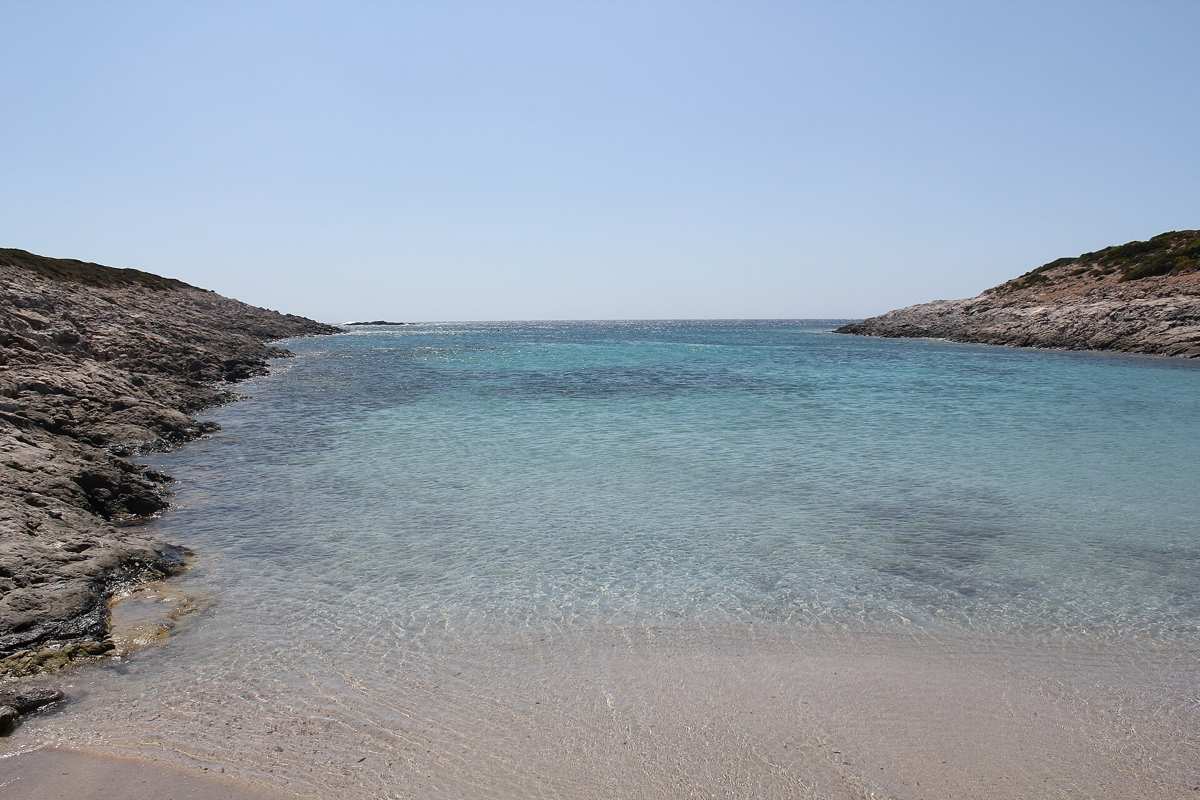
Faneromeni beach sits at the far southern tip of Antiparos, about a twenty-minute drive from the town. It is a small, secluded cove of soft, fine, light-coloured sand, backed by wild, unspoilt nature and washed by clear, transparent turquoise water. Reaching it takes effort, along a long unpaved road that runs south from Soros, and this remoteness keeps it quiet and empty. Above the sand stands a small whitewashed church with a blue dome, built by island fishermen and dedicated to the Virgin Mary. Plan a visit to this southern cove, and the rest of your island trip, with My Greece Tours.
This cove rewards travellers who want to escape the busier bays and find calm, clear water in a wild setting. Getting there, what the beach itself is like, and how to enjoy it all shape the visit. The sections below cover where the beach lies, how to reach it, what the cove offers, the snorkelling and sea cave, and the small church above the sand. Set this remote southern beach in the wider picture with our Antiparos travel guide.
Where is Faneromeni beach on Antiparos?
Faneromeni beach lies at the far southern tip of the island of Antiparos, about a twenty-minute drive from the town. It sits at the very end of the road south, past Soros and Agios Sostis, in a quiet, remote corner.
Faneromeni beach occupies the far southern tip of Antiparos, well away from the main town and the busier bays of the west coast. From the town it lies about a twenty-minute drive to the south, along a route that starts on sealed road and then turns to dirt for the final stretch. This position, at the very end of the island, is a large part of the beach’s character. It is one of the last points you can reach before the sea, tucked into a quiet, remote corner that few visitors bother to seek out.
The distance and the rough final road keep the cove peaceful, so those who make the trip usually find it calm and empty even in high season.
The approach passes through the south of the island and gives the beach its strong sense of seclusion. The route runs down from the town toward Soros, a larger and better-known bay, and then continues south past the settlement of Agios Sostis before the road narrows and roughens into a dirt track. This southern part of Antiparos is drier, quieter and less built-up than the areas near the town, and the landscape opens into low hills, scrub and open sea. By the time you reach Faneromeni, you feel genuinely far from the bustle of the town and the busier coast.
The cove sits at the end of this journey, sheltered and hidden, rewarding the drive with clear water and soft sand in a setting of pure, undisturbed nature.
The beach sits so far south that it pairs naturally with other spots on that side of the island rather than with the town beaches to the north. A trip here works well combined with a stop at nearby Soros or a swim at other southern coves, making a relaxed half-day of exploring the quieter end of Antiparos. The area rewards those who like to wander off the main routes and find beaches that stay wild and unorganised well into the season. Anyone mapping out this coast will find that Faneromeni ranks among the finest of the remote southern bays.
It features on any thorough list of Antiparos beaches for travellers who value quiet over convenience, and it rewards the drive south with peace and clear water.
How do you get to Faneromeni beach on Antiparos?
Reach Faneromeni by driving south from the town for about twenty minutes. The last part is a long unpaved road of roughly four kilometres running south from Soros through Agios Sostis. A car, scooter or quad is needed to get there.
Getting to Faneromeni beach means driving to the far south of Antiparos, as no bus serves this remote corner of the island. From the town the route heads south for about twenty minutes, first on sealed road and then onto a long unpaved track. This dirt road runs roughly four kilometres south from Soros, passing through the settlement of Agios Sostis, and ends at a small church near the beach. The surface is rough and dusty, so the final drive is slow and best taken with real care. The effort is the price of the seclusion here.
This is not a beach you stumble upon, but one you choose to reach, and the rough road keeps the cove quiet and lightly visited even at the height of summer.
You need your own transport to reach Faneromeni, since the beach lies well beyond any bus route and the final stretch is unpaved. A hired car, scooter or quad is the practical way to get there, and each handles the dirt road well enough, though a higher vehicle copes best with the rougher patches. Drive slowly, watch for loose gravel and ruts, and allow time for the bumpy final kilometres to the coast. Sorting out wheels for the day is straightforward, and arranging Antiparos car rental before you set off makes a trip to the southern beaches simple to plan.
With transport in hand, the remote south of the island opens up for an easy day of exploring at your own pace.
The route to Faneromeni is a single dirt track heading south from the sealed road near Soros, so it is hard to lose your way once you commit to it. The road passes through the small settlement of Agios Sostis and then runs on toward the coast, ending at the little church that stands above the beach. Park near the church, as there are no formal facilities, and walk the short distance down to the sand. The lack of signs and services is part of the appeal, keeping the cove wild and undeveloped.
A stop here fits neatly into a wider drive around the island and adds to the range of things to do in Antiparos beyond the town and the main bays.
What is Faneromeni beach like?
Faneromeni is a small, secluded cove of about thirty metres of soft, fine, light-coloured sand, with clear turquoise water and a gently sloping seabed of pale white gravel. It is completely unorganised, wild and sheltered from the wind.
Faneromeni beach is a small, secluded cove, only about thirty metres of soft, fine, light-coloured sand tucked between low rocks. The water is clear and transparent, a bright turquoise that shades to deeper blue further out, and the seabed slopes gently away in pale white gravel underfoot. This gentle slope and clean bottom make for easy, pleasant swimming close to the shore. The compact size adds to the sense of privacy, since the cove holds only a modest number of visitors before it feels full and intimate. The whole setting is one of soft sand, clear water and quiet rock.
It forms a pocket of calm at the southern edge of the island, where the open sea meets a wild, undisturbed shore.
The cove is sheltered from the wind by its orientation and by the rocks that frame it, so the sea here is usually calm and inviting. This protection is a real advantage on the breezier days that stir up other beaches, since the water at Faneromeni tends to stay flat and clear when exposed shores turn choppy. The calm, transparent sea makes swimming and floating a pleasure, and the gentle entry over gravel and sand suits a relaxed dip rather than any rough surf.
The sheltered position, together with the fine sand and clear water, is a large part of why those who reach the cove find it such a restful and peaceful place to spend the whole day by the sea.
Faneromeni is completely unorganised, with no sunbeds, umbrellas, beach bar or natural shade, only wild, unspoilt nature all around the cove. This means you must bring everything you need for the day, including water, food and your own sun protection, since there is nowhere at all to buy supplies once you arrive. The lack of any development is exactly what draws people who want a natural, untouched beach rather than a fully serviced one. Those who prefer amenities may want a busier bay instead, such as nearby Soros beach, which offers more in the way of facilities and services close to the water.
Faneromeni instead rewards self-sufficiency with peace, space and a genuine sense of wild, undisturbed seclusion at the edge of the island.
Can you snorkel at Faneromeni beach?
Yes, the rock formations on the sides of the cove are good for snorkelling in the clear water. A small sea cave can also be reached by swimming to the right end of the bay, adding to the appeal for confident swimmers.
The rock formations on either side of Faneromeni make the cove a fine spot for snorkelling in clear water. The water is clean and transparent, so visibility is good, and the rocks that frame the sand create the kind of structure where marine life gathers. Swimming out along these rocky edges, mask in place, you can explore the shallows and watch the seabed drop away into deeper blue. The calm, sheltered water helps too, keeping the surface still enough for easy snorkelling on most days of the summer. For those who enjoy exploring underwater, this natural, rocky setting is one of the beach’s real draws.
It turns a simple swim into a chance to look closely at the clear Cycladic sea and its quiet, rocky shallows.
A small sea cave adds to the interest for stronger swimmers at Faneromeni. It can be reached by swimming to the right end of the bay, where the rocks meet the water, giving a small adventure to those confident enough to make the crossing. Reaching it takes a steady swim in open water, so it suits able swimmers rather than casual paddlers, and it is wise to go only when the sea is calm. The reward is a quiet, hidden natural feature that few beaches offer, reached under your own power straight from the sand.
This little cave, along with the snorkelling among the rocks, gives Faneromeni a clear appeal that goes well beyond simply lying on the beach in the sun.
Snorkelling here calls for the same self-reliance as the rest of a visit, since the cove is unorganised and has no services. Bring your own mask, snorkel and any gear you want, as there is nowhere to hire equipment at this remote southern beach. Keep an eye on the conditions, stay within your comfort in the water, and treat the sea cave as a trip for calm days and confident swimmers only. The clear water and rocky sides reward the effort, and exploring them fits well into a day spent among the wilder corners of the island.
A snorkel here sits comfortably alongside a visit to the Antiparos cave for a day of natural sights above and below the surface.
What is the church above Faneromeni beach?
Above the beach stands the small whitewashed church of Faneromeni, with a blue dome. It was built by island fishermen in the early twentieth century and dedicated to the Virgin Mary, giving the cove its name and a quiet landmark.
Above the sand at Faneromeni stands a small whitewashed church with a blue dome, the landmark that gives the beach its name. It is a simple, traditional Cycladic chapel, its white walls bright against the dry southern landscape and the blue of the sea beyond. The church sits on the rise overlooking the cove, so it is the first thing you see as you arrive at the end of the road and the point you park beside before walking down to the water. Small and plain, it fits the quiet, unspoilt character of the beach perfectly, a modest human touch in an otherwise wild setting.
Its whitewashed form and blue dome make a fitting symbol of this remote southern corner of the island.
The chapel was built by island fishermen in the early twentieth century and dedicated to the Virgin Mary, whose name, Faneromeni, the beach shares. This local, seafaring origin gives the little church a genuine connection to the community and the sea it overlooks. Fishermen raising a chapel above a cove they knew well speaks to the long bond between the islanders and these southern waters. The dedication to the Virgin Mary places it within the strong Orthodox tradition of small country chapels that dot the Cyclades, each tied to a family, a village or a trade.
This history adds a quiet depth to a visit, turning the beach into a place with a story as well as fine sand and clear water.
The church rounds out the appeal of Faneromeni, adding a note of culture and history to the natural beauty of the cove itself. Visitors who make the drive south find not only a secluded beach but also this small, storied chapel standing quiet guard above it. Pausing at the church before or after a swim gives a sense of the island’s traditions and the fishermen who shaped this coast long ago. It makes Faneromeni more than a place to swim, tying the wild southern shore to the human history of Antiparos.
For travellers who like their beaches to carry a story, the whitewashed chapel dedicated to Agios Georgios nearby and the little church here both reward a closer, slower look.
Frequently Asked Questions
Is Faneromeni beach on Antiparos worth visiting?
Faneromeni beach is well worth visiting for travellers who want a wild, secluded cove rather than an organised, serviced beach. It sits at the far southern tip of Antiparos, about a twenty-minute drive from the town, at the end of a long unpaved road, and this remoteness keeps it quiet and lightly visited even in high season. The reward for the rough drive is a small cove of soft, fine, light-coloured sand, only about thirty metres wide, with clear, transparent turquoise water and a gently sloping seabed of pale white gravel that makes for easy swimming.
The cove is sheltered from the wind, so the sea stays calm, and the rocks on either side are good for snorkelling in the clear water. A small whitewashed church with a blue dome stands above the sand, adding a quiet landmark and a touch of local history. For those who value peace, clear water and unspoilt nature over sunbeds and beach bars, the trip south to Faneromeni is genuinely rewarding.
Are there facilities at Faneromeni beach?
Faneromeni beach has no facilities at all, as it is completely unorganised and left to wild, unspoilt nature. There are no sunbeds or umbrellas to rent, no beach bar or taverna, and no natural shade above the sand, so anyone visiting must come fully prepared. Bring plenty of water, food and snacks for the day, along with your own sun protection such as a hat, sunscreen and ideally a beach umbrella or portable shade, since there is nowhere to shelter from the sun. There is no shop nearby to buy supplies once you arrive, so plan ahead before making the drive south.
The lack of any development is exactly what gives the cove its quiet, natural character, and it is the reason the beach stays so peaceful and unspoilt. This self-sufficient approach suits travellers who value seclusion, but those who prefer amenities and services may be happier at a more organised bay elsewhere on the island. Coming prepared lets you enjoy the wild beauty of the cove in comfort.
Can you reach Faneromeni beach without a car?
Reaching Faneromeni beach without your own transport is difficult, as no bus serves this remote southern corner of Antiparos and the final approach is a long unpaved road. The beach lies at the far southern tip of the island, roughly four kilometres of dirt track south from Soros, passing through Agios Sostis, and this rough route rules out easy access on foot for most visitors. The practical way to get there is with a hired car, scooter or quad, each of which handles the dusty surface, though a higher vehicle copes best with the rougher patches.
Drive slowly and carefully along the track, watching for loose gravel and ruts, and park near the small church that stands above the cove. Arranging transport in advance is the simplest solution, and hiring wheels for a day or two opens up not only Faneromeni but the whole quiet southern end of the island. Without a car, scooter or quad, this secluded beach is very hard to reach.
Is the sea calm and safe for swimming at Faneromeni?
The sea at Faneromeni is usually calm, which makes it pleasant and generally comfortable for swimming. The cove is sheltered from the wind by its orientation and by the surrounding rocks, so the water tends to stay flat and clear even on breezier days that stir up more exposed beaches elsewhere on the island. The seabed slopes gently away from the shore in pale white gravel, giving an easy, shallow entry that suits a relaxed swim close to the sand. The clear, transparent turquoise water and the calm conditions also make the cove good for snorkelling along the rocks on either side.
Confident swimmers can reach a small sea cave by swimming to the right end of the bay, though this is best attempted only on calm days by those comfortable in open water. This unorganised beach has no lifeguards or services, so swim within your ability and take extra care if you venture toward the sea cave. For most visitors, the sheltered water makes Faneromeni a restful place to swim.