
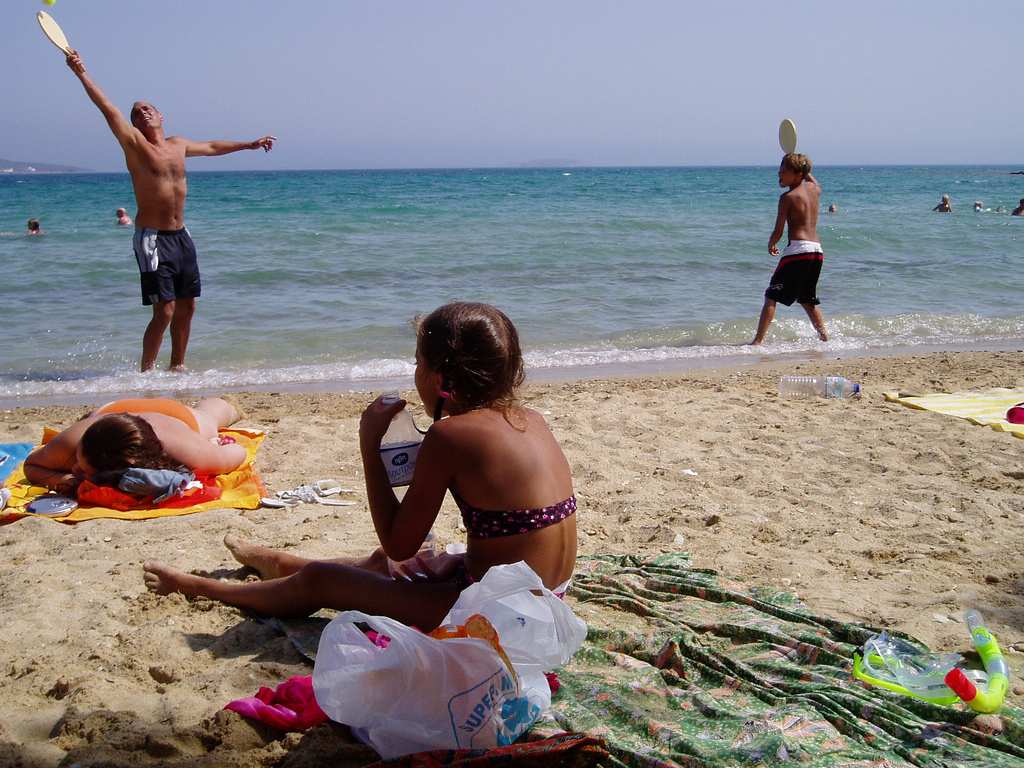
Panagia beach is a calm, sandy bay on the island of Antiparos. It lies about one kilometre south of the town, just beyond the two Psaraliki bays. For this reason it is sometimes called Psaraliki 3. A short, pleasant walk from the centre reaches it. The bay is large and tranquil, with fine golden sand and clear azure water. Big trees behind the sand give good natural shade. The water is shallow and calm, so the beach suits families and gentle swimming. It is quieter than the busier Psaraliki I, a genuine change of pace close to the town. Discover this peaceful family bay with My Greece Tours.
A visit to this beach has a single, easy mood: a quiet, shaded swim in shallow water within walking distance of the town. The fine golden sand, the big shade trees and the serene atmosphere are the draw. A nearby taverna serves Greek dishes. The sections below cover where the beach sits, why it suits families, what swimming is like, how to reach it and what to bring. Set the beach in context with our Antiparos travel guide before you go.
Where is Panagia beach on Antiparos?
Panagia beach lies about one kilometre south of Antiparos town, just beyond the two Psaraliki bays. That position gives it the nickname Psaraliki 3. A short walk south from the centre reaches the sand.
Panagia beach sits on the coast about one kilometre south of the town. It shares the same eastern shore as the Psaraliki bays. It lies just beyond Psaraliki I and Psaraliki II, the two organised bays closest to the centre. Its position third in that line is why locals sometimes call it Psaraliki 3. The beach is a large, calm bay of fine golden sand. Clear azure water laps the shore, and a peaceful, serene atmosphere hangs over the whole cove. Big trees stand behind the sand and cast good natural shade across it. The whole setting is low, sheltered and quiet.
This spot forms part of the string of Antiparos beaches that follow the shore south from the town.
The beach continues the coastal walk that begins at the edge of the town. That walk passes the two Psaraliki bays on the way. Where those bays are busy and organised, Panagia opens out as a broader, quieter cove a little further along. The sand here is soft and golden, the bay wide and open. The water is a clear azure that shelves gently from the shore. A row of big trees behind the beach marks it out and shades much of the sand through the day. The setting is low and calm, in keeping with this sheltered eastern coast. The serene atmosphere sets the bay apart from its neighbours.
It feels far removed from the livelier organised stretches nearer the centre of the town.
The beach lies close enough to walk to, yet far enough to feel like a retreat from the centre. From the edge of the town it is roughly one kilometre south. The stroll follows the shore past the Psaraliki bays and on to the wider cove beyond. A path leads down to the sand from the end of the road behind the beach. The distance is small, so the bay fits easily into a day spent in and around the town. It works for a morning swim or a shaded afternoon by the water. Its position, near the centre yet set apart, gives Panagia its quiet, unhurried character.
That balance holds right through the season and keeps the cove calm.
Why is Panagia beach good for families on Antiparos?
Panagia beach suits families because its shallow, calm water is safe for children, and big trees behind the sand give good natural shade. The fine golden sand and short walk from the town add to its gentle appeal.
The beach owes its family appeal to a simple set of qualities. The water is shallow and calm, shelving gently from the shore. Young children can paddle and swim near the edge in safety under an adult’s eye. The sand is fine and golden, soft underfoot and comfortable for building and playing. Big trees behind the sand cast good natural shade. That shade is a real comfort in the strong summer heat, and a rare feature on many open Cycladic beaches. The bay is broad and serene, with a peaceful atmosphere that suits a slow family day. These traits together make Panagia gentle and sheltered for a young family.
It is one of the calmest and safest bays for children near Antiparos town.
The calm, quiet character of the bay is a large part of what makes it work for families. It is far quieter than the busier Psaraliki I nearer the town. In the hottest hours of the day it can feel almost deserted. That gives parents space and calm rather than crowds. The natural shade from the big trees means a family can settle for a long stay. There is no need to hire an umbrella or bake in the open sun. Children have soft sand to play on and shallow, still water to splash in. Adults rest in the shade close by, watching over them.
This blend of calm, shade and safe water draws families back to the bay through the warm months.
The short, easy approach from the town rounds out the beach’s appeal for families. It lies about one kilometre south of the centre. The flat, pleasant walk is one that even small children can manage, so no drive is strictly needed. A municipal bus stop sits nearby for those who would rather ride. There is also parking behind a restaurant at the end of the road, with a path leading down to the sand. A taverna nearby serves Greek dishes, handy for a family lunch without packing a full picnic. This ease of access pairs with the shade and the shallow water.
Together they place Panagia high on the list of family-friendly bays on the island for a relaxed day out.
What is swimming like at Panagia beach?
Swimming at Panagia is easy and gentle. The water is shallow and calm, with clear azure colour over fine sand, so it stays warm and safe for children and relaxed for adults through the warm months.
The beach offers an easy, gentle swim in shallow, calm water. The sea shelves slowly from the fine golden sand. The shallows run out a good way, and the water stays warm and clear. It is an inviting azure over the sandy bottom. This gentle profile makes the bay pleasant for a relaxed float. It is also safe for children to paddle near the edge. The calm of the cove means the surface is usually still, without the chop of more exposed coasts. The bay serves families and gentle swimmers very well through the warm season. It is ideal for a quiet, unhurried dip close to the town.
There is no need to swim out far or contend with waves here at all.
The setting adds to the pleasure of the swim. Big trees behind the sand throw good shade right down toward the water. Bathers can step between a warm swim and a cool, shaded rest with ease. There is no stretch of baking sand to cross. The bay is broad and serene, with a peaceful atmosphere that carries into the water itself. The clear azure sea keeps the sandy bottom in view. This calm, shaded stretch is a comfortable place to spend a whole morning or afternoon in and out of the sea. It pairs naturally with the shade and quiet on offer.
The bay is worth weighing when you plan where to stay in Antiparos within walking distance of a swim.
The quiet of the bay shapes the swim as much as the water does. Panagia is calmer and less busy than Psaraliki I nearer the town. In the hottest hours of the day it can feel almost deserted. A swim here is often a solitary, peaceful affair. The still, shallow water and the empty sand make it easy to relax, float and cool off. There is no bustle of a crowded organised beach to break the calm. The bay is a fine choice for anyone who prefers a serene, low-key swim to a lively one. Its clear azure water, gentle depth and quiet all point the same way.
Together they suit a slow, restorative day by the sea south of the town.
How do you get to Panagia beach in Antiparos?
You reach Panagia beach on foot from the town in a short, pleasant walk of about one kilometre south, past the Psaraliki bays. A municipal bus stop and parking behind a restaurant nearby give other options.
The simplest way to reach the beach is on foot from the town. The walk runs about one kilometre south along the shore. It is a short, pleasant stroll that passes the two Psaraliki bays. Then it opens onto the wider cove of Panagia. The route is flat and easy to follow, with the sea on one side, and needs no transport at all. It stays close to the water for its whole length. This gentle walk is one of the beach’s attractions. It lets visitors based in the town swim and rest in the shade without a drive. Setting off on foot is the natural choice.
It makes the bay an easy, spontaneous addition to a day spent around Antiparos restaurants and shops in the centre.
Other ways to reach the beach suit those not walking from the centre. A municipal bus stop sits nearby. The local bus brings you close to the sand without a long walk in the heat. That helps families with young children or beach gear. For those with a car, scooter or quad, there is parking behind a restaurant at the end of the road. A path then leads from there down to the beach. These options give flexibility for anyone staying further out. They also help those carrying shade, water and supplies for a longer stay. Between the walk, the bus and the parking, the bay is straightforward to reach.
It works whichever way you are travelling around the island in the warm season.
The short distance makes the beach easy to fit around the rest of the day. You might swim in the shade in the morning, break in the town for lunch, and return later. A quiet afternoon by the water then works without effort. The small gap between the bay and the centre makes all this simple. The nearby taverna serving Greek dishes means a meal need not interrupt the day at all. The path back into the town then leads straight to its tavernas and shops for the evening. This close, flexible access is a big reason the bay features in so many stays.
It gives a calm, shaded retreat only a short walk from everything the town offers to visitors.
What should you bring to Panagia beach?
Bring water, sun protection and a mat or towel for a comfortable day. The big trees give good natural shade, though an umbrella still helps, and the nearby taverna serving Greek dishes covers lunch and drinks.
A little preparation makes a day at the beach comfortable. The big trees behind the sand give good natural shade, a real bonus. It is still worth carrying a mat or towel to spread beneath them. That lets you claim a shaded spot early in the day. Water, sun cream, a hat and sunglasses remain sensible even with the trees. The shade shifts through the day, and the sun off the sea is strong in summer. A light umbrella adds cover if the trees are busy. With these few items packed, the bay is a relaxed and easy place. You can spend a shaded morning or afternoon beside the clear, shallow water.
It sits only a short walk south of the town for an easy return.
A visit with children calls for a little more thought. The shallow, calm water is safe for young ones. Bring what makes their day easy, such as beach toys for the fine golden sand. Floats for the gentle shallows and a change of clothes help too. Snacks and plenty of water carry a family through a long, warm afternoon. The children move in and out of the sea, so keep supplies close. The natural shade means a family can settle for hours without baking. The quiet of the bay gives parents calm and space to rest. A little forethought turns the shaded, shallow bay into an easy family beach day.
It becomes a restful outing rather than a scramble for shade and supplies at midday.
Planning around the day rounds out a good visit. A taverna nearby serves Greek dishes, and there is parking behind a restaurant at the end of the road. Lunch and a cold drink need not be packed if you prefer to eat out. Even so, water and a few snacks are worth having for the stretches between meals. The hottest hours bring the deepest shade and the quietest sand. The bay can feel almost deserted then, so plan the day to enjoy that calm. The cove rewards a slow, unhurried approach rather than a rushed dash. Arrive early to claim a shaded spot under the big trees.
This bay pairs naturally with a walk on from the calmer, family-friendly Psaraliki beach bays just to the north of it.
Frequently Asked Questions
Why is Panagia beach called Psaraliki 3?
Panagia beach is sometimes called Psaraliki 3 because of where it sits along the coast south of Antiparos town. The shore running south from the town holds a line of sandy bays. The first two, closest to the centre, are the well-known Psaraliki I and Psaraliki II. These are two organised beaches within easy walking distance of the town square. Panagia beach lies just beyond them, about one kilometre south of the town. It is the third sandy bay in that same line. It follows directly on from the two Psaraliki bays, and shares their fine golden sand, shallow water and calm character.
For that reason it has picked up the informal name Psaraliki 3 among locals and regular visitors alike. The official name, though, is still Panagia beach on maps and signs. It is a larger, calmer and quieter bay than the busier Psaraliki I nearer the centre. Big trees behind the sand give good natural shade over a serene cove.
Is Panagia beach suitable for young children?
Panagia beach is well suited to young children. It is a popular choice for families staying in or near Antiparos town. Its main appeal for children is the shallow, calm water. The water shelves gently from the fine golden sand and stays warm and still. Young ones can paddle and swim near the edge in safety under an adult’s eye. The big trees behind the sand give good natural shade. That lets children and parents rest out of the strong summer sun without hiring an umbrella. The fine golden sand is soft for playing. The bay is broad, quiet and serene, calmer than the busier Psaraliki I nearer the town.
The beach lies only about one kilometre south of the town. The flat walk is short enough for small children to manage on foot. A municipal bus stop and parking behind a restaurant help those carrying gear. A taverna nearby serving Greek dishes makes lunch simple for a full family day.
Is there food and parking at Panagia beach?
Panagia beach has a taverna nearby that serves Greek dishes. There is also parking close to the sand, which makes a longer visit easy. The taverna means you can enjoy a proper lunch or a cold drink without packing a full picnic. Bringing water and a few snacks is still sensible for the stretches between meals. For those arriving by car, scooter or quad, there is parking behind a restaurant at the end of the road. A path runs from there down to the sand, so the walk from the vehicle is short. Anyone not driving can reach the bay by the local bus, as a municipal bus stop sits nearby.
You can also walk from the town in about one kilometre south along the shore. That route passes the Psaraliki bays on the way. Between the taverna, parking, bus stop and easy walk, the beach is simple to reach.
How does Panagia beach compare with the Psaraliki bays?
Panagia beach shares much with the Psaraliki bays just to the north, but it stands apart in a few clear ways. All three lie on the same coast south of Antiparos town. All share fine sand, shallow calm water and an easy walk from the centre. This is why Panagia carries the informal nickname Psaraliki 3. The difference is in the mood. Psaraliki I and Psaraliki II are the two organised bays closest to the town. They tend to be busier and livelier, with more people and more facilities along the sand. Panagia lies about one kilometre south, just beyond them. It is a larger, calmer and quieter bay, with big trees giving good natural shade.
It is noticeably quieter than the busier Psaraliki I. In the hottest hours it can feel almost deserted, a real change of pace. For a shaded, tranquil swim, Panagia is the gentler choice of the three. For sunset, the west-coast Sifneiko beach is the classic evening spot.