
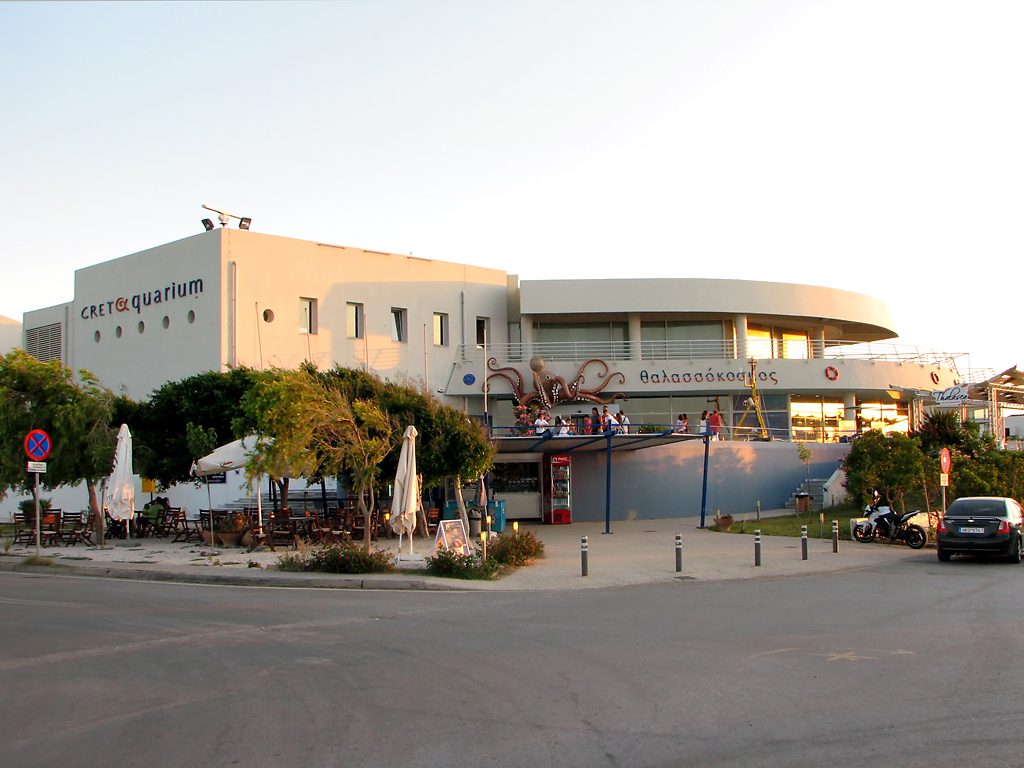
CretAquarium, known also as Thalassocosmos, is the largest aquarium in Greece and sits on the north coast of Crete at Gournes in the Heraklion region. The complex occupies the site of a former American air-base between Heraklion and the resort of Hersonissos. Around sixty tanks hold roughly two thousand marine creatures, from sharks and groupers to moray eels, jellyfish and loggerhead sea turtles. The Hellenic Centre for Marine Research operates the site as a place of research, conservation and public education. A self-guided route takes about ninety minutes. This guide sets out what the aquarium holds and how to fit it into a Cretan trip with My Greece Tours.
The aquarium draws families across the full year, and its position near the airport and two large resorts makes it one of the most reachable attractions on the island. A visit pairs neatly with a beach morning or an afternoon in the regional capital. The sections below cover the tank collection, the science behind the centre, the practical route through the halls, the surrounding coast, and the calendar for a visit. Read them alongside the wider Crete travel guide to slot Gournes into a full itinerary across the Heraklion region and the north coast.
What is CretAquarium in Crete?
CretAquarium, also called Thalassocosmos, is the largest aquarium in Greece. It stands on the north coast of Crete at Gournes in the Heraklion region and displays roughly two thousand marine creatures across sixty tanks along a self-guided route.
The aquarium occupies the grounds of a former American air-base at Gournes, on the shoreline between Heraklion city and the resort strip further east. Its Greek name, Thalassocosmos, translates as sea-world, and the halls carry the visitor past sixty tanks of graded size. The collection covers roughly two thousand individual creatures drawn from the Mediterranean and beyond, with sharks, groupers, moray eels, jellyfish and loggerhead sea turtles among the headline residents. The route runs as a single self-guided loop rather than a set of separate rooms, so the pace rests with the visitor throughout. Audio guides and interactive screens explain each habitat in turn.
Families rank the site high on their lists of things to do in Crete, and it stays open across the whole calendar year rather than closing for the winter season.
The scale sets CretAquarium apart from the smaller displays found elsewhere in the country. The largest tanks hold thousands of litres and recreate open-water and reef conditions with careful lighting and controlled currents. Signage runs in Greek and English, and the interactive screens let visitors identify each species as it passes the glass wall. The layout guides foot traffic in one direction, which keeps the halls readable even at the busiest midday hours in high summer. A gift shop and a cafe sit at the end of the route for a final break.
The centre lies within easy reach of the nearby resort of Gouves, so a stay on that stretch of coast puts the aquarium a short drive away and turns a hot afternoon into an indoor, shaded outing beside the Cretan sea.
Which marine creatures live at CretAquarium?
The sixty tanks hold roughly two thousand creatures and dozens of species from the Mediterranean and further afield. Sharks, groupers, moray eels, jellyfish and loggerhead sea turtles anchor the collection, each set in a habitat matched to its natural home.
The tanks group creatures by habitat rather than by name, so the route moves through shallow rocky shores, sandy flats, open water and deeper reef zones in sequence. Sharks patrol the largest tanks, while groupers hold station near rock ledges and moray eels wait in dark crevices. Jellyfish drift in dedicated cylindrical displays lit to show their translucent bodies. Loggerhead sea turtles, a species that nests on Cretan beaches each summer, feature among the marine life visitors watch most closely of all. The interactive screens name each animal and explain its role in the food web.
This grounding in real Mediterranean ecology makes the centre a strong fit for a trip built around Crete with kids, where a clear, factual attraction earns its place beside the beaches.
Beyond the headline predators, the tanks carry smaller reef fish, crustaceans, sea anemones and other invertebrates that fill out a working marine community. The displays draw on species from the waters around Crete and the wider Mediterranean, so the collection mirrors what divers and snorkellers meet off the island’s own coast today. Colour and movement hold younger visitors at the glass, while the printed and on-screen text supplies depth for adults reading further. The turtle and shark tanks tend to gather the largest crowds, so an early or late slot gives a clearer, calmer view.
The species mix stays consistent through the year, which means the same broad experience awaits whether a visit falls in spring, high summer or the quieter, cooler months of the Cretan autumn.
Who runs CretAquarium and why?
The Hellenic Centre for Marine Research operates CretAquarium as a research, conservation and public-education centre. The public display sits alongside scientific work, funding marine study while teaching visitors about Mediterranean ecosystems and the pressures they face today.
The Hellenic Centre for Marine Research is a national scientific body, and Thalassocosmos serves as both its public face and part of its working campus at Gournes. The aquarium income supports research and conservation programmes, so a ticket funds study of the seas around Greece rather than a purely commercial attraction. Conservation themes run through the signage, from turtle nesting on Cretan beaches to the health of the Mediterranean fish stocks. The centre frames each habitat within its real-world setting, which turns the visit into a grounded lesson on the sea beyond the glass.
This educational weight helps explain why the aquarium appears on published lists of island attractions aimed at travelling families, school groups and marine-science enthusiasts, all served by the same self-guided route through the sixty tanks at Gournes.
The research role also shapes the standard of animal care and tank design, since the same institution studies the creatures it displays to visitors. Staff manage water quality, feeding and species welfare to a scientific brief, and the interactive material reflects current marine knowledge from the centre’s own work. The location at a converted air-base gave the centre the land and infrastructure for large tanks and support facilities on one site. Its position on the north coast, close to the regional capital of Heraklion, keeps it within reach of the airport, the port and the main road network.
That accessibility lets the centre serve a steady flow of visitors year-round while continuing the marine research and public-education mission that defines its founding purpose at Gournes.
How long does a CretAquarium visit take?
A visit takes about ninety minutes along the self-guided route through the sixty tanks. The single loop lets visitors set their own pace, pausing at the shark, turtle and jellyfish displays, then reaching the gift shop and cafe at the end.
The route runs as one continuous path, so there is no risk of missing a hall or doubling back on the way through. Most visitors spend around ninety minutes moving through the sequence of habitats, from shallow-shore tanks near the entrance to the deep-water displays further in. Audio guides, offered in a range of languages, let each person follow a commentary at a comfortable speed, while the interactive screens invite a longer stop for those wanting detail. The layout suits pushchairs and wheelchairs, and the shaded, indoor setting offers relief from the midday heat of the north coast.
The lively resort of Hersonissos makes an easy pairing, since visitors can spend the cool morning among the tanks and the rest of the day on its beaches and busy seafront.
Timing the visit around the crowd pattern improves the whole experience for a family or a couple. The largest tour groups tend to arrive in the late morning, so an opening-hour or late-afternoon slot gives clearer sightlines at the busiest tanks. A full stop of two hours suits those who read every panel and use the complete audio guide, while a brisk pass takes closer to an hour from door to door. The cafe at the end serves drinks and light food, and the gift shop stocks books and marine-themed items for a keepsake.
The car park sits beside the entrance, and the site lies a short drive from the airport, which makes the aquarium a practical first or last stop on a Cretan trip when flight times leave a spare half-day near Gournes.
What is near CretAquarium on the Crete coast?
CretAquarium sits at Gournes between Heraklion and Hersonissos, close to the airport and the resort of Gouves. Beaches, tavernas and the regional capital all lie within a short drive, so the visit slots easily into a wider day on the north coast.
Gournes occupies a central stretch of the north coast, which puts a wide choice of destinations within a short drive of the aquarium car park. The regional capital lies to the west, with its harbour, museums and the palace of Knossos on its southern edge. The resort towns spread to the east, backed by sandy and pebbly beaches and lined with tavernas and cafes along the shore. This central position is one reason travellers base themselves nearby and treat the aquarium as one stop among a fuller day of touring.
The neighbouring family resort of Gouves sits closest, sharing the same coastal road and beach frontage that fronts the aquarium grounds, while the busier resorts stretch further east along the highway toward the eastern half of the island’s north coast.
The coast around Gournes offers sand and pebble beaches, a small marina and water-sports within easy reach of the aquarium entrance. A morning among the tanks pairs naturally with an afternoon swim, and the tavernas along the shore serve lunch between the two halves of the day. Drivers heading west reach the centre of the regional capital and its archaeological sites in well under half an hour on the coastal highway. Those heading east link into the string of resorts that runs along the coast toward Malia and beyond.
The airport lies a short distance to the west, which keeps transfers brief and makes the whole Gournes stretch a convenient touring base for the northern half of the island rather than a single-attraction detour off the highway.
Frequently Asked Questions
Is CretAquarium open all year?
CretAquarium at Gournes stays open across the full calendar year, unlike the seasonal attractions on the island that close outside the summer months. Opening hours run longer in high summer and shorten through the cooler seasons, so checking the current schedule before a visit avoids a wasted trip. The indoor, climate-controlled halls give the centre an advantage on hot midsummer afternoons and on the wet, windy days that mark a Cretan winter, since the experience does not depend on the weather outside the walls. This year-round access shapes the way travellers plan around it, and it reads well against a wider study of the best time to visit Crete.
Spring and autumn bring thinner crowds at the tanks, while July and August fill the halls with resort visitors escaping the midday heat, so the quieter shoulder months reward those who prefer clear sightlines at the shark and turtle displays inside the aquarium.
How do I get to CretAquarium from the resorts?
The aquarium sits directly on the coastal road at Gournes, between the regional capital and the eastern resorts, which keeps it within a short drive of the main tourist bases on the north coast. Guests staying at the eastern resort strip reach it in minutes by car or bus heading west, and the neighbouring resort of Gouves lies closer still along the same road. Public buses along the north-coast highway stop nearby, and taxis run readily from the resort centres to the entrance. A car park sits beside the doors for those driving their own or a hired vehicle.
The airport lies a short distance west, so an arrival or departure day with spare hours suits a visit well. Drivers coming from the regional capital follow the coast east for under half an hour to reach Gournes. The central location is a large part of why the aquarium features on family itineraries for the island’s northern half throughout the touring season.
Is CretAquarium suitable for young children?
CretAquarium suits families with young children, and it ranks among the leading family attractions on the island for good reason. The self-guided route is flat and takes pushchairs and wheelchairs without difficulty, and the ninety-minute length holds attention without tiring small legs on the way round. Colour and movement at the jellyfish, shark and turtle tanks draw children to the glass, while the interactive screens and audio guides add depth for older siblings and parents alike. The indoor setting shields families from the fierce midday sun, which makes it a reliable option on the hottest days of the Cretan summer.
Planning around it fits neatly into a broader trip built around shaded, educational stops that balance beach and pool time for younger travellers. The cafe at the end offers a break for drinks and food, and the gift shop lets children take home a marine-themed keepsake at the close of the loop through the sixty tanks.