
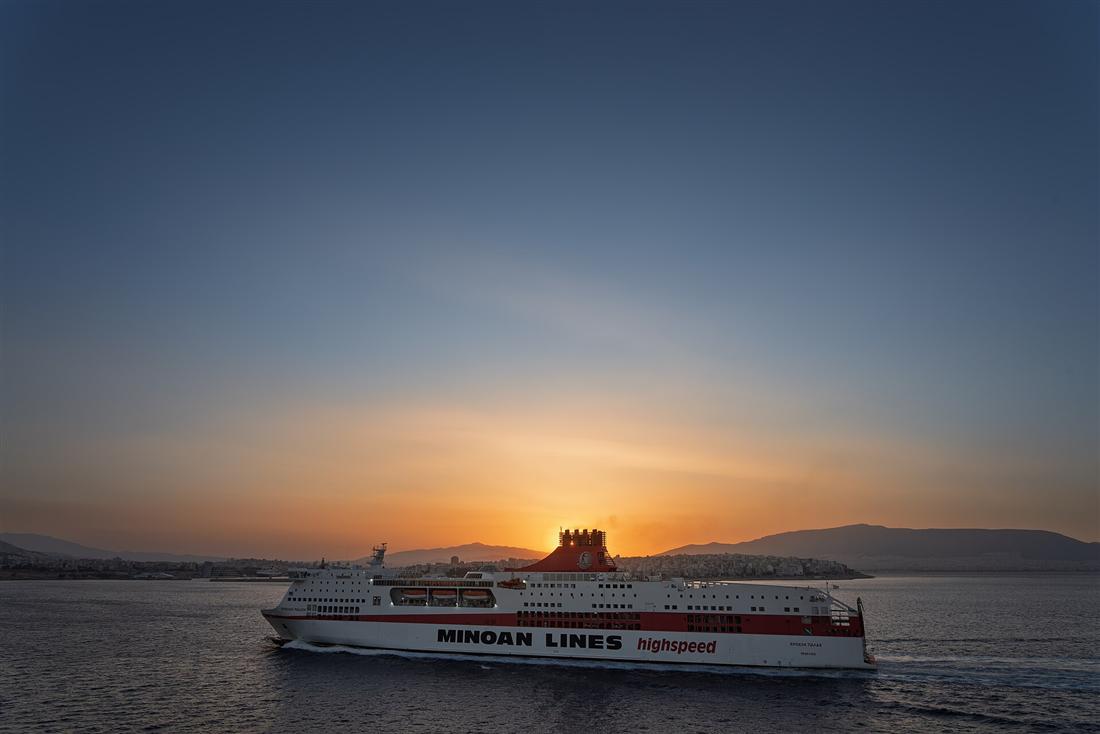
To get from Chania to Athens, fly from Chania airport to Athens in about 50 minutes to an hour, or take the overnight ferry from Souda port to Piraeus, the port of Athens, in about 8 to 9 hours. Plan the whole trip with Greece Tours.
This guide covers the trip from Chania to Athens in full: the two ways to get there, the flight time, how the overnight ferry works, where Souda port is, whether to fly or sail, the cost, the timetable, taking a car, getting from Piraeus into central Athens, and which route suits you, closing the loop on getting to Chania.
How do you get from Chania to Athens?
Two routes link Chania, Crete, with Athens on the mainland. The flight from Chania International Airport to Athens International Airport lasts 50 minutes to 1 hour and is the fastest. The overnight ferry from Souda port to Piraeus takes 8 to 9 hours and saves a hotel night.
Chania sits on the north-west coast of Crete, and Athens sits 320 km north across the Sea of Crete and the Aegean. No road or bridge crosses that water, so every journey between the two cities runs by air or by sea. The choice sets the length of the trip, the price, and whether the traveller moves in daylight or overnight.
The air route lifts off from Chania International Airport, coded CHQ, 14 km east of Chania town on the Akrotiri peninsula, and lands at Athens International Airport, coded ATH, 33 km east of central Athens at Spata. The Greek carriers run the schedule through the day, and the flying time stays under 1 hour. Airport transfers, check-in and security add roughly 2 to 3 hours to the door-to-door total.
The sea route boards at Souda port, 7 km east of Chania on Souda Bay, and docks at Piraeus, the port of Athens, 12 km south-west of the Athens centre. The ferry departs in the evening and arrives at dawn, covering the crossing in 8 to 9 hours. It carries foot passengers, cars, motorbikes and campervans, and it offers cabins for the night. The flight wins on speed; the ferry replaces a night’s accommodation and moves a vehicle between the island and the mainland.
How long is the flight from Chania to Athens?
The flight from Chania (CHQ) to Athens (ATH) takes 50 minutes to 1 hour in the air. The Greek carriers run frequent daily departures across the day. Adding check-in, security and the airport transfers brings the full door-to-door journey to about 3 hours, the fastest route to the mainland.
The aircraft climbs north-east from the Akrotiri peninsula, crosses the Sea of Crete and the southern Aegean, and descends into Spata east of Athens. The distance in a straight line measures 320 km, and a jet covers it in under an hour of block time. Wind and the sequencing of arrivals into a busy Athens airport shift the figure by a handful of minutes, no more.
Departures run from early morning to late evening, with the highest frequency in the summer travel months. The Greek carriers operate the bulk of the schedule, and the number of daily rotations rises as demand climbs. Booking ahead secures a seat on the departure that fits the onward plan, whether that is an international connection at Athens or an early start into the city.
The 50-minute flight time is the air segment alone. Check-in closes 45 minutes before departure at CHQ, security screening precedes the gate, and the transfer from Chania town to the airport runs 14 km. At the Athens end, the ride from ATH to the centre covers 33 km by metro line 3, the airport bus, or a fixed-fare taxi. Counting those legs, the traveller leaves the door in Chania and reaches central Athens in about 3 hours.
How does the ferry from Chania to Athens work?
The overnight ferry sails from Souda port, 7 km east of Chania, to Piraeus, the port of Athens, in 8 to 9 hours. It departs in the evening and arrives early the next morning. Passengers book cabins, aircraft-style reclining seats or deck space, and the ship carries cars and foot passengers.
The vessel loads at Souda in the early evening and pulls out into Souda Bay as the light fades. It crosses the Sea of Crete through the night and berths at Piraeus soon after dawn, covering 160 nautical miles. The ferry companies that serve the route run large overnight ships built for the crossing, with multiple decks of accommodation above the vehicle holds.
Accommodation splits into three tiers. Cabins hold two to four berths with a private bathroom, and inside and outside variants sell at different prices. Aircraft-style seats fill dedicated lounges for travellers who rest upright. Deck and general-access space costs the least and suits a short summer night. Booking a cabin turns the 8-to-9-hour crossing into a night’s sleep and delivers the traveller into Athens rested at the start of the day.
The vehicle deck takes cars, motorbikes, campervans and freight, which makes the ferry the route for a traveller moving a hire car or a loaded vehicle between Crete and the mainland. Foot passengers board through the terminal on the same sailing. On-board facilities run to a self-service restaurant, a bar, a shop and open deck areas. Check-in at Souda closes before the evening departure, so arrival at the terminal with time in hand is part of the plan.
Where is Souda port and how do you get there?
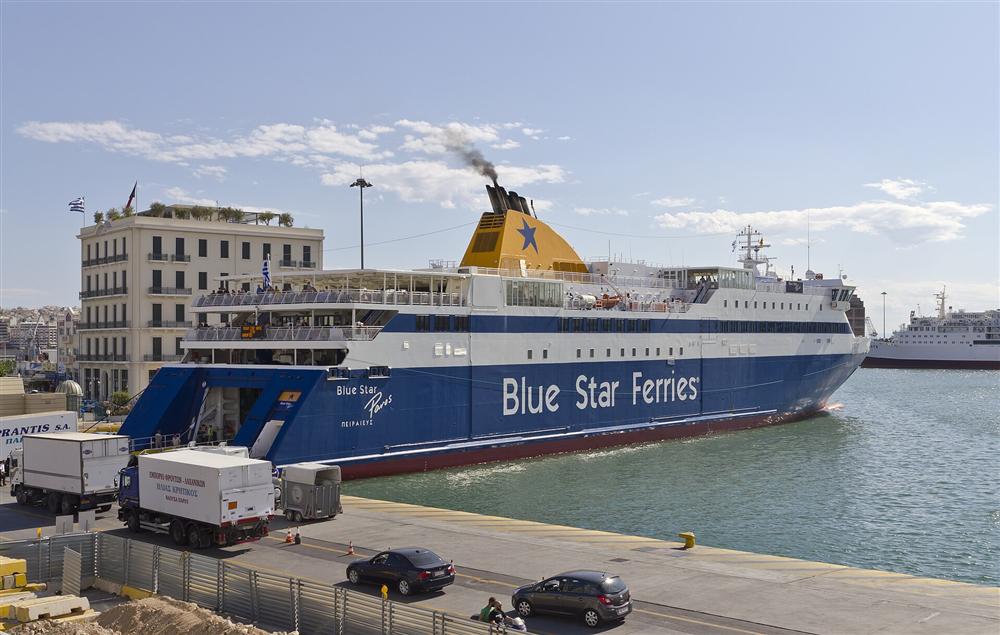
Souda is the port of Chania, 7 km east of the town on the north shore of Souda Bay. The KTEL city bus, a taxi or a private car reaches the ferry terminal in about 15 minutes. Car-hire drop-off sits nearby, and check-in opens before the evening sailing.
Souda Bay is a deep natural harbour that shelters the port on Crete’s north coast. The passenger terminal handles the overnight Piraeus ferry alongside the commercial and naval quays. From the terminal building, foot passengers board the ship directly, and vehicle traffic queues for the loading ramp at the stern.
The city bus links Chania town centre with Souda through the day. It departs from the central market area and the main bus stops, runs the 7 km east, and sets down at the port for a low flat fare. The ride takes about 15 minutes outside the busiest traffic. A taxi covers the same distance on a metered or fixed fare and drops passengers at the terminal door, which suits a traveller with heavy luggage or a late arrival.
A traveller driving a hire car returns it at a Chania depot or a Souda drop-off point before boarding as a foot passenger, or drives the car straight onto the ferry after booking a vehicle space. Parking stands near the terminal for those leaving a private car on the island. Reaching Souda with time before check-in closes matters most on the evening sailing, when the queue of foot passengers and vehicles builds ahead of the departure.
Is it better to fly or take the ferry from Chania to Athens?
The flight is the fastest route at under 1 hour in the air, offset by airport transfers and a fare. The overnight ferry takes 8 to 9 hours but sails while the traveller sleeps, replaces a hotel night, carries a car and costs less for a cabin. The right choice tracks the traveller, the luggage and the timing.
Speed favours the flight without contest. The 50-minute air segment beats the 8-to-9-hour crossing outright, and a traveller with a tight schedule, an onward international connection at Athens airport, or a single day to spare takes the plane. The trade is the airport time at both ends and the transfer over 33 km from ATH into central Athens, which lifts the door-to-door total to about 3 hours.
Value and comfort tilt towards the ferry. The overnight sailing turns travel hours into sleeping hours, so the traveller boards after dinner in Chania and steps off at Piraeus at the start of a fresh day, with no night’s accommodation to pay for. A cabin fare for two undercuts two flight tickets plus a hotel room, and the ship absorbs luggage that airline allowances penalise. The crossing suits the unhurried traveller and the group.
The vehicle decides the harder cases. A traveller moving a car, a motorbike or a campervan between Crete and the mainland books the ferry, because no flight carries a vehicle. A family with cases, camping gear or sports equipment travels lighter on the ship. A lone traveller with hand baggage and a fixed meeting in Athens flies. Match the route to the load and the clock, and each option earns its place on the Chania-to-Athens journey.
How much does it cost to get from Chania to Athens?
The Chania to Athens flight costs least on the low-cost carriers booked weeks ahead, rising towards departure and through the summer peak; the overnight ferry charges per passenger plus a cabin berth or deck seat, with cars priced separately, and its cabin removes one hotel night from the trip.
The air fare on the Chania to Athens route moves with two levers: the season and the lead time. A seat reserved a month before travel on Aegean, Sky Express or a low-cost carrier sits at the bottom of the range. The same seat bought the day before departure, or during the July and August peak, sits at the top. Booking early and travelling midweek holds the fare down; a Friday-evening seat in high summer sets it at its highest.
The ferry from Souda port prices each element on its own. The base fare covers one passenger in a deck or air-seat class. A cabin adds a per-berth charge on top, priced by whether the cabin is inside, outside or has a window, and by the number of berths that fill it. A car crossing adds a vehicle fare set by the car’s length. Two adults sharing an outside cabin therefore pay the two passenger fares plus the cabin, and a car on top of that.
One figure shifts the comparison: the overnight ferry doubles as a night’s accommodation. The evening departure from Souda and the early-morning arrival at Piraeus mean the crossing replaces a hotel night, so the cabin charge offsets a room you skip. For a family bringing a car, that saved night plus the vehicle transport pulls the ferry towards the flight on total cost, while a solo traveller with hand luggage keeps the early-booked flight cheapest.
When do the ferries and flights from Chania to Athens run?
Flights from Chania airport to Athens run through the day, year-round, on Aegean, Sky Express and low-cost carriers, and take about 50 minutes; the ferry sails once daily, leaving Souda port in the evening and reaching Piraeus early the next morning, with the fullest timetable across the summer.
The flight schedule is the frequent one. Departures from Chania airport to Athens are spread from early morning to late evening, every day of the year, so the route works around a meeting, a connection at Athens airport or a same-day return. The summer months add rotations to the winter base timetable, which loosens seat availability, and the flying time holds at roughly 50 minutes gate to gate regardless of season.
The ferry runs to a single daily rhythm. One sailing leaves Souda port, 7 km east of Chania town, in the evening, and berths at Piraeus early the following morning after a crossing of about nine hours. The evening slot is deliberate: passengers board after dinner, sleep through the Aegean, and step off at the port at the start of the next day. The winter timetable holds the daily departure; the summer timetable adds capacity on the same evening slot.
Peak season tightens both. Across July and August, and around Greek public holidays, the ferry cabins fill first and the cheapest flight fares clear first, so a reservation made weeks ahead secures the berth or the low seat price. A car space on the ferry books out before foot-passenger tickets in high summer, and a window cabin before an inside one. For flexible dates, a midweek departure carries lighter demand than a weekend one.
Can you take a car from Chania to Athens?
Yes, on the ferry: drive the car onto the overnight Souda to Piraeus sailing, sleep aboard, and drive it off at Piraeus straight onto the Athens road network. The flight carries no vehicle, so a hire car is returned at Chania airport before departure and a fresh one collected on the mainland.
The ferry is the route that brings a vehicle from Crete to the mainland. At Souda port the car is booked as a separate vehicle fare, priced by length, and boards through the ship’s car deck ahead of foot passengers. The driver parks on the deck, takes hand luggage up to the cabin or seating, and returns to the deck near arrival. At Piraeus the car rolls off onto the quay and joins the road out of the port within minutes of docking.
From Piraeus the national road network opens directly. The A8 and the wider motorway system connect the port and Athens to the Peloponnese, to Thessaloniki and the north, and to the airport ring road, so a car landed off the ferry drives on to any mainland destination without transfer. This is the practical reason to choose the crossing: a road trip that continues on the mainland starts with the car already there rather than hired afresh.
The flight rules a vehicle out. An aircraft carries passengers and luggage, not cars, so a self-drive holiday on Crete that ends with a flight to Athens returns the hire car to the depot at Chania airport at check-in, and a separate hire car is collected at Athens airport or in the city. For travellers who own the car or want one vehicle for the whole journey, the ferry is the answer; for those hiring at each end, the flight loses nothing.
How do you get from Piraeus to central Athens?
Piraeus, where the ferry lands, sits about 10 km south-west of central Athens. Metro Line 1 runs from Piraeus station beside the port to Monastiraki in the centre in about 20 minutes; city buses and taxis cover the same distance, and the metro links on to Athens airport for an onward flight.
The ferry berths at Piraeus, the main passenger port, and the transport into Athens starts at the quay. Metro Line 1, the green line, terminates at Piraeus station a short walk from the ferry gates and runs into the heart of the city, reaching Monastiraki, Thiseio and the Acropolis area in about 20 minutes for the price of a standard city ticket. This is the fastest and cheapest link for a passenger arriving on foot off the boat.
Buses and taxis cover the route for those with heavy luggage or a group. City bus lines connect Piraeus to Syntagma and Omonia in the centre, and taxis wait at the port for a direct door-to-door ride of roughly 20 to 30 minutes depending on traffic. A traveller carrying on to Athens airport changes at Monastiraki onto Metro Line 3, which runs straight to the terminal, so the ferry connects to an onward flight without a separate transfer booking.
The early-morning arrival works in the traveller’s favour. Stepping off the ferry near dawn puts you into Athens ahead of the day’s crowds, with the metro already running and the roads clear, so a hotel check-in, a first sight of the Acropolis, or a same-morning onward connection all fit into the hours the flight passenger spends still travelling to the airport.
Is the trip from Chania to Athens worth it, and which suits you?
Both routes are frequent and straightforward. The flight wins on speed at about 50 minutes and suits a short trip with light luggage; the overnight ferry suits a car, heavy bags and the hotel night it saves. Match the choice to what you carry and how the journey fits your plans.
The flight is the fast answer. Fifty minutes in the air, day-long frequency from Chania airport and a low fare booked ahead make it the route for a weekend break, a business day, or a tight connection through Athens airport to an onward flight. A traveller with a cabin bag and a fixed date reaches the mainland before lunch and keeps the trip short.
The ferry is the answer for weight and wheels. The evening departure from Souda and the dawn arrival at Piraeus turn the crossing into a night’s sleep and a saved hotel room, carry a car and unlimited luggage that a flight taxes or refuses, and land you rested in the centre by metro. A family with bags, a couple bringing a vehicle to the mainland, or a slow traveller who wants the Aegean crossing itself chooses the boat.
Both directions close the loop on planning Crete. This journey pairs with the inbound leg set out in how to get to Chania, and with the wider things to see and do gathered on the Chania hub, so the outbound trip to Athens sits inside a full itinerary rather than standing alone. Read the arrival guide before you go and the hub while you are there, and the Chania to Athens leg finishes the trip cleanly. Whichever route you pick, the crossing between the island and the mainland is a fixed, frequent and well-trodden link, so the plan comes down to speed against the saved night and the car rather than to any doubt about the connection itself.
Frequently Asked Questions
How do you get from Chania to Athens?
Fly from Chania airport to Athens in about 50 minutes to an hour on the Greek carriers, or take the overnight ferry from Souda port near Chania to Piraeus, the port of Athens, in about 8 to 9 hours. The flight is fastest; the overnight ferry saves a hotel night and carries a car.
How long is the ferry from Chania to Athens?
The overnight ferry from Souda port to Piraeus takes about 8 to 9 hours, leaving in the evening and arriving early the next morning. It carries foot passengers and cars, with cabins, reclining seats and deck space; the flight from Chania airport takes under an hour.
Is it better to fly or take the ferry from Chania to Athens?
The flight is the fastest at under an hour and suits a short trip with light luggage; the overnight ferry takes 8 to 9 hours but sails while you sleep, saves a hotel night, carries a car and costs less for a cabin. Match the choice to the luggage, the car and the timing.