
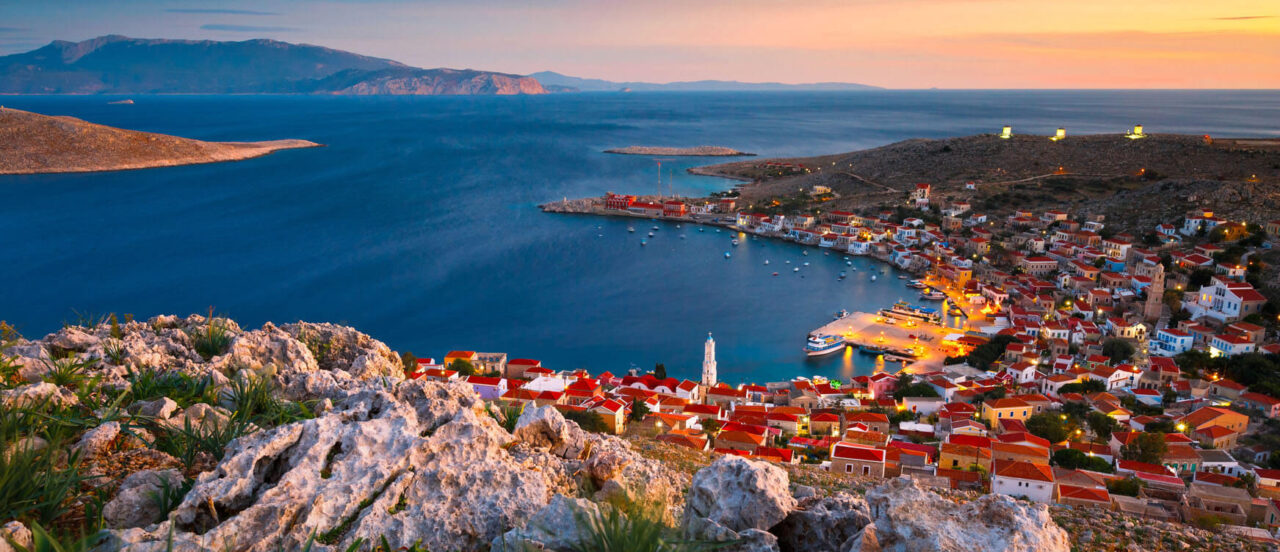
Explore Chalki Island with our Greece Tour travel guide for insider tips on beaches, local dining, hiking, and authentic experiences on this charming Greek micro-island.
Chalki Travel Guide: Discover Greece’s Tiny Island Gem — Where To Go, What To Do, And How To Plan
We’ve been drawn to Chalki because it’s the kind of place that makes you slow down without trying, a micro-island tucked in the Dodecanese, a short hop from Rhodes with a population that counts in the hundreds, not thousands. Chalki keeps getting rediscovered for its pastel neoclassical harbor, clear waters, and low-key rhythm that feels deliberately unhurried. This guide collects what we’ve learned about getting there, where to swim, how to eat like a local, and which day trips make sense when you want to explore beyond the quay. Whether you’re planning a romantic escape, a quiet week of remote work, or a few days of island-hopping, we’ll help you make choices that match Chalki’s scale. Expect practical tips, sample itineraries, and on-the-ground recommendations that respect the island’s small-community charm, plus a few honest cautions so your visit feels easy and authentic.
The tours below sail from Rhodes to Chalki and Alimia bay, or cross Rhodes to Kamiros Skala, the port of the small ferry to Chalki.
Why Visit Chalki? What Makes This Island Special
Chalki’s appeal feels immediate: it’s compact, pretty, and refreshingly free of big-resort development. The island retains a slow, lived-in character that’s rare in popular Greek destinations. We’re drawn to Chalki for several reasons: the perfectly preserved neoclassical buildings lining the harbor of Nimporio, the abandoned old village of Chorio on the hill above it, and the clarity of the Aegean that frames every shoreline. Chalki is also a place where cultural restoration meets sustainable tourism. Recent local initiatives prioritize heritage conservation, low-impact visitor services, and small-scale hospitality.
Compared with neighboring Rhodes, Chalki is quieter and simpler. We can stroll the entire waterfront in twenty minutes, but every corner offers a photo-worthy scene: bougainvillea-draped houses, fishing boats, and family-run tavernas where menus change by what’s fresh. For travelers who want to unplug, Chalki’s limited nightlife and few cars help us feel present. Photographers and swimmers will find plenty to love, and history buffs can trace maritime ties back through centuries. Put simply: Chalki is small enough to explore thoroughly and still feel like we’ve discovered something off the beaten path.
Practical Planning — Getting There, When To Go, And Entry Essentials
Getting to Chalki is straightforward but requires a little coordination. There’s no airport; the nearest major one is Rhodes (RHO). From Rhodes town or the airport, we catch a ferry or high-speed catamaran to Nimborio: schedules vary by season, so booking tickets a day or two ahead during July and August is wise. In the lower season (April–June, September–October) service is less frequent but still reliable. We’ve also taken small boat transfers from Leros or Kos when connections aligned.
When to go: Chalki shines in late spring and early fall. May–June and September offer warm sea temperatures, blooming landscapes, and fewer crowds. July–August brings guaranteed sunshine and lively tavernas, but also higher prices and busier ferries. Winter is quiet: some businesses close, but the island’s peacefulness then is unmatched if you don’t mind limited services.
Entry essentials: We recommend packing sunscreen, a reusable water bottle, and basic cash; many small vendors prefer euros in hand. Wi‑Fi exists in cafés and many guesthouses, but connections can be spotty. If you’re driving across islands to reach Chalki, verify car ferry options first: on-island transport is limited, so plan transfers in advance.
Top Sights And Experiences On Chalki
Chalki offers a compact list of must-dos that we can comfortably complete in a long weekend or savor over a week. The island’s rhythm centers on two settlements: Emporio, also called Nimporio (the harbor village), and Chorio (the abandoned hilltop village below the castle). Nimporio is postcard-perfect, with pastel houses, a pebble quay, and family-run seafood tavernas. Chorio rewards slow exploration: abandoned stone lanes, frescoed churches, the Knights’ castle, and views that extend across glittering water.
We recommend allocating time to wander purposefully rather than rushing between “sights.” Part of Chalki’s charm is the casual discoveries: a waterfront bakery selling fresh koulouri, a small chapel tucked in a gully, or an elderly fisherman mending nets. For history, check out the island’s small Folklore Museum and the old lime kilns near Emporio that hint at local industry. Photographers should time a harbor walk for early morning or late afternoon light, when colors pop, and the island feels particularly framed for postcards.
Below, we break down where to swim and which villages, trails, and cultural spots to prioritize.
Beaches, Bays, And Best Swimming Spots
Chalki’s coastline is mostly pebble beaches and tiny coves with crystalline water, excellent for snorkeling and calm swimming. Our favorites include Pontamos (the sandy beach ten minutes on foot from the harbor), where the shallow entry is ideal for families and long swims: Ftenagia, a quieter bay with dramatic cliffs that shelters crystal-blue water: and Tzibri, a tucked-away pebble cove best accessed by a short footpath from the road.
For snorkelers, the rocky sections near the old harbor reveal small fish, sea urchins, and interesting rock formations. We like to carry reef shoes: pebbled shorelines can be slippery, and shoes make getting in and out more comfortable. If we want a little solitude, we’ll walk 10–20 minutes from Nimporio along the coast to find smaller coves where day-trippers rarely venture.
Note: There are no lifeguards, so swim with care and pay attention to wind conditions. During Meltemi winds in July–August, the open sea can get choppy: sheltered bays remain our best bet.
Hiking, Villages, And Cultural Highlights
Chalki rewards walkers. Trails between Nimporio and Chorio are short but scenic, passing terraced fields, dry-stone walls, and olive groves. The climb up to Chorio is steep in places but manageable: once we reach the abandoned village, stone alleys and old churches invite slow discovery. Chorio holds the castle and chapels perched for maximum sea views, while Emporio below keeps the bakeries and the small museums.
We recommend a morning hike to Chorio followed by coffee in a shaded square back in Emporio, then a gentle loop down toward the old lime kilns and abandoned warehouses that tell the story of Chalki’s maritime past. Residents often point out family histories and older houses with restored neoclassical facades. For a cultural highlight, try to sync our visit with a local religious festival or summer concert; dates vary, but add warmth and authentic interaction.
Bring comfortable shoes, a hat, and water. Trails are signposted in places, but take a simple map (or download offline) to avoid backtracking. Walking is one of the best ways to really feel the island’s scale and history.
Boat Trips, Snorkeling, And Other Water Activities
The sea around Chalki is the natural stage for our days. Boat trips are the easiest way to see hidden coves, nearby islets, and underwater life. Short local boat tours depart Nimporio most days in high season, offering loops that include snorkeling stops, secluded bays, and swimming breaks. We like booking small-group excursions for a personal feel; captains often double as local guides and will share stories about the coastline and fishing history.
Snorkeling from the shore is also rewarding. Clear visibility and rocky seabeds make for interesting marine sightings: bring your own snorkel gear if you can, since rental options are limited. For a more adventurous option, arrange a private boat to visit Alimia, the uninhabited islet between Chalki and Rhodes, with sheltered coves and fewer visitors.
If we want to fish or try paddleboarding, ask your guesthouse host; many locals rent SUP boards or will arrange a calm-morning paddle. Safety note: always check weather and sea conditions, especially during the Meltemi season, and favor morning trips when winds are typically lighter.
Where To Stay And Eat — Local Tips For Authentic Dining
Accommodation on Chalki ranges from family-run guesthouses and renovated neoclassical homes to small apartments above the harbor. We prefer places close to Nimporio if we want easy access to tavernas and boat services: staying on the slopes above the harbor gives a quieter, hilltop perspective with stellar views. Many rooms are simple but impeccably kept, with hosts who help with ferry bookings and restaurant recommendations.
Eating on Chalki is a highlight. The best meals are often the least polished: a taverna on the quay where the catch of the day is grilled simply, or a family kitchen serving slow-cooked goat and roasted vegetables. We look for places that draw locals, a sign that the food is honest. Typical staples include fresh fish, fava, grilled octopus, and small plates of local cheese and honey. Portions are generous: sharing plates and sampling multiple dishes is the norm.
We always ask hosts for the day’s specials and avoid menus that look identical to every island taverna’s online listing. Seasonal produce and small-batch local olive oil show up on the best tables. Tip: Dine a little later in the evening, Greeks eat late, and many kitchens open around 8 p.m. for dinner service.
Best Neighborhoods And Accommodation Options
Nimporio is our go-to for convenience and atmosphere: waterfront rooms, easy boat access, and an evening vibe with tavernas and gelato. Staying here keeps us steps from morning swims and late-night seaside strolls. The upper lanes of Emporio are quieter and more residential, with stone houses, terraces, and panoramic views, perfect for couples or travelers seeking tranquility. A few guesthouses in the upper lanes are restored historic homes with local décor and rooftop terraces.
If we want privacy, we choose a small villa or apartment slightly inland where olive groves offer seclusion and views. For budget travelers, simple rooms above tavernas provide the essentials and unmatched proximity to the harbor. In high season, popular guesthouses fill up quickly: booking several months ahead is sensible if our travel dates are fixed. When choosing, we prioritize hosts who can help coordinate transfers and local experiences, as local intel often makes the trip effortless.
Day Trips, Sample Itineraries, And Practical Daily Plans
Because Chalki is small, we find sample itineraries help set a relaxed pace while ensuring we don’t miss highlights. Here are a few realistic day plans:
- Short stay (1–2 days): Day 1, arrive in Nimporio, walk the harbor, lunch at a seaside taverna, afternoon swim at Pontamos, sunset coffee by the windmills above the harbor. Day 2, morning hike to Chorio and the castle, afternoon boat trip with snorkeling, late ferry out, or another night ashore.
- Three-day escape: Day 1, settle in, sunset swim. Day 2, full morning exploring Chorio and the castle, afternoon boat trip to secluded coves. Day 3, leisurely breakfast, market shopping, and a late lunch in Nimporio.
- Week-long slow trip: Mix swimming days with walking and a private boat trip to Alimia. Attend a local festival if available, and take one free day for reading by the sea or sketching the harbor.
Practical daily tips: start early in warm months to beat heat and wind: carry water and sun protection on hikes: reserve dinner spots for popular tavernas during high season. We keep plans flexible; some of Chalki’s best moments are unplanned.
What is Chorio, the abandoned old capital of Chalki?
Chorio is the old capital of Chalki, a hill village below the castle of the Knights of Saint John, abandoned after mid-20th-century emigration; its castle, frescoed church and ancient stone thrones make it the main historic site of the island.
The islanders of Chalki lived at Chorio for centuries, out of sight of pirates, and moved down to the harbour of Emporio as the sea became safe. The castle above the village was built by the Knights of Rhodes on the ruins of the ancient acropolis. In the 14th century the Knights gave Chalki as a fief to the Assanti family from Ischia, and the walls still carry the coat of arms of Grand Master Pierre d’Aubusson, who restored the fortress after a raid on the island.
Inside the castle, the church of Agios Nikolaos, the old patron saint of Chalki, keeps frescoes of the 15th and 17th centuries. Around the abandoned houses stand the vaulted church of Panagia Choriani, the churches of Agioi Anargyroi and Sotiras, the old school and the small monasteries of Agia Triada and Agios Konstantinos. Above the village, two stone seats of the Hellenistic period, known as the thrones of Zeus and Hecate, are cut into the rock. Climb to Chorio in the early morning, when the path from Emporio is in shade.
What is the history of Chalki?
Chalki has been inhabited since prehistoric times; its name comes either from its ancient copper workings or from a Phoenician word for purple dye, and it followed the fortunes of Rhodes through Knights, Ottomans and Italians before joining Greece with the Dodecanese.
Myth makes the Titans the first people of Chalki, followed by Pelasgians, Carians, Dorians and Phoenicians. In the Classical period the island depended on Kameiros on Rhodes, and it appears as an ally in the tribute lists of the Delian League. Remains of three temples of Apollo survive at Pefkia. Arabs held Chalki from the 7th century until 825; Venetians and Genoese arrived in 1204 and built a fort on the islet of Alimia; the Ottomans took the island in 1523.
In the 19th century Chalki reached its peak through trade and sponge diving, alongside Symi, Kalymnos, Kastellorizo and Kasos, and its schools flourished. Italy occupied the island in 1912, and the loss of the old privileges hit trade and sponge fishing. Emigration followed: a large group of islanders settled in Tarpon Springs, Florida, where the Greek sponge community still lives. Lieutenant Alexandros Diakos of Chalki was the first Greek soldier killed in the Second World War.
Which landmarks stand in Emporio, the harbour village of Chalki?
Emporio, also called Nimborio, is the only inhabited village of Chalki, a harbour of neoclassical mansions where the Town Hall, the Post Office, the Clock Tower, the church of Agios Nikolaos of 1861 and three windmills on the hill mark the skyline.
The church of Agios Nikolaos, the present patron saint of Chalki, was built in 1861. Its tall bell tower, the work of Eleftherios Sellas in 1894, rests on ancient marbles taken from the temple of Apollo. The three traditional windmills on the hill above the harbour form the landmark of the island, and the chapel of the Ypapanti stands near them.
The school of Chalki, now the Sokratis Fanourakis secondary school, was built in 1914 by the island architects Ioannis Fanourakis and his son Antonis, with funds from the Society of Chalkitans in Tarpon Springs. The children of Chalki still walk to it. For a day visit by boat, see our Halki day trip from Rhodes page.
Which monasteries, walks and beaches lie beyond the harbour of Chalki?
Beyond the harbour, Chalki offers the Monastery of Agios Ioannis Alargas, a two-hour walk from Emporio, the tree-shaded Monastery of Taxiarchis Michail Panormitis, and beaches from the sandy Pontamos, ten minutes on foot, to the boat-only coves of Areta and Trachia.
The Monastery of Agios Ioannis Alargas is the main pilgrimage site of Chalki, reached on a path of about two hours across the bare interior. The Monastery of Taxiarchis Michail Panormitis, set among trees with wide sea views, is the starting point of further walks.
The beaches of Chalki, from the harbour outwards:
- Pontamos: the only sandy beach, ten minutes on foot along the paved road, with a taverna and umbrellas.
- Ftenagia: a small rocky beach behind the chapel of Agia Aikaterini, about 15 minutes on foot.
- Kania: north of Emporio near the fish farms, 25 minutes on foot or by car.
- Gialoi: large white pebbles on the south coast, below Chorio, with no services.
- Areta: a secluded beach reached by caique.
- Trachia: a double beach on a spit of land beyond Pontamos, reached by caique.
What protects the nature of Chalki and its islets?
Chalki, Alimia and the surrounding islets form a Natura 2000 site of 353.2 square kilometres, important for breeding seabirds such as Eleonora’s falcon and Audouin’s gull; the island rises to 593 metres at Merovigli and draws its water from a desalination plant.
Chalki covers 28 square kilometres with 34 kilometres of coast, 5 miles west of Cape Armenistis on Rhodes. Its highest peaks are Merovigli at 593 metres and Profitis Ilias at 578 metres, and its valleys, such as Zies, Pontamos and Kissos, grew cereals in antiquity. Between Chalki and Rhodes lie islets and reefs, the largest of them Alimia, part of the Municipality of Chalki.
Chalki has no natural water supply. Rain was stored in cisterns and drinking water came by boat from Rhodes until a desalination plant opened in 2014. A solar park on Chalki now generates 1.8 gigawatt-hours of electricity a year. For the neighbouring islands, see our Symi and Karpathos pages.
Conclusion
Chalki is quietly magnetic: small enough to know intimately within days, rich enough to reward lingering. Greece Tours finds it best suited to travelers who value pace over spectacle, those who will swap high-rise beaches for pebble coves, crowded promenades for family-run tavernas, and packed itineraries for slow walks. If you want a clear sea, local warmth, and a sense of discovery without roughing it, Chalki delivers.
Our parting advice: plan travel logistics ahead, respect the island’s scale, eat where locals eat, and leave room for serendipity. Chalki’s charm isn’t in checking boxes but in sinking into its unhurried rhythm, and that feeling, once found, keeps us coming back.
Chalki Travel Guide FAQs
What makes Chalki Island special in Greece?
Chalki Island is known for its pastel neoclassical harbor, clear Aegean waters, and a relaxed, unhurried atmosphere. It offers a unique blend of cultural heritage, sustainable tourism initiatives, and a peaceful, small-community charm away from mass tourism.
How can I get to Chalki Island, and when is the best time to visit?
You reach Chalki by ferry or high-speed catamaran from Rhodes town or the airport. The best time to visit is during late spring (May–June) or early fall (September) when the weather is warm, crowds are fewer, and sea temperatures are ideal for swimming.
What are the best swimming spots and beaches on Chalki?
Top swimming spots include Pontamos beach near Nimporio, the quiet bay of Ftenagia with dramatic cliffs, and the secluded pebble cove Tzibri. These areas offer clear water, excellent snorkeling, and calm conditions sheltered from strong winds.
Where should I stay on Chalki to experience the island’s authentic atmosphere?
Nimporio is great for convenience, waterfront views, and access to tavernas and boats, while the upper lanes of Emporio offer tranquility, historic stone houses, and panoramic views. Many accommodations are family-run guesthouses or renovated neoclassical homes with local charm.
Are there opportunities for hiking and cultural exploration on Chalki Island?
Yes, Chalki has scenic hiking trails between Nimporio and Chorio that pass olive groves and historic sites like old lime kilns. Visitors can explore museums, narrow stone alleys, and local chapels and enjoy cultural events such as religious festivals and concerts.
What activities can I do on Chalki besides swimming and hiking?
Besides swimming and hiking, you can take local boat trips to nearby islets, snorkel around rocky seabeds, try paddleboarding, and enjoy fishing excursions. Small-group boat tours offer snorkeling stops and visits to hidden bays, enhancing your coastal experience.
Find more experiences in My Greece Tours: