
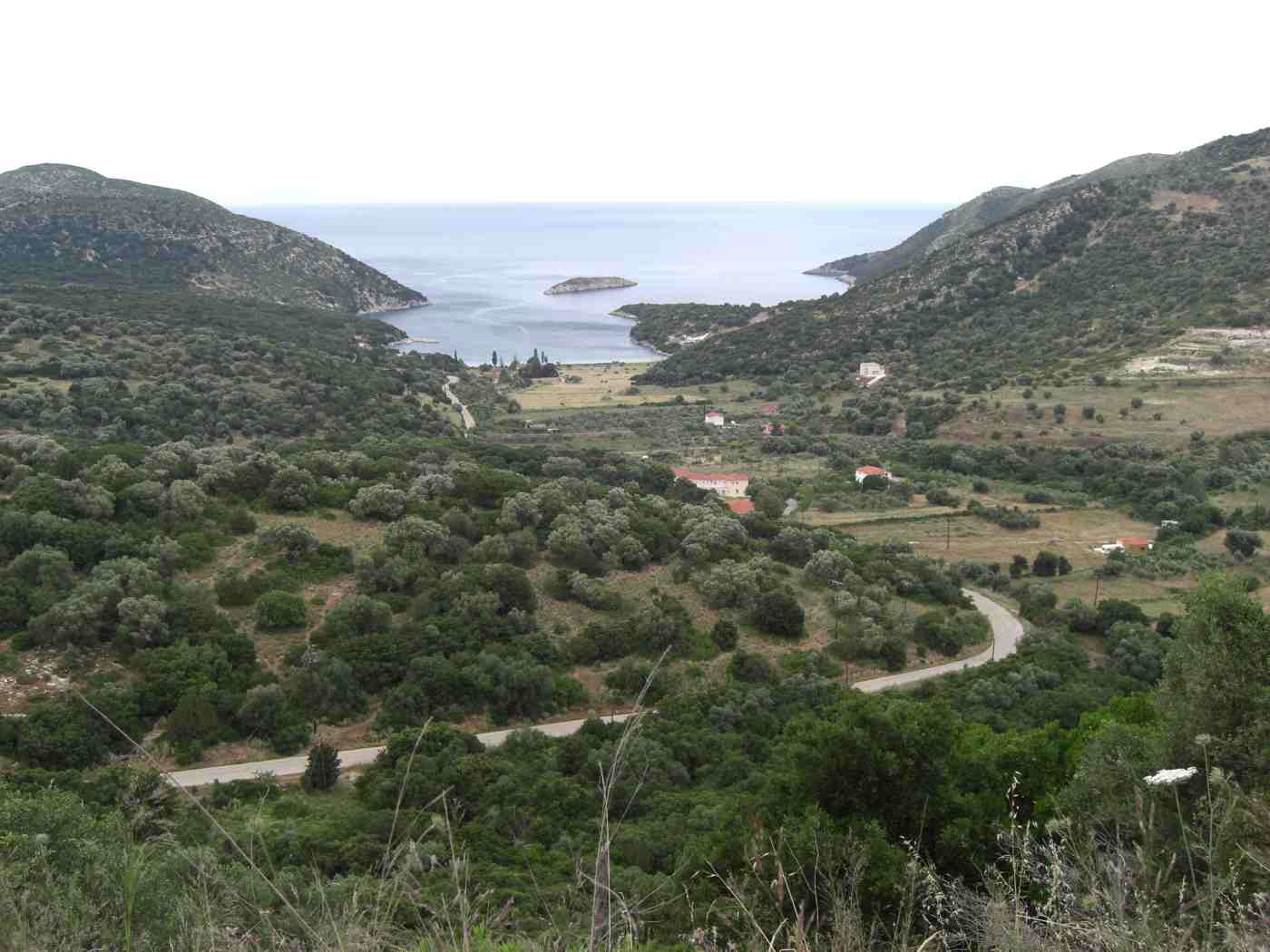
Atheras is a small traditional village and near-circular bay on the north of the Paliki peninsula in western Kefalonia. It sits about 15 km north of Lixouri, reached by a quiet inland road that winds through vineyards and olive groves before dropping to the sea. A sheltered horseshoe bay holds a modest beach of sand and fine pebble, with shallow, calm and clear water and fishing boats drawn up on the sand. A handful of tavernas line the shore. The village stayed small after the earthquake of and keeps an unspoilt, green character, well away from the crowds of Kefalonia’s larger resorts. Plan the whole trip with Greece Tours.
The bay works as a place for a slow swim, a long lunch by the water and a sunset over the Ionian Sea. To the north the land climbs to Cape Atheras, where wind turbines line the ridge above the coast. Atheras suits travellers who prefer a working fishing settlement to a busy tourist strip, and it fits easily into a day exploring the Paliki peninsula. The road links it to Lixouri and to the west-coast beaches of Paliki, with Petani not far to the south. Argostoli, the island capital, connects to Lixouri by a short ferry across the gulf, making the bay an easy half-day trip.
Where is Atheras in Kefalonia?
Atheras lies on the north of the Paliki peninsula in western Kefalonia, about 15 km north of the town of Lixouri and reached by a quiet inland road.
The Paliki peninsula forms the western arm of Kefalonia, a green block of land separated from the rest of the island by the gulf of Argostoli. Lixouri is its main town and sits on the eastern shore of that gulf. Atheras occupies the northern tip of the peninsula, roughly 15 km north of Lixouri, where the hills fall away to a small enclosed bay. The route runs inland through farmland rather than along the coast, so the sea appears only as the road descends to the village. This position keeps Atheras out of the main flow of visitors and gives it a remote, end-of-the-road feel.
The village stands just back from the water at the head of the bay, with the beach and the tavernas along the shore below. Vineyards, olive groves and low wooded hills surround it on almost every side, and the ground rises steadily to the north towards Cape Atheras. The wider Paliki peninsula is known for its farmland, its west-facing beaches and its unhurried pace, and Atheras sits firmly within that character. It is one of several small settlements scattered across the northern part of the peninsula. Linked by narrow roads that thread between the hills and the small coves along the coast.
Reaching Atheras almost always means passing through Lixouri first, since the town is the road hub for the whole peninsula. From Lixouri the drive north takes around 20 to 25 minutes, covering the 15 km or so on a paved but winding route. The final stretch bends down through olive terraces to the bay, where the road ends near the shore. There is no coastal highway or resort strip on the approach, which is part of the appeal. Travellers who reach the village find a compact shoreline, a small beach and a working harbour rather than a developed seafront lined with hotels and shops.
Argostoli, the island capital, lies across the gulf of Argostoli to the east. Although the two towns face each other over the water, the road between them loops a long way around the head of the gulf. Many visitors instead use the ferry that crosses directly between Argostoli and Lixouri, a short trip of about 20 to 30 minutes. From the Lixouri quay it is then a straightforward drive north to Atheras. This combination of a brief ferry crossing and a short inland drive makes the bay an easy target for a day out. Even for those based on the eastern side of the island.
What is the bay at Atheras like and how is it sheltered?
Atheras sits in a near-circular, horseshoe-shaped bay ringed by hills. The enclosing headlands wrap almost all the way around, so the water inside stays sheltered and calm in most conditions.
The bay at Atheras is one of the most enclosed on the Paliki peninsula. Two arms of land curve out from the shore and reach towards each other, leaving only a narrow opening to the open sea. This near-circular, horseshoe form is what gives the bay its distinctive character. The surrounding slopes rise steadily from the water, so the beach and the village sit within a natural bowl. The shape shields the shoreline from much of the swell that reaches the more exposed west-coast beaches of Paliki, and it keeps the inner waters flat and settled through most of the season.
The sea inside the bay is usually calm even when the open Ionian is choppy. This shelter is a large part of why the small beach is so popular with families and slower swimmers. Fishing boats are drawn up on the sand and moored in the protected water, taking advantage of the same natural harbour that has served the village for generations. The calm conditions also make the bay a reliable place to swim across a range of weather, since the ring of land keeps the worst of the northern and western winds off the shore.
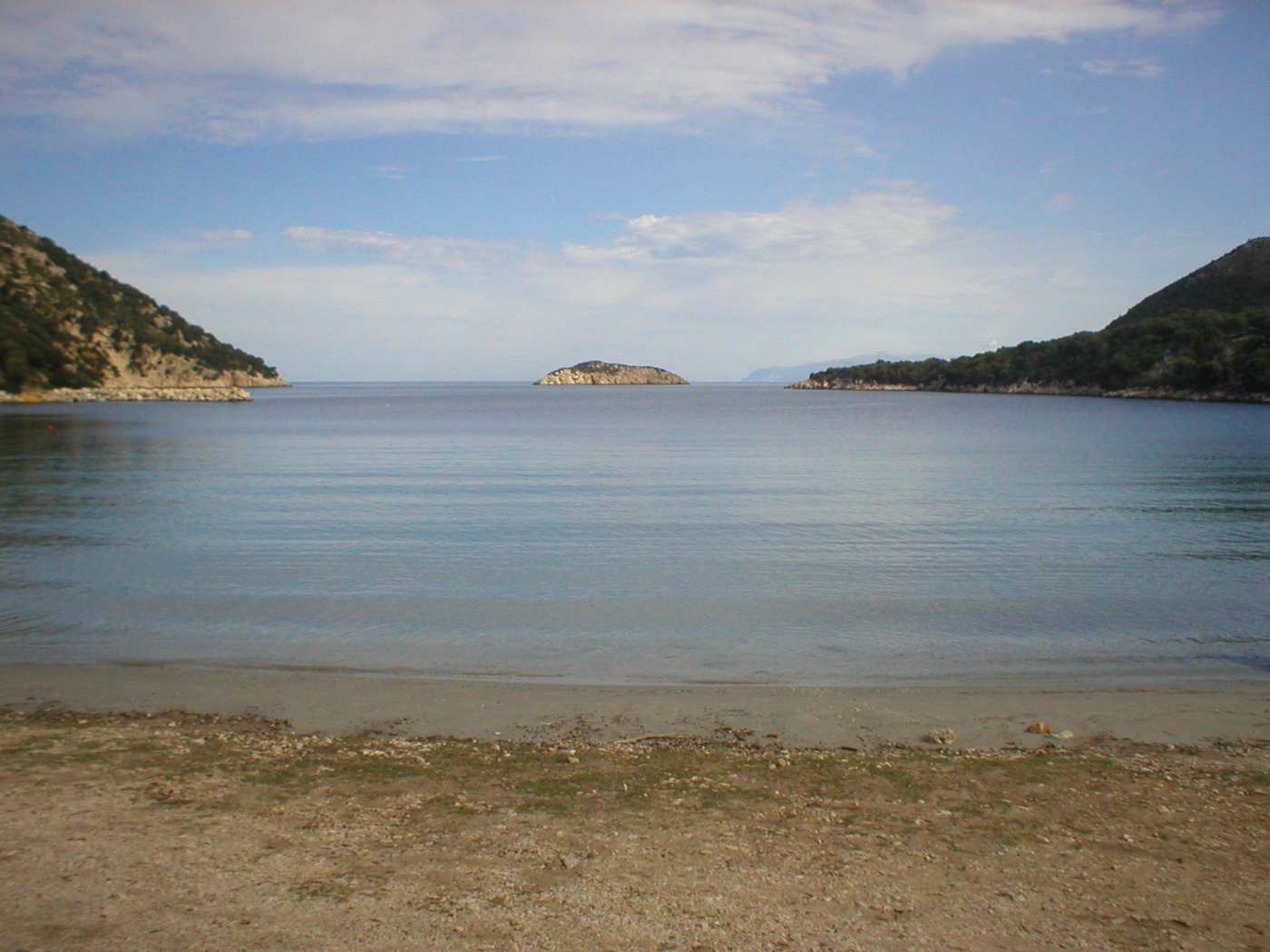
The bowl of hills does more than shelter the water. It frames the bay visually, so the view from the beach is of green slopes. The small settlement at the head of the cove and the boats resting on the sand. There is little to interrupt the setting, no large hotels or apartment blocks crowding the shore. The scale is small and human, in keeping with the size of the village. Standing on the beach, a visitor sees the two headlands closing in on either side and the narrow gap where the bay meets the open sea. A layout that explains the sheltered feel at once.
The gap in the headlands faces roughly west and north-west, which is why the bay is a good place to watch the sun drop towards the horizon in the evening. During the day the enclosed water warms in the shallows, and the clear conditions let swimmers see the sandy and pebbly bottom well below the surface. The combination of shelter, clarity and a compact scale sets Atheras apart from the long, open beaches elsewhere on the island. It is a bay built for slow use rather than for crowds, and the physical form of the coastline is the reason for that calm, contained atmosphere.
What is the beach and swimming like at Atheras?
The beach is a small strip of sand and fine pebble with shallow, calm and clear water. The gentle entry and settled sea suit relaxed swimming and easy snorkelling near the shore.
The beach at Atheras is a modest crescent of sand mixed with fine pebble, set at the head of the horseshoe bay. It is not a long stretch of coast; the scale matches the small village behind it. The sand is soft underfoot near the waterline, with finer pebbles in places, and fishing boats often rest on the shore alongside sunbathers. The water shelves gently, so it stays shallow for some distance out. This gradual entry, combined with the shelter of the surrounding headlands, keeps the sea calm and makes wading in straightforward, without sudden drops close to the beach.
The clarity of the water is one of the bay’s strongest features. Because the sea inside the horseshoe is sheltered and slow-moving, the shallows stay clear and the bottom is easy to see. Swimmers can watch the sandy and pebbly seabed well below the surface, and the calm conditions make for unhurried swimming rather than fighting waves or current. The shallow zone extends far enough that children can paddle safely close to shore while adults swim a little further out. The temperature in the shallows tends to be comfortable through the warmer months, warmed by the sun in the enclosed water.
Snorkelling works well near the edges of the bay, where the pebble bottom and the rocky flanks of the headlands hold small fish and patches of sea grass. The clear, still water means good visibility, and the sheltered surface makes it easy to float and look down without being pushed about by swell. Snorkellers tend to stay close to the sides of the cove rather than the open middle, following the rocks where marine life gathers. There are no strong currents inside the bay in normal conditions, which keeps this kind of gentle exploration relaxed and within reach of casual swimmers rather than only experienced ones.
Facilities at the beach are limited, in keeping with the village’s small size and undeveloped character. The shore has the tavernas by the water and the fishing boats rather than rows of loungers, watersports or large organised amenities. Visitors bring what they need for the day and treat Atheras as a quiet, natural beach rather than an equipped resort strip. This lack of development is exactly what draws people who want a calm swim and a slow afternoon. The beach rewards those looking for simple pleasures, clear water and a sheltered swim close to a working village, rather than the busy services of the island’s larger resorts.
Who does Atheras suit as a destination?
Atheras suits travellers who want a calm, unspoilt bay over a busy resort. Families, slow swimmers and those seeking a quiet village atmosphere find the sheltered water and small scale well matched to their plans.
Atheras appeals most to visitors who value quiet over facilities. The bay has no resort strip, no crowds and no organised entertainment, so it draws people who prefer a natural setting and an unhurried pace. Families with young children find the shallow, calm and sheltered water especially reassuring, since the gentle entry and the lack of strong current suit small swimmers. Older visitors and anyone who wants to swim without battling waves also do well here. The compact scale means the beach never feels overwhelming, and the surrounding hills and village give the whole place a settled, homely feel rather than a commercial one.
The bay is a natural fit for travellers exploring the Paliki peninsula who want to slow down for hours. It rewards those content to swim, eat a long lunch by the water and watch the sunset rather than seek activities and nightlife. People who enjoy small fishing villages, local tavernas and unspoilt landscapes tend to appreciate Atheras far more than those looking for a lively beach scene. It also suits photographers and walkers drawn to the green setting. The boats on the sand and the ridge of wind turbines above Cape Atheras to the north, which give the area a distinctive backdrop.
Atheras is less suited to visitors who want a fully equipped beach with sunbeds, watersports and a range of shops and bars. The limited facilities mean it is not the place for those who expect resort-style services at hand. Anyone seeking a busy social atmosphere, beach clubs or a wide choice of restaurants will find more of that around Lixouri, Argostoli or the island’s larger tourist centres. Atheras trades those amenities for calm and character. Visitors who understand this and come prepared, with their own supplies for the day, are the ones who enjoy the bay most and leave satisfied with its quiet charms.
The village also works well for travellers using a hire car to tour the peninsula, since it fits naturally into a wider day out. Its position at the northern end of Paliki makes it a good final stop, a place to swim and eat before heading back towards Lixouri and the ferry. Those without a car will find it harder to reach, as public transport to such a small settlement is sparse. On balance, Atheras rewards independent travellers who want to seek out the quieter corners of Kefalonia and are happy to swap convenience for a sheltered bay and a genuine village setting.
What is the village of Atheras and its tavernas like?
Atheras is a small traditional fishing village that stayed quiet after the earthquake. A handful of tavernas line the shore, serving simple food beside the boats and the calm water of the bay.
The village of Atheras is small and traditional, set just back from the head of the bay. It kept its quiet character after the earthquake of , which reshaped much of Kefalonia, and it never grew into a resort. The result is a settlement of modest houses among gardens, olive groves and vineyards, with narrow lanes leading down to the shore. Fishing has long been part of local life, and the boats drawn up on the beach and moored in the sheltered water reflect that. The pace is slow, and the atmosphere is that of a working Greek village rather than a purpose-built tourist stop.
Along the shore a handful of tavernas make up the main focus of village life for visitors. They sit close to the water, so diners can eat within sight of the boats and the calm bay. The setting is simple and informal, with tables near the sand and the sea steps away. These shoreline tavernas are the natural place to spend a long lunch or an early evening meal, especially as the light softens over the bay. Their position at the water’s edge is a large part of what makes a visit to Atheras feel complete, pairing a swim with an unhurried meal by the sea.
Food at the tavernas centres on the kind of fare found in coastal Greek villages, with an emphasis on the day’s catch given the fishing tradition of the bay. Fresh fish and seafood sit naturally alongside the simple dishes typical of the region. Because the exact menus, names, prices and opening times vary and change with the season, it is worth arriving with flexible plans rather than fixed expectations. The appeal lies less in any single establishment than in the experience of eating slowly beside the water. Watching the boats and the light on the bay while the meal unfolds at an easy, unrushed pace.
Beyond the tavernas, the village offers little in the way of commercial activity, and that is part of its charm. There are no large hotels crowding the seafront, no strings of bars and no busy shopping streets. Instead visitors find a green, unspoilt place where the sea, the boats and the surrounding hills dominate. The village turns quiet in the evenings once the daytime visitors leave, returning to its own slow rhythm. For travellers who want to see a corner of Kefalonia that has held on to its traditional feel. Atheras offers a rare and genuine example on the northern edge of the Paliki peninsula.
What is the setting around Atheras and Cape Atheras like?
Atheras sits in a green, unspoilt landscape of vineyards and olive groves. To the north the land rises to Cape Atheras, where wind turbines line the ridge above the sea.
The setting around Atheras is green and largely undeveloped, a contrast to the busier parts of Kefalonia. Vineyards and olive groves cover the slopes that ring the bay, and low wooded hills rise on almost every side. This farmland has shaped the area for generations, and the vines and olives remain a working part of the landscape rather than mere scenery. The near-absence of resort development means the natural setting dominates the view from the beach and the village. The overall impression is of a quiet, cultivated countryside meeting a sheltered stretch of coast, with the small settlement tucked into the head of the horseshoe bay.
To the north of the village the land climbs steadily towards Cape Atheras, the headland that marks the northern tip of the Paliki peninsula. Along the ridge above the sea stands a line of wind turbines, taking advantage of the exposed, breezy heights of the cape. The turbines form a distinctive feature on the skyline. Visible from the bay and the surrounding roads. They mark the transition from the sheltered village to the windier, higher ground above. The contrast between the calm, protected bay below and the exposed, turbine-topped ridge above is one of the memorable characteristics of the Atheras area.
The cape and its higher ground offer wide views over the northern coast of Paliki and out across the Ionian Sea. The exposed position that suits the wind turbines also means the weather there differs from the sheltered bay, with more wind and open sky. Travellers driving through the area can take in the ridge and the turbines as part of the landscape. A reminder of how the peninsula rises from its enclosed coves to breezy heights. This layered terrain, from cultivated valley to sheltered shore to windy cape, gives the northern Paliki a varied character within a small geographic area.
The green, unspoilt quality of the setting is central to the appeal of Atheras. Because so little large-scale development has reached this corner of the island, the natural landscape and the traditional village remain the main attractions. Visitors come as much for the sense of a quiet, rural coast as for the swim itself. The vineyards, olive groves, hills and the turbine-lined ridge above the bay combine into a setting that feels distinct from the more built-up resorts elsewhere on Kefalonia. It is a place where the countryside runs right down to a sheltered bay, and where the pace and scale stay modest throughout.
How do you reach Atheras from Lixouri and Argostoli?
From Lixouri, drive about 15 km north on the inland road, roughly 20 to 25 minutes. From Argostoli, take the short ferry across the gulf to Lixouri first, then continue north to Atheras.
The simplest way to reach Atheras is by road from Lixouri, the main town of the Paliki peninsula. The route heads north out of Lixouri and runs inland through farmland and low hills for about 15 km before descending to the bay. The drive takes roughly 20 to 25 minutes on a paved but winding road, with the final stretch bending down through olive terraces to the shore. There is no coastal highway on this approach, so the sea comes into view only near the end. A hire car or scooter is the practical means of getting there, given the village’s remote position and limited public transport.
Travellers based in or near Argostoli, the island capital, usually reach Atheras by first crossing the gulf of Argostoli. Although Argostoli and Lixouri sit close together across the water, the road between them loops a long way around the head of the gulf. The quicker option is the ferry that runs directly between the two towns, a crossing of about 20 to 30 minutes. From the Lixouri quay, the drive north to Atheras follows the same inland road, adding roughly another 20 to 25 minutes. This ferry-plus-drive combination keeps the total journey manageable and makes the bay accessible from the eastern side of the island.
The Argostoli to Lixouri ferry is a well-used link that saves the long road detour around the gulf. It carries both foot passengers and vehicles, so travellers can take a hire car across and continue straight on to the peninsula. Sailings run regularly through the day in the main season, though schedules vary, so it is worth checking current times before setting out. Crossing on the ferry also adds a short and pleasant sea trip to the journey, with views across the gulf. Once on the Lixouri side, the road network of Paliki opens up, with Atheras at its northern end.
For visitors touring the peninsula, Atheras is best approached as part of a wider day rather than a single destination. Its position at the north of Paliki means the drive there naturally passes other villages and beaches, and the return trip can take in more of the coast. Those coming from the eastern resorts allow time for the ferry crossing as well as the inland drive. Because the roads are narrow and winding and the village lies at the end of the route, unhurried driving suits the terrain. Reaching Atheras is part of the experience, a slow approach through green countryside to a sheltered bay at the edge of the island.
Frequently Asked Questions
How far is Atheras from Lixouri?
Atheras lies about 15 km north of Lixouri, the main town of the Paliki peninsula. The drive takes roughly 20 to 25 minutes on a paved but winding inland road that runs through vineyards, olive groves and low hills before descending to the bay. The route does not follow the coast, so the sea appears only as the road drops down to the village at the end. Lixouri is the natural road hub for the whole peninsula, so almost every journey to Atheras passes through or starts from the town.
A hire car or scooter is the practical way to cover the distance, as public transport to such a small northern village is limited and the roads are quiet and rural.
Is Atheras beach suitable for children?
Atheras beach is well suited to children thanks to the sheltered bay and the shallow, calm water. The near-circular horseshoe shape of the bay breaks the wind and swell, so the sea inside stays settled in most conditions. The beach shelves gently, keeping the water shallow for some distance from the shore, and there are no sudden drops close in. This gradual entry lets children paddle and swim safely near the edge while adults swim a little further out. The clear water also makes it easy to see the sandy and pebbly bottom. Facilities are limited, so families bring their own supplies for the day, including shade.
Water and anything else they need, since the beach has tavernas and boats rather than organised amenities.
Can you snorkel at Atheras?
Snorkelling works well at Atheras, especially around the edges of the bay. The sheltered, near-circular shape keeps the water calm and clear, giving good visibility down to the sandy and pebbly bottom. Snorkellers tend to follow the rocky flanks of the headlands on either side of the cove, where small fish and patches of sea grass gather, rather than the open middle. The still surface makes it easy to float and look down without being pushed about by waves, and there are no strong currents inside the bay in normal conditions. This makes the spot suitable for gentle, casual snorkelling close to shore rather than demanding open-water swimming.
Bring your own mask and snorkel, as the small, undeveloped village does not offer equipment hire or organised watersports at the beach.
How do you get to Atheras from Argostoli?
From Argostoli, the usual approach is to take the ferry across the gulf of Argostoli to Lixouri, then drive north to Atheras. Although the two towns sit close together across the water, the road between them loops a long way around the head of the gulf. The ferry is the quicker route. The crossing takes about 20 to 30 minutes and carries both foot passengers and vehicles, so a hire car can go across. From the Lixouri quay it is then roughly 15 km, or about 20 to 25 minutes, north on the inland road to Atheras.
Sailings run regularly through the day in the main season, but times vary, so it is worth checking the current schedule before setting out on the journey.
Can you combine Atheras with Petani and the Paliki coast?
Atheras combines easily with Petani and the wider Paliki peninsula, and visitors treat it as one stop on a broader day out. Petani lies not far to the south on the west coast, and the road network of Paliki links the two along with Lixouri and the other west-coast beaches. Because Atheras sits at the northern end of the peninsula, it works well as a final swim and lunch stop before heading back south. A typical day pair the sheltered, calm bay of Atheras with the more open, dramatic beach at Petani, then return through Lixouri towards the ferry.
A hire car makes this kind of touring straightforward, as the small roads connect the villages and coves of the peninsula and reward unhurried exploration.
When is the best time to visit Atheras?
The warmer months of the year are the best time to visit Atheras, when the sheltered water is comfortable for swimming and the tavernas by the shore are open. Late spring and early autumn bring calmer crowds while the sea stays warm enough to enjoy, and the green setting of vineyards and olive groves is at its most pleasant. The height of summer offers the warmest water and the fullest choice of open tavernas, though even then the bay stays quieter than the island’s larger resorts. Because the bay faces roughly west, the evening is a good time to stay for a sunset over the Ionian Sea after a swim and a long lunch.
Outside the main season, facilities are more limited, so it is worth planning around what is open.