
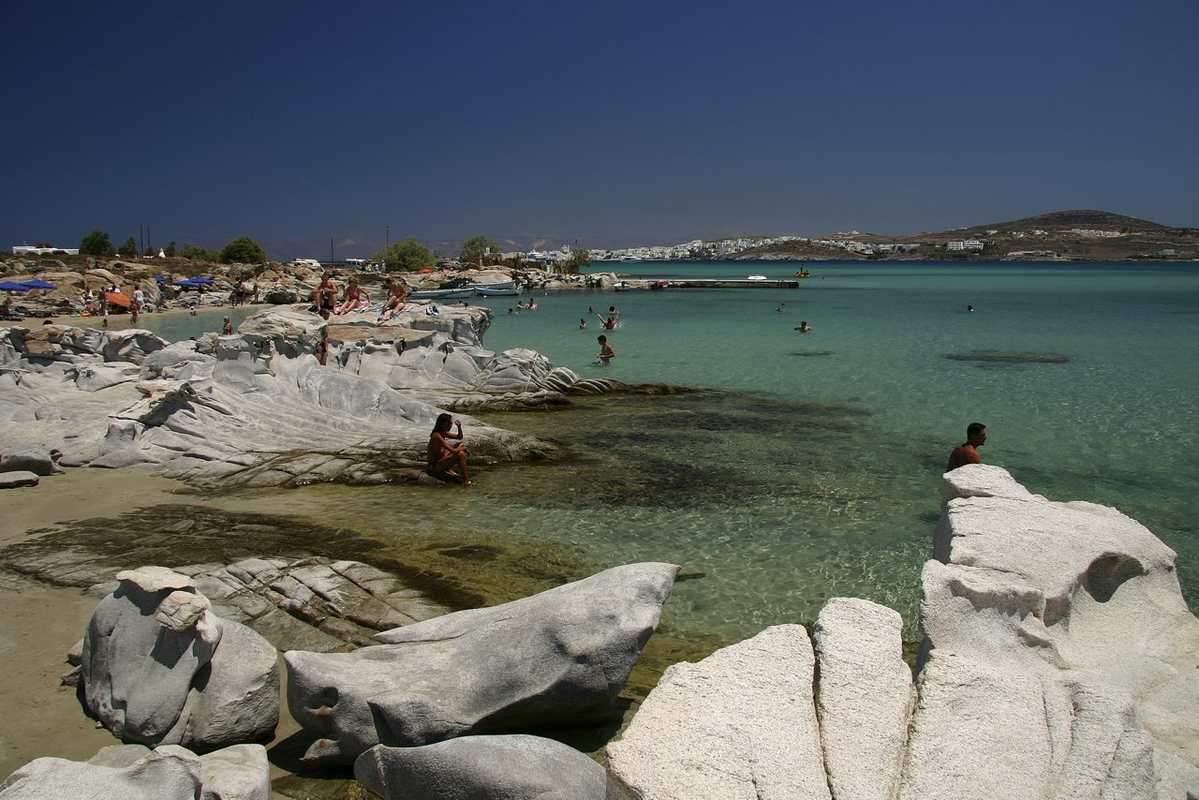
Antiparos is the small, laid-back island across a narrow channel from Paros, reached by a seven-minute ferry and loved for its relaxed town, quiet beaches and a dramatic cave. Just 35 square kilometres, it makes one of the best day trips in the Cyclades. This guide covers how to get there, what to see and how to plan a visit to the island next door. Plan the whole trip with Greece Tours.
The neighbouring island is a natural extension of a Paros stay, a highlight in the wider Paros travel guide. It sits a short hop off the south-west coast. The sections below cover the visit.
How do you get there?
You get there by a seven-minute ferry from Pounta on the south-west coast of Paros, which runs every half hour and carries cars. A small foot-passenger boat also crosses from Parikia in summer, and organised boat tours visit by sea.
The crossing is one of the shortest in Greece. The car ferry from Pounta, about ten minutes’ drive from Parikia, reaches the island in just seven minutes and departs roughly every half hour through the day, with no booking needed, costing around €1.50 per foot passenger and €8 to €10 for a car. A passenger boat also links Parikia to the island town directly in summer. Bringing a vehicle is wise, since the sights are spread out. Many visitors also arrive on a boat tour, set out in the guide to Paros boat tours. The town is the first stop.
What is the main town like?
The main town is a small, whitewashed Cycladic settlement with marble alleys, a central pedestrian street of cafés and tavernas, and a medieval Venetian Kastro at its heart. Relaxed and largely traffic-free, it makes an easy and charming stroll.
The island’s chora is its calm, pretty centre. A single pedestrian street lined with cafés, bars and tavernas runs up from the port to the medieval Kastro, a fortified settlement of inward-facing houses still largely intact. Bougainvillea spills over whitewashed walls and marble lanes, and the relaxed, low-key atmosphere draws those seeking a quieter scene than Paros. The town fills gently in the evenings but never feels rushed. It anchors a half-day, with the beaches and the cave beyond. The cave is the island’s star attraction.
What is the cave?
The cave is one of the most impressive in Europe, descending 411 steps into a vast chamber of stalactites and stalagmites used as a ceremonial space since antiquity. It sits in the island’s centre-south and costs around €6 to enter, taking about an hour.
The cave is the island’s signature sight. A flight of 411 steps leads down into a huge chamber hung with ancient stalactites and stalagmites, including some of the oldest formations in Europe, a space used for rituals and inscriptions since classical times. The descent and visit take about an hour and reward the effort with a remarkable underground world. It lies in the hilly centre-south of the island, too far to walk in summer heat, which is why a car or scooter helps. The beaches complete the day.
What are the beaches like?
The beaches are quiet and sandy, scattered along the east and west coasts, with sheltered swimming and few crowds. Soros and Apantima on the east coast are among the best, with shallow, clear water that suits families and a relaxed beach day.
The island’s coast rewards those who explore it. Sandy beaches dot the east and west shores, generally calmer and less developed than the busy sands of Paros. Soros and Apantima on the east coast offer clear, shallow water and a sheltered setting, with a few beach bars, while quieter coves reward those willing to drive. The west coast catches more wind but has its own swimming spots. A car or scooter reaches the best of them, making the island ideal for a slow beach day, set within the wider Paros itinerary. A little planning makes the most of a visit. The questions below cover the points travellers ask most.
How do you plan a day trip?
You plan a day trip by taking a vehicle on the early Pounta ferry, exploring the town, the cave and a couple of beaches, and returning in the evening. Allow a full day, since reaching the ferry, crossing and orienting takes time.
The island rewards a full day rather than a rushed morning. Driving to Pounta, ferrying across and getting your bearings takes around ninety minutes, so an early start helps. A good plan combines the town, the cave and a swim at Soros or Apantima, with lunch in the chora, before catching an evening ferry back. Bringing a car or scooter is the key to covering the spread-out sights. Booking nothing is needed for the ferry, which simply runs on demand, as the guide to things to do in Paros reflects. The questions below cover the points travellers ask most.
Where do you eat on the island?
You eat on Antiparos mainly in the main town, where tavernas and cafés line the pedestrian street and the small harbour, serving fresh fish, Greek dishes and drinks. A handful of beach tavernas grill the catch by the sand at the quieter coves.
The island keeps its dining simple and good. The pedestrian main street and the harbour of the chora hold most of the tavernas, cafés and bars, serving fresh fish, grilled meats and Greek classics in a relaxed, low-key setting, busier in the evenings. A few beach tavernas at coves such as Soros and Apantima grill the day’s catch and serve cold drinks by the water, perfect for a long lunch. Eating in the town rounds off a day trip, set within the wider best restaurants in Paros guide. Some visitors choose to linger overnight.
Can you stay overnight on the island?
You can stay overnight on Antiparos, which has hotels, studios and rooms in and around the main town, plus a few villas. An overnight stay reveals the island’s quiet evening charm once the day-trippers leave, though most visit on a day trip.
The island rewards those who linger. While most come for the day, Antiparos has a range of places to stay, from small hotels and studios in the chora to apartments and villas near the beaches, so an overnight trip is easy to arrange. Staying lets you enjoy the calm of the town in the evening, when the day boats have gone and the lanes belong to locals and a few visitors. It suits travellers wanting a slower, quieter base than Paros, set out alongside the guide to where to stay in Paros. Families find the island easy too.
Is the island good for families?
The island is good for families, with calm, shallow beaches, a safe, traffic-free town and the adventure of the cave. The short ferry, gentle pace and easy swimming make it a relaxed and rewarding family day out from Paros.
Antiparos suits a family day well. Its sheltered, shallow beaches on the east coast offer safe swimming for children, the pedestrian chora lets them wander freely, and the descent into the famous cave is a memorable adventure for older kids. The short, frequent ferry and the island’s small size keep travel easy and stress low. Bringing sun protection, water and snacks helps, since facilities are modest, complementing the guide to Paros with kids. One beach stands out for a swim.
What is the best beach on the island?
The best beaches are Soros and Apantima on the east coast, with sheltered, shallow, clear water and a few beach bars. Psaraliki, near the main town, is the most convenient, while the west coast offers wilder, windier spots for the adventurous.
The island’s coast rewards a little exploring. Soros and Apantima, on the calmer east coast, are the most popular, with clear, shallow water, soft sand and a relaxed beach-bar setting good for families. Psaraliki, a short walk from the chora, is the handiest for a quick swim, with twin sandy bays. The west coast catches more wind and stays wilder and quieter, suiting those after solitude. A car or scooter reaches the best of them, as the guide to Paros beaches reflects. The questions below cover the points travellers ask most.
Frequently Asked Questions
How do you get to Antiparos from Paros?
You get to Antiparos by a seven-minute car ferry from Pounta on the south-west coast of Paros, running every half hour with no booking needed. A small passenger boat also crosses from Parikia in summer, and boat tours visit by sea.
Is Antiparos worth visiting?
Antiparos is well worth visiting for its relaxed whitewashed town, medieval Kastro, quiet sandy beaches and a dramatic cave. The short ferry and laid-back pace make it one of the best and easiest day trips from Paros.
What is there to do on Antiparos?
On Antiparos you can stroll the town and its Venetian Kastro, descend the famous cave with its ancient stalactites, and swim at quiet beaches such as Soros and Apantima. A car or scooter helps reach the spread-out sights.