
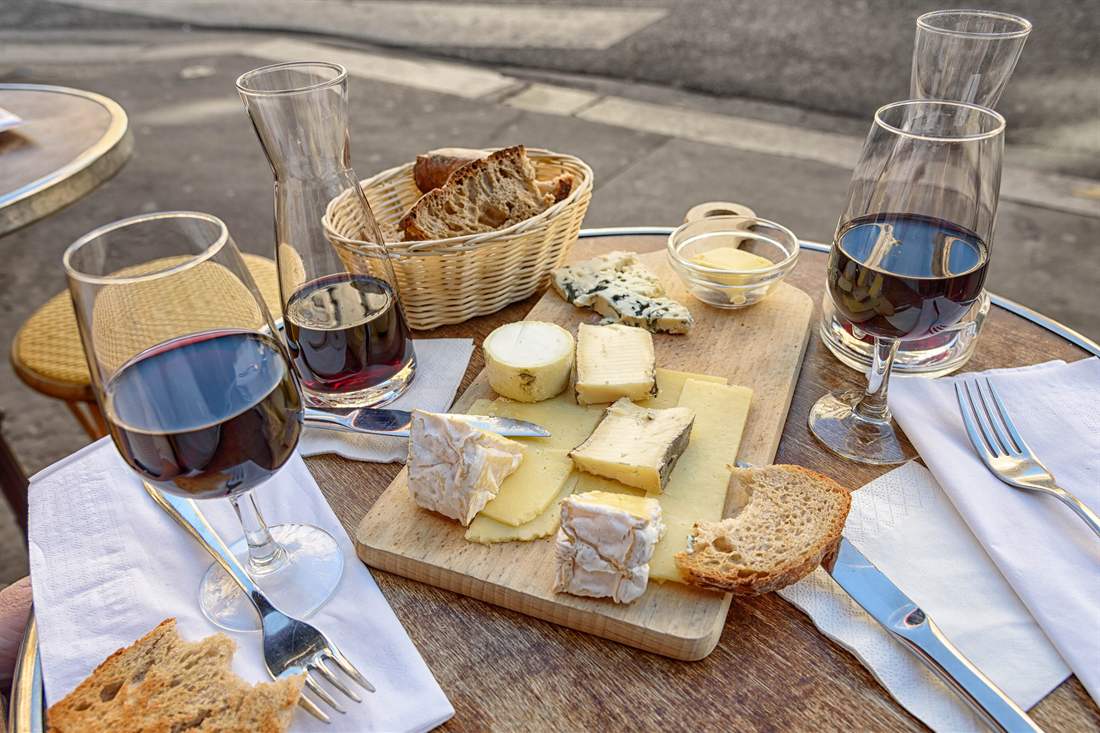
An Aegina wine tasting is a private tasting of Greek wines with cheese and meze, hosted in Perdika, a fishing village of the island. Our Greece Tours homepage lists the other trips we run across the country.
This page lists the Aegina wine tasting you can book, the Greek wines and grapes behind a first tasting, the cheeses and meze that go with them, the Hippocras workshop in Aegina Town, the wine tours from Athens, the booking details and the questions travellers ask.
What is an Aegina wine tasting?
Wine tasting is the sensory examination and evaluation of wine, a practice as old as wine production itself. An Aegina wine tasting applies it on a Greek island; the bookable version pairs wines with food.
Aegina is a Saronic Gulf island in the Attica region, 27 km from Athens, and ferries from Piraeus reach it.
The craft reaches back to ancient times. Sumerian stories of Gilgamesh, from the third millennium BCE, already separate wines of the Zagros Mountains from wines of Lebanon.
In the fourth century BCE, Plato listed the main flavours of wine and classified the aromas into families. Aristotle proposed a sensory tasting built on the four elements: air, water, fire and earth. The Roman philosopher Lucretius deepened that idea in the first century BCE.
A formal method began to take hold from the 14th century onward. By the 18th century, Linnaeus, Poncelet and others had brought the understanding of tasting up to date. The Nobel Prize in Medicine went to Richard Axel and Linda B. Buck for work on taste and smell.
Professional tasters, such as sommeliers and buyers for retailers, use a specialised vocabulary for flavours, aromas and character. Informal, recreational tasting is a much less analytical process, aimed at a general, personal appreciation.
Wine is a complex subject to study, so tasting can seem daunting at first. Pausing and focusing on each step separates an Aegina wine tasting from simple quaffing. The point is not to get drunk. It is to try new wines, learn about them and decide whether you want to buy a bottle.
Smell is personal. Everyone smells something different or finds different words for the same smell, so smelling has no wrong answer. A tasting note is a taster’s written account of a wine’s aroma, taste, acidity, structure, texture and balance.
Judging a wine is more objective when you taste it beside other wines. Tasters call such a selection, presented for sampling and comparison, a tasting flight. A flight can hold between three and eight glasses, and sometimes up to fifty.
Flights come in two shapes. A vertical tasting pours different vintages of one wine from one winery. A horizontal tasting pours one vintage from different wineries. Both highlight differences between similar wines.
For the wider island, see our Aegina tours page.
Which Aegina wine tasting can you book?
The bookable Aegina wine tasting is “Aegina: Private Wine Tasting Experience” on GetYourGuide. It starts in Perdika, lasts three hours and is booked as a private group.
The listing invites you to discover the rich flavors of Greek wines in a personalized tasting experience. It then promises a selection of 3 course wines paired with artisanal cheeses and savory meze.
Three wines fall inside the three-to-eight range of a tasting flight. The Aegina wine tasting listing names no wine, grape, cheese, winery or host. This page therefore claims nothing about the glasses or the plates.
The listing also labels the activity a small group. Four more details sit on the booking page:
- Pickup is available.
- The activity is marked wheelchair accessible.
- Free cancellation is included.
- You must book at least three hours in advance.
Which Greek wines and grapes does a wine tasting on Aegina introduce?
Greek wine tells its story through grapes: Assyrtiko, Moschofilero, Malagousia and Roditis make the whites, Agiorgitiko and Xinomavro the reds. The listing for the Aegina wine tasting names no bottles or grapes. Every grape below is general Greek wine knowledge.
Greece grows about 200 vine varieties, a count from the International Organisation of Vine and Wine database. Six names give a first-timer a base before any Aegina wine tasting: four white grapes and two red.
Assyrtiko is native to Santorini and keeps its acidity as it ripens. The Wine Society lists citrus, stone fruit and a salty, mineral tang in young wines. Moschofilero comes from Mantineia in Arcadia, in the Peloponnese. Its wines are crisp and floral, and the Wine Society names rose water, grapefruit, lime and peach.
Malagousia grows mainly in Macedonia. Wikipedia credits it with a special aroma and medium-plus acidity, and the Wine Society names peach, flowers and herbs. Roditis is the “pink” grape and makes light white wines with citrus flavours. The Wine Society says growers plant it more widely than any other Greek variety.
Agiorgitiko means “St. George’s grape”. It is native to Nemea, grows mainly in the Peloponnese and makes a soft, fruity red in different styles. Xinomavro means “sour black” and leads in Macedonia around Naoussa. Its thin skins give pale colour, high acidity and firm tannin.
Wikipedia names four recognised stages of a tasting: appearance, the aroma in the glass, sensations in the mouth, and the finish. A tasting glass narrows at the rim to concentrate the bouquet. Cooler wine stresses acidity and tannin and mutes aroma, while warmer wine does the reverse.
At an Aegina wine tasting, run through all four stages with each pour. Wikipedia calls the tongue map a misperception: taste qualities spread across the whole mouth, and the tip of the tongue does not alone judge sweetness.
Which cheeses and meze go with the wines at an Aegina wine tasting?
The listing says the wines come with artisanal cheeses and savory meze, but it names neither. The pairings below are Greek food rules from published guides, not a promised Aegina wine tasting menu. Feta, graviera, kefalotyri, manouri and ladotyri each have a sourced wine match.
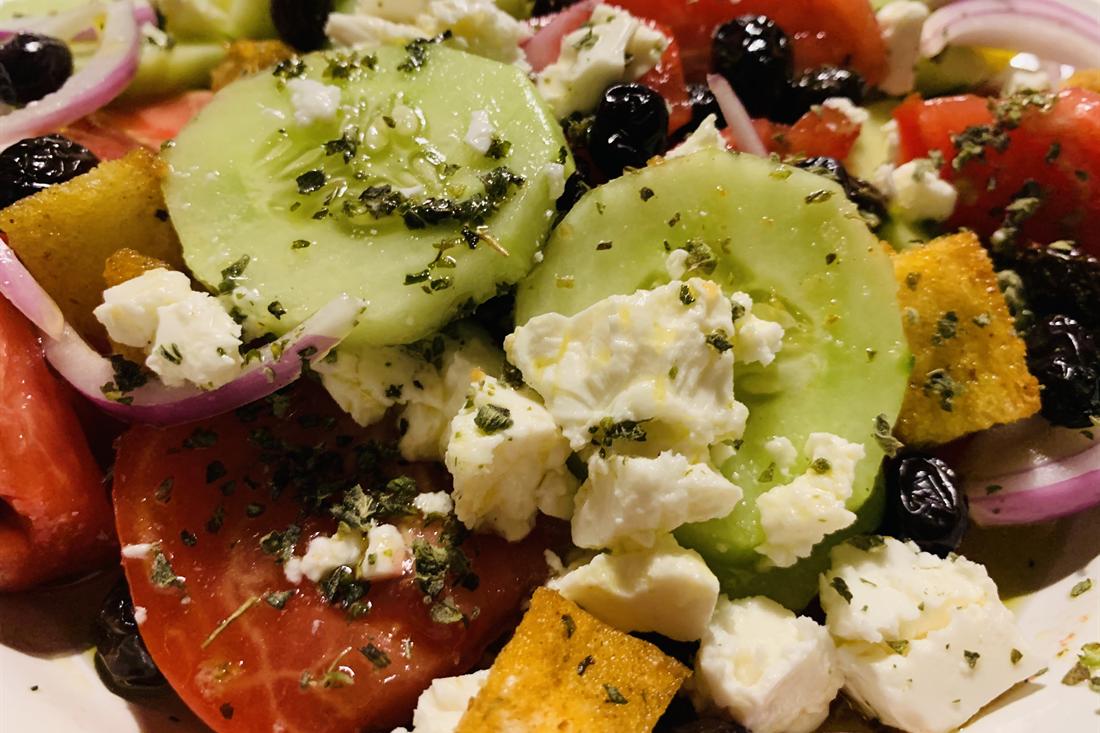
Feta holds protected designation of origin status, and the European Commission calls it salty and slightly acidic. A Greek oenologist matches that acidity with a fresh, aromatic white with crisp acidity, such as Moschofilero. A wine merchant suggests Santorini Assyrtiko, brine against brine.
Graviera is pale yellow with a mild, buttery flavour. Agrafa, Crete and Naxos hold PDO status for it. Ask for the age of the graviera at your Aegina wine tasting, because age and place move it from sweet and mild to nutty and sharp. Sweet graviera suits a medium-bodied Agiorgitiko red, while a spicier, saltier one suits a rich white.
Kefalotyri is a hard yellow cheese made from sheep milk, goat milk or a blend. It has a rich, salty flavour, and the Cheese Professor says it pairs with both red and white wines.
Manouri is an alabaster-white sheep’s whey cheese with a milky, creamy taste. The Cheese Professor calls it creamier and less salty than feta. The oenologist says it needs an aromatic white with low acidity, such as Malagousia. Greek Flavours counts manouri among the main types of mizithra, a whey cheese.
Ladotyri Mytilinis means “oil cheese”. It is a hard, pale-yellow sheep’s milk cheese from Lesbos, preserved in local olive oil. Its taste is spicy and salty, and the Cheese Professor pairs it with sweet wines.
Olives are a standard meze, so a weight rule applies at any Aegina wine tasting: match the wine to the olive. Chalkidiki olives are large, firm and bright green, and a Greek olive supplier pairs them with Assyrtiko. Kalamata olives are deep purple and meaty, so the same guide pairs them with Xinomavro.
Dolmades, or stuffed grape leaves, suit an earthy white wine, according to Unraveling Wine. The same guide says Assyrtiko pairs nicely with both tomatoes and feta in a Greek salad.
A seafood pairing guide matches grilled sardines with Roditis, a light-bodied white with notes of apple, pear and lemon zest. Unraveling Wine pairs taramosalata, a dip of fish roe, garlic and lemon juice, with a citrusy, mineral wine such as Assyrtiko. It pairs tzatziki, a fresh-tasting dip, with bright Malagousia.
These are general Greek pairing rules, not claims about the Aegina wine tasting menu. Use them as a map for what to notice at the table.
What is the Hippocras ancient Greek sangria workshop in Aegina Town?
The Hippocras workshop is a two-hour, small-group class in Aegina Town, separate from the Aegina wine tasting. It teaches two types of a sangria-like drink: one dates back to ancient Greece, the other is modern. The listing offers pickup.
GetYourGuide lists the class as “Aegina: Hippocras Ancient Greek Sangria Workshop”. Its description calls the session fun and interactive. Guests discover the history of the drink and learn to make two types.
The class meets in Aegina Town, while the Aegina wine tasting starts in Perdika. The listing abstract names no ingredients or recipe, so this page names none either.
Wikipedia defines hippocras as wine mixed with sugar and spices. It names cinnamon, ginger, clove, grains of paradise and long pepper as the main spices. The spices steep in the sweetened wine for a day, and a cloth bag then strains them out.
That cloth bag gives the drink its name. It is called the Hippocratic sleeve, or manicum hippocraticum. Wikipedia says the Greek physician Hippocrates devised it in the fifth century BC to filter water.
A research paper in the East Kingdom Gazette adds a point about the ancient side. Spiced wines were widely known in classical Greece, yet Hippocrates did not invent hippocras. The name refers to the filter that removes the spices.
Wikipedia describes the common style of ancient Greek wine as sweet and aromatic, though drier wines were also made. The Greeks believed that herbs, spice, seawater, brine, oil and perfume improved wine. Greek doctors prescribed wine as a tonic and a digestive aid.
Byzantine Greek cooking had its own spiced wine, called konditon. A tenth-century Greek farming text mixes pepper, Attic honey and old white wine. Wikipedia places the same family of spiced wines in ancient Roman cuisine as well.
The Roman cookbook of Apicius opens with a recipe for conditum, a spiced wine that began the meal. Medieval hippocras came at the end of the meal instead, according to the same research paper.
Wikipedia dates recipes under the names ipocras and ypocras to the late fourteenth century, in English and French sources. The drink was well liked in medieval and Elizabethan times, and doctors prescribed it to aid digestion. It fell out of fashion in the eighteenth century.
Wikipedia also suggests that hippocras inspired the Spanish sangria of the eighteenth century. Sangria is sweeter than hippocras but is still made with spices such as cinnamon, ginger and pepper. A guest who books both meets wine twice. Town offers the spiced drink, and the village offers the Aegina wine tasting.
Where does the Aegina wine tasting start in Perdika?
The listing names Perdika as the start place of the Aegina wine tasting. This fishing village sits at the south-west tip of the island, 9 kilometres from the main port. The islet of Moni lies across its harbour.
Perdika is one of five communities in the municipality of Aegina. The listing names the village as the start place and gives no winery or venue. For the full village guide, see Perdika.
The village that hosts the Aegina wine tasting sits on a peninsula’s north prong, at the island’s south-west tip. A scenic lane circles the headland, with views toward Epidaurus. The south prong is scrub where goats and donkeys graze.
Aegina Town lies at the north-western end of the island. The Aegina wine tasting therefore begins in a different part of Aegina from the Hippocras class.
Traditional fishing caiques tie up in the small harbour, and fishermen unload the morning catch there. Whitewashed houses with blue shutters and courtyards of bougainvillea stand around it. A stone-paved path above the water forms the centre of village life.
Directly opposite the start point of the Aegina wine tasting lies the islet of Moni, 1 kilometre long. A boat from the harbour reaches it in 10 minutes. A beach bar stands at the landing point, and the rest of the islet is uninhabited.
The ferry operator’s village guide calls Moni a protected nature reserve of pine trees. It puts a Moni trip at 2 to 4 hours. Deer, wild goats and peacocks roam the islet freely.
Two swimming spots sit near the start of the Aegina wine tasting. Klima, also called Kleidi, has turquoise water and pebbles. Sarpa is a small cove just before Perdika, with clear water and plenty of peace.
Perdika has 847 residents, against 6,976 in the community of Aegina. The Aegina wine tasting therefore starts in a small harbour, not in the island’s main town.
Which wine tasting from Athens can you add to an Aegina wine tasting trip?
Two mainland wine outings sit beside the Aegina wine tasting. One is a nine-hour private wine roads tour with winery tastings. The other is a three-and-a-half-hour blind challenge at an Attica winery. Each is its own booking with its own listing.
The longer outing is called From Athens: Wine Roads Private Tour with Wine Tasting. It runs for nine hours as a private group. The listing says guests relax on board a comfortable vehicle while it takes them to wineries for tastings.
The route adds ancient highlights, and the listing names the Temple of Apollo and Nemea Stadium. It lists wheelchair access and free cancellation. Guests must book at least two hours ahead. For the Nemea stop, read our Nemea wine day trip from Athens guide, which covers Nemea on its own.
The shorter outing is the Private Athens Winery Wine Tasting Challenge with Transfer. The listing calls it competitive, and it lasts three and a half hours at an Attica winery. Guests taste six wines blind, guess the grape and win a prize. The listing includes a round-trip transfer.
Wikipedia’s wine tasting entry explains the blind format: the taster never sees the label or the bottle shape. That way, details such as origin or reputation cannot sway the judgment. The entry adds that a black glass can mask the colour of the wine. The listing does not say which method the challenge uses.
The listings do not join either Athens outing to the Aegina wine tasting, so give each its own day. A nine-hour tour is a long day by itself. Our Athens wine tasting page sets out other ways to taste wine in the capital, if neither listing fits.
When does an Aegina wine tasting run, and how do you book it?
Book the three-hour Aegina wine tasting in Perdika at least three hours before it starts. Its listing shows free cancellation, pickup and wheelchair access. September is the traditional grape harvest month in Greece. Wine tasting began on a saint’s day in late October or early November.
The Hippocras workshop in Aegina Town sets the same three-hour lead time, with free cancellation and pickup. It lasts two hours. The workshop and the Aegina wine tasting add up to five hours of booked time on one island day. Make two separate reservations and check each start time on its listing.
The listing details for the Aegina wine tasting name no season and no saint’s day. Choose the date on the booking page. The calendar below is background on how Greek wine is made and first tasted, not a booking rule.
September is traditionally the wine grape harvest month in Greece, and the work is a family matter. Family, neighbours and friends start in the vineyards early in the morning. Autumn weather is unstable, so the work must finish before sudden rain can ruin the crop.
Old customs mark the season. On 6 August, winemakers filled a basket with the first ripe grapes. They sent it to the church for a blessing. On the first harvest day, they brought a priest to say a prayer. They left a small portion of the vineyard unharvested as thanks.
Each helper had a task. Youngsters and women handled the picking and placed the grapes in baskets. The strongest carried and stacked the baskets on trucks. In the past, donkeys did that work. Noon brought a break for the food that the wine grower offered.
The crop then went to the patitiri, the wine press. One group pressed the grapes, and another group enjoyed meze and drinks. In the past, the grapes were trodden by foot, and the wine fermented in wooden barrels for three months.
Wine tasting began during the celebration of one of two Orthodox saints. Those were Agios Dimitrios on 26 October and Agios Georgios Methistis on 3 November. The word methistis comes from the Greek methisos, meaning drunk. The Perdika listing ties the Aegina wine tasting to neither date.
What do travellers ask about an Aegina wine tasting?
Two Aegina bookings sit behind these answers. A three-hour private tasting starts in Perdika, and a two-hour Hippocras workshop runs in Aegina Town. Both list pickup, wheelchair access and free cancellation, and both need a three-hour booking lead time.
Is the Aegina wine tasting private or shared?
The Perdika listing labels this Aegina wine tasting a private group activity and also tags it as a small group. The Hippocras workshop carries only the small-group tag, so its listing does not call it private. The Athens wine roads tour is a private group booking too. Read the group details on each booking page before you pay.
How long does each booking last on Aegina and from Athens?
The tasting in Perdika lasts three hours, and the workshop in Aegina Town lasts two hours. Two mainland add-ons from Athens differ in length. The wine roads private tour takes nine hours, and the Attica winery challenge takes three and a half hours. Choose the length that leaves room for travel, and check the start place on each page.
Are pickup and wheelchair access available for the Aegina wine tasting?
Both Aegina listings offer pickup and mark the activity wheelchair accessible. The Athens wine roads tour carries the wheelchair label too. It drives guests to the wineries in a comfortable vehicle. The Attica winery challenge includes a round-trip transfer. Confirm the pickup point during booking, and ask the operator about any special access need before you reserve.
How far ahead do you book the Aegina wine tasting, and can you cancel?
Book the Aegina wine tasting at least three hours before it starts, and give the workshop the same lead time. Both listings offer free cancellation, as does the Athens wine roads tour, which needs two hours of notice. Free cancellation is a listing label, so read the terms on the booking page before you reserve.
Can the Hippocras workshop and the Aegina wine tasting fit into one day?
The durations fit: the tasting takes three hours and the workshop takes two, which makes five hours of booked time. The tasting starts in Perdika and the workshop starts in Aegina Town, so plan the trip between them. A separate Aegina food tour has its own page and times; check them before you stack three activities.
What does a first-time taster do with the glass?
Wikipedia lists five basic steps: colour, swirl, smell, taste and savour. Tilt the glass against a white background to judge the colour. Swirl it gently to release the aroma, then smell before you sip. Hold the sip in your mouth so it reaches the taste buds. Wikipedia adds that pausing at each step separates wine tasting from quick drinking.