
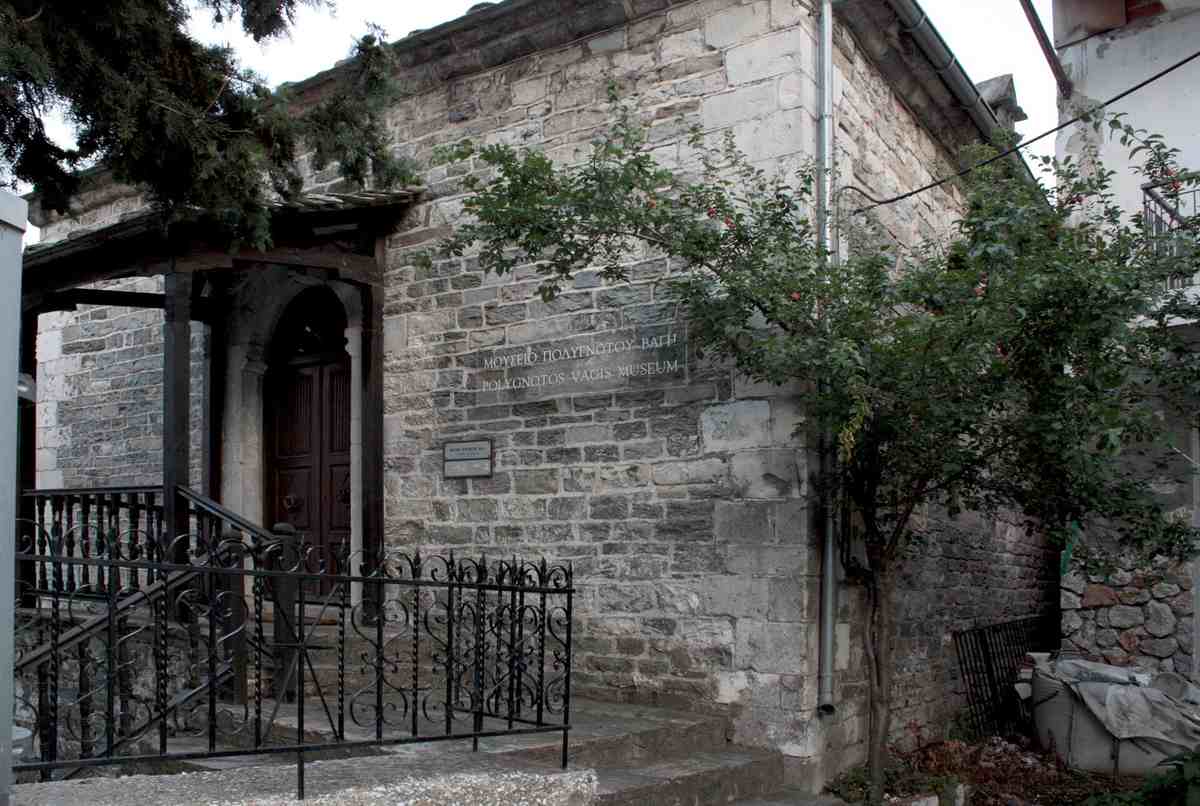
The Polygnotos Vagis Museum sits in the heart of Potamia, a stone-built mountain village on the eastern side of Thassos, 14 kilometres from the island capital of Limenas. The museum occupies a two-storey stone building in the centre of the village that once functioned as the local primary school. Rooms that held classrooms now hold sculpture, giving the collection a grounded, community setting. The building honours a single figure: Polygnotos Vagis, the sculptor born in this very village before his career carried him abroad. Its position in Potamia ties the artist directly to his birthplace, making the visit a return to origins rather than a detour into an anonymous gallery.
The museum rewards travellers who fold culture into a beach holiday, and it slots neatly into wider Thassos tours that thread the island’s villages, ruins and coastline. Potamia lies inland from the popular sands of the east coast, so the museum works as a cool, shaded stop between mornings on the beach. The collection rewards slow looking, with 98 sculptures and fifteen paintings gathered under one roof. Families, art lovers and curious day-trippers find common ground here, since the works range from mythological figures to bold semi-abstract forms. A short drive from Golden Beach brings visitors to a museum that most travellers never expect in a hillside village.
What is the Polygnotos Vagis Museum on Thassos?
The Polygnotos Vagis Museum is a municipal art museum in the village of Potamia on Thassos, housed in a two-storey stone building that once served as the village primary school, dedicated to the sculptor born there.
The Polygnotos Vagis Museum is a municipal art museum owned and run by the local community of Thassos. Its home is a solid two-storey stone building at the centre of Potamia, a structure that served earlier generations as the village primary school. The conversion from schoolhouse to gallery kept the thick stone walls, the calm rooms and the village-square setting, so the museum feels rooted in local life. The dedication is singular and clear: every room serves the memory and output of Polygnotos Vagis. This focus separates it from a general art space, turning the building into a monograph in stone that a visitor can walk through in an hour.
Potamia gives the museum its character as much as the collection does. The village climbs the lower slopes of Mount Ipsarion, the highest peak on Thassos, and its stone houses and narrow lanes frame the walk to the entrance. The museum’s central location means a visit folds naturally into a wander through the square, the churches and the cafes nearby. Distance from the capital is short at 14 kilometres, yet the mountain backdrop makes Potamia feel a world away from the harbour bustle of Limenas. The building’s former life as a school also anchors it in the everyday history of the village community.
The collection inside justifies the journey for anyone drawn to sculpture. Ninety-eight sculptures by Vagis fill the display rooms, ranging from monumental carved forms to a set of 25 miniatures shown together in one showcase. Fifteen paintings complete the holdings, adding colour and line to a story told mostly in stone, bronze and concrete. The works span the sculptor’s full arc, from early pieces steeped in myth to later semi-abstract experiments. Presentation stays simple and uncrowded, letting each form breathe and giving the visitor room to circle the standing pieces and read their shifting profiles.
The museum matters beyond Thassos because Vagis earned an international reputation before returning his work home. His decision to bequeath sculptures and paintings to his birthplace turned a small mountain village into the permanent guardian of a recognised body of work. Visitors therefore encounter art that once circulated in New York galleries, now settled in the quiet of Potamia. The pairing of a global career and a village homecoming gives the museum an emotional weight that larger institutions rarely match. The building’s modest scale keeps that story intimate rather than grand. That contrast, more than any single carving, defines what the Polygnotos Vagis Museum offers to travellers on Thassos.
Who was the sculptor Polygnotos Vagis?
Polygnotos Vagis was a sculptor born in Potamia on Thassos, who emigrated to New York City at the age of 19, became an American citizen, trained at the Beaux-Arts Institute, and won recognition across the United States.
Polygnotos Vagis was a Greek-American sculptor whose life bridged a Thassian village and the art world of New York. Birth in Potamia placed him among the stone and marble traditions of an island long famous for its quarries. Emigration at the age of 19 carried him across the Atlantic to New York City, where he built his adult life and career. Naturalisation as an American citizen followed, tying his identity to two countries at once. The museum in Potamia frames this dual belonging, presenting a local son who became a figure in American sculpture while never cutting the thread back to Thassos.
Formal training shaped the raw talent Vagis carried from the island. Study at the Beaux-Arts Institute in New York gave him the technical grounding in modelling, casting and carving that his later work would push in new directions. The city’s galleries and exhibitions exposed him to the currents of modern art taking hold at the time. Recognition came steadily, and Vagis established himself as a respected sculptor within the United States art scene. His progress from immigrant newcomer to acknowledged artist gives the collection a narrative of ambition realised far from home. That arc of effort and reward runs quietly through every room of the museum.
Thassos never left the sculptor’s imagination despite his decades abroad. Ancient Greek history and mythology fed his earliest works, drawing on the same stories carved on the island’s antique monuments. Modern Greek history also surfaced in his subjects, linking his art to the nation of his birth rather than only to his adopted country. This rootedness explains why the homecoming of his work feels fitting rather than sentimental. The sculptures returned to the island that first shaped his eye, closing a circle that began in the lanes of Potamia. His bequest treated the village as the natural resting place for a life’s output.
The decision to leave his work to Potamia defines his legacy on Thassos. Vagis bequeathed sculptures and paintings to his home village, ensuring that the community that raised him would hold the fullest record of his achievement. This gift created the museum’s core collection and gave the old schoolhouse a second life. Travellers who visit therefore meet the artist through his own final wishes, not through a curator’s later purchase. The personal nature of that bequest gives the museum a warmth that reaches past the cool surfaces of stone and bronze. That act of return remains the quiet heart of the whole institution.
What does the museum collection contain?
The museum collection holds 98 sculptures by Polygnotos Vagis, including 25 miniature works displayed together in a single showcase, alongside fifteen of his paintings that trace the range of his artistic career.
The collection centres on 98 sculptures produced by Polygnotos Vagis across his working life. These pieces move from figurative studies grounded in myth to abstracted forms that reduce a subject to its essential mass. Materials shift across the group, taking in stone, marble, wood, granite, bronze and concrete. The range lets a visitor track how one sculptor tested his ideas against hard and cast media alike. Scale varies from intimate hand-held objects to substantial standing works. Standing among the pieces, the eye reads a career of constant experiment rather than a single fixed style. That breadth turns the display rooms into a compact retrospective.
A set of 25 miniature sculptures forms one of the collection’s most distinctive features. These small works sit together inside a single showcase, inviting close, careful inspection rather than a passing glance. Their reduced scale concentrates Vagis’s ideas about form into objects sized for the hand. Grouping them in one case lets the visitor compare shapes, surfaces and moods across a tight family of pieces. Fine detail on such small forms shows the discipline behind the sculptor’s larger commissions. The showcase becomes a museum within the museum, rewarding those who slow down and lean in. That precision links the miniatures directly to the monumental carvings nearby.
Fifteen paintings widen the collection beyond three-dimensional work. These canvases reveal how Vagis thought about colour, line and composition away from the demands of stone and bronze. Their presence rounds out the portrait of an artist who worked across disciplines rather than within a single craft. Hung alongside the sculptures, the paintings offer a change of rhythm and a softer register within the tour. Subjects on canvas echo the themes worked in stone, from myth to modern life. The pairing helps visitors read the sculptures with fresh eyes, alert to the drawing that underpins each carved profile. That continuity binds the two media into one coherent body of work.
The whole holding stays small enough to absorb in a single visit yet rich enough to reward return trips. Ninety-eight sculptures, 25 miniatures within that count, and fifteen paintings give the museum a clear, memorable inventory. This scale suits Potamia, where the schoolhouse rooms cannot hold a sprawling national collection. Concentration becomes a strength, since every object earns its place on the walls and plinths. Labels stay brief and the layout stays open, keeping attention on the work itself. The result is a focused encounter with one artist, unblurred by the crowds and scale of a metropolitan museum.
How did the two artistic periods of Vagis differ?
Vagis worked through two artistic periods; his first drew on ancient Greek mythology and modern Greek history, while his second, semi-abstract period produced forms cast in bronze or concrete and carved in stone, marble, wood and granite.
Vagis worked through two clearly distinct artistic periods over his career. His first period drew its subjects from ancient Greek history and mythology, the shared inheritance of every Greek sculptor. Modern Greek history also entered this early work, tying his art to the events and identity of his homeland. Figures from these periods stayed closer to recognisable form, rooted in narrative and character. Themes of heroism, faith and national memory run through these opening works. This grounding in story gave the early sculptures a legible, human presence that visitors read at once. That foundation set the stage for the bolder turn that followed.
The second period pushed Vagis toward a semi-abstract language of pure form. Subjects grew simpler and heavier, reduced to compact masses that suggest rather than describe. This shift matched wider currents in modern sculpture, where artists stripped away detail to reach essential shape. The change marks the sculptor’s growing confidence and his engagement with the art world of New York. Curved and blocky volumes replace the flowing narrative of the earlier carvings. Works from this period reward slow viewing, since their meaning rests in profile, weight and surface rather than in obvious subject. That reduction gives the late pieces a quiet, brooding power.
Materials define the second period as much as its abstract shapes do. Bronze and concrete carry the cast works, giving them a dense, industrial solidity. Stone, marble, wood and granite carry the carved works, each material lending its own grain, colour and resistance. Vagis chose his medium to suit the form, matching hard granite or warm wood to the mood of a piece. Surface treatment shifts with the material, from polished marble to rough concrete. The mix of casting and carving shows a sculptor fluent in both the additive and the subtractive traditions of his craft. That variety keeps the late rooms visually alive despite their abstract restraint.
The two periods together tell a single story of artistic growth. Movement from myth-bound figures to semi-abstract mass traces how Vagis absorbed new ideas without abandoning his roots. Early and late works share the museum’s rooms, letting visitors see the whole journey in one walk. The contrast sharpens appreciation of both phases, since each throws the other into relief. Continuity of theme underlies the change of style, from Greek memory to universal form. Reading the collection as a progression turns a simple gallery visit into a study of how one sculptor found his mature voice. That thread rewards a second, slower circuit of the display.
How do visitors reach the museum in Potamia village?
Visitors reach the museum by driving 14 kilometres from Limenas to Potamia, a village set below Mount Ipsarion, where the stone building sits in the centre and pairs with a walk through the surrounding lanes.
Potamia sits 14 kilometres from Limenas, the capital and main ferry port of Thassos. The drive climbs gently inland from the coast, following the island’s ring road before turning up toward the village. Car rental in Limenas or Golden Beach makes the trip simple, and parking near the village square puts the museum within a short stroll. Local buses also serve Potamia, linking it to the coastal resorts for travellers without a vehicle. Road signs point toward the village centre, where the stone schoolhouse stands. The short distance keeps the museum easily reachable as a half-day outing from most bases on the island.
The village itself rewards the visitor before the museum doors even open. Potamia spreads across the foothills of Mount Ipsarion, its stone houses and red roofs stacked against the green mountainside. A walk to the museum passes churches, tavernas and the shaded village square at the heart of the settlement. The neighbouring village of Panagia lies close by, sharing the same traditional architecture and mountain setting. Cool air off the mountain makes the inland villages a welcome change from the shore. Pairing the two villages turns a single museum stop into a wider tour of inland Thassos and its stone-built heritage.
Skala Potamia on the coast forms the natural partner to the inland village. The seaside settlement of Skala Potamia sits at the foot of the valley, fronting the long sweep of Golden Beach. Travellers often stay by the sea and drive up to Potamia for the museum, combining sand and culture in a single day. The road between coast and village runs only a short distance, making the switch between beach and gallery effortless. Morning swims and an afternoon at the museum fit comfortably into one plan. This tight link between shore and mountain is central to how the eastern side of Thassos is explored.
Opening hours and the quiet setting shape how visitors plan the stop. The museum keeps seasonal hours that suit the summer travel calendar of Thassos, so checking current times before setting out saves disappointment. Its compact size means an unhurried visit takes about an hour, leaving the rest of the day for the beach or the mountain. The village square nearby offers shaded cafes for a coffee before or after the tour. Comfortable shoes help on the sloping village lanes around the entrance. This easy pacing makes the museum a low-effort, high-reward addition to a Thassos itinerary.
How does the museum connect to the culture and history of Thassos?
The museum anchors the cultural map of Thassos alongside the Archaeological Museum of Thassos in Limenas, linking the island’s ancient marble heritage to a modern sculptor whose bequest returned home to Potamia.
The museum links a modern sculptor to the deep artistic tradition of Thassos. Marble from the island’s ancient quarries supplied sculptors across the Greek and Roman worlds, giving Thassos a name in stone that stretches back millennia. Vagis drew on that same inheritance, working marble and stone in a lineage that runs through the island’s history. His museum therefore reads as a modern chapter in a story of Thassian sculpture that began in antiquity. The connection gives visitors a through-line from quarry to gallery. Placing his work on the island closes the gap between ancient craft and modern art. That continuity deepens the meaning of every carved surface on display.
The Archaeological Museum of Thassos in Limenas provides the natural companion to the Vagis collection. A visit to the Archaeological Museum of Thassos shows the ancient sculpture, pottery and inscriptions unearthed across the island. Setting that classical material beside Vagis’s modern forms lets travellers trace how Thassian art evolved over thousands of years. The two museums together frame a single question about how form and material carry meaning through time. One museum holds the ancient roots and the other holds the living branch. Pairing them turns a beach holiday into a compact course in the island’s artistic identity. That balance rewards travellers curious about the full arc of the island’s art.
The history of Thassos runs directly through the story the museum tells. Learning the history of Thassos explains why an island of quarries and colonists produced both ancient masters and a modern sculptor of note. Vagis’s early subjects drew on ancient Greek and modern Greek history alike, folding that long record into his work. His emigration and return also reflect the island’s own history of movement, as generations of Thassians left and kept ties to home. Migration, marble and memory bind the artist to the island’s past. Reading the museum against this background gives its sculptures a richer, more grounded meaning. That web of connections makes the small museum feel unexpectedly large.
The museum also strengthens Potamia’s place on the cultural map of Thassos. A village better known for hiking and its route to Mount Ipsarion gains, through the museum, a claim on the island’s art history. Local ownership of the collection keeps the sculptor’s memory tied to community life rather than to a distant institution. The old schoolhouse setting reinforces that bond, since generations of villagers once learned within the same walls. Pride in a local son runs quietly beneath the museum’s calm rooms. This blend of art, place and community is what gives the Polygnotos Vagis Museum its particular standing on Thassos.
How can travellers plan a visit around the museum?
Travellers plan the museum into a day that combines Potamia with Skala Potamia and Golden Beach on the coast, plus a climb toward Mount Ipsarion, the highest peak on Thassos, for hikers seeking mountain views.
Travellers plan the museum best as one stop within a full day on the eastern coast of Thassos. A morning on Golden Beach, the long sandy bay below the village, pairs naturally with an afternoon at the museum. The short drive up from the shore keeps the two experiences within easy reach of each other. Basing a stay near Skala Potamia puts both the beach and the museum on the doorstep. A single valley holds the beach, the seaside resort and the inland museum. This clustering of sights lets a visitor enjoy sea, culture and mountain scenery without long transfers.
Mount Ipsarion adds an active dimension for travellers who want more than a gallery. The peak rises above Potamia as the highest point on Thassos, and marked trails climb from the village into pine forest and open ridge. Hikers often combine a morning climb with an afternoon at the museum, matching physical effort with quiet reflection. The village serves as the trailhead, so the museum sits steps from the start of the mountain routes. Cool forest shade on the ascent balances the heat of the coast below. Pairing summit and sculpture gives an energetic visitor a full, varied day inland.
Food and rest round out a well-planned visit to Potamia. Tavernas around the village square serve traditional Thassian cooking, from grilled meats to island honey and olive oil. A shaded lunch after the museum lets travellers absorb what they have seen before heading back to the coast. Local produce from the surrounding slopes fills the village menus. The neighbouring inland villages extend the outing for anyone keen to explore further. Building in time to eat and linger turns a quick museum stop into a relaxed half-day among the stone houses of the mountainside.
The museum suits travellers of every kind, which makes it easy to slot into a group itinerary. Families, art lovers, hikers and beachgoers each find a reason to climb to Potamia, whether for the sculpture, the village or the mountain. Its low entry effort and short visit length keep it flexible within any Thassos plan. Combining the museum with Skala Potamia, Golden Beach and Mount Ipsarion creates a balanced day of culture, coast and nature. One short drive knits together beach, village and summit in a single loop. This versatility explains why the stop earns a place on so many eastern-Thassos itineraries.
Frequently Asked Questions
Where is the Polygnotos Vagis Museum located?
The Polygnotos Vagis Museum stands in the centre of Potamia, a mountain village on the eastern side of Thassos, 14 kilometres from the capital Limenas. The museum occupies a two-storey stone building that once served as the village primary school.
How do visitors get to the museum from the coast?
Golden Beach and Skala Potamia lie a short drive below the village, so visitors reach the museum by car, taxi or local bus in minutes. Parking near the village square puts the entrance within a brief walk uphill.
What can visitors see inside the museum?
The collection holds 98 sculptures by Polygnotos Vagis, including 25 miniatures grouped in a single showcase, together with fifteen of his paintings. The works span an early mythological period and a later semi-abstract period in bronze, concrete, stone, marble, wood and granite.
How long does a visit to the museum take?
The compact collection suits an unhurried visit of about an hour. Its single building and focused holdings let travellers see everything without rushing, leaving the rest of the day free for Golden Beach or a climb toward Mount Ipsarion.
Is the museum suitable for families?
Families find the museum manageable, since the short visit length and clear, uncrowded layout suit children and adults alike. The bold shapes of the sculptures hold young attention, and the village square nearby offers cafes for a break after the tour.
What else is worth seeing near the museum?
Skala Potamia, Golden Beach and the village of Panagia sit close to Potamia, while the trail up Mount Ipsarion starts in the village itself. The Archaeological Museum of Thassos in Limenas complements the collection for travellers keen on the island’s wider art history.