
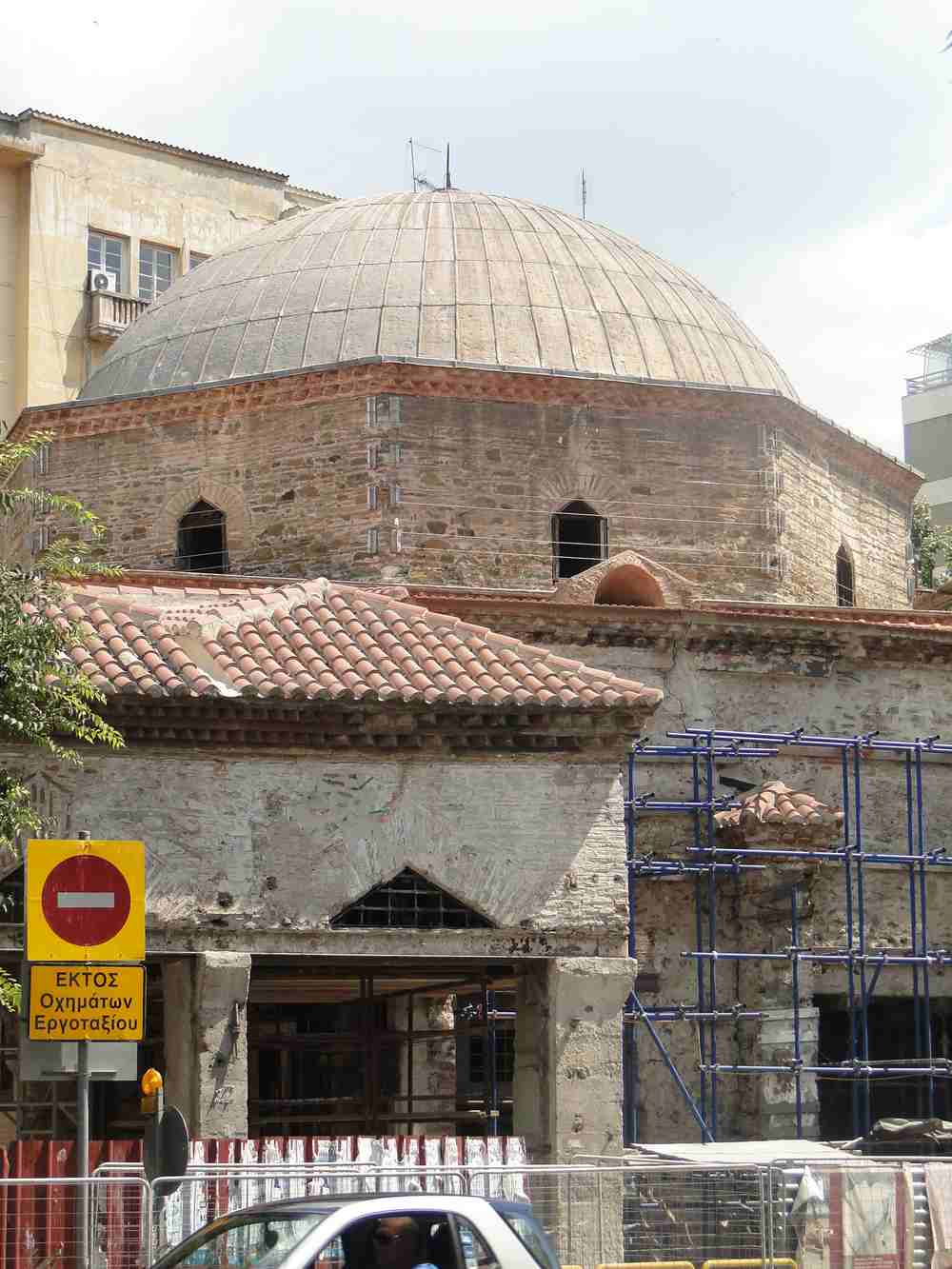
The Hamza Bey Mosque, a prominent historical site, stands majestically on Egnatia Avenue in Thessaloniki. As the city’s oldest and largest surviving Ottoman mosque, it carries immense historical significance. Founded in the fifteenth century by Hamza Bey, the mosque showcases a unique architectural style with a domed prayer hall and a colonnaded courtyard. Its journey from a religious site to the Alcazar cinema reflects the dynamic history of Thessaloniki. Today, it serves as a monument open for exhibitions, drawing visitors keen on exploring its rich past. Located near the vibrant Kapani market quarter, it offers an insightful glimpse into both the Ottoman era and modern Thessaloniki, with My Greece Tours.
Hamza Bey Mosque is a testament to Thessaloniki’s diverse historical tapestry. The mosque’s architectural grandeur and cultural relevance make it a fascinating destination for history enthusiasts and travellers alike. Situated near other significant landmarks such as Panagia Chalkeon and the Roman forum, it provides a comprehensive view of the city’s heritage. The sections below cover its history, architectural features, cultural impact, and visitor information, offering a detailed understanding of its significance. For those planning a visit, Thessaloniki tours offer tailored experiences that include this iconic site.
What is the historical significance of the Hamza Bey Mosque?
The Hamza Bey Mosque is significant as Thessaloniki’s oldest Ottoman mosque, reflecting the city’s rich multicultural history and architectural evolution.
The Hamza Bey Mosque was founded in the fifteenth century, marking the expansion of Ottoman influence in the region. Its establishment by Hamza Bey was a pivotal moment, as it symbolised the integration of Islamic culture into the predominantly Christian Thessaloniki. The mosque’s foundation coincided with a period of significant architectural and cultural development under Ottoman rule. This era saw the construction of numerous religious and civic structures, each contributing to the city’s diverse cultural landscape. The mosque’s location on Egnatia Avenue, a key artery in Thessaloniki, underscores its importance as a religious and social hub, drawing people from across the region.
The mosque not only served as a centre for worship but also as a social gathering point for the local Muslim community. Its presence reinforced the cultural and religious diversity that characterised Thessaloniki during the Ottoman era. The site’s historical significance is further amplified by its connection to the city’s broader historical narrative, including its transition from Ottoman to Greek governance. This transition was marked by significant cultural and demographic shifts, with the mosque remaining a constant landmark amidst these changes, offering a stable point of reference for the city’s evolving identity.
The mosque underwent a transformation during the twentieth century, becoming the Alcazar cinema. This adaptation reflects the evolving needs and cultural dynamics of Thessaloniki’s residents. The building’s use as a cinema introduced it to a new audience, preserving its relevance in the city’s social fabric. The mosque’s ability to adapt to changing times while retaining its historical essence highlights its enduring significance. Its restoration and reopening as a monument for exhibitions further underscore its role as a custodian of Thessaloniki’s rich historical and cultural heritage, attracting both locals and tourists.
How did the Hamza Bey Mosque evolve architecturally?
The mosque evolved with a domed prayer hall, colonnaded courtyard, and marble columns, showcasing Ottoman architectural mastery.
The architectural evolution of the Hamza Bey Mosque is a testament to Ottoman craftsmanship and design. Initially constructed with a central domed prayer hall, the mosque’s design exemplifies the classic Ottoman style, emphasising symmetry and spatial harmony. The dome, a hallmark of Ottoman architecture, not only enhances the aesthetic appeal but also serves a practical purpose by amplifying sound within the prayer hall. This architectural feature underscores the mosque’s dual function as a place of worship and a community gathering space, reinforcing its role in the social fabric of Thessaloniki.
The mosque’s expansion, undertaken by Hafsa, the daughter of Hamza Bey, introduced additional elements that enhanced its architectural complexity. The addition of a colonnaded courtyard, known as the revak, provided a serene space for reflection and social interaction. This courtyard, surrounded by smaller domed bays, further exemplifies the Ottoman emphasis on creating harmonious and functional spaces. The use of marble columns within the courtyard adds a touch of elegance, highlighting the intricate craftsmanship that defines Ottoman architecture and the mosque’s enduring beauty.
Despite losing its minaret after Thessaloniki’s transition to Greek governance, the mosque retains its architectural grandeur. The minaret’s removal was part of a broader trend of altering Ottoman structures during this period. The mosque’s core architectural elements remain intact, allowing visitors to appreciate its historical and aesthetic significance. The recent restoration efforts have focused on preserving these features, ensuring that the mosque continues to stand as a testament to the architectural prowess of the Ottoman era. This preservation effort highlights the importance of maintaining cultural and historical landmarks for future generations.
What role did the Hamza Bey Mosque play in Thessaloniki’s cultural landscape?
The mosque played a crucial role as both a religious centre and a social hub, reflecting Thessaloniki’s multicultural heritage.
Throughout its history, the Hamza Bey Mosque has been a pivotal element in Thessaloniki’s cultural landscape. As a religious centre, it provided a space for the city’s Muslim population to practice their faith and engage in community activities. The mosque’s presence in the heart of Thessaloniki symbolised the city’s multicultural identity, where diverse religious and cultural groups coexisted harmoniously. This coexistence fostered a vibrant cultural exchange, enriching the city’s social fabric and contributing to its unique character, making it a focal point for cultural interactions.
The mosque’s transformation into the Alcazar cinema during the twentieth century marked a significant shift in its role within the cultural landscape. As a cinema, the building became a hub for entertainment, drawing audiences from across the city. This new function introduced the mosque to a broader demographic, bridging cultural divides and fostering a sense of community among Thessaloniki’s residents. The cinema era of the mosque highlights its adaptability and enduring relevance in the city’s ever-evolving cultural scene, illustrating its ability to engage diverse audiences.
The mosque stands as a monument open for exhibitions, continuing to play an active role in Thessaloniki’s cultural life. These exhibitions provide a platform for showcasing local art and history, attracting visitors keen on exploring the city’s diverse heritage. The mosque’s current function as a cultural venue underscores its ongoing contribution to Thessaloniki’s vibrant cultural landscape. By preserving and celebrating its historical significance, the mosque remains a vital part of the city’s identity, reflecting its rich past and dynamic present. Its continued use as a cultural venue ensures its place in the city’s future.
Why is the Hamza Bey Mosque a key site on Thessaloniki tours?
The mosque is a key site due to its historical, architectural, and cultural significance, offering insights into Thessaloniki’s Ottoman past.
The Hamza Bey Mosque is an essential stop on Thessaloniki tours due to its rich historical and architectural significance. As the oldest surviving Ottoman mosque in the city, it provides a unique glimpse into the region’s past, showcasing the architectural and cultural influences that shaped Thessaloniki. Visitors exploring the mosque can appreciate the intricate design elements that define Ottoman architecture, such as the domed prayer hall and colonnaded courtyard. These features not only highlight the mosque’s aesthetic appeal but also offer insights into the cultural and religious practices of the time, making it a must-visit on any historical itinerary.
The mosque’s location near other significant landmarks, such as the Panagia Chalkeon and the Roman forum, makes it an integral part of any historical tour of Thessaloniki. Its proximity to these sites allows visitors to explore a diverse range of historical periods and cultural influences within a short distance. This accessibility enhances the overall experience, providing a comprehensive understanding of Thessaloniki’s rich and diverse heritage. The mosque’s inclusion in tours highlights its importance as a cultural and historical landmark, ensuring that visitors gain a full appreciation of the city’s legacy.
For those interested in exploring Thessaloniki’s Ottoman heritage, the mosque offers a meaningful connection to this era. Its history as a cinema and subsequent restoration as a monument further enrich its narrative, providing visitors with a multifaceted understanding of Thessaloniki’s cultural evolution. The mosque’s significance is not only historical but also cultural, as it continues to host exhibitions and events that engage the local community and visitors alike. By visiting the mosque, tourists can gain a deeper appreciation for Thessaloniki’s complex history and vibrant cultural landscape, making it an essential experience on any cultural tour.
How does the Hamza Bey Mosque compare to other Ottoman sites in Thessaloniki?
The mosque stands out as the oldest and largest surviving Ottoman site, offering unique architectural and historical insights.
Compared to other Ottoman sites in Thessaloniki, the Hamza Bey Mosque holds a unique position as the oldest and largest surviving Ottoman mosque in the city. Its historical and architectural significance sets it apart from other sites, offering a comprehensive view of Ottoman influence in the region. While other Ottoman structures, such as the Bey Hamam, also reflect the architectural style of the era, the mosque’s scale and design elements provide a more immersive experience for visitors. Its domed prayer hall and colonnaded courtyard exemplify the grandeur and craftsmanship associated with Ottoman architecture, making it a standout among historical sites.
The mosque’s historical evolution, from a religious site to the Alcazar cinema, adds another layer of intrigue that distinguishes it from other Ottoman sites. This transformation illustrates the adaptability and enduring relevance of the mosque within Thessaloniki’s cultural landscape. While other Ottoman structures have also undergone changes, the mosque’s transition from a place of worship to an entertainment venue is particularly noteworthy. This unique narrative enhances its appeal, attracting visitors interested in exploring the dynamic history of Thessaloniki and its cultural adaptability.
Visitors exploring the mosque can gain a deeper understanding of Thessaloniki’s Ottoman heritage, complementing their visits to other sites. Its location near the markets of Thessaloniki allows for a broader exploration of the city’s historical and cultural offerings. By comparing the mosque to other Ottoman sites, visitors can appreciate the diverse architectural styles and historical narratives that define Thessaloniki’s rich heritage. This comparative approach provides a well-rounded perspective on the city’s past, highlighting the mosque’s unique contributions to Thessaloniki’s cultural identity and its role in preserving history.
What can visitors expect when exploring the Hamza Bey Mosque?
Visitors can expect a rich historical and architectural experience, with exhibitions and a glimpse into Thessaloniki’s Ottoman past.
Visitors to the Hamza Bey Mosque can anticipate a captivating exploration of history and architecture. Upon entering, the mosque’s domed prayer hall immediately captures attention with its grandeur and intricate design. The hall serves as a focal point, highlighting the architectural mastery of the Ottoman era. The mosque’s colonnaded courtyard, surrounded by smaller domed bays, offers a serene space for reflection and appreciation of the architectural elements. These features provide a tangible connection to the mosque’s historical and cultural significance, offering visitors a deeper understanding of its role in Thessaloniki’s past and its continuing legacy.
The mosque’s current function as a venue for exhibitions adds another dimension to the visitor experience. These exhibitions often feature local art and history, providing insights into Thessaloniki’s vibrant cultural landscape. Visitors can engage with these displays, gaining a broader perspective on the city’s heritage and contemporary cultural scene. The mosque’s role as an exhibition space underscores its ongoing relevance and contribution to Thessaloniki’s cultural life, attracting both locals and tourists seeking to explore the city’s diverse offerings and its historical narratives.
Located at the edge of the Kapani market quarter, the mosque is ideally situated for visitors to explore the surrounding area. The markets of Thessaloniki offer a bustling and lively atmosphere, providing a contrast to the mosque’s serene environment. This proximity allows visitors to immerse themselves in the local culture, experiencing both the historical and modern facets of Thessaloniki. By exploring the mosque and its surroundings, visitors can gain a comprehensive understanding of the city’s rich cultural tapestry, making it a memorable and enriching experience that captures the essence of Thessaloniki’s heritage.
Why is the Hamza Bey Mosque important for understanding Thessaloniki’s Ottoman history?
The mosque is crucial for understanding Ottoman history, representing architectural, cultural, and religious influences in Thessaloniki.
The Hamza Bey Mosque is a vital resource for understanding Thessaloniki’s Ottoman history. As the city’s oldest surviving Ottoman mosque, it embodies the cultural and architectural influences that the Ottoman Empire brought to the region. Its construction in the fifteenth century marked a significant period of cultural integration, with the mosque serving as a focal point for the local Muslim community. The mosque’s architectural features, such as the domed prayer hall and colonnaded courtyard, reflect the Ottoman emphasis on grandeur and symmetry, offering insights into the design principles of the era and the cultural priorities of its builders.
The mosque’s evolution over time further enhances its significance in understanding Thessaloniki’s Ottoman history. Its transformation into the Alcazar cinema during the twentieth century illustrates the dynamic cultural shifts that occurred in the city. This adaptation highlights the mosque’s ability to remain relevant amidst changing social and cultural landscapes. The building’s history of adaptation and preservation provides a nuanced perspective on Thessaloniki’s Ottoman past, illustrating how historical structures can continue to serve contemporary purposes while retaining their cultural essence and historical narratives.
For those exploring Thessaloniki’s Ottoman heritage, the mosque offers a tangible connection to this period. Its location near other historical landmarks, such as the Ottoman Thessaloniki sites, provides a broader context for understanding the city’s past. By visiting the mosque, individuals can gain a deeper appreciation for the architectural and cultural contributions of the Ottoman era to Thessaloniki’s development. This understanding enriches the overall experience of exploring the city, highlighting the importance of preserving and celebrating its diverse historical narrative. The mosque serves as a gateway to the past, offering insights into the city’s evolution and enduring legacy.
Frequently Asked Questions
What is the architectural style of the Hamza Bey Mosque?
The mosque features Ottoman architectural style, characterised by a central domed prayer hall and a colonnaded courtyard. The use of marble columns and smaller domed bays enhances its aesthetic appeal, showcasing the intricate craftsmanship typical of Ottoman design.
How can I visit the Hamza Bey Mosque?
Visitors can explore the mosque as part of Thessaloniki tours, which often include other historical sites in the area. The mosque is open for exhibitions, allowing visitors to engage with its history and appreciate its architectural beauty.
What historical role did the Hamza Bey Mosque play in Thessaloniki?
Historically, the mosque served as a religious centre for Thessaloniki’s Muslim community. It symbolised the city’s multicultural identity during the Ottoman era, fostering cultural exchange and social interaction among diverse religious groups.
Why is the Hamza Bey Mosque also known as the Alcazar?
The mosque is known as the Alcazar due to its transformation into a cinema during the twentieth century. This period as the Alcazar cinema introduced the building to a wider audience, preserving its relevance in Thessaloniki’s social and cultural life.
What makes the Hamza Bey Mosque unique among Thessaloniki’s historical sites?
The mosque stands out as the oldest and largest surviving Ottoman mosque in Thessaloniki. Its architectural features, historical evolution, and cultural significance make it a unique and essential part of the city’s heritage, offering insights into its Ottoman past.
Are there any nearby attractions worth visiting with the Hamza Bey Mosque?
Nearby attractions include the Panagia Chalkeon and the Roman forum, offering a broader exploration of Thessaloniki’s historical and cultural landscape. The mosque’s proximity to these sites makes it an ideal starting point for exploring the city’s rich heritage.