
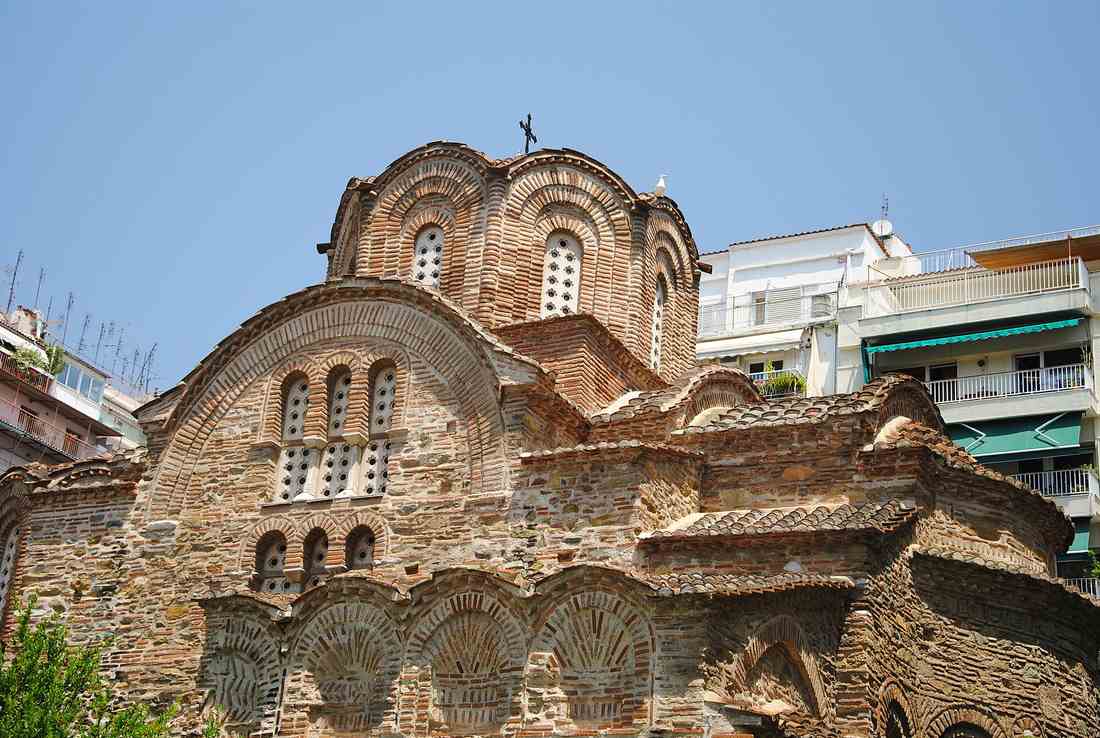
Agios Panteleimon stands as a testament to the rich historical tapestry of Thessaloniki. This late-Byzantine church, situated near the Arch of Galerius and the Rotunda, dates back to the late thirteenth or early fourteenth century. Originally part of the monastery of the Theotokos Peribleptos, its architecture showcases the cross-in-square design with a prominent central dome. Although only fragments of its wall paintings remain, they hint at the church’s original grandeur. The church’s exterior brickwork is remarkably detailed, and its transformation into the Ishakiye mosque during Ottoman rule adds another layer to its history. It resides on the edge of the vibrant student and café quarter, inviting both locals and visitors to explore its past with My Greece Tours.
Agios Panteleimon, a pivotal historical site, offers insights into Thessaloniki’s Byzantine and Ottoman past. The sections below cover its architectural features, historical transitions, and cultural significance. Visitors to Thessaloniki can explore this heritage site alongside other landmarks such as the Rotunda and the Arch of Galerius. With its location in the student and café district, Agios Panteleimon provides a unique blend of historical exploration and modern-day vibrancy. Discover more about Thessaloniki’s rich tapestry through Thessaloniki tours and immerse yourself in the city’s diverse past.
What is the architectural style of Agios Panteleimon?
Agios Panteleimon features a cross-in-square architectural style with a central dome and ambulatory, characteristic of the early Palaiologan period.
Agios Panteleimon’s architecture is a prime example of the cross-in-square design, a common feature in Byzantine churches. This layout includes a central dome supported by four columns, creating a sense of symmetry and balance. The church’s ambulatory, which once wrapped around three sides, is another distinctive feature, although today only the portico bays at the corners remain intact. This design not only provided structural support but also added to the aesthetic appeal, creating a harmonious blend of form and function. The church’s design reflects the architectural trends of the early Palaiologan period, when such structures were prevalent in the Byzantine Empire.
The exterior brickwork of Agios Panteleimon is noteworthy for its intricate detailing. The finely worked bricks were not only a structural necessity but also a decorative element that reflected the craftsmanship of the era. This attention to detail is evident in the patterns and textures that adorn the church’s facade, providing a visual narrative of the period’s architectural innovations. The use of brick also served practical purposes, offering durability and resilience against the elements, which was crucial for the longevity of such structures that have stood the test of time.
Inside Agios Panteleimon, remnants of its original wall paintings offer a glimpse into its past decorative splendour. These fragments, located in the narthex and side chambers, showcase the artistic style of the Byzantine period, characterised by religious iconography and vibrant colours. Though only fragments remain, they continue to captivate visitors, serving as a testament to the church’s historical and cultural significance. The preservation of these remnants provides valuable insights into the artistic practices of the time, illustrating the religious narratives that were central to Byzantine worship and the community’s spiritual life.
How did Agios Panteleimon change during the Ottoman era?
During the Ottoman era, Agios Panteleimon was converted into the Ishakiye mosque, reflecting the religious and cultural shifts of the period.
The transformation of Agios Panteleimon into the Ishakiye mosque during the Ottoman era marks a significant chapter in its history. This conversion was part of a broader trend during Ottoman rule, where many Byzantine churches were repurposed for Islamic worship. The church’s strategic location and architectural features made it a prime candidate for conversion. This change involved modifications to its interior and exterior, aligning it with Islamic architectural and religious practices while preserving its structural integrity. The mosque served the local Muslim community, becoming a place of gathering and prayer, reflecting the diverse religious landscape of Thessaloniki.
The conversion process entailed several architectural adjustments, including the addition of a mihrab and minbar, which are essential elements in a mosque. These features were integrated into the existing structure, demonstrating a blend of Byzantine and Islamic architectural styles. The minaret, a prominent addition, symbolised the mosque’s new religious function, while the mihrab indicated the direction of Mecca. These changes reflect the cultural and religious dynamics of Ottoman Thessaloniki, illustrating the city’s adaptability and the coexistence of different religious communities, which was a hallmark of the Ottoman Empire.
Agios Panteleimon’s history as a mosque is a reflection of Thessaloniki’s diverse past. The city’s strategic location at the crossroads of Europe and Asia made it a melting pot of cultures and religions. The church’s conversion to a mosque and its subsequent reversion to a church after Ottoman rule ended highlights the fluidity of cultural and religious identities in the region. Visitors can explore the remnants of this transformation, gaining insights into the city’s multifaceted history. Ottoman Thessaloniki offers a deeper understanding of this period, showcasing the lasting impact of the Ottoman era on the city’s architectural and cultural landscape, which continues to influence Thessaloniki today.
What remains of the original wall paintings in Agios Panteleimon?
Fragments of the original wall paintings survive in the narthex and side chambers, showcasing Byzantine artistic styles.
The surviving wall paintings in Agios Panteleimon are a testament to the artistic prowess of the Byzantine era. These fragments, located primarily in the narthex and side chambers, offer a rare glimpse into the decorative techniques and religious themes prevalent at the time. The use of vibrant colours and intricate designs reflected the spiritual and cultural ethos of the Byzantine Empire. Despite the passage of time, these remnants continue to captivate visitors, providing a window into the past and illustrating the rich artistic traditions of the period, which were central to the identity of Byzantine Thessaloniki.
The narthex, a transitional space between the exterior and interior of the church, houses some of the most significant fragments. These paintings depict religious figures and scenes, offering insights into the theological narratives that were central to Byzantine worship. The positioning and subject matter of these artworks were carefully chosen to enhance the spiritual experience of those entering the church. Each fragment serves as a piece of a larger narrative that once enveloped the entire interior, creating an immersive environment for worshippers that reflected the church’s role in the community’s spiritual life.
In the side chambers, additional fragments of wall paintings offer further clues to the original artistic vision of Agios Panteleimon. These chambers, often used for private prayer and contemplation, were adorned with images designed to inspire and uplift the faithful. The surviving artwork in these spaces highlights the interplay between light, colour, and form, characteristic of Byzantine artistic expression. Visitors today can appreciate these remnants as part of a broader exploration of the Byzantine churches of Thessaloniki, gaining a deeper appreciation for the artistic achievements of the era and the religious devotion they inspired, which continues to resonate with those who visit.
What is the historical significance of Agios Panteleimon?
Agios Panteleimon holds historical significance as part of the UNESCO Palaeochristian and Byzantine Monuments of Thessaloniki.
Agios Panteleimon’s inclusion in the UNESCO Palaeochristian and Byzantine Monuments of Thessaloniki underscores its historical importance. This designation highlights the church’s role in reflecting the architectural and cultural heritage of the Byzantine era. As a late-Byzantine church, it provides insights into the religious and artistic developments of the early Palaiologan period. The church’s architectural features and surviving artworks offer valuable information about the region’s history and its influence on subsequent architectural styles, illustrating the enduring legacy of Byzantine culture and its impact on Thessaloniki’s identity.
The church’s historical significance is further amplified by its association with the monastery of the Theotokos Peribleptos. This connection suggests that Agios Panteleimon was once part of a larger religious complex, playing a central role in the spiritual life of the community. The monastery’s prominence in Byzantine society is reflected in the church’s architectural grandeur and artistic embellishments. These elements collectively contribute to our understanding of the religious and social dynamics of the time, highlighting the importance of monastic institutions in Byzantine culture and their influence on the broader community.
Agios Panteleimon’s transformation into a mosque during the Ottoman era adds another layer to its historical narrative. This period of change illustrates the cultural and religious shifts that occurred in Thessaloniki and the broader region. The church’s ability to adapt to these changes while retaining its core architectural identity is a testament to its resilience and enduring significance. Visitors can explore this multifaceted history through things to do in Thessaloniki, gaining a comprehensive view of the city’s historical and cultural evolution, which continues to shape its identity today.
Where is Agios Panteleimon located in Thessaloniki?
Agios Panteleimon is located in central Thessaloniki, near the Arch of Galerius and the Rotunda, within the student and café quarter.
Agios Panteleimon’s central location in Thessaloniki makes it easily accessible to both locals and visitors. Situated near the Arch of Galerius and the Rotunda, it lies at the heart of a vibrant district known for its academic and social activities. This proximity to major historical landmarks adds to its appeal, offering a convenient starting point for exploring Thessaloniki’s rich history. The church’s setting within the student and café quarter provides a lively backdrop, blending the city’s historical heritage with its contemporary cultural scene, thereby attracting a diverse range of visitors who are eager to explore the area’s attractions.
The surrounding area of Agios Panteleimon is characterised by its bustling atmosphere and diverse attractions. Visitors can enjoy a leisurely stroll through the nearby streets, discovering a mix of cafes, shops, and cultural venues. This dynamic environment reflects Thessaloniki’s status as a cultural hub, where history and modernity coexist harmoniously. The church’s presence in this lively quarter enhances its accessibility, inviting exploration and engagement with the city’s past and present, making it an integral part of the community’s cultural landscape and a popular destination for tourists and locals alike.
Agios Panteleimon’s location also offers opportunities for further exploration of Thessaloniki’s historical landmarks. Within a short walk, visitors can reach the Arch of Galerius, a monumental structure that provides insights into the city’s Roman past. The nearby Rotunda, another architectural marvel, complements the church’s Byzantine heritage. Together, these sites create a historical tapestry that enriches the visitor experience. Discover more about Thessaloniki’s historical sites through the Arch of Galerius, offering a comprehensive understanding of the city’s diverse historical narrative and its significance in the region’s cultural heritage.
What role does Agios Panteleimon play today?
Agios Panteleimon now serves as a historical and cultural landmark, drawing visitors interested in Byzantine and Ottoman history and in Palaiologan church design.
Agios Panteleimon continues to play a significant role as a cultural and historical landmark in Thessaloniki. Its rich history, architectural features, and surviving artworks attract visitors interested in exploring the city’s Byzantine and Ottoman past. As part of the UNESCO Palaeochristian and Byzantine Monuments of Thessaloniki, the church serves as a focal point for cultural tourism. It provides an opportunity for visitors to delve into the region’s diverse heritage and gain a deeper understanding of its historical developments, highlighting the city’s role as a crossroads of cultures and its ongoing influence on the region.
The church’s current role extends beyond its historical significance, as it functions as a symbol of Thessaloniki’s cultural identity. Its presence in the student and café quarter highlights the city’s blend of tradition and modernity. This fusion of past and present is reflected in the church’s architecture and its surrounding environment, creating a unique experience for those who visit. Agios Panteleimon serves as a reminder of the city’s enduring legacy and its ability to adapt to changing times, illustrating the dynamic nature of Thessaloniki’s cultural landscape, which continues to attract visitors from around the world.
Visitors to Agios Panteleimon can engage with its history through guided tours and educational programmes. These initiatives provide insights into the church’s architectural and artistic features, as well as its role in Thessaloniki’s evolving cultural landscape. By participating in these activities, visitors can enhance their appreciation of the site’s historical significance and its contribution to the city’s cultural heritage. Explore more of Thessaloniki’s historical offerings through Thessaloniki tours, gaining a deeper understanding of the city’s rich historical tapestry and its role in shaping the cultural narrative of the region.
What is the connection between Agios Panteleimon and the monastery of the Theotokos Peribleptos?
Agios Panteleimon is believed to have been part of the monastery of the Theotokos Peribleptos, indicating its importance within a larger religious complex.
The connection between Agios Panteleimon and the monastery of the Theotokos Peribleptos suggests that the church was once integral to a significant religious complex. This association highlights the church’s importance within the spiritual and social fabric of Byzantine Thessaloniki. The monastery, known for its religious and cultural influence, likely played a central role in the community, with Agios Panteleimon serving as a key component. This relationship underscores the church’s historical significance and its contribution to the region’s religious heritage, reflecting the interconnectedness of religious institutions during the Byzantine period and their lasting impact on the community.
The architectural features of Agios Panteleimon reflect its connection to the monastery of the Theotokos Peribleptos. The church’s design and decorative elements align with those found in other monastic complexes of the period, indicating a shared architectural and artistic tradition. This connection is further evidenced by the church’s grandeur and the quality of its surviving artworks. These elements collectively contribute to our understanding of the religious and cultural dynamics of the time, providing valuable insights into the role of monastic institutions in Byzantine society and their influence on the broader cultural landscape.
Agios Panteleimon’s historical association with the monastery adds depth to its cultural narrative. This connection offers a broader context for understanding the church’s architectural and artistic features, as well as its role within the community. The monastery’s influence is reflected in the church’s design and its enduring significance as a cultural landmark. Visitors can explore this relationship further by examining the architectural and historical connections between Agios Panteleimon and other Byzantine sites in Thessaloniki, such as Byzantine churches of Thessaloniki, offering a comprehensive view of the city’s historical and cultural evolution, which continues to shape its identity today.
Frequently Asked Questions
What is the architectural style of Agios Panteleimon?
Agios Panteleimon features a cross-in-square architectural style typical of the Byzantine period. This design includes a central dome supported by four columns and an ambulatory that originally wrapped around three sides of the church. Its finely detailed brickwork is also notable.
How did Agios Panteleimon transform during the Ottoman period?
During the Ottoman period, Agios Panteleimon was converted into the Ishakiye mosque. This transformation involved architectural modifications such as adding a mihrab and a minaret, aligning the structure with Islamic religious practices while maintaining its Byzantine architectural essence.
What remains of the original wall paintings in Agios Panteleimon?
Fragments of the original Byzantine wall paintings survive in the narthex and side chambers of Agios Panteleimon. These fragments depict religious figures and scenes, offering insights into the artistic and theological narratives of the Byzantine era.
Where is Agios Panteleimon located?
Agios Panteleimon is located in central Thessaloniki, near significant landmarks such as the Arch of Galerius and the Rotunda. It is situated within the vibrant student and café quarter, providing a lively atmosphere for visitors exploring the area.
What is the significance of Agios Panteleimon today?
Agios Panteleimon stands as a historical and cultural landmark, drawing those interested in Byzantine and Ottoman history. The church belongs to the UNESCO Palaeochristian and Byzantine Monuments of Thessaloniki, which underscores its standing as a heritage site.
What is the historical connection between Agios Panteleimon and the Theotokos Peribleptos monastery?
Agios Panteleimon is believed to have been part of the monastery of the Theotokos Peribleptos, indicating its significance within a larger religious complex. This association highlights the church’s importance in the spiritual and social life of Byzantine Thessaloniki.