
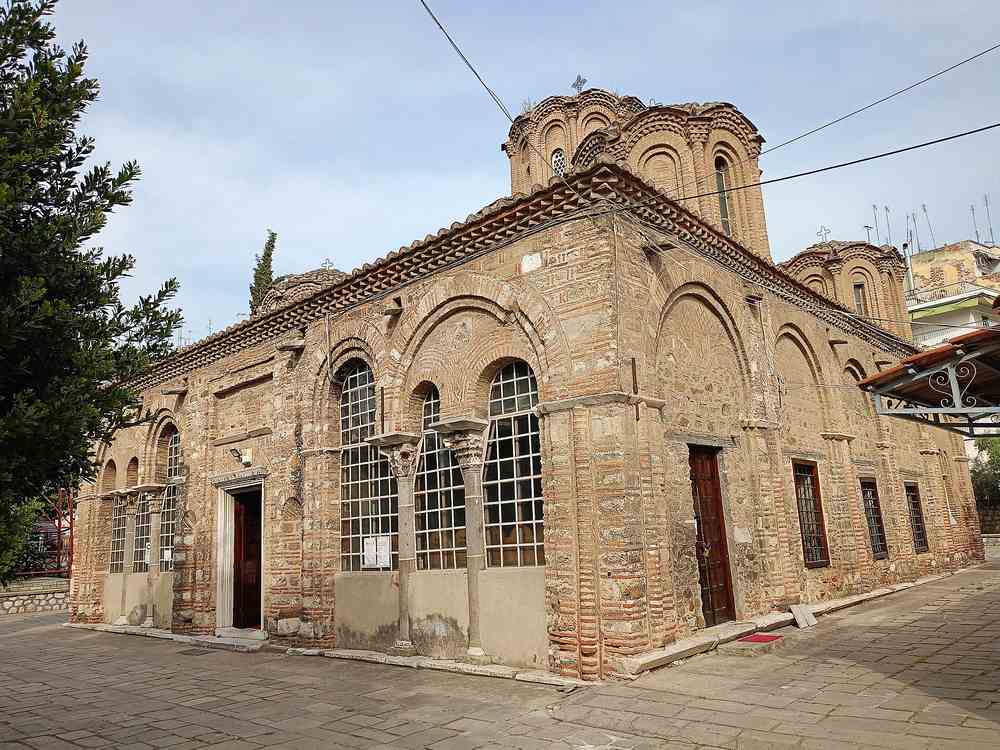
The Church of the Holy Apostles, known locally as Agioi Apostoloi, stands as a testament to Thessaloniki’s rich Byzantine heritage. Constructed in the early fourteenth century during the Palaiologan period, this architectural marvel was originally the katholikon of a monastery founded by Patriarch Niphon. Its design features a cross-in-square layout, crowned by five domes, and an ambulatory portico. The exterior boasts intricate brickwork, while inside, mosaics and wall paintings of exquisite quality depict Gospel scenes and saints. The church’s historical significance is underscored by its inclusion in the UNESCO Palaeochristian and Byzantine Monuments of Thessaloniki. Explore this iconic site with My Greece Tours.
The Church of the Holy Apostles is a vital piece of Thessaloniki’s historical tapestry, reflecting the city’s Byzantine past. Its transformation from a church to a mosque during the Ottoman era marks its dynamic history. Visitors can admire the preserved mosaics and the decorative brickwork that adorn its walls. The sections below cover the church’s detailed architecture, significant history, and its role in Thessaloniki’s UNESCO heritage. For those planning a visit, check out Thessaloniki tours to enhance your experience.
What is the architectural style of the Church of the Holy Apostles?
The Church of the Holy Apostles is a cross-in-square structure with five domes, featuring intricate Byzantine brickwork and an ambulatory portico.
The Church of the Holy Apostles exemplifies Byzantine architecture with its cross-in-square design, a common feature during the Palaiologan period. The church is crowned with five domes, a signature element that adds to its grandeur and spiritual symbolism. The central dome stands prominently, surrounded by four smaller ones, creating a harmonious skyline that is both functional and visually striking. This architectural style not only defines the building’s structural integrity but also its aesthetic appeal, drawing visitors into a deeper appreciation of Byzantine architectural principles. The design reflects the architectural ingenuity of the time, combining functionality with the symbolism of the heavens.
The exterior of the church is adorned with intricate brickwork, showcasing the artistic prowess of Byzantine craftsmen. Meanders, chequer bands, and framed niches are meticulously worked into the walls, creating a facade that is both complex and cohesive. These decorative elements serve an aesthetic purpose and demonstrate the wealth and power of the church’s patrons. The brick patterns play with light and shadow, adding depth and texture to the exterior, making it a subject of admiration and study for those interested in Byzantine art. The exterior design is a testament to the detailed craftsmanship that defines Byzantine architecture.
Inside the church, the ambulatory portico allows for a continuous walkway around the central nave. This architectural feature is not only functional, facilitating the movement of clergy during liturgical services, but also enhances the spatial experience for visitors. The portico’s arches frame views of the interior’s stunning mosaics and paintings, guiding the eye towards the sacred imagery. This architectural element creates a seamless transition between the interior and exterior spaces, emphasizing the holistic design approach of Byzantine architecture where every detail is intended to elevate the spiritual experience. The portico exemplifies the integration of art and function in sacred spaces.
Why is the Holy Apostles significant in Thessaloniki’s history?
The Holy Apostles is significant for its role as a monastery’s katholikon and its transformation into a mosque during Ottoman rule.
The Holy Apostles holds a pivotal place in Thessaloniki’s history, originally serving as the katholikon of a monastery founded by Patriarch Niphon. This designation underscored its importance as a religious centre during the Byzantine era, where it played a central role in the spiritual and social life of the community. Monasteries at the time were hubs of religious activity, education, and social services, contributing significantly to the cultural and intellectual life of the region. The church’s construction during the Palaiologan period marked a flourishing of Byzantine art and architecture, reflecting the era’s cultural vibrancy and religious devotion.
Under Ottoman rule, the church was converted into a mosque, reflecting the shifting political and religious landscape of Thessaloniki. This transformation involved architectural adaptations, such as the addition of a minaret, which has since been removed but left its mark on the building’s history. The church’s dual identity as both a Christian and Islamic place of worship highlights the city’s diverse cultural heritage and its ability to adapt to changing political climates. This layered history is palpable in the building’s architecture and decorations, which bear witness to the city’s complex past and its resilience through time.
The Holy Apostles is part of the UNESCO Palaeochristian and Byzantine Monuments of Thessaloniki. Its inclusion in this prestigious list underscores its cultural and historical value, providing it international recognition and protection. The site’s preservation allows visitors to engage with Thessaloniki’s rich past, experiencing firsthand the artistic achievements of the Byzantine era. The church stands as a symbol of resilience and adaptability, embodying the city’s dynamic history and its continuous evolution through different cultural and religious influences. The church’s presence in the UNESCO list highlights its significance as a cultural landmark.
What artworks can be found inside the Holy Apostles?
Inside, the Holy Apostles features high-quality Palaiologan mosaics and wall paintings depicting Gospel scenes and standing saints.
The interior of the Holy Apostles is a treasure trove of Byzantine art, showcasing mosaics and wall paintings from the Palaiologan period. These artworks are considered some of the finest examples from this era, reflecting the skill and creativity of Byzantine artists who were masters of their craft. The mosaics, crafted with vibrant tesserae, depict Gospel scenes that convey theological narratives and religious devotion, serving both educational and inspirational purposes for the worshippers who once filled the space. The vivid colours and intricate designs of the mosaics highlight the artistic sophistication of the Byzantine period.
Wall paintings inside the church complement the mosaics, featuring standing saints and biblical figures. These images serve as visual sermons, educating worshippers and reinforcing religious teachings through depictions of holy figures and scenes from the life of Christ. The use of colour, form, and composition in these paintings demonstrates the sophisticated artistic techniques of the time, showcasing the depth of emotion and spirituality that Byzantine art could convey. The preservation of these artworks allows contemporary audiences to appreciate the spiritual and cultural significance of Byzantine art in its original context. The paintings are a testament to the narrative art form that thrived in Byzantine churches.
The church’s interior artworks are strategically placed to enhance the liturgical experience, with mosaics adorning the domes and arches to draw the eye upward and create a heavenly atmosphere. Wall paintings line the nave and aisles, guiding worshippers through a visual journey of faith that aligns with the church’s architectural flow. This integration of art and architecture exemplifies the holistic approach of Byzantine church design, where every element serves a sacred purpose and contributes to the overall spiritual ambiance of the space. The artworks are integral to the church’s role as a place of divine worship and reflection.
How did the Church of the Holy Apostles change during the Ottoman era?
During the Ottoman era, the Church of the Holy Apostles was converted into a mosque, involving architectural and functional changes.
The transformation of the Church of the Holy Apostles into a mosque during the Ottoman era represents a significant chapter in its history. This conversion involved both physical and functional changes to accommodate Islamic worship practices, reflecting the broader cultural shifts in Thessaloniki under Ottoman rule. A minaret was likely added to the structure, serving as a visual marker of its new religious identity, though it has since been removed, leaving the original Byzantine architecture primarily intact. The conversion marked a period of religious and cultural adaptation for the building.
Inside the church, alterations were made to suit the needs of a mosque, including the reorientation of the prayer space towards Mecca. Christian iconography may have been covered or removed to align with Islamic traditions, demonstrating the flexibility and adaptability of the building’s design. These changes reflect the broader cultural and religious shifts occurring in Thessaloniki during Ottoman rule, highlighting the city’s complex history of religious coexistence and transformation as it accommodated diverse faith communities. The building’s ability to adapt highlights its architectural versatility and historical resilience.
Despite these changes, the core structure of the church remained intact, preserving its Byzantine architectural features and allowing it to retain its historical identity. This resilience speaks to the craftsmanship and durability of Byzantine construction techniques, which have withstood centuries of change. Visitors today can explore the church’s layered history, appreciating both its Christian origins and its period as a mosque, offering insights into Thessaloniki’s diverse cultural and religious landscape. The church stands as a living testimony to the city’s enduring multicultural heritage.
What is the significance of the Holy Apostles’ decorative brickwork?
The Holy Apostles’ decorative brickwork showcases Byzantine craftsmanship, featuring intricate patterns like meanders and chequer bands.
The decorative brickwork of the Holy Apostles is a testament to the skill and artistry of Byzantine craftsmen who created intricate designs that are both functional and ornamental. This architectural embellishment is not merely decorative but serves as a reflection of the cultural and religious values of the time, showcasing the artistic sensibilities and technical prowess of the era. The use of patterns such as meanders and chequer bands demonstrates a meticulous attention to detail, creating a dynamic interplay of light and shadow on the building’s exterior that captivates visitors. The craftsmanship involved in these patterns speaks volumes about the dedication to aesthetic detail in Byzantine architecture.
Brickwork patterns on the church’s facade are designed to captivate and inspire, with meanders symbolising eternity and divine order, while chequer bands add a rhythmic visual element that enhances the building’s aesthetic appeal. These patterns are not only aesthetically pleasing but also convey theological messages, integrating art with spirituality and reflecting the church’s role as a place of worship. The brickwork exemplifies the fusion of form and function characteristic of Byzantine architecture, where every element is carefully crafted to serve a specific purpose. The integration of symbols in the design reflects the deep spiritual context of the church’s architecture.
The preservation of this decorative brickwork allows contemporary audiences to appreciate the craftsmanship of the past, offering a window into the artistic and cultural achievements of the Byzantine period. As visitors approach the church, the intricate patterns invite closer inspection, revealing the skill involved in their creation and the visual impact they continue to have. These details contribute to the overall impression of the church as a masterpiece of Byzantine art and architecture, enhancing its status as a significant historical monument in Thessaloniki and a key contributor to its UNESCO designation. The brickwork remains a crucial element of the church’s enduring visual and cultural appeal.
How does the Holy Apostles contribute to Thessaloniki’s UNESCO status?
The Holy Apostles contributes to Thessaloniki’s UNESCO status through its exceptional Byzantine architecture and preserved artworks.
The inclusion of the Holy Apostles in the UNESCO Palaeochristian and Byzantine Monuments of Thessaloniki highlights its global cultural significance, recognising the church’s outstanding representation of Byzantine architectural and artistic achievements. This designation underscores the importance of preserving such sites for future generations, allowing them to engage with and learn from Thessaloniki’s rich historical and cultural heritage. The preservation of its structural and decorative elements allows for continued appreciation and study, contributing to our understanding of Byzantine culture and its lasting impact. The church’s role in the UNESCO list highlights its universal value as a cultural landmark.
Thessaloniki’s UNESCO status is bolstered by sites like the Holy Apostles, which collectively illustrate the city’s rich historical tapestry and its role as a centre of Byzantine art and culture. The church’s well-preserved mosaics and wall paintings provide invaluable insights into the artistic practices and religious beliefs of the Palaiologan period, offering a window into the spiritual and cultural life of the time. These artworks are not only cultural treasures but also educational resources, highlighting the city’s significance as a hub of Byzantine civilisation. The artistic legacy of the Holy Apostles plays a crucial role in the city’s cultural narrative.
The church’s role in Thessaloniki’s UNESCO designation underscores the importance of heritage preservation, ensuring that sites like the Holy Apostles remain accessible and meaningful to future generations. Protecting and maintaining these cultural landmarks allows for a deeper appreciation of Thessaloniki’s unique contributions to civilisation, promoting an understanding of cultural heritage as a vital component of global history. The Holy Apostles stands as a testament to the enduring legacy of Byzantine art and architecture, attracting scholars and visitors from around the world. Its UNESCO status is a testament to its historical and cultural significance.
What can visitors explore around the Church of the Holy Apostles?
Around the Holy Apostles, visitors can explore the nearby cistern, the remains of the monastery gate, and Thessaloniki’s western walls.
Visitors to the Holy Apostles can enrich their experience by exploring the surrounding area, which offers additional historical sites of interest. The nearby cistern, a remnant of the original monastery complex, provides insights into the water management practices of the time, illustrating the ingenuity and resourcefulness of the monastic community. This structure underscores the self-sufficiency of the monastery, highlighting the importance of water conservation and management in sustaining daily monastic life and activities. The cistern is a crucial element of the monastery’s historical infrastructure, offering a glimpse into the practical aspects of monastic life.
The remains of the monastery gate stand as a testament to the original monastic complex’s scale and significance, offering a glimpse into the architectural style and construction techniques of the period. These ruins provide context for the church’s historical environment, allowing visitors to imagine the daily life and operations of the monastic community that once thrived here. Exploring these remains deepens visitors’ understanding of Byzantine monasticism and its role in the broader cultural and religious landscape of Thessaloniki. The gate’s remnants are a tangible link to the past, showcasing the monastery’s architectural grandeur.
Thessaloniki’s western walls, located near the Holy Apostles, form part of the city’s extensive fortifications, which played a crucial role in the city’s defence and strategic importance throughout history. Visiting the walls provides a broader perspective on Thessaloniki’s historical significance as a fortified city and its role in regional politics and trade. For a more comprehensive exploration of Thessaloniki’s historical sites, consider joining a Thessaloniki walking tour, which offers guided insights into the city’s rich cultural heritage and architectural landmarks. The walls are integral to understanding Thessaloniki’s historical defence strategies and urban development.
Frequently Asked Questions
What is the Church of the Holy Apostles known for?
The Church of the Holy Apostles is renowned for its Byzantine architecture, intricate brickwork, and exquisite Palaiologan mosaics and wall paintings. It serves as a significant historical site within Thessaloniki’s UNESCO-listed Palaeochristian and Byzantine Monuments, reflecting the city’s rich religious and cultural heritage.
How can I visit the Church of the Holy Apostles?
Visitors can explore the Church of the Holy Apostles by joining guided tours that cover Thessaloniki’s historical sites. These tours provide insights into the church’s history and architecture, enhancing the visitor experience. Check local tour operators or Thessaloniki tours for more information on visiting options.
What makes the Holy Apostles a UNESCO World Heritage site?
The Holy Apostles is a UNESCO World Heritage site due to its outstanding representation of Byzantine architecture and art. Its well-preserved mosaics and wall paintings are exemplary of Palaiologan artistic achievements, contributing to its recognition as a cultural landmark within the Palaeochristian and Byzantine Monuments of Thessaloniki.
What are the key architectural features of the Holy Apostles?
Key architectural features of the Holy Apostles include its cross-in-square layout, five domes, and ambulatory portico. The church is also notable for its intricate brickwork, featuring patterns like meanders and chequer bands, which showcase the craftsmanship and artistic sensibilities of the Byzantine era.
Are there any other Byzantine churches to visit in Thessaloniki?
Thessaloniki is home to numerous Byzantine churches, each offering unique historical and architectural insights. Notable examples include Agios Dimitrios, which is the largest church in Greece, and the Museum of Byzantine Culture, which provides further context on Byzantine art and history.
What historical changes did the Holy Apostles undergo?
The Holy Apostles underwent significant changes, including its conversion into a mosque during the Ottoman period. This transformation involved architectural modifications, such as the addition of a minaret. Despite these changes, the church retains its Byzantine architectural integrity and continues to be a symbol of Thessaloniki’s diverse cultural history.