
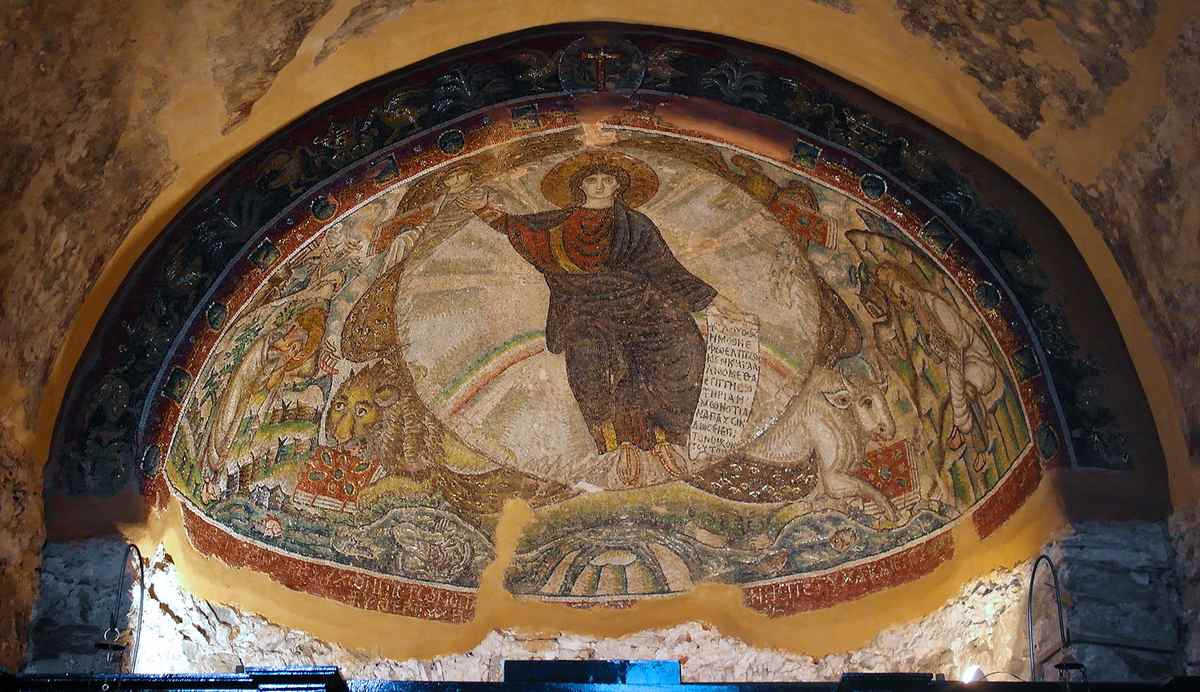
Osios David, the katholikon of the former Latomou Monastery, stands in the historic Ano Poli district of Thessaloniki. This small Byzantine church, part of the UNESCO-listed Palaeochristian and Byzantine Monuments, is renowned for its rare late-antique mosaic depicting the Vision of Ezekiel. The mosaic features a youthful, beardless Christ Emmanuel, surrounded by four living creatures and prophets. During the Ottoman era, the church was converted into a mosque, and its mosaic was plastered over, only to be rediscovered later. The compact building, hidden among narrow lanes below Thessaloniki’s acropolis walls, also houses Byzantine wall paintings from the Komnenian and later periods, offering a glimpse into the city’s rich religious history with My Greece Tours.
Osios David is a remarkable testament to Thessaloniki’s Byzantine heritage. Nestled within Ano Poli, this church invites visitors to explore its historical and artistic significance. The sections below cover its architectural features, historical context, and cultural importance, making it a must-visit for history enthusiasts and art lovers alike. To fully appreciate the context and beauty of Osios David, consider exploring related sites such as the Thessaloniki tours. This allows for a deeper understanding of the city’s past and its vibrant present.
What is the historical significance of Osios David?
Osios David represents a crucial link to Thessaloniki’s early Byzantine era, showcasing rare religious art and architecture.
Osios David, located in the upper town of Thessaloniki, serves as a vital historical monument. It acts as a window into the early Byzantine period, offering insights into religious practices and architectural styles of that era. The church’s enduring structure and artistic elements, including its unique mosaic of Christ Emmanuel, highlight the cultural and religious complexity of Thessaloniki. During the Ottoman era, the church underwent transformation into a mosque, reflecting the city’s diverse historical influences. This layering of history makes Osios David an invaluable site for understanding Thessaloniki’s multifaceted past. As part of the UNESCO-listed Palaeochristian and Byzantine Monuments, it stands as a testament to the city’s rich cultural tapestry.
The church’s compact design is typical of Byzantine architecture, with its small size belied by the richness of its artistic treasures. The mosaic in the apse, depicting the Vision of Ezekiel, is particularly notable for its iconography, showcasing a youthful and beardless Christ, an image that deviates from the more traditional portrayals of the time. This reflects the theological and artistic shifts occurring during the late-antique period. The intricate depiction of figures such as prophets and living creatures adds depth to the mosaic’s narrative, making it a focal point for visitors. This unique aspect of Osios David enhances its historical value, attracting scholars and tourists alike.
Osios David’s location within Ano Poli places it in a district filled with history and charm. The narrow lanes leading to the church contribute to its hidden allure, inviting exploration and discovery. This area, with its proximity to the walls of Thessaloniki, offers a broader context for understanding the city’s development over centuries. The church not only serves as a religious site but also as a cultural landmark that encapsulates the essence of Byzantine Thessaloniki. Visitors can enhance their understanding by exploring the Ano Poli district, which is known for its picturesque views and historical significance.
How does the Vision of Ezekiel mosaic at Osios David stand out?
The Vision of Ezekiel mosaic is unique for its depiction of a youthful Christ Emmanuel and rare iconography.
The Vision of Ezekiel mosaic in Osios David is a masterpiece of late-antique art. Its depiction of Christ Emmanuel is distinct due to the youthful and beardless portrayal, a departure from traditional images of Christ. This mosaic, surrounded by the four living creatures and prophets, is housed in the apse of the church. The vibrant colours and intricate details of the mosaic reflect the high level of skill and artistry of Byzantine craftsmen. This artwork not only represents religious themes but also provides insights into the theological perspectives of the time. The mosaic’s survival through different historical periods adds an additional layer of intrigue.
The mosaic’s location in the apse makes it a focal point for visitors entering the church. Its survival through the Ottoman era, when it was plastered over, adds to its historical intrigue. The rediscovery of the mosaic has allowed historians and art enthusiasts to appreciate its significance and the broader context of Byzantine art. The depiction of the Vision of Ezekiel offers a rare glimpse into the religious narratives and iconographic themes that were prevalent during the late-antique period. This mosaic is a critical piece in understanding the artistic evolution within the Byzantine Empire.
Visitors to Osios David can engage with the mosaic on various levels. The visual impact of the mosaic is immediate, drawing the eye with its vivid imagery and complex symbolism. For those interested in Byzantine art, the mosaic represents a critical piece of historical art that speaks to the religious and cultural dynamics of the period. The church’s inclusion in the UNESCO-listed Palaeochristian and Byzantine Monuments of Thessaloniki underscores its importance. Exploring this site can be complemented by a visit to the Museum of Byzantine Culture, which offers further insights into the artistic traditions of the era.
What architectural features define Osios David?
Osios David is characterised by its compact Byzantine architecture and hidden location in Ano Poli.
Osios David’s architecture is emblematic of early Byzantine design, with its compact structure and functional layout. The church’s small size does not detract from its architectural beauty but rather enhances its intimate and serene atmosphere. Its location in the narrow lanes below the acropolis walls contributes to its hidden charm, inviting visitors to explore its historical context. The building materials and construction techniques reflect the ingenuity of Byzantine architects, who balanced practical design with aesthetic considerations. This architectural harmony is evident in the church’s ability to convey a sense of historical continuity.
The church’s interior is adorned with Byzantine wall paintings from the Komnenian and later periods, adding to its architectural allure. These paintings depict various Gospel scenes, providing a rich narrative tapestry that complements the mosaic in the apse. The harmonious integration of these artistic elements within the church’s architectural framework highlights the sophisticated design principles of the Byzantine era. The careful preservation of these features allows visitors to appreciate the historical and artistic significance of Osios David. The church’s design serves as a testament to the architectural prowess of the Byzantine period.
Osios David’s architectural features also include its strategic location within the Ano Poli district. This area, known for its historical significance and picturesque views, enhances the appeal of the church. The proximity to other notable sites, such as Byzantine churches of Thessaloniki, offers a comprehensive experience for those interested in exploring the city’s Byzantine heritage. The church stands as a testament to the enduring legacy of Byzantine architecture and its influence on Thessaloniki’s cultural landscape. This architectural heritage is a crucial aspect of the church’s allure, drawing visitors from around the world.
What role did Osios David play during the Ottoman era?
Osios David was converted into a mosque during the Ottoman era, showcasing the region’s dynamic historical changes.
Osios David underwent significant transformation during the Ottoman era, when it was repurposed as a mosque. This change reflects the broader historical and cultural shifts in Thessaloniki during this period. The conversion involved alterations to the church’s interior and exterior, including the plastering over of its famous mosaic. This adaptation is indicative of the pragmatic approach taken by the Ottomans towards existing religious structures, integrating them into their cultural and religious framework. The church’s ability to survive through these changes speaks to its structural resilience and cultural importance.
The mosque period of Osios David adds a layer of historical complexity to the site, illustrating the diverse influences that have shaped Thessaloniki over the centuries. The church’s survival through this era is a testament to its structural resilience and cultural significance. The eventual rediscovery of the mosaic has allowed for a re-evaluation of the church’s artistic and historical importance. This aspect of Osios David’s history provides valuable insights into the adaptive reuse of religious spaces in response to changing political and cultural dynamics. This historical narrative is crucial for understanding the broader context of Thessaloniki’s past.
Osios David stands as a monument to Thessaloniki’s layered history. The transition from a church to a mosque and back again highlights the city’s dynamic past and its ability to incorporate diverse cultural influences. Visitors interested in understanding this transformative period can explore the Thessaloniki walking tour, which offers insights into the city’s Ottoman heritage. The church’s story is a microcosm of Thessaloniki’s broader historical narrative, reflecting the region’s complex interplay of cultures and religions. This historical depth enriches the visitor experience, making Osios David a compelling destination.
How do the Byzantine wall paintings at Osios David enhance its historical value?
The Byzantine wall paintings at Osios David provide a rich narrative of Gospel scenes, enhancing its historical and artistic value.
The Byzantine wall paintings in Osios David are integral to its historical and artistic significance. These paintings, dating from the Komnenian and later periods, depict various Gospel scenes, offering a visual narrative that complements the church’s mosaic. The detailed artistry and vibrant colours of the paintings reflect the sophistication of Byzantine art, providing insights into the religious and cultural milieu of the time. These artworks serve not only as religious depictions but also as historical documents that offer a glimpse into the past. The paintings’ preservation enhances the church’s cultural value.
The wall paintings enhance the overall aesthetic and spiritual atmosphere of the church, creating a cohesive visual experience for visitors. Each scene is carefully crafted to convey theological themes, contributing to the church’s role as a centre of religious instruction and reflection. The preservation of these paintings allows contemporary audiences to connect with the artistic traditions of the Byzantine era, offering a tangible link to the past. The combination of mosaic and paintings makes Osios David a focal point for those interested in Byzantine religious art. This artistic heritage is central to the church’s historical significance.
Osios David’s wall paintings are an essential part of its appeal, drawing art historians and enthusiasts to explore their intricate details. The paintings’ narrative content and artistic style provide a deeper understanding of the Byzantine period’s cultural and religious dynamics. Visitors can enhance their experience by exploring related sites, such as the walls of Thessaloniki, which offer additional context for the city’s historical development. These paintings enrich the church’s historical narrative, making it a vital destination for those interested in the Byzantine heritage of Thessaloniki. The artistic and historical depth of the paintings contributes to the site’s enduring allure.
Why is Osios David included in the UNESCO list?
Osios David’s inclusion in the UNESCO list highlights its cultural and historical significance as a Palaeochristian and Byzantine monument.
Osios David’s inclusion in the UNESCO list underscores its significance as a Palaeochristian and Byzantine monument. This designation recognises the church’s unique architectural and artistic features, which offer invaluable insights into early Christian and Byzantine culture. The rare mosaic of the Vision of Ezekiel and the Byzantine wall paintings are central to its UNESCO status, highlighting the church’s role in preserving religious art and architecture from these periods. The UNESCO listing reflects the global importance of Osios David in the study of Byzantine heritage. This recognition enhances the church’s status as a cultural landmark.
The church’s historical narrative, spanning from its origins as a Byzantine church to its time as an Ottoman mosque, adds to its cultural value. This layered history is emblematic of Thessaloniki’s complex past, making Osios David a critical site for understanding the city’s evolution. The UNESCO designation not only recognises the church’s artistic and architectural merits but also its ability to convey broader historical themes. Osios David stands as a testament to the enduring legacy of Byzantine culture and its influence on the historical landscape of Thessaloniki. The church’s inclusion in the UNESCO list highlights its importance on a global scale.
Visitors to Osios David can appreciate its UNESCO status through guided tours that explore its historical and artistic context. These tours provide a comprehensive understanding of the church’s significance and its place within Thessaloniki’s cultural heritage. The church’s inclusion in the UNESCO list enhances its appeal to both scholars and tourists, offering a unique opportunity to engage with Byzantine history. For a broader exploration of Thessaloniki’s UNESCO sites, visitors can consider the Thessaloniki tours, which provide a curated experience of the city’s rich historical tapestry. This recognition adds to the church’s prestige and allure, making it a must-visit site.
What makes Osios David a must-visit site in Thessaloniki?
Osios David is a must-visit due to its unique mosaic, rich history, and cultural significance in Thessaloniki’s Byzantine heritage.
Osios David is an essential destination for visitors to Thessaloniki, offering a unique blend of history, art, and architecture. The church’s rare mosaic of the Vision of Ezekiel, with its depiction of a youthful Christ Emmanuel, is a standout feature that draws art enthusiasts and historians alike. This mosaic, alongside the Byzantine wall paintings, provides a rich visual narrative that captures the essence of Byzantine religious art. The church’s compact size and hidden location add to its allure, making it a fascinating site for exploration. Its historical and cultural significance is further enhanced by its UNESCO status.
The historical significance of Osios David extends beyond its artistic features. Its transformation during the Ottoman era and subsequent restoration highlight the dynamic cultural changes that have shaped Thessaloniki. This layered history is reflected in the church’s architecture and art, offering visitors a comprehensive understanding of the city’s past. Osios David’s inclusion in the UNESCO list further underscores its importance as a cultural and historical landmark. The church stands as a testament to Thessaloniki’s rich Byzantine heritage and its enduring influence on the region. This historical depth makes it a must-visit site for those interested in the city’s past.
Visitors to Osios David can enhance their experience by exploring the surrounding Ano Poli district, known for its historical charm and picturesque views. The narrow lanes and proximity to other Byzantine sites create a cohesive cultural experience. For those interested in a more in-depth exploration, the Thessaloniki walking tour offers insights into the city’s Byzantine past. Osios David’s unique combination of art, history, and culture makes it a must-visit site for anyone seeking to understand the rich tapestry of Thessaloniki’s heritage. Its historical and cultural significance ensures that it remains a prominent attraction in the city.
Frequently Asked Questions
Where is Osios David located?
Osios David is located in the upper town (Ano Poli) of Thessaloniki, nestled among narrow lanes below the acropolis walls. This area is known for its historical significance and offers picturesque views of the city, making it a popular destination for visitors.
What is the Vision of Ezekiel mosaic?
The Vision of Ezekiel mosaic is a late-antique artwork found in Osios David. It uniquely depicts a youthful, beardless Christ Emmanuel seated in a rainbow mandorla, surrounded by four living creatures and two prophets, making it a significant piece of Byzantine art.
Why was Osios David converted into a mosque?
During the Ottoman era, Osios David was converted into a mosque as part of the broader cultural and religious transformation in Thessaloniki. This change involved modifications to its structure, such as plastering over the mosaic, reflecting the city’s dynamic historical shifts.
What are the Byzantine wall paintings in Osios David?
The Byzantine wall paintings in Osios David depict various Gospel scenes and date from the Komnenian and later periods. These artworks enhance the church’s historical and artistic value, providing insights into the religious and cultural narratives of the Byzantine era.
How can visitors explore Osios David?
Visitors can explore Osios David by visiting the church in Ano Poli and engaging with its art and history. Guided tours offer insights into its significance, and exploring related sites, such as the Ano Poli district, provides a broader understanding of Thessaloniki’s Byzantine heritage.
What makes Osios David a UNESCO-listed site?
Osios David is UNESCO-listed due to its cultural and historical significance as a Palaeochristian and Byzantine monument. Its unique architectural features, rare mosaic, and Byzantine wall paintings contribute to its recognition as a vital part of Thessaloniki’s heritage.