
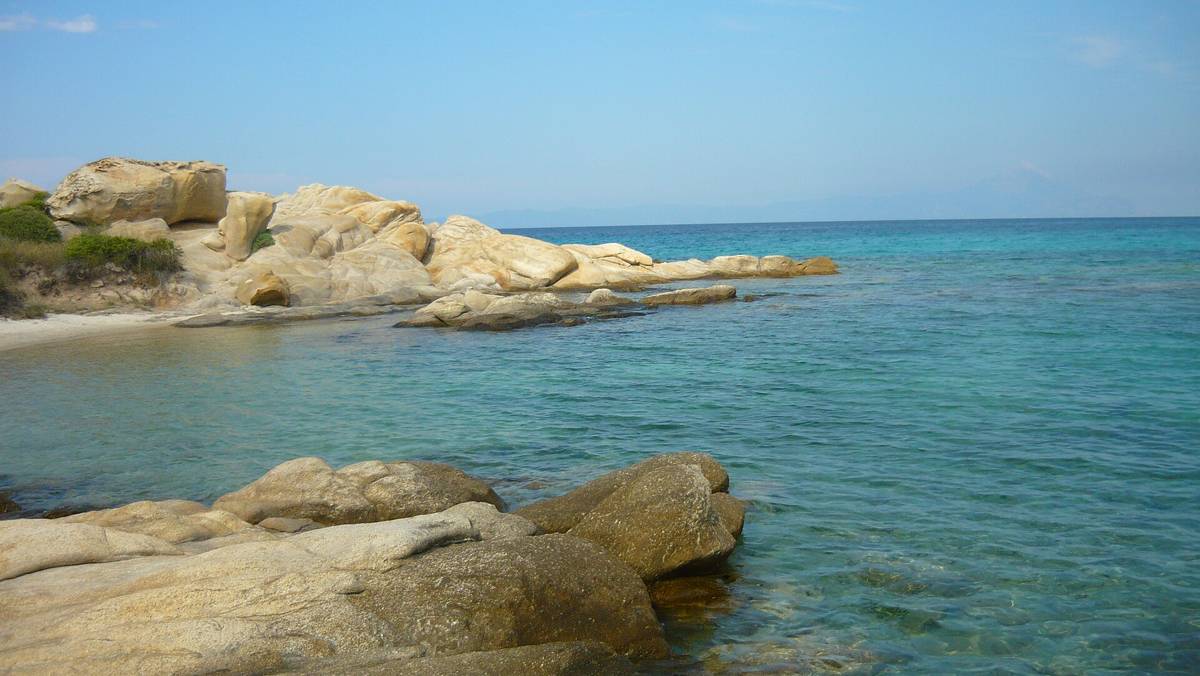
Halkidiki is the beach escape of Thessaloniki, a three-fingered peninsula that drops into the Aegean southeast of the city. The nearest sands sit around an hour from the centre, which turns a swim, a coastal cruise, or a village lunch into an easy outing between breakfast and dinner. Kassandra brings lively resorts, Sithonia keeps its pine-backed coves quieter, and the Athos coast holds the monasteries best seen from a boat. This guide maps the choice of finger, the ways to travel, and the shape of a single day by the sea. Plan the run south from the northern capital with My Greece Tours.
The sections below cover the trip from the first question of whether one day is enough down to the final hour on the beach. Early answers weigh the payoff against the drive, then compare the three fingers and the ways to reach them by car, bus, and guided coach. Later parts map the strongest beaches, the Mount Athos cruise, the cave and ruins inland, the best season, and the rhythm of a typical day. Read it against your dates, then match the plan to the guided Thessaloniki tours that reach the coast without the wheel.
Is a Halkidiki day trip from Thessaloniki worth it?
A Halkidiki day trip rewards the short drive from Thessaloniki. Kassandra’s beaches and beach bars sit about an hour south, close enough for a full swim day, a coastal cruise, or a village lunch and a sunset return.
The pull of the peninsula is its nearness. Kassandra’s first resorts sit about an hour from the city centre, which places a real swim within easy reach of a morning coffee. That short hop separates Halkidiki from the long transfers other Greek beaches demand. A driver can leave after breakfast, claim a lounger by late morning, and still eat lunch at a taverna with sand underfoot.
The payoff stretches past the swim itself. A coastal cruise along the Athos shore, a lunch in a hillside village, and a sunset from a west-facing cape all fold into the same day. Halkidiki earns its place near the top of any list of day trips from Thessaloniki for travellers who want the sea rather than a monument. The choice of activity shapes the outing more than the distance does.
The honest limit is the third finger. Sithonia’s quieter coves lie closer to two hours out, which turns a there-and-back into a rushed day. A single outing to Sithonia trades beach time for road time, so the greener finger rewards an overnight rather than a dash. Reading that gap keeps the plan grounded and steers a first visit toward Kassandra or a cruise.
The verdict lands firmly on the worthwhile side for a Kassandra beach day or an Athos cruise. The drive stays short, the coast delivers warm, clear water, and the return leaves the evening free back in the city. Travellers chasing the quietest sands accept a longer haul or a night away. For a straightforward day by the Aegean, the peninsula repays the modest effort in full.
Which finger of Halkidiki should you choose?
Kassandra suits a first day trip: the closest finger, roughly an hour out, lined with sandy resorts and beach bars. Sithonia trades that buzz for greener, calmer coves but a longer drive. Athos is viewed by boat rather than entered.
Kassandra is the workhorse of the day trip. The western finger carries the densest run of sandy beaches, organised resorts, and beach bars, and its neck sits closest to the city. The coast road threads a string of resort towns, each with its own stretch of sand and its own evening buzz. A first visit that wants sun, loungers, and an easy return lands here without a second thought.
Sithonia answers a different mood. The middle finger keeps its pine woods close to the shore, and its coves cut into the coast in a run of sheltered bays. The water reads clearer and calmer than Kassandra’s busier fronts, and the pace drops a gear. The trade is the drive: the loop around Sithonia asks for more road and more time than a day trip gives, which is why it draws the overnight crowd.
Athos, the eastern finger, follows its own law. The monastic peninsula ends in the holy mountain, a self-ruling community of monasteries barred to day visitors. The land route stops at Ouranoupoli, and the coast beyond opens only to permit-holders and to cruise boats. A day tour here means a voyage along the shore rather than a walk through the gates.
The choice narrows fast for one day. Kassandra wins on ease and beaches, a cruise wins for the Athos coast, and Sithonia waits for a longer trip. Matching the finger to the hours available matters more than chasing the prettiest cove on a map. A clear-eyed pick keeps the day relaxed rather than rushed.
How do you get from Thessaloniki to Halkidiki?
Three routes reach Halkidiki: a self-drive, a KTEL bus from the city bus station, or a guided coach or cruise. The car gives the most freedom, the bus the lowest cost, and the tour the least planning.
The self-drive gives the widest freedom. A hire car runs southeast out of Thessaloniki on the main road, then branches onto the coastal route that rings each finger. Drivers set their own hour, chase the beach that suits the wind, and linger for the light before turning back. The cost is the wheel time and the search for a parking spot at the busier bays in high summer.
The KTEL bus is the budget route. Coaches leave the city’s intercity bus station through the day and serve the main Kassandra and Sithonia towns. The fare stays low, and the driver takes the strain of the road. The catch is the fixed timetable and the last-bus deadline, which fences the beach hours and rules out the quieter coves off the main lines.
The guided tour removes the planning. A coach or minivan collects travellers in the morning, runs the coast road, and often pairs a beach stop with an Athos cruise from Ouranoupoli. A guide handles the route, the timing, and the commentary on the villages and the monasteries. The format suits first-timers and anyone who would rather watch the coast than navigate it.
Each route answers a different priority. The car wins on freedom, the bus on price, and the tour on ease and the cruise it bundles in. Groups and first-timers lean toward the guided coach, while confident drivers take the wheel for the hidden bays. The best pick follows the traveller, not the clock alone.
How far is Halkidiki and how long does the trip take?
Kassandra’s first beaches lie roughly seventy to ninety kilometres from Thessaloniki, about an hour to an hour and a half by car. Sithonia runs farther, closer to two hours. A day trip fits Kassandra or a cruise comfortably.
The distance splits by finger. Kassandra’s neck opens onto beaches within seventy to ninety kilometres of the city, an hour to ninety minutes on the road. The western and eastern coasts of that finger add a little more driving once past the canal at Nea Potidea. The figure holds outside the peak weekend rush, when the exit roads clog with beach traffic.
Sithonia stretches the clock. The middle finger starts farther out, and its best coves sit close to two hours from Thessaloniki before the loop road even begins. That gap is the reason the greener finger reads as an overnight rather than a day dash. Planning around it steers the single-day traveller toward Kassandra or a boat trip.
The clock rules a beach day more than the map. A late-morning start still reaches a Kassandra lounger before the midday sun peaks, leaving the long afternoon for the water. Slotting the outing into a wider Thessaloniki itinerary works well on a day framed by gentler city plans on either side. The return runs against the evening flow back into the city.
Buffer time protects the plan. A fuel stop, a coffee, and the walk from car park to sand all draw on the hours. Building slack into the day keeps the beach calm rather than clock-watched. The peninsula rewards a slow lunch and a long swim, and a tight schedule strips the outing of its ease.
What are the best beaches for a Halkidiki day trip?
Kassandra holds the beaches easiest to reach in a day, with sandy stretches, organised loungers, and beach bars along its west and east coasts. Sithonia rewards a longer drive with clearer water and quieter, pine-fringed coves.
Kassandra carries the day-trip beaches. Possidi reaches out on a long sand spit near the finger’s tip, with shallow, warm water on both sides. Kallithea and the coast around Afytos pack organised loungers and beach bars behind a low bluff. Sani spreads wide, flat sand backed by pine and a marina. The western coast catches the afternoon light and the calmer swell.
Sithonia holds the quieter coves. Vourvourou scatters small islets across a sheltered bay, ideal for a calm swim and a paddle. The rock coves around Kavourotrypes cut white stone into turquoise pools that draw a younger crowd. The catch is the drive, which pushes these beaches past the easy day-trip line and toward an overnight base.
Beach character shifts with the wind. The west of Kassandra shelters from the summer meltemi, while exposed stretches pick up a livelier chop. Checking the forecast before choosing a coast pays off, since the peninsula’s shape offers a calm shore on one side whatever the day brings. A quick swap of bay turns a windy morning into a sheltered swim.
Facilities track the crowds. The organised beaches rent loungers and umbrellas and back onto cafes and tavernas, which suits a full day with children. Quieter coves ask for a cool box and a beach towel, since the shade and the service thin out. Picking the beach around the group’s needs keeps the day easy from arrival to the last swim.
What is a Mount Athos boat cruise from Halkidiki?
Mount Athos is a self-governed monastic state closed to casual visitors. Women may not enter, and men need a permit, so most travellers view the twenty monasteries from a cruise boat that sails the coast from Ouranoupoli.
The holy mountain runs its own affairs. Athos forms a self-governed part of Greece under the spiritual care of the monasteries, and its rule reaches back more than a thousand years to the Byzantine emperors. Twenty ruling monasteries and their dependencies cling to the slopes and the shore. The community follows the old Julian calendar and its own daily round of prayer.
Entry is tightly held. Women may not set foot on the peninsula, an ancient rule the community still keeps. Men who wish to stay need a written permit issued in limited daily numbers, arranged well ahead. That restriction is why the cruise, not the trail, is the day visitor’s route to the monasteries.
The cruise reads the coast from the water. Boats sail from Ouranoupoli along the western shore, holding offshore at the distance the rules require. From the deck the monasteries stack up the green slopes, their towers and sea-gates clear through binoculars. A guide names each house and unpacks its history as the shore slides past.
The trip suits travellers barred from the land or short on time. A morning or afternoon sailing pairs neatly with a Kassandra beach on the same day out of Thessaloniki. The voyage trades a walk through the gates for a broad view of a place shut to most of the world. For the curious, it is the closest legal look at the monastic republic.
What can you do in Halkidiki beyond the beaches?
Halkidiki pairs its coast with the Petralona cave and its prehistoric finds, the ancient city of Olynthos, the gateway town of Ouranoupoli, and hill villages such as Afytos and Parthenonas that look down over the sea.
Petralona cave hides an older story. The cavern in the hills above the western neck holds dripstone chambers and the fossil skull of an early human, one of the oldest human traces found in Greece. A lit path threads the formations, and a small museum sets out the finds. The cool interior offers a break from the midday heat by the coast.
Olynthos lays out a classical city on a grid. The ancient site preserves house plans, mosaic floors, and the street layout of a town destroyed by Philip the Second of Macedon. The ruins reward a slow walk with a sense of everyday life in the ancient Greek world. The stop pairs naturally with the classic things to do in Thessaloniki for travellers building a fuller northern trip.
The gateway town anchors the Athos coast. Ouranoupoli guards the border of the monastic land with a medieval tower on its waterfront and a harbour full of cruise boats. Cafes and tavernas line the front, and the town makes the natural launch point for a sail along the holy shore. A wander here fills the wait for a boat.
The hill villages lift the day above the sand. Afytos perches on a bluff over Kassandra, its stone houses and a church square looking out to sea. Parthenonas sits restored on the slope of Mount Itamos in Sithonia, a car-free cluster of old stone with a wide coastal view. A late-afternoon stop trades beach glare for cool air and a long horizon.
When is the best time for a Halkidiki day trip?
Late spring to early autumn suits a Halkidiki day trip, with warm sea and long daylight for the beach. Midsummer weekends draw crowds from Thessaloniki, so a weekday or the shoulder months keep the coast calmer.
Late spring opens the season. The sea warms through May and June, the crowds stay thin before the school holidays, and the daylight stretches long for a full beach day. Wildflowers still colour the hills behind the coast, and the tavernas reopen at an unhurried pace. The shoulder weeks reward travellers who want warm water without the peak-season press.
High summer brings the heat and the crowds. July and August pack the Kassandra resorts with holidaymakers from the city and beyond, and the weekend exit roads run heavy. The water sits at its warmest, and the beach bars run at full tilt. Weighing the best time to visit Thessaloniki helps line the beach day up with the calmer weekday windows.
Early autumn holds the sweet spot. The sea keeps its summer warmth into September and October, while the crowds thin as the holidays end. The light softens, the air eases off the midsummer peak, and the coast relaxes. The season rewards travellers chasing warm swims and quiet sand in the same trip.
Winter empties the coast. The resorts wind down, the beach bars shut, and the water turns cold for swimming. The villages and the cave still welcome a visit, and the Athos cruise runs on calm days, yet the beach itself sleeps. A cool-season day trip leans on the inland sights rather than the sand.
What does a typical Halkidiki day trip look like?
A typical day starts with a morning drive south, reaches a Kassandra beach before midday, and fills the afternoon with swimming and a taverna lunch. A hill village or a coastal cruise closes the day before the evening drive home.
The morning belongs to the road. Travellers leave Thessaloniki after breakfast, clear the city’s southeast fringe, and pick up the coast road toward Kassandra. A coffee stop breaks the drive near the neck of the finger. The first glimpse of the sea, wide and blue past Nea Potidea, signals the switch from city to shore.
Midday centres on the beach. The group claims a stretch of sand, rents loungers where the beach is organised, and settles into the water for the hottest hours. A taverna lunch by the shore breaks the swimming, with grilled fish, a salad, and shade under a tamarisk. The pace slows to the rhythm of the sea.
The afternoon can turn to the water in a different sense. A boat trip along the Athos coast fills the middle of the day for travellers who booked one, sailing from Ouranoupoli past the monasteries. Others stay put on the sand or drift to a second, quieter cove as the light lengthens. The choice bends to the mood of the group.
The late day climbs to a village or turns for home. A stop in Afytos trades the beach glare for a cool square and a sea view, and a drink on a terrace closes the outing. The return road runs north against the evening light, reaching the city in time for dinner. A long swim day ends with salt still on the skin.
What should you pack for a Halkidiki day trip?
Pack for a full beach day: swimwear, a towel, high-factor sunscreen, a hat, and water. Add sturdy sandals for rocky coves, cash for loungers and tavernas, and a light cover-up for a village stop or a cruise deck.
Sun protection tops the list. The Halkidiki coast bakes under a strong summer sun, and the beaches offer thin natural shade outside the organised stretches. A high-factor sunscreen, a wide hat, and sunglasses guard against the worst of it. A rash top helps children through long hours in and out of the water.
Footwear matters more than travellers expect. The organised sands take bare feet, but the rock coves of Sithonia and the pebbly patches on Kassandra reward a pair of sturdy sandals or water shoes. The same shoes handle the walk down to a cove and the climb back to the car park. A dry pair for the drive home keeps sand out of the footwell.
Cash smooths the day. Loungers, umbrellas, and beach-bar drinks often run on cash at the quieter spots, and the smaller tavernas prefer it. Carrying euros in small notes covers a lounger fee, a lunch, and a coffee without a hunt for a card machine. A waterproof pouch keeps phone and notes dry by the shore.
A short list of extras rounds out the kit. A cool box holds water and a picnic for a cove with no service, and a beach umbrella earns its space on an exposed stretch. A light layer or a cover-up suits a breezy cruise deck or a cool village square in the late afternoon. Packing light but complete keeps the day easy from the first swim to the drive home.
What does a Halkidiki day trip cost?
Costs track the route. A self-drive covers fuel, tolls, and a hire car; the bus charges a low return fare; a guided tour bundles transport and often a cruise. Loungers, lunch, and a boat ticket add to any option.
The route sets the base cost. A self-drive splits between fuel for the round trip, the motorway tolls out of the city, and the hire-car rate for the day. Sharing a car across four travellers brings the per-head figure down and often undercuts the bus. The trade is the deposit and the fuel stop against the freedom to roam.
The bus is the lean option. A KTEL return fare to a Kassandra town runs low and fixes the outlay before the day begins. The saving comes with the timetable, which caps the beach hours and rules out the coves off the main lines. For a solo traveller or a pair, the bus often reads as the cheapest way to the sand.
The guided tour trades a higher ticket for less effort. A coach or minivan price folds in the transport, the driver, and the guide, and a combined trip often adds an Athos cruise. The figure sits above the raw fuel-and-tolls of a self-drive, yet it removes the planning, the parking, and the wheel time. Groups and first-timers weigh that ease against the extra outlay.
On-the-ground extras stack up on any route. A pair of loungers and an umbrella, a taverna lunch, drinks at a beach bar, and a boat ticket for the Athos coast each add to the day. Carrying a rough budget for the beach itself keeps the outing relaxed. A picnic and a free stretch of public sand trim the total for travellers watching the spend. Tallying the beach outlay against the transport ahead of time keeps the day free of small surprises.
What food should you try on a Halkidiki day trip?
Halkidiki plates fresh fish and seafood by the shore, from mussels to prawns. Inland it is known for green olives, thyme honey, and local wine. A taverna lunch of grilled fish, a Greek salad, and olives fits the beach day.
Seafood leads the coastal table. The tavernas along the shore serve the morning’s catch, grilled whole or fried, alongside octopus, calamari, and prawns. The mussels of the Thermaic and Toroneos gulfs turn up steamed or in a tomato and cheese bake. A cold starter of taramasalata or a fresh Greek salad rounds the plate.
Halkidiki grows famous olives. The region’s green olives, plump and mild, carry a protected name and fill the meze bowls across the peninsula. The groves climb the hills behind the coast, and roadside stalls sell them by the jar. A dish of local olives with bread and oil opens a taverna lunch in the shade.
Honey and wine round out the pantry. Halkidiki’s pine and thyme honey draws beekeepers to the forested slopes, and it sweetens the yoghurt on breakfast tables across the region. Small wineries on Sithonia and the inland hills bottle crisp whites and soft reds worth a glass with lunch. A jar of honey makes an easy gift for the drive home.
The village kitchens keep it simple and fresh. A taverna in Afytos or a harbour grill in Ouranoupoli plates seasonal vegetables, grilled meat, and the day’s fish without fuss. Lunch stretches long in the Greek way, with a carafe of house wine and a sea view. The food is half the reason a beach day here feels unhurried. A shared plate of mussels and a carafe on a shaded terrace turns a quick lunch into the calm heart of the outing.
Who does a Halkidiki day trip from Thessaloniki suit?
The day trip suits beach lovers, families, and travellers after a coastal cruise or a relaxed swim day. Sithonia’s distance rewards an overnight, so those set on its quieter coves may prefer a longer stay than one day allows.
Beach lovers gain the most. The peninsula stacks warm, clear water, organised sand, and easy access into one short drive, which is the core of its appeal. A day of swimming, sunbathing, and a seaside lunch needs little planning beyond the choice of coast. The Aegean does the rest.
Families manage the day with ease. The organised Kassandra beaches offer shallow water, loungers, and cafes within reach of the towel, which keeps children happy and parents relaxed. The short drive suits younger travellers who tire on longer transfers. Snacks, sunscreen, and an early claim on a shaded spot smooth the hours.
Culture-minded travellers find a thread too. The Petralona cave, the ruins at Olynthos, and the Athos cruise weave history through a beach day for those who want more than sand. A guided tour ties the sights together and adds the background a self-drive would skip. The mix rewards a curious visitor as fully as a sun-seeker.
The trip fits less neatly for certain plans. Travellers set on Sithonia’s quieter coves face a drive that strains a single day, so an overnight serves them better. A central base makes the morning start easier, which is why it helps to weigh where to stay in Thessaloniki before booking. For a straightforward Aegean beach day, though, the peninsula suits almost anyone.
Frequently Asked Questions
Is Halkidiki worth visiting as a day trip from Thessaloniki?
Yes. Kassandra’s beaches sit about an hour south, close enough for a full swim day, a seaside lunch, and an evening return. An Athos cruise from Ouranoupoli works in a day too. Sithonia’s quieter coves reward an overnight.
How long is the drive from Thessaloniki to Halkidiki?
Kassandra’s first beaches lie an hour to ninety minutes away, roughly seventy to ninety kilometres. Sithonia sits closer to two hours. The distance rises once you loop the coast road around either finger.
Can you visit Halkidiki from Thessaloniki without a car?
Yes. KTEL buses run from the city’s intercity bus station to the main Kassandra and Sithonia towns, and guided coach tours cover a beach stop or an Athos cruise. The bus ties you to a fixed timetable.
Which finger of Halkidiki is best for a day trip?
Kassandra suits a day trip best: it is the closest finger, about an hour out, and lined with sandy resorts and beach bars. Sithonia is greener and calmer but farther, so it rewards an overnight.
Can you visit Mount Athos on a day trip?
Not on foot. Women may not enter, and men need a permit arranged ahead. Most travellers instead take a cruise from Ouranoupoli that views the monasteries from the sea along the western coast.
When is the best time for a Halkidiki beach day?
Late spring to early autumn brings warm sea and long daylight. Midsummer weekends draw crowds from Thessaloniki, so a weekday or the September to October shoulder keeps the beaches calmer and the roads lighter.