
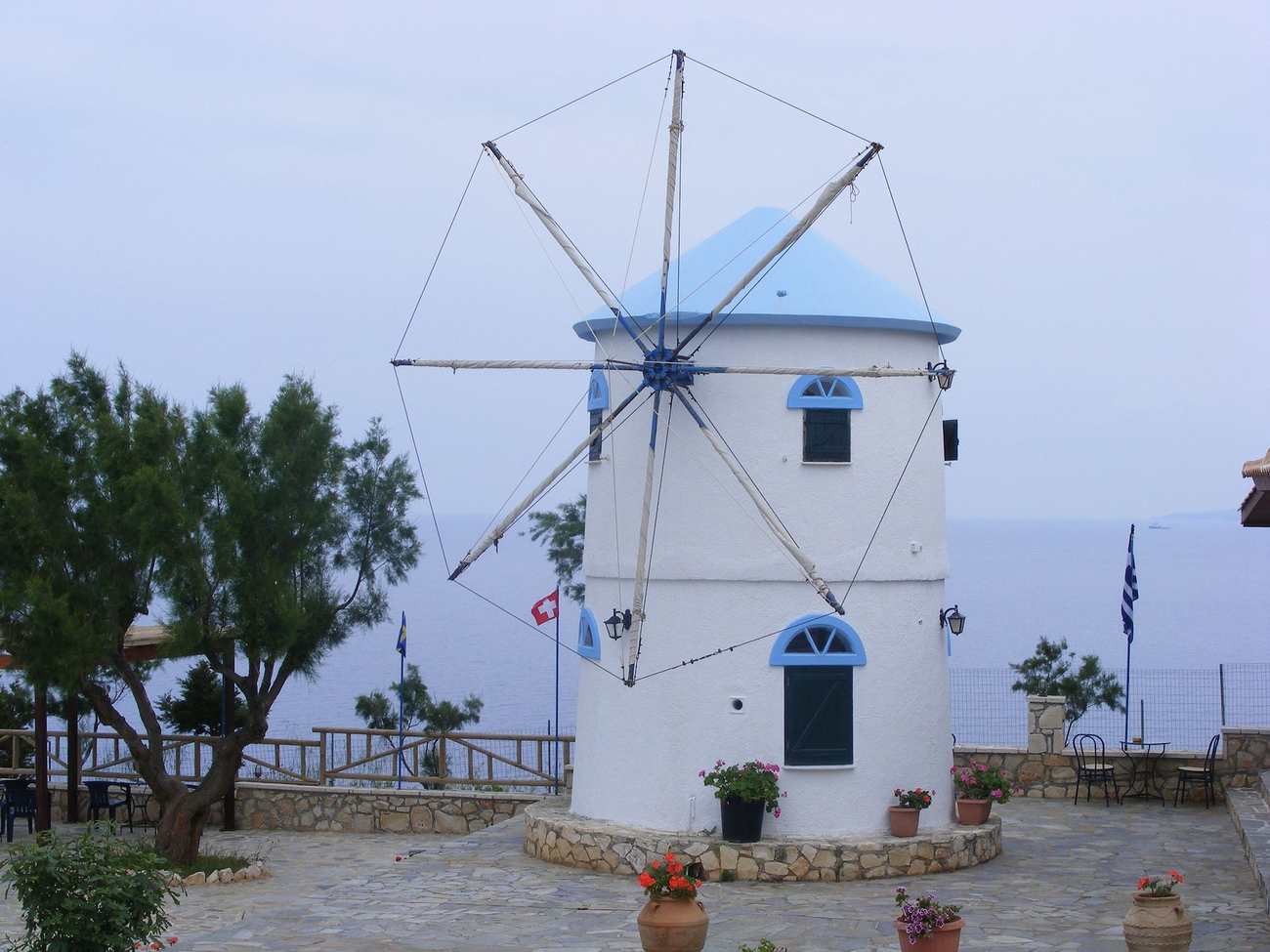
Cape Skinari forms the northernmost point of Zakynthos, a rocky headland gazing across the strait toward Kefalonia. A lighthouse marks the tip, and old stone windmills cling to the slopes above the sea, one converted into a small guesthouse and cafe with sweeping views. No sandy beach exists at the cape, yet ladders and platforms allow access to deep, transparent water perfect for swimming and snorkelling. Small boats depart from here to the sea caves of the north coast, lying a short distance to the south. Photographers are drawn by the white cliffs, the blue water, and the turning sky at sunset. Visitors find tavernas and rooms near the harbour below. Discover more with My Greece Tours.
Cape Skinari delivers a quiet, scenic corner of Zakynthos away from the crowded southern resorts. The white cliffs, deep blue water, and the dramatic turning sky at sunset create a striking backdrop for photographers and swimmers alike. Tavernas near the harbour below offer local food, and one of the old windmills serves as a guesthouse with panoramic sea views. Small boats leave from the cape for the sea caves along the north coast. The sections below cover the lighthouse, the swimming spots, the windmill cafe, the boat departures, and the best times for photography. Read our Zakynthos travel guide for broader island context.
Where exactly is Cape Skinari located on Zakynthos?
Cape Skinari sits at the northernmost point of Zakynthos, forming a rocky headland that looks across the strait toward Kefalonia. A lighthouse stands at the tip, and old stone windmills occupy the slopes above the sea.
The northernmost headland of Zakynthos, Cape Skinari commands views across the narrow strait toward the neighbouring island of Kefalonia on clear days. The rocky promontory is crowned by a lighthouse that has guided vessels through these waters for decades. Stone windmills dot the slopes above the sea, their walls weathered by salt winds, standing as reminders of the island’s agricultural past. One windmill has been restored and converted into a small guesthouse and cafe, giving visitors a place to sit with a drink and absorb the wide panorama of cliffs and open water. The surrounding area remains quiet compared to the busy southern resort towns, making it a rewarding stop for travellers who prefer natural scenery over crowds.
From this vantage point, small boats depart regularly for the Blue Caves along the north coast.
Reaching Cape Skinari involves driving north from Zakynthos Town through villages and olive groves, following signs toward the cape and the harbour at its base. The road narrows near the headland, and parking sits close to the windmill cafe and the paths leading to the lighthouse. Visitors arriving from the eastern side of the island pass through Agios Nikolaos, the nearest settlement of any size, where tavernas and shops line the waterfront. From Agios Nikolaos, the drive to the cape takes roughly fifteen minutes along a coastal road that bends past rocky coves and low cliffs. Travellers without a car can join organised excursions that include Cape Skinari as part of a circular tour of the northern highlights.
The harbour below the cape serves as a boarding point for boat trips to the sea caves and along the coast.
The village of Korithi marks the last inhabited settlement before the road climbs toward the headland at Cape Skinari. Drivers pass a signposted turnoff that branches from the island ring road, then follow a paved lane to the windmills and the lighthouse. The distance from Zakynthos Town measures around thirty-two kilometres, and the drive rewards travellers with coastal views the whole way. On a clear day the mountains of Kefalonia rise across a strait roughly fifteen kilometres wide, forming a distant wall of rock and green. The narrow channel between the two islands funnels wind and current, which the fishermen of the north coast have read for generations.
Rental cars remain the practical way to reach the cape, since public buses do not run this far north.
Can you swim at Cape Skinari?
Swimming is possible off the rocky shore at Cape Skinari, where ladders and platforms lead into deep, clear water. There is no sandy beach, but the rocks and clean sea create good conditions for snorkelling among the underwater scenery.
The absence of sand at Cape Skinari does not deter swimmers, as metal ladders fixed to the rocks provide easy entry into deep, remarkably clear water. Wooden platforms give a place to leave towels and gear before descending into the sea, where fish and rock formations reward those who bring a mask and snorkel. The water here drops quickly to depth, so confident swimmers enjoy the conditions more than young children might. Visitors should bring their own equipment, as there are no rental shops at the cape itself. Tavernas near the harbour below offer food and cold drinks, making a full morning or afternoon of swimming practical and pleasant.
The rocky setting keeps the area uncrowded, giving a sense of privacy that the busy southern Zakynthos beaches rarely provide.
Boats leave the harbour at Cape Skinari throughout the day, carrying passengers to the sea caves carved into the white cliffs along the north coast. These trips last roughly two to three hours and visit the most accessible caverns, where the reflected light turns the water an intense shade of blue. Tickets are sold at kiosks near the harbour, and the small vessels take limited passengers, which keeps the experience intimate compared to larger excursions departing from the southern ports. Zakynthos boat tours from the cape focus specifically on the north coast, giving travellers a concentrated look at the caves and rock arches without long transit times.
Swimming stops are included on longer departures, letting passengers jump from the boat into the clear, deep water.
A concrete staircase descends from the windmill terrace to a small platform at the water’s edge below Cape Skinari. Swimmers use this route to reach the sea without a boat, entering deep water directly beneath the cliffs. The staircase also links to the footpath that leads toward the nearest of the sea caves along the coast. Snorkellers exploring the clear water below find rock ledges dropping into shadow and small fish sheltering near the stone. The seabed stays visible to a considerable depth, thanks to the clarity that the limestone and lack of sand produce.
Bringing water shoes helps on the sharp rock, and a mask reveals the underwater arches that give the north coast its reputation among divers and swimmers who value quiet, transparent conditions.
What can visitors see at the Cape Skinari windmills?
Old stone windmills stand on the slopes above the sea at Cape Skinari, remnants of the island’s rural past. One windmill has been converted into a small guesthouse and cafe that offers wide views across the water toward Kefalonia.
The windmills of Cape Skinari represent a piece of Zakynthos history, standing as stone cylinders with wooden sails long since removed. Their position on the windy slopes above the sea made them ideal for grinding grain in earlier centuries, when agriculture formed the backbone of island life. Restoration of one windmill into a cafe and guesthouse has preserved the structure and given it a practical function for visitors. The cafe terrace looks out over the strait toward Kefalonia, and on clear days the neighbouring island’s mountains rise sharply on the horizon. Guests at the windmill guesthouse wake to the sound of waves below and the sight of fishing boats leaving the harbour at dawn.
The nearest village with shops and accommodation beyond the windmill is Agios Nikolaos, a short drive east along the coast.
The lighthouse at the tip of Cape Skinari stands as a white tower against the dark rock and blue sky, visible from boats approaching the northern coast of Zakynthos. The structure marks the narrow passage between Zakynthos and Kefalonia, a channel that has carried maritime traffic for centuries. Visitors can walk to the lighthouse along a rough path from the windmill cafe, passing low scrub and exposed stone along the way. The view from the lighthouse takes in the full curve of the headland, the white cliffs dropping into deep water, and on clear days the outline of Kefalonia across the strait.
Photographers often position themselves near the lighthouse in the late afternoon, waiting for the light to soften and the sky to change colour over the sea.
The stone windmills at Cape Skinari once harnessed the steady north wind to grind grain for the surrounding farms. Their circular towers taper toward the top, where wooden sail frames turned across the open sky in earlier centuries. The exposed position on the ridge above the sea gave the mills a constant supply of wind through the summer months. Craftsmen built the walls from local stone, thick enough to withstand the gusts that sweep the headland in every season. One restored mill now houses a cafe and rooms, letting travellers stay inside a working piece of island heritage.
The terrace tables look north toward Kefalonia, and the sound of the wind against the old walls carries a reminder of the structures’ original purpose above the deep blue water.
Is Cape Skinari a good departure point for boat trips on Zakynthos?
Cape Skinari serves as a departure point for small boats heading to the sea caves of the north coast, which lie a short distance to the south. The harbour below the cape handles regular trips throughout the day.
The harbour at Cape Skinari functions as a practical base for exploring the sea caves that riddle the white cliffs of the north coast. Small motorboats operated by local families leave at regular intervals, weather permitting, and the journey to the nearest caves takes only minutes. Passengers sit close to the waterline, giving them a clear view into the caverns as the boats edge inside. The light reflecting off the white limestone turns the water a luminous blue that has made these caves famous among visitors to the Ionian Islands. The trip often continues past rock arches and isolated coves that are inaccessible by land, adding variety to the short excursion.
Boat operators at the harbour post schedules and prices on boards near the dock, and tickets can be bought on the day of travel.
Travellers planning a broader exploration of Zakynthos from Cape Skinari can arrange full-day boat excursions that combine the sea caves with stops along the coast. These extended trips appeal to visitors who want to see the dramatic limestone cliffs and hidden inlets that define the northern and western shorelines of the island. The famous shipwreck at Navagio Beach lies further south along the western coast and requires a separate boat journey from Porto Vromi or Zakynthos Town. Boats from Cape Skinari concentrate on the northern caves and the waters around the cape itself, keeping travel times short and focused.
The sea between Zakynthos and Kefalonia can become choppy in strong afternoon winds, so morning departures tend to offer calmer conditions and better visibility inside the caverns.
The Blue Caves near Cape Skinari draw their name from the way sunlight reflects off the white limestone and colours the water a vivid blue. Local boats reach the caverns within minutes of leaving the harbour below the windmills. Passengers glide beneath rock arches and into shaded grottoes where the sea glows against the pale stone walls. The caves were charted in the late nineteenth century, and their reputation has grown with every decade of island tourism since. Morning trips catch the calmest water and the strongest light inside the openings, while afternoon winds can stir the strait and shorten some departures.
Operators run repeated short circuits through the day, so travellers rarely wait long for a place on one of the small vessels moored at the dock.
Why does Cape Skinari attract photographers at sunset?
The setting of white cliffs, blue water and turning sky at sunset draws photographers to Cape Skinari. The lighthouse and windmills add structural interest to the scene, while the view toward Kefalonia provides a distant backdrop.
The combination of white limestone cliffs and deep blue water makes Cape Skinari a natural subject for landscape photography, particularly in the hour before sunset. The light at that time softens and warms, casting long shadows across the rock and turning the sea from bright turquoise to a deeper, richer blue. The lighthouse at the tip provides a focal point for compositions, and the old windmills on the slopes above add a sense of scale and history. Photographers willing to stay past sunset capture the sky shifting through shades of orange and pink over the silhouette of Kefalonia.
The cliffs along this northern stretch of coast echo the dramatic formations found at the Keri Caves on the island’s southern side, giving photographers contrasting locations on opposite ends of Zakynthos.
Tavernas near the harbour below Cape Skinari serve fresh fish and traditional Zakynthos dishes, giving visitors a reason to extend their stay into the evening. The menu at these tavernas typically features grilled octopus, local cheese, and seasonal vegetables dressed in olive oil from the island’s groves. Portions are generous, and the prices reflect the remote, family-run nature of the establishments rather than the inflated costs found in the southern resort areas. Rooms near the harbour offer simple accommodation for travellers who want to wake at the cape and watch the sunrise over the strait toward Kefalonia.
Staying overnight at Cape Skinari allows photographers to capture both dawn and dusk from the same vantage point, something that day-trippers travelling from Zakynthos Town cannot easily arrange given the distance and the narrow coastal roads.
The headland at Cape Skinari faces open water on two sides, which lets photographers capture both sunrise and sunset from nearby vantage points. Morning light strikes the eastern cliffs and the harbour, while evening colour spreads across the strait toward the silhouette of Kefalonia. The white lighthouse tower stands out against the darkening sky, giving compositions a clear vertical anchor. Patient photographers wait for the moment the sun drops below the horizon, when the water shifts from turquoise to deep indigo. The windmills on the ridge add texture and history to wide shots of the coast.
Long exposures at dusk smooth the sea into a soft plane beneath the cliffs, and the absence of resort lighting keeps the northern sky dark enough for stars to appear above the cape.
Frequently Asked Questions
How do I get to Cape Skinari from Zakynthos Town?
Driving from Zakynthos Town to Cape Skinari takes roughly forty-five minutes along the main road heading north through the villages of the island interior. The route passes through olive groves and farmland before reaching the coast near the northern headland. Car rental is the most flexible option, as it allows visitors to stop at viewpoints along the way and explore the narrow roads leading to the lighthouse and the windmill cafe. Taxis are available from Zakynthos Town but can be expensive for the return journey, so arranging a pickup time in advance is advisable.
Public buses connect Zakynthos Town with Agios Nikolaos, the nearest settlement to the cape, from where visitors can walk or take a short taxi ride to reach the headland. Organised tours that include Cape Skinari as part of a northern island circuit offer an alternative for travellers who prefer not to drive on the mountain roads that characterise this part of Zakynthos.
Is Cape Skinari suitable for families with children?
Cape Skinari offers a mixed experience for families with children. The absence of a sandy beach means that young children cannot dig or paddle in shallow water, and the deep water accessed by ladders and platforms suits confident older children and adults more than toddlers. Parents should assess their children’s swimming ability and comfort with deep water before committing to a swim stop here. The windmill cafe provides a welcoming rest point, serving drinks and light meals with panoramic views that keep parents entertained while children rest. Boat trips to the nearby sea caves are generally family-friendly, as the vessels are small and stable and the journey is short.
Children old enough to appreciate the luminous blue water inside the caves tend to find the experience memorable. Families with very young children might prefer the sandy beaches of the south or east coast, where shallow water and facilities are more readily available. The tavernas near the harbour welcome children and offer simple dishes that appeal to younger palates.
What is the best time of year to visit Cape Skinari?
The best time to visit Cape Skinari falls between late spring and early autumn, when the weather is warm and the sea is calm enough for swimming and boat trips. June and September offer the most agreeable conditions, as temperatures are comfortable, the roads are quiet, and the tavernas near the harbour are open without the peak-season crowds. July and August bring hot weather and busier roads, particularly around the harbour where boats depart for the sea caves. The light at sunset remains striking throughout the summer, drawing photographers to the headland regardless of the month.
Spring visitors will find the landscape greener and the wildflowers in bloom along the coastal paths, though the sea may still be cold for swimming. Autumn brings warm water that holds the heat of summer, making October a pleasant month for snorkelling off the rocks. Winter renders the tavernas and boat services closed, and strong winds can make the exposed headland inhospitable for casual visitors.
How do the Blue Caves connect to a visit at Cape Skinari?
The Blue Caves lie along the north coast just south of Cape Skinari, which makes the cape a natural starting point for reaching them. Small boats leave the harbour below the windmills and reach the nearest caverns within minutes, gliding beneath rock arches into shaded grottoes. The caves take their name from the way sunlight bounces off the pale limestone and turns the water a vivid blue inside the openings. A footpath with a staircase also drops from the windmill terrace to the water, letting confident swimmers reach the closest cave without a boat. Explorers who charted these grottoes in the late nineteenth century gave the coast its lasting reputation among island visitors.
Morning departures offer the calmest sea and the clearest light inside the caverns, since afternoon winds can stir the strait between Zakynthos and Kefalonia. Combining the cape, the windmills and a short boat trip fills a rewarding half-day on the northern tip of the island.