
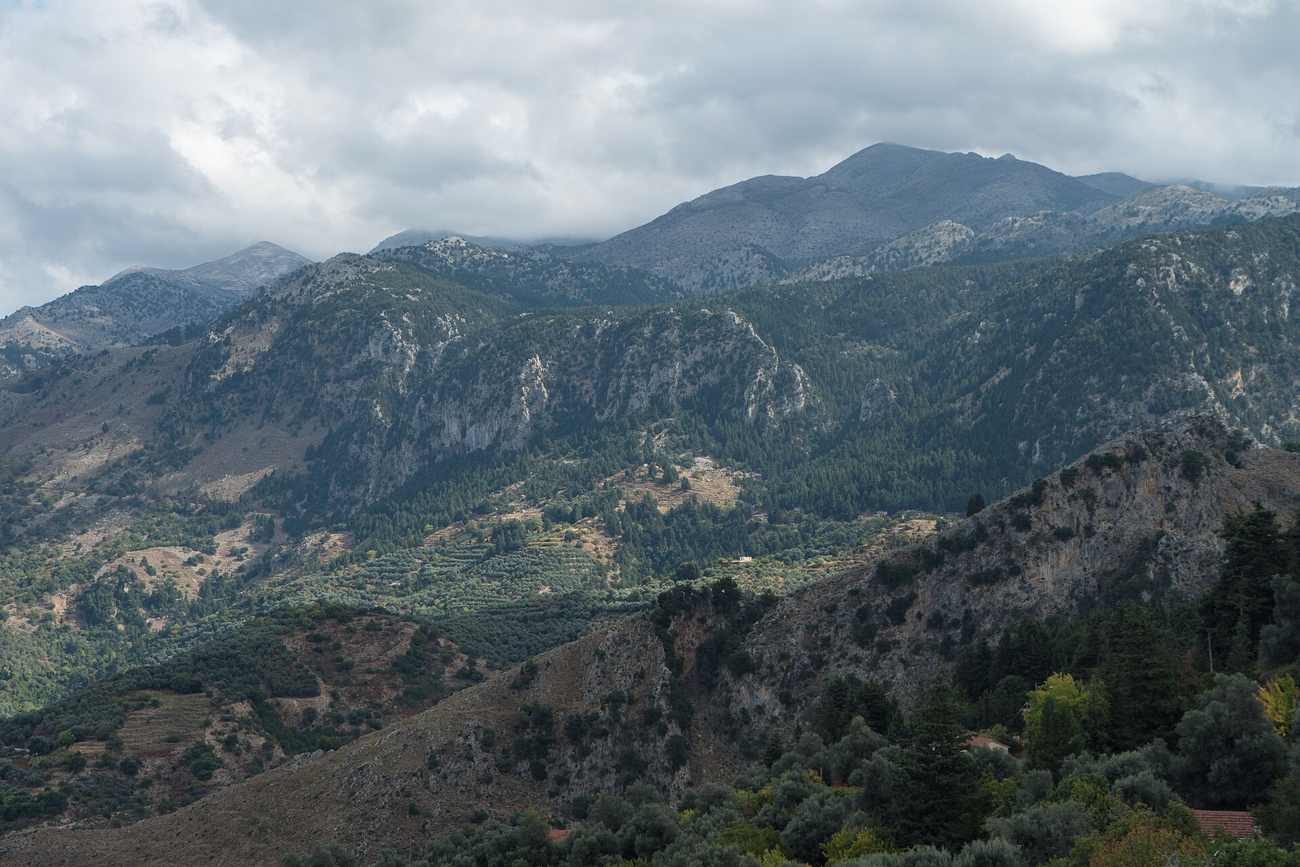
Lakki is a mountain village in the Chania district of western Crete, perched on a slope of the White Mountains along the road that climbs from Chania up to the Omalos plateau and the Samaria Gorge. Whitewashed and stone houses stack up the hillside, giving wide views over deep valleys and distant peaks. Cool air, walnut trees and terraced fields surround the lanes, where old churches stand among the houses. Travellers heading to the gorge have long paused here for a coffee, a meal and the view. Plan a scenic highland stop or a restful base above the coast with My Greece Tours.
Lakki holds a natural role as the last real village before the road tops out on the Omalos plateau, where the great walk down the gorge begins. Rooms, cafes and tavernas serving mountain food line the road, and the whole place looks out over a wide, quiet valley toward the high peaks. The village also carries a part in Cretan resistance through its history. The sections below cover where Lakki sits, the views and food, the walking on its doorstep, its story and how it fits a wider trip. For the full regional picture, our Crete travel guide sets Lakki against the island’s other mountain roads and villages.
Where is Lakki on Crete’s road to Samaria?
Lakki sits in the Chania district of western Crete, on a slope of the White Mountains along the road climbing from Chania up to the Omalos plateau and the Samaria Gorge. Whitewashed houses stack up the hillside above deep valleys.
Lakki occupies a high shelf of the White Mountains, roughly midway up the winding road that leaves Chania on the north coast and climbs toward the Omalos plateau. The village reads as the last real settlement before the road tops out on the plateau, where the long walk down the Samaria Gorge begins each morning in the warm months. Whitewashed and stone houses stack up the slope in tight lanes, and the ground falls away below into deep, green valleys that open toward distant peaks. This position gives Lakki a double character. It stands close enough to the coast for an easy drive up from Chania.
Yet it rises high enough to feel like a true mountain place, cooled by altitude and wrapped in the quiet of the White Mountains rather than the bustle of the shore.
The drive up to Lakki frames the whole character of the village long before you reach its first houses. Hairpin bends climb steadily out of the coastal plain, opening view after view over terraced fields, walnut trees and the widening valley below. The air cools with every turn, and the sea drops out of sight behind the ridges. Lakki appears clinging to its slope, its white houses bright against the grey stone and green terraces around them. The road passes straight through the village on its way higher, so travellers bound for the gorge slow here almost by instinct, drawn by the view and the smell of cooking from the tavernas.
The place feels tucked into the mountain rather than perched for show, a working village that the road happens to climb through.
What are the views and the food like in Lakki?
Lakki looks out over deep valleys toward distant peaks, with whitewashed houses stacked up the slope. Tavernas along the road serve honest mountain food, and cafes give travellers a place to pause over the wide highland view.
The view is the first thing that holds people in Lakki, and it stays with them longest. From the edge of the village the ground drops steeply into a broad, green valley, then rises again toward the bare high peaks of the White Mountains beyond. Terraced fields and walnut trees soften the middle distance, and the light shifts across the slopes through the day as clouds move over the summits. Cafes and tavernas along the road set their tables where this view opens widest, so a coffee or a long lunch comes with the whole valley laid out below.
The cool mountain air makes the spot welcome even at the height of summer, when the coast bakes far below. People pause here for the view alone, then find themselves staying for the food and the quiet.
Eating in Lakki means honest mountain cooking rather than resort fare. The tavernas lean on what the highland gives up nearby. Menus carry meat raised on the slopes, cheese from mountain flocks, vegetables from terraced gardens, walnuts from the trees around the village, and olive oil pressed lower down the valley. Meals stretch out in the unhurried Cretan way, generous and slow, warmed by the cool air outside. Travellers touring the region and weighing wider things to do in Crete often break their drive here for exactly this, a real village table above the valley rather than a roadside snack. The everyday, lived-in quality of the place is the draw.
Old men pass the afternoon over coffee in the cafes while the smell of cooking drifts out along the road.
What walking and sights lie on Lakki’s doorstep?
Lakki sits a short drive from the Omalos plateau and the head of the Samaria Gorge, the great walking route of western Crete. Old churches, mountain paths and the high White Mountains give walkers a full range of days out.
The walking on Lakki’s doorstep is the reason the road carries such steady traffic in the warm months. Higher up sits the Omalos plateau, a wide, flat bowl ringed by peaks where the mountain road finally levels off. From its far edge the Samaria Gorge drops away, cutting a long, dramatic route down through the mountains to the Libyan Sea on the south coast, the best-known walk on the whole island. Travellers bound for that day-long descent pass through Lakki on the way up. The village makes a natural place to sleep the night before an early start on foot.
Shorter mountain paths thread the slopes around the village itself, giving gentler walking for those who want the highland air without the full gorge, and every path opens fresh views over the valley below.
The wider White Mountains open a whole world of high country behind Lakki, from bare summits to hidden upland valleys reached only on foot. Closer to hand, old churches stand among the lanes of the village, quiet stone buildings that carry the faith and history of the place. The city of Chania lies down at the foot of the road, an easy drive away. Travellers can pair a mountain base at Lakki with the harbour, markets and old town of the coast. This spread of options lets a stay here carry varied days on the map.
A great gorge fills one morning, a quiet church and a mountain path the next, and the wide valley view waits each evening back at the village. The mix keeps a mountain base from ever feeling narrow or one-note.
What part did Lakki play in Cretan resistance?
Lakki played a part in Cretan resistance through its history, its remote mountain position making it a natural refuge and centre for those who held out in the high country of the White Mountains during hard times.
The story of Lakki runs deeper than its quiet lanes suggest, and it belongs to the wider tradition of resistance woven through the mountain villages of Crete. Its high, remote position on the flank of the White Mountains, hard to reach and easy to defend, made the village a natural refuge in troubled times across its history. The people of such highland settlements were known for their fierce independence and their readiness to shelter and support those who took to the mountains. That quiet layer of history sits close to the everyday scene of tavernas and mountain views, giving the village a weight that a passing traveller might otherwise miss.
The stone houses and steep lanes that make the place so photogenic today were once part of a rugged landscape that offered cover and safety to those who needed it.
This resistance history places Lakki firmly among the mountain villages that Cretans hold in deep regard, settlements whose remoteness became their strength when the island was tested. Travellers who seek the story out find that the wide valley below, so peaceful now, once mattered as much for cover and escape as for its beauty. The old churches among the quiet lanes carry their own long memory of the community that held on here through hard and testing years. Understanding this layer changes how the village feels underfoot. The quiet is not emptiness but endurance.
The honest, self-reliant character that shows in the food, the cooking and the welcome of the tavernas grew from the same mountain independence that shaped the village through the harder chapters of its past.
Why choose Lakki for a stay on Crete?
Lakki suits travellers after mountain views, fresh air and honest village food, and it makes a scenic, restful base or stop on the road to Omalos and the Samaria Gorge, high above the busy coast of western Crete.
The case for Lakki rests on what the mountains give and the coast cannot. Wide views over deep valleys toward the high peaks open from the edge of every lane, and cool, clean air replaces the heat of the shore below. Whitewashed houses stack up the slope in a scene that rewards a slow wander, and the tavernas serve food grown and raised nearby rather than shipped in for the season. The road to the Omalos plateau and the Samaria Gorge runs straight through the village, so a stay here places the island’s greatest walk within an easy early-morning drive. Travellers who value fresh air, real cooking and a genuine highland setting find their rhythm quickly.
Lakki answers a clear wish, a restful mountain base above the crowds, honest and lived-in rather than built for show.
Lakki also earns its place through sheer position on the road. A scenic stop or base high on the White Mountains gives travellers the best of both worlds, the quiet of the highland by night and the gorge, the plateau and the coast within reach by day. Walkers set out for Samaria, wanderers take the gentler mountain paths, and those after rest simply sit with the valley view and a plate of walnut-rich mountain food. Travellers hunting the island’s hidden gems in Crete return to Lakki for exactly this unforced quality. The reward is a stay that feels like a true stretch of the mountains rather than a night in a resort.
Lakki keeps its own honest character above the road to the gorge, a quiet corner of western Crete.
Frequently Asked Questions
How do you reach Lakki and what is the road like?
Lakki sits on the mountain road that climbs from Chania up toward the Omalos plateau and the Samaria Gorge. Travellers reach it by driving south out of the city and up into the White Mountains. A hire car gives the most freedom here, letting travellers move between the village, the plateau and the coast at their own pace. The road winds steadily uphill in hairpin bends, opening wider views over terraced fields, walnut trees and the deep valley below as it climbs. Chania lies at the foot of the road, an easy drive away, and makes a natural gateway to the mountains. The higher stretch runs on toward the plateau, where the great walk down the gorge begins.
Buses bound for the head of the Samaria Gorge follow this same road in the warm months. Lakki works best as a base you settle into. Drive up to the plateau or the gorge, then return each evening to the wide valley view and a taverna table above the slope.
Is Lakki a good base for walking the Samaria Gorge?
Lakki makes a strong base for the Samaria Gorge, and its position on the road is the main reason. The village stands as the last real settlement before the mountain road tops out on the Omalos plateau. There the long walk down the gorge begins each morning in the warm season. A night in Lakki places travellers within an easy early drive of that starting point, cutting out a tiring journey up from the coast before a hard day on foot. The cool mountain air also gives better rest than the heat of the shore below, useful before a demanding descent. Rooms and small guesthouses sit along the road through the village, close to the tavernas and cafes.
Shorter mountain paths around Lakki offer gentler walking for a day off, so the village suits a mixed group. Travellers who want the great walk without a punishing pre-dawn drive from the beach settle happily here, above the road up to Omalos.
What is the best time of year to visit Lakki?
The warm half of the year suits Lakki best, chiefly because the Samaria Gorge and the road up to the Omalos plateau open only in the milder months. Late spring and early autumn bring warm days, clear mountain air and quieter tavernas, and they line up well with the gorge-walking season on the doorstep. The cool altitude keeps Lakki comfortable even at the height of summer, when the coast far below turns hot and crowded, so a mountain base here offers welcome relief. Walnut trees and terraced fields around the village turn the setting green and fresh through the growing season.
Winter brings cold and, higher up, snow to the White Mountains, and the gorge stays closed, so the village grows very quiet and inward. Travellers chasing wide views, fresh air, honest food and the great walk down Samaria arrive in the warmer months, when Lakki shows its finest face and the road up to the gorge runs open through the mountains.