
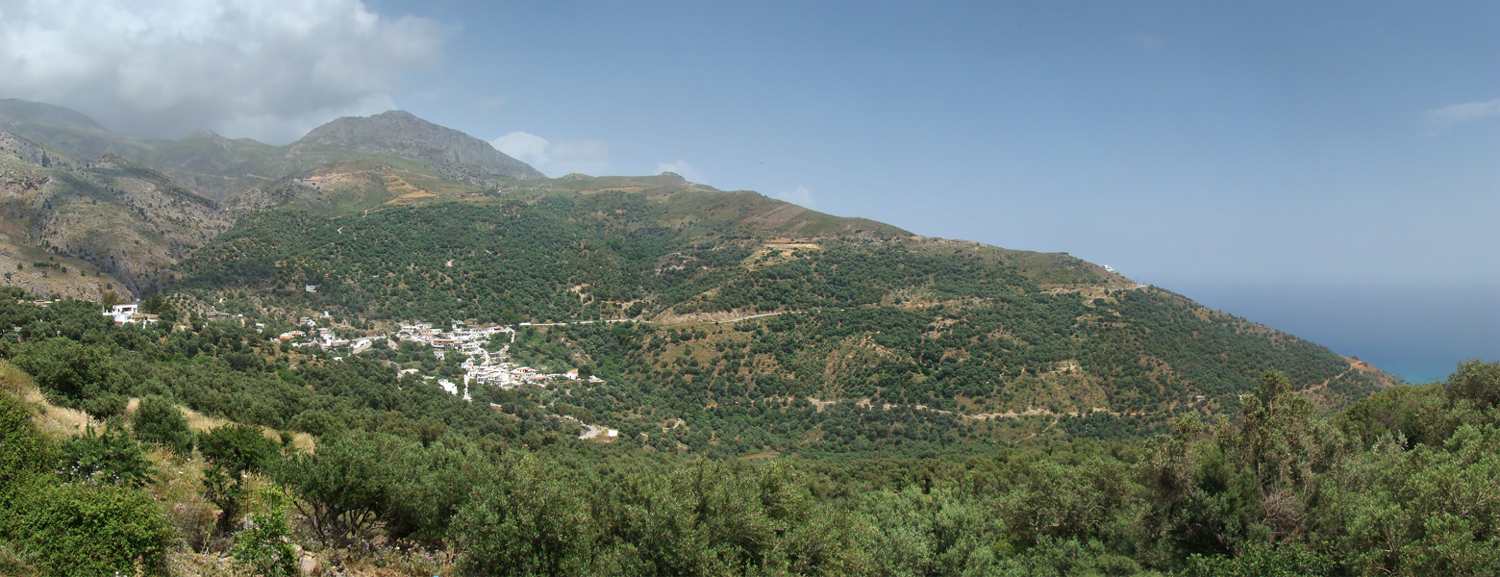
Rodakino is a quiet coastal area in the Rethymno district on the south coast of Crete, resting between the resort of Plakias and the Venetian castle of Frangokastello. Its name means peach, a soft word for a soft place. Long sandy and pebble beaches line the shore below two hillside villages, washed by the clear Libyan Sea and backed by tamarisk trees. Families and independent travellers come here for calm water and slow days rather than crowds. Olive groves and the White Mountains rise behind, framing a landscape that rewards patience. Plan an unhurried southern escape far from the busy north coast with My Greece Tours.
Rodakino splits between two hillside settlements, Ano and Kato Rodakino, plus a stretch of coast below. Down there the beaches of Polirizos and Korakas stretch out under a line of rooms and tavernas. The place stays uncrowded even in high summer, and a wartime evacuation of Allied soldiers from this shore is remembered by a monument above the water. The sections below cover the beaches, the villages, the food, the nearby gorge and castle, and how Rodakino fits a wider itinerary. For the full regional picture, our Crete travel guide sets Rodakino against the island’s other southern shores and mountain roads.
Where is Rodakino on Crete’s south coast?
Rodakino lies in the Rethymno district on the south coast of Crete, set between the resort of Plakias and the Venetian castle of Frangokastello. Two hillside villages sit above a stretch of long sandy and pebble beaches.
Rodakino occupies a gentle pocket of the Rethymno district, facing the Libyan Sea on Crete’s southern edge. The area reads as three linked places rather than one: the upper village of Ano Rodakino, the lower village of Kato Rodakino, and the coastal strip below where the long beaches gather beneath the hills. A single winding road threads down from the villages to the shore, passing olive groves and the lower slopes of the White Mountains. The resort of Plakias sits a short drive to the west, while the Venetian castle of Frangokastello marks the coast to the east.
This position keeps Rodakino close to real landmarks yet apart from them, a base that feels tucked quietly away rather than passed through by day-trip traffic on its way to somewhere busier.
The drive down to Rodakino frames the character of the whole area before you even arrive at the sand. Hairpin bends open onto wide views of the sea and the tamarisk-backed beaches, and the road stays calm and empty outside the peak weeks of summer. The two hillside villages hold their everyday rhythm, with old stone houses, a church and the smell of cooking drifting out from kitchen doors. Down at the water, the settlement thins into rooms and family tavernas rather than hotel blocks or a promenade.
Travellers weighing wider itineraries and things to do in Crete often use Rodakino as a calm southern anchor, driving out to distant sights and returning each evening to an empty beach and a plate of local food.
What are the beaches at Rodakino like?
The beaches at Rodakino run long, sandy and pebbly, backed by tamarisk trees and washed by the clear Libyan Sea. Polirizos and Korakas stay calm and uncrowded, popular with families and independent travellers looking for unhurried days.
Polirizos and Korakas form the heart of the Rodakino shore, two open beaches of sand and fine pebble that catch the southern sun right through the day. Tamarisk trees line the back of the sand, throwing broken patches of shade over loungers and towels, and a row of tavernas sits within easy reach of the water for lunch. The Libyan Sea here stays clear and, on most days, calm, which suits families with young children and swimmers who prefer settled water. Even in the height of summer the beaches hold their space, a rare quality on an island whose northern resorts fill quickly and loudly.
Rodakino trades nightlife and organised excitement for room to breathe, warm shallows and a long, unhurried afternoon by the edge of the sea.
The wider south coast offers a chain of shores in the same quiet spirit, and Rodakino makes a natural link in it for anyone touring by car. A short drive west reaches Plakias and its broader bay, while smaller, harder-to-find coves hide along the coast in either direction. Readers comparing options across the island in our roundup of Crete beaches will find Rodakino grouped with the calm, family-friendly end of the spectrum rather than the party sands of the busier resorts. The lack of crowds is the whole point of the place.
People return year after year for the same familiar stretch of tamarisk-shaded sand, the same taverna table at dusk, and a sea that stays warm and gentle well past the middle of summer.
What can you eat and where can you stay in Rodakino?
A line of family tavernas along the shore serves local Cretan food, from fresh fish to garden vegetables and olive oil pressed nearby. Rooms and small guesthouses sit close to the sand, offering a simple, authentic seaside stay.
Eating in Rodakino means sitting at a taverna a short step from the sand, often run by the same family across a generation or two. Menus lean on what the land and sea give up nearby: fish landed on the south coast, vegetables from village gardens, cheese from the mountain slopes, and olive oil pressed in the very groves that climb behind the beaches. Meals stretch out in the unhurried Cretan way, generous and slow, and the bill rarely stings the wallet. The two hillside villages hold their own kafeneia where older residents pass the long afternoon over coffee.
This everyday, lived-in quality is exactly what draws travellers seeking hidden gems in Crete well away from the packaged resorts and crowded beaches of the north.
Accommodation stays small in scale and close to the water, which fits the gentle mood of the place perfectly. Rooms to rent, studios and modest family guesthouses cluster along the coastal strip and in the villages above, most within a short walk of the beach and its tavernas. There are no large hotels or resort complexes here, and the deep quiet after dark is one of the things returning guests remember most. Booking ahead helps in the peak weeks of high summer, when the limited rooms fill with regulars who come back each year.
Rodakino rewards travellers ready to swap polish for authenticity: a balcony over the olive groves, the steady sound of the Libyan Sea below, and a village that keeps its own patient pace rather than performing for visitors.
What lies near Rodakino for day trips?
Rodakino sits within a short drive of the resort of Plakias, the Venetian castle of Frangokastello and the Kallikratis gorge. The coast, the villages and the mountains behind give walkers, swimmers and history-minded travellers a full range of days out.
The land around Rodakino packs real contrast into short driving distances. East along the coast stands Frangokastello, a Venetian castle rising above a shallow, warm shoreline and wrapped in local legend. Inland and upward, the Kallikratis Gorge cuts through the flank of the White Mountains, offering a walking route for travellers who want to trade the soft sand for stone and shade. Between them lies a network of small back roads through olive groves and mountain villages, quiet enough to drive slowly at your own chosen pace.
This spread of options lets a Rodakino base carry a genuinely varied week without long transfers, a Venetian castle one morning, a mountain gorge the next, and an empty beach waiting each evening for the walk back.
A wartime evacuation of Allied soldiers took place from this very coast, and a monument standing above the shore marks the spot where the difficult crossing was made. That quiet layer of history sits close to the everyday scene of swimmers and tavernas, giving the beach a deeper meaning for travellers who seek the story out. West of the monument, the resort of Plakias offers a larger bay, more services and a broader choice of beaches within an easy drive along the coast. Rodakino works as the still centre of all this: a place to sleep, eat and swim in peace, while the castle, the gorge and the neighbouring resort supply the days out.
Travellers leave with both real rest and a lasting sense of the south coast’s depth and variety.
Why choose Rodakino for a Crete holiday?
Rodakino suits travellers after an unhurried, authentic seaside stay far from the busy northern resorts. Calm sandy beaches, family tavernas and a peaceful southern base within reach of a castle and a gorge make it a rewarding, low-key choice.
The case for Rodakino rests on what it leaves out as much as on what it quietly holds. There are no crowds pressing onto the sand, no strip of loud bars, and no resort machinery standing between you and the open sea. Instead there are two calm hillside villages, a shore of tamarisk-shaded sand and pebble, and a line of tavernas serving food grown and caught nearby. The Libyan Sea stays clear and settled, and the White Mountains rise behind to frame every single view. Travellers who value slow mornings, empty beaches and honest local cooking find their natural rhythm here quickly.
Rodakino answers a specific wish: a real southern Crete, lived-in and unhurried, rather than a resort built and polished for the season alone.
Rodakino also earns its place through sheer position on the map. A peaceful southern base within a short drive of Plakias, Frangokastello and the Kallikratis gorge gives travellers the best of both moods, deep quiet at home and easy variety out on the road. Families settle into the calm water, walkers take to the gorge and the coastal paths, and history-minded visitors follow the wartime story marked above the shore. The reward is a holiday that feels like a genuine stretch of the island rather than a booking on a screen.
People who find Rodakino tend to keep it close, returning to the same beach and the same taverna table year after year, drawn back by a corner of Crete that has quietly kept its own honest character.
Frequently Asked Questions
How do you get to Rodakino and how long is the drive?
Rodakino sits on the south coast of Crete in the Rethymno district, reached by road from the north through the mountains or along the coast from neighbouring resorts. A hire car gives the most freedom here. The area rewards travellers who want to move between the beach, the two hillside villages and the sights nearby at their own gentle pace. The final approach drops down a winding road from the hills to the shore, opening views of the sea and the tamarisk-backed beaches on the way. The resort of Plakias lies a short drive to the west and makes a natural gateway, while Frangokastello sits within easy reach to the east.
Roads stay quiet outside the peak weeks of high summer, so the drive itself becomes part of the pleasure. Rodakino works best as a base you settle into. Drive out to a castle or a gorge, then return each evening to an empty beach and a taverna table by the water.
Is Rodakino suitable for families with children?
Rodakino suits families well, and calm water is the main reason. The beaches of Polirizos and Korakas run long and gently shelving, washed by the clear Libyan Sea that stays settled on most days, which reassures parents of young swimmers. Tamarisk trees line the back of the sand and throw natural shade over towels and loungers through the hottest hours. A row of tavernas sits close enough for an easy lunch without a long walk. The lack of crowds matters too: the beaches hold their space even in high summer, so children have room to play and parents keep an easy eye on the water.
Rooms and small guesthouses stand within a short walk of the sand, cutting out long transfers to and from the beach. Rodakino trades organised entertainment for simple pleasures, a quiet sea, safe swimming and unhurried days, which is exactly what families travelling the south coast of Crete are looking for on a summer holiday.
What is the best time of year to visit Rodakino?
The warm half of the year brings Rodakino to life, and the shoulder weeks either side of high summer often serve travellers best. Late spring and early autumn hold warm sun and a sea kept gentle by the Libyan coast, while the beaches and tavernas stay even quieter than in the peak. The height of summer delivers the warmest water and the fullest run of open tavernas, though it also gathers the season’s returning regulars, so booking a room ahead helps at that time. The White Mountains behind keep a cooler edge to the mornings, welcome when the midday sun is strong.
Rodakino never fills the way the northern resorts do, so even the busiest weeks feel calm by comparison. Travellers chasing empty sand and an unhurried, authentic seaside stay tend to arrive in the softer months, when the beach is theirs and the south coast of Crete shows its quietest, most rewarding face.