
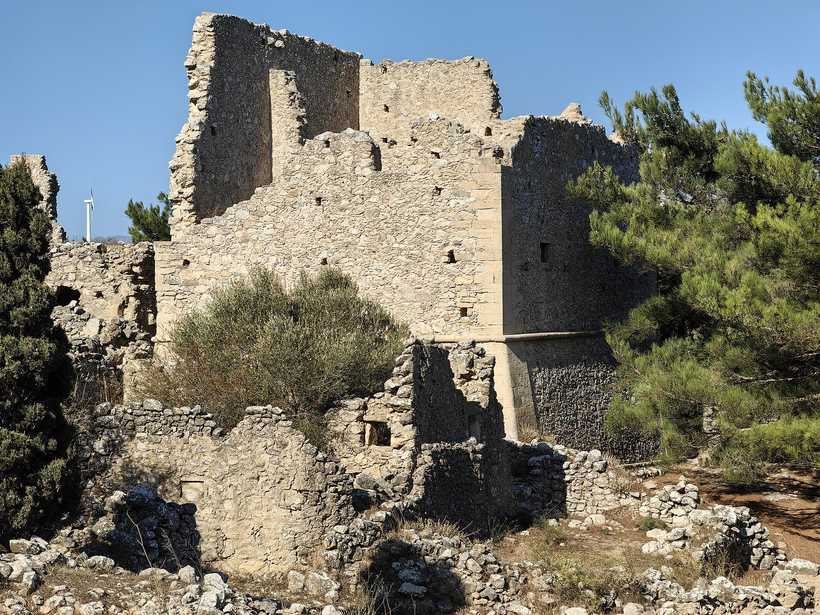
Voila stands in the far east of Crete as one of the best-preserved ghost villages in Greece, a hushed cluster of stone houses abandoned in the last century. A prosperous settlement under Venetian and then Ottoman rule, it now rewards travellers who prefer atmospheric ruins to crowded resorts. You reach it on the windswept Armeni plateau, near the villages of Handras and Ziros in the Sitia area of the Lasithi district. Arched doorways, a Venetian tower and an Ottoman fountain still trickling with water greet anyone who wanders the silent lanes. Plan a rewarding half-day around this quiet corner of vineyards and old churches with My Greece Tours.
Voila lies off the tourist trail, yet it sits within reach of the palm beach of Vai and the wild coves of Xerokambos, so a single eastern loop can pair ruins with swimming. Entry to the site is free and the lanes stay open, which makes an unhurried visit simple to arrange around the heat of the day. The sections below cover the location, the surviving monuments, the best way to combine the stop with nearby beaches and the practical timing that keeps the walk comfortable. For wider planning across the island, the Crete travel guide sets the broader context.
Where is Voila in Crete and how do you reach it?
Voila sits in the far east of Crete, in the Sitia area of the Lasithi district, near Handras and Ziros on the Armeni plateau. Drivers follow quiet inland roads through vineyards, and the free site stays open to walk.
The village occupies a gentle slope on the Armeni plateau, a high shelf of vineyards and windswept fields inland from the port town of Sitia. Most travellers arrive by hire car, threading the narrow lanes that link Handras and Ziros before the ruins appear beside the road. A short stroll from the parking area brings you into the heart of the deserted settlement, where the ground is uneven and sturdy shoes help. The eastern reaches of the island stay far quieter than the resort coasts, so the approach itself feels like a journey back into old rural Crete. Signposts are modest, and the surrounding plateau offers little shade, which shapes the timing you choose.
Pairing the drive with a longer day of things to do in Crete turns the modest detour into a full and rewarding outing.
Voila belongs to the wider hinterland behind Sitia, the handsome coastal town that serves as the gateway to this corner of the island. From that base the plateau villages lie a short drive uphill, and the road rewards you with wide views over terraced vines. The route stays paved for the most part, though the final approaches narrow between old stone walls. Travellers exploring the region often set their base in Sitia and radiate out to the eastern sights across a couple of unhurried days. The absence of ticket booths, gates or opening hours means you can time the walk to suit the light.
Early morning brings soft shadows across the arched doorways, while late afternoon gilds the tower and the ruined castle standing high above the village.
What can you see among the ruins of Voila?
Stone houses, arched doorways, a Venetian tower and an Ottoman fountain still running with water survive at Voila. Two churches endure among the ruins, one restored and in use, while a ruined hilltop castle overlooks the site.
The surviving fabric of Voila reads like a layered record of the island’s rulers. A square Venetian tower rises above the roofless houses, its masonry a reminder of the centuries when the Republic of Venice held eastern Crete. Below it an Ottoman fountain still runs with cool water, a rare working relic that hints at the everyday life once lived here. Arched stone doorways frame empty rooms, and lintels carved by long-gone masons lean where roofs have fallen. The lanes twist between dry-stone walls, opening onto small courtyards where fig trees root among the rubble. Walking slowly through this stillness gives a vivid sense of old rural Crete, and the quiet is part of the reward.
Travellers who love this mood often chase other hidden gems in Crete on the same eastern trip.
Two churches stand among the ruins, and their contrast tells much of the story. The church of Agios Georgios has been restored and remains in use, its whitewashed walls a bright note against the grey stone of the abandoned houses. The second church sits closer to ruin, sharing the fate of the homes around it. Above the village a ruined hilltop castle commands the plateau, and a short climb rewards you with wide views over the vines and distant hills. The setting invites slow exploration rather than a quick photo stop, since each lane reveals another arch or fallen threshold.
Pilgrims and history lovers often pair Voila with the fortified Toplou Monastery farther north, tracing the region’s devotional and defensive past across a single day.
Why was Voila abandoned and what makes it special?
Voila prospered under Venetian and then Ottoman rule before its residents left in the last century. That desertion preserved the streets almost intact, making it one of the finest ghost villages in Greece and a rare window into vanished life.
The village grew wealthy on the plateau’s vineyards and mixed farming during the long centuries of Venetian and then Ottoman control. Its position on fertile high ground, watered by the spring that still feeds the Ottoman fountain, supported a settled community for generations. The gradual drift of rural families toward towns and the coast in the last century emptied the houses one by one, until the lanes fell silent. The site was left largely undisturbed rather than rebuilt, so its medieval and Ottoman fabric survived where other villages lost theirs to modern construction. That accident of history is precisely what makes Voila special today, and it counts among the most complete ghost villages anywhere in Greece.
The preservation lets visitors read the shape of daily life directly from the standing walls of the plateau.
What lingers most at Voila is the atmosphere of a place caught between eras. The stone houses, the tower and the churches sit exactly where their builders raised them, undisturbed by souvenir stalls or ticket gates. Historians value the site for its clear layering of Venetian and Ottoman work, while casual travellers simply enjoy the hush and the honeyed light. The free, always-open access strips away the barriers that separate visitors from most heritage sites, so the encounter feels personal. A stop here pairs naturally with a cooling swim at the remote coves of Xerokambos, which lie a short drive to the south.
The blend of ruin and beach captures the unhurried spirit of eastern Crete, and few corners of the island reward slow travel so fully.
How do you combine Voila with nearby Crete beaches?
Pair Voila with eastern Crete’s coast for a balanced day. The palm beach of Vai lies to the north, the coves of Xerokambos to the south, and Sitia anchors the region. Morning ruins suit a midday swim beautifully.
The eastern tip of the island packs contrasting sights into a compact area, so Voila slots neatly into a wider loop. A common rhythm starts with the cool morning air among the ruins, then drops to the coast as the sun climbs. To the north the famous palm grove behind Vai beach offers a striking swim beneath thousands of native palms, a landscape unlike anywhere else in Greece. The drive between the plateau and the shore runs through terraced vineyards and quiet hamlets, keeping every transition scenic. The ghost village asks for no ticket, so you can linger or leave as the mood takes you, shaping the day around the heat rather than a fixed schedule.
That flexibility is the great advantage of an open-access site on a hot and sun-baked island.
Travellers who prefer wilder, emptier sand often turn south instead, following the road down to the string of coves at the Xerokambos shore. The water there stays clear and the crowds thin, which suits an afternoon of unhurried swimming after a morning of history. Sitia rounds out the loop with tavernas, a harbour and easy parking, making a natural lunch stop between plateau and beach. Devotional and defensive heritage adds further depth, since the fortified monastery to the north sits within the same eastern circuit. Planning the route around the light and the temperature keeps the whole day comfortable, letting you enjoy the ruins, the churches and the sea without rushing.
This is slow travel at its most rewarding, stitched together across the island’s least crowded corner.
When should you visit Voila and what should you bring?
Visit Voila in early morning or late afternoon to dodge the heat, as the plateau offers little shade. Bring water, sturdy shoes and sun protection. Entry is free and the site stays open, so timing is entirely yours.
The Armeni plateau catches strong sun through the long Cretan summer, and the ruins provide almost no cover, so the hour you choose matters. Early morning brings soft light across the arched doorways and cooler air for wandering the uneven lanes. Late afternoon works equally well, gilding the Venetian tower and the ruined castle as the day fades. Spring and autumn reward visitors with wildflowers or ripening vines and gentler temperatures throughout the day. Sturdy shoes matter, for the ground is loose stone and fallen masonry rather than smooth path. A hat, sunscreen and a full water bottle round out the kit, and no kiosk or café stands on the site.
The Ottoman fountain runs, yet carrying your own supply remains the safe choice on a hot day across the plateau.
Access could hardly be simpler, which is part of the charm. No gate, no ticket booth and no closing time govern Voila, so you shape the visit entirely around your own plans and the weather. Most travellers spend around an hour wandering the lanes, though photographers and history enthusiasts happily stay much longer. Respecting the fragile walls keeps the site intact for those who follow, so tread carefully and avoid climbing on loose stone. The restored church of Agios Georgios still holds services, so a quiet, considerate manner suits the place. Combining the stop with a picnic on the plateau or a meal back in town turns a short detour into a memorable half-day.
Little planning is needed beyond water, decent footwear and a willingness to slow down and absorb the deep silence of Voila.
Frequently Asked Questions
Is Voila worth visiting in eastern Crete?
Voila rewards anyone drawn to atmospheric ruins and the island’s layered past. It ranks among the best-preserved ghost villages in Greece, a hushed cluster of stone houses, arched doorways and a Venetian tower on the windswept Armeni plateau near Sitia. The Ottoman fountain still runs with water, and the restored church of Agios Georgios remains in use, giving the deserted lanes a living thread amid the silence. Wandering the site delivers a vivid sense of old rural Crete that resort coasts cannot match. Its position in the far east places it within reach of the palm grove at Vai and the wild coves to the south, so a visit fits neatly into a wider eastern loop.
Add the free, always-open access, and the reward clearly outweighs the modest effort of the drive across the plateau. History lovers and quiet-seekers alike come away deeply impressed by its haunting, timeless stillness among the ruins.
How long does a visit to Voila take?
Most travellers spend around an hour exploring the lanes of Voila, which comfortably covers the Venetian tower, the Ottoman fountain, the two churches and a short climb toward the ruined hilltop castle. Photographers and history lovers often linger longer, as the ruins reveal fresh detail at every turn and the light shifts beautifully through the day. The ground is uneven loose stone, so an unhurried pace suits both safety and enjoyment. Entry is free and the site never closes, so you can shape the length of the visit entirely around your own schedule and the heat of the afternoon.
People often fold the ghost village into a fuller day on the eastern tip of the island, pairing the ruins with a coastal swim or a plateau picnic. Allowing extra time for the drive through the vineyards between Handras and Ziros keeps the whole outing relaxed rather than rushed across this remote corner.
What is the history behind the Voila ghost village?
Voila grew into a prosperous settlement during the long centuries of Venetian and then Ottoman rule, thriving on the vineyards and farmland of the Armeni plateau. The spring that still feeds the Ottoman fountain sustained the community for generations, while a square Venetian tower and a hilltop castle guarded the approaches. The gradual movement of rural families toward towns and the coast in the last century emptied the houses one by one, until the lanes fell silent and the village earned its ghostly reputation. That quiet desertion, rather than demolition or rebuilding, preserved the medieval and Ottoman fabric almost intact. Two churches survive, one of them, Agios Georgios, restored and still in use.
Travellers tracing the region’s devotional heritage often pair the village with the fortified monastery to the north, reading the Venetian and Ottoman story of eastern Crete across a single unhurried and memorable day among the silent ruins.