
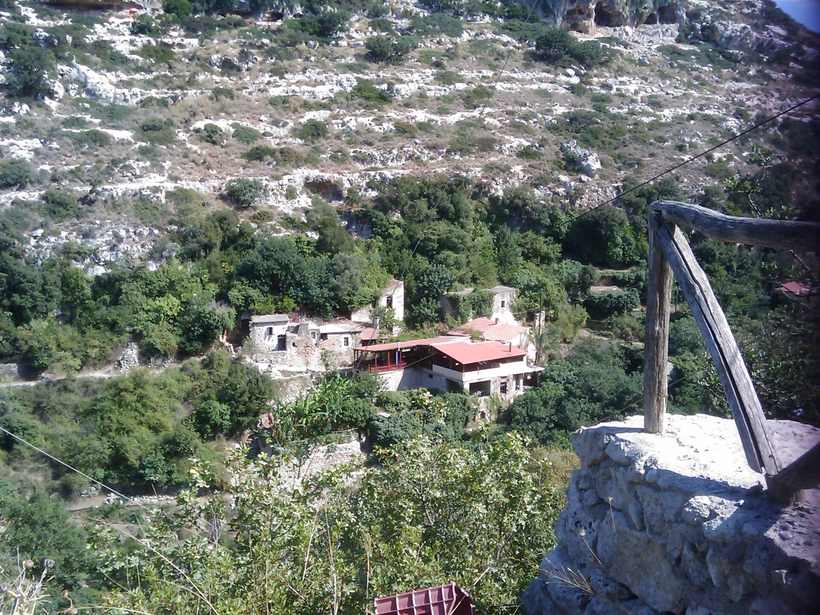
The Myli gorge is a short, green ravine just south of Rethymno on the north coast of Crete, in the Rethymno district. Its name, the Valley of the Mills, comes from the ruins of dozens of old watermills that once ground the region’s grain along a stream shaded by plane trees. The path runs between the village of Chromonastiri and the hamlet of Myli, past springs, small chapels, terraced gardens and a taverna. Moss and ferns cover the stone channels and wheels. An easy walk of a couple of hours brings the industrial history and running water of this cool valley within reach on a short trip with My Greece Tours.
This ravine sits close enough to reach from Rethymno town on a short drive, which makes it an easy half-day for families and walkers who want shade near the coast. The gorge was the water-mill heart of the area for centuries before the mills fell silent, and it blends stone ruins, greenery and cold spring water in one route. The sections below cover the walk itself, the watermills, how to reach the gorge, what to combine with it and who it suits, all set within the wider Crete travel guide. Concrete detail on distance, effort and setting follows.
What is the Myli gorge in Crete?
The Myli gorge in Crete is a short, green ravine just south of Rethymno on the north coast. It carries a stream, plane trees and the ruins of dozens of old watermills that once ground the region’s grain.
The gorge earned its second name, the Valley of the Mills, from the watermills that lined the stream running down it. Dozens of stone mills once ground the grain grown across the surrounding Rethymno district, powered by water channelled from springs higher up the ravine. The path threads between the village of Chromonastiri at the top and the hamlet of Myli lower down, following the water for most of its length. Plane trees arch over the route and hold the shade through the hottest part of the day. Moss and ferns cover the abandoned stone channels and the old wooden wheels, and the ruined mill buildings stand among terraced gardens still worked by hand along the ravine floor.
This shaded corner ranks among the hidden gems in Crete for walkers based near the coast.
The setting stays cool because the stream runs through the ravine for much of the year, feeding the plane trees and the ferns that grow thick along the banks. Small chapels stand beside the path at intervals, and a taverna along the route serves food and drink to walkers who break the descent for a rest. Springs surface at points down the valley and keep the ground green even as the bare hills above turn dry and brown in high summer. The contrast between the sun-baked slopes outside the gorge and the shaded, watered floor inside it defines the whole place.
This green ribbon just south of the coast counts among the things to do in Crete for travellers who want history and shade over sand and sun loungers.
Why is it called the Valley of the Mills?
It is called the Valley of the Mills because dozens of old watermills once stood along the stream, grinding the region’s grain. The gorge was the water-mill heart of the Rethymno area for centuries before the mills fell silent.
Water drove the whole valley for hundreds of years of working life. The stream falling through the ravine was channelled from mill to mill in stone conduits, turning wheels that ground wheat and barley into flour for the farms and villages of the district. Grain came down from the surrounding land, and flour went back up the slopes, which made the gorge a working corridor rather than a scenic one. The mills fell silent once modern grinding replaced them, and the buildings, channels and wheels were left to the moss and the ferns. Their ruins now line the shaded path as a standing record of that older grain economy.
A walk here reads as living industrial history, a theme that runs through hiking in Crete routes across the island.
The stone channels that fed the wheels still trace the line of the old water system along the ravine floor. Terraced gardens beside them show how the same spring water grew vegetables and fruit alongside the milling of grain. The density of mills packed into so short a valley reflects both the steady flow of the stream and the volume of grain the region produced each harvest. Chromonastiri at the head of the gorge held the community that ran the mills, and Myli at the foot took its very name from them. Springs, small chapels and the old stone buildings together give the route its distinct character.
The setting sits within a short drive of Rethymno, which supplied the market for the flour the mills produced.
How long is the walk through the gorge?
The walk through the gorge takes a couple of hours at an easy pace, running between Chromonastiri and Myli. The shaded, mostly downhill route with running water beside it suits families and casual walkers rather than serious hikers.
The route follows the stream between the two settlements at the opposite ends of the ravine. Most walkers start high at Chromonastiri and descend toward Myli, which keeps the effort low and the plane-tree shade overhead for the full length of the walk. The couple of hours it takes leaves room to stop at the springs, the small chapels and the taverna along the way down. The ground stays cool because the water runs beside the path, so the walk works even in high summer when the open hills bake in the sun. Sturdy shoes handle the uneven, sometimes damp stone underfoot on the descent.
The gentle scale makes it a fitting half-day among hiking in Crete options for anyone wanting shade rather than a full mountain climb.
The path passes the ruined watermills, the terraced gardens and the moss-covered channels in sequence, so the industrial history unfolds step by step as walkers move down the ravine floor. The taverna gives a natural break point and a place to turn around for those who prefer to return the way they came. The distance stays modest, which is why the route reads as an easy outing rather than a demanding mountain hike. The green, watered floor of the gorge and its shifting scenes keep interest up along the whole length.
This shaded half-day pairs well with a swim afterwards on one of the Crete beaches along the nearby north coast, which lie a short drive from the mouth of the valley below the mountain villages.
How do you reach the Myli gorge in Crete?
You reach the Myli gorge in Crete on a short drive south of Rethymno town, heading inland toward Chromonastiri and Myli. The trailhead sits close enough to the coast to make the gorge an easy morning or afternoon outing.
The gorge lies just inland from the north coast, which puts it within easy range of Rethymno town for a half-day trip. A short drive south from the town reaches Chromonastiri at the top of the ravine or Myli at the foot, the two ends of the walking route. The road climbs from the coastal plain into the hills, and the change from open, sun-baked slopes to the shaded, watered gorge floor comes over quickly. A car gives the most direct access, since the two trailheads sit in small settlements rather than on a main bus corridor.
The short drive and easy walk are what make this a genuine half-day among the things to do in Crete for travellers based on the north coast near town.
The base at Rethymno puts the gorge, the old town and the beaches all within a short drive of one another, so a morning in the ravine leaves the rest of the day free for other stops. The route down into the valley is signed toward Chromonastiri and Myli, and the descent on foot between the two small settlements forms the walk itself along the stream. Cool water, plane-tree shade and the ranks of mill ruins wait at the end of a drive that takes minutes rather than hours from the coast.
That short distance separates the busy shoreline from a quiet, green ravine, which is the whole appeal of the outing for anyone staying near Rethymno on the north coast for a summer holiday.
What can you combine with a visit to the gorge?
A visit combines well with Rethymno town, the north-coast beaches and other spring-fed villages nearby. The gorge fills a shaded half-day, which leaves time for the old town, a swim or a second watered valley in the surrounding hills.
Rethymno town sits a short drive from the mouth of the valley, so its Venetian harbour, fortress and old-town lanes fill the other half of the day with ease. The north-coast beaches lie the same short distance away, which lets a cool morning in the shaded ravine end with an afternoon swim on the sand. The pairing of shaded walk and open shore forms the natural rhythm for a day based here on the coast near town. Cold spring water defines both the gorge and the wider green hill country behind Rethymno town.
Another spring-fed village that suits the same trip is Argyroupoli, known for its running water south of the town, a close match in mood and setting to the Valley of the Mills.
The two watered sites read well together on one route, since both trade on plane trees, cold springs and deep shade rather than beach heat. A morning in the mill valley and an afternoon among the Argyroupoli springs makes a full day of green, cool stops inland from the hot coast. The gorge, the old town and the shore stack into a single day precisely because they all lie so close together near town. For travellers who prefer soft sand to stone channels and mill ruins, the Crete beaches of the north coast round off the outing with a late swim.
The short distances between these points, all within easy reach of Rethymno town, are what make the combination so straightforward to arrange in a single day.
Frequently Asked Questions
Is the Myli gorge walk suitable for families?
The Myli gorge walk suits families well. The route runs a couple of hours at an easy pace between Chromonastiri and Myli, mostly downhill and shaded by plane trees for its full length. Cold spring water beside the path keeps the ground cool even in high summer, so children walk it without the heat that tires them on open trails outside the ravine. Springs, small chapels, a taverna and the ruined watermills give natural stops and things to look at along the way down. Sturdy shoes handle the uneven, sometimes damp stone underfoot on the descent.
The taverna offers a place to rest, eat and turn back for anyone who prefers a shorter loop rather than the whole valley. The gentle scale, the shifting scenery and the running water make this one of the easier shaded outings among hiking in Crete routes, fitting a half-day rather than a full mountain day for parents walking with younger children based near the north coast.
What will I see along the Myli gorge path?
The Myli gorge path leads past the ruins of dozens of old watermills that once ground the region’s grain, strung along a stream shaded by plane trees. Moss and ferns cover the abandoned stone channels and wheels, and terraced gardens worked by hand line the ravine floor. Springs surface at points down the valley and keep the ground green through summer, while small chapels stand beside the route at intervals. A taverna along the way serves food and drink to walkers. The contrast between the bare, sun-baked slopes outside the gorge and the cool, watered floor inside it defines the place.
Chromonastiri sits at the head of the ravine and Myli at the foot, the two ends of the walk. The whole route reads as living industrial history, which sets it apart among the hidden gems in Crete for travellers who value stone ruins and running water over sand and resorts near Rethymno.
When is the best time to walk the Myli gorge?
Spring and autumn give the fullest experience, when the stream runs strong and the plane trees, the moss and the ferns stay green along the ravine floor. The gorge holds shade and cool spring water even in high summer, which lets walkers use it as an escape from the heat that grips the open north-coast slopes and beaches. A morning start beats the warmest hours and leaves the afternoon free for the town or the sea. Winter walks are possible, though the stone underfoot turns wet and the flow rises after heavy rain. The couple of hours the route takes fits easily into any season as an unhurried half-day.
The short drive from town means the gorge slots into a wider day of things to do in Crete around Rethymno, whether paired with the old town, a north-coast beach or a second spring-fed valley in the green hills behind the coast.