
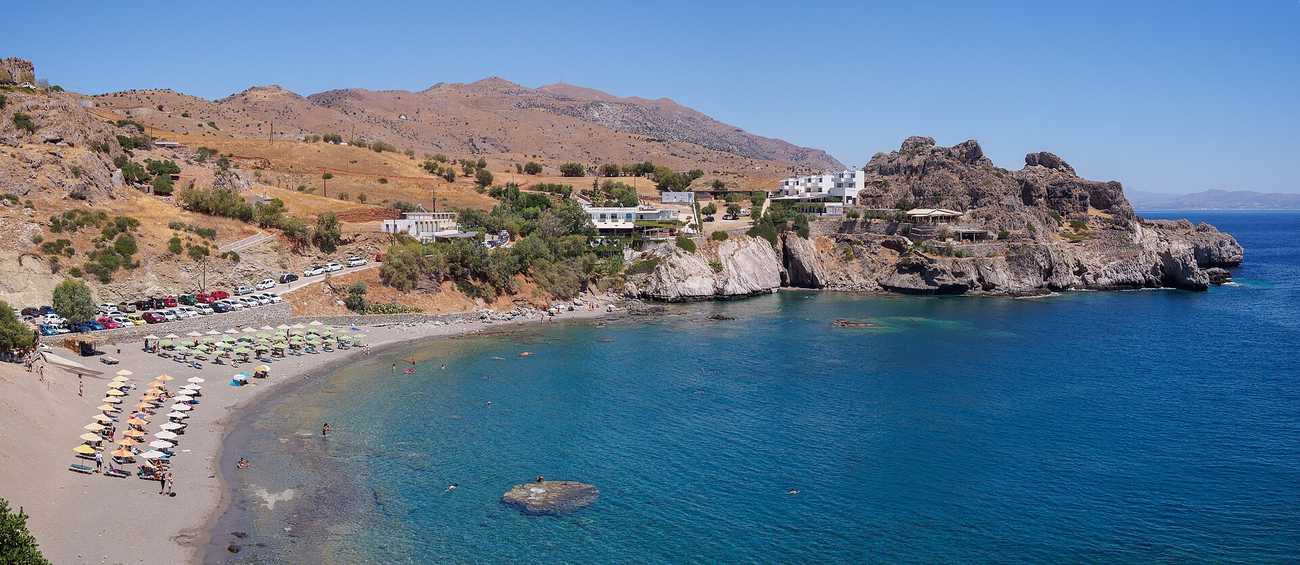
Ligres is a long, quiet beach on the south coast of Crete, set in the Rethymno district below the mountains between Agios Pavlos and Triopetra on the Libyan Sea. Grey-and-golden sand, low dunes and a stream mouth back a small line of tavernas and rooms, with no resort development along the shore. A rough road down from the mountain villages of Akoumia and Kerames keeps the beach quiet through the summer. The open water can turn choppy with wind and waves, which draws the occasional surfer to the break. Travellers reach this stretch of the southern coast after calm, clear swimming and long sunsets over the water, and plan the trip with My Greece Tours.
This page sets out how to reach Ligres, what the beach and its water are like, where the shore fits among the wild southern beaches, and who the place suits. The sections below cover the drive down from the Rethymno hill villages, the sand and swimming conditions, the food and rooms on the shore, and the outings that pair with a visit. For the wider picture of the island’s south coast and its network of quiet coves, the Crete travel guide frames Ligres within the region as a whole.
Where is Ligres beach on Crete?
Ligres lies on the south coast of Crete in the Rethymno district, on the Libyan Sea between Agios Pavlos and Triopetra. Mountains rise behind the shore, and a rough road descends to the beach from Akoumia and Kerames.
The beach sits at the foot of the Rethymno hill country, where the land drops from farmed slopes to the Libyan Sea. Akoumia and Kerames stand on the mountainside above, and the descent to the water runs along a narrow, partly unpaved road that discourages casual traffic. Drivers reach the villages first, then follow signs down the ravine to the shore. The last stretch tests a low car, so a slower pace and a higher clearance help on the loose surface. The reward at the bottom is a wide beach open to the horizon, with the mountains framing it on three sides and the stream cutting across the sand.
For the full range of coast, gorge and mountain outings across the island, the things to do in Crete overview maps the choices by region and by pace.
Ligres faces due south, so the sun tracks across the bay through the whole day and sets over open water at the western end. The stream that reaches the sea here keeps a green strip of oleander and reeds alive behind the sand, a contrast with the dry, pale hills around it. The nearest towns of any size are Spili inland and Rethymno on the north coast, both reached by mountain road rather than a coastal highway. Regular bus links do not run to the beach, so the drive is the practical way in and out.
Among the quiet corners of the island collected in the hidden gems in Crete selection, Ligres ranks with the least developed, since the difficult approach keeps casual traffic away through the year.
What is the beach and water like at Ligres?
Ligres is a long strip of grey-and-golden sand backed by low dunes and a stream mouth. The open Libyan Sea gives clear water for swimming, though wind and waves rise on exposed days and draw the occasional surfer.
The sand runs for a wide stretch, mixing pale gold with darker grey grains washed down from the mountains behind the shore. Low dunes and a fringe of dune plants edge the back of the beach, and the stream mouth cuts a shallow channel across the sand toward the sea. Space is the defining feature here: even at the height of summer walkers spread out along the shore rather than crowd a single cove. The water shelves gently at the eastern end and runs clear over sand and small stones, which suits steady swimming when the sea lies flat and warm.
Wave action scours the beach after a blow, so the exact shape of the sand shifts through the season, part of the appeal for those tracking the wilder Crete beaches along the southern shore.
Exposure to the open Libyan Sea sets the mood of each day at the beach. On calm mornings the bay lies glassy and warm, ideal for a long swim or a float off the sand near the stream. A south wind can raise a swell by afternoon, and the surf that follows brings the odd board rider to the break at the western end. Shade is limited, so an umbrella and water matter on this treeless shore, and the tavernas at the edge of the sand offer the only reliable cover through the middle of the day. Sunsets stretch long and clear over the water, drawing the last swimmers and the camper vans that park behind the dunes.
The same rhythm of bright calm and sudden wind runs east toward Triopetra, the next bay along the coast.
Are there tavernas and rooms at Ligres beach?
Family-run tavernas and rented rooms sit at the edge of the sand, rather than hotel chains. Fresh fish, grilled meat and garden vegetables fill the menus, and the plain rooms offer a simple base right on the shore.
The tavernas cluster where the road meets the beach, shaded by canvas and cane against the strong southern sun. Cooks work with fish landed along the coast, lamb and goat from the mountain farms above, and vegetables grown in the terraced gardens of Akoumia and Kerames. Meals run to grilled fish, horta greens, stuffed courgette flowers and the local cheeses, washed down with village wine and raki. The pace is slow, and a lunch here stretches easily into the afternoon between swims. Prices stay lower than on the packaged north coast, a reflection of the effort it takes to reach the place.
Food across the island follows the same seasonal, local pattern set out in the guide to the mountain kitchen of Spili inland from the beach.
Rooms at Ligres are plain and few, above or beside the tavernas, with fans rather than deep comfort and a short walk to the water. Yoga groups book them for retreats through the warmer months, drawn by the quiet and the space to practise on the sand at dawn. Campers and van travellers park behind the dunes and stay for nights on end, buying meals from the tavernas and water from the road above. Booking ahead matters in the peak weeks, since the total number of beds is small and the same visitors return year after year to the same rooms.
For the wider choice of bases across the island’s coast and mountains, the guide to where to stay in Crete sets Ligres beside both busier resorts and calmer inland villages.
How does Ligres fit among the southern beaches of Crete?
Ligres forms one link in the chain of wild southern beaches around Triopetra and Agios Pavlos in the Rethymno district. Rough roads, open sea and an absence of resorts tie this stretch of the Crete coast together.
The south coast of the Rethymno district holds a run of undeveloped beaches reached only by mountain roads that fold down the slopes to the sea. Agios Pavlos sits to the west with its cove and dunes, Triopetra spreads its twin bays to the east, and Ligres lies between them as the longest open strand. Walkers link the beaches on foot along the shore and the low headlands, moving from one bay to the next across the sand and rock. Each keeps its own character while sharing the same clear water and mountain backdrop above the shore.
This band of coast draws campers, yoga groups and travellers who plan around solitude, a pattern repeated at the quiet coves that map the calmest corners of the south from one end of the district to the other.
The contrast with the north coast is sharp and deliberate along this shore. Where the northern resorts pack hotels and sunbeds along easy highways, the southern beaches stay hard to reach and lightly built, which is exactly what keeps them empty. Ligres and the bays beside it draw people who accept a slow, rough drive in exchange for space and quiet on the sand. The sunsets over the Libyan Sea, unbroken by any headland to the south, are the shared reward at the end of each long day.
Together this stretch forms one of the calmer edges of the whole island, worth the effort for travellers who plan their route around the least crowded beaches on the southern coast of the Rethymno district and the wider south.
Who is a trip to Ligres best suited for?
Ligres suits travellers after an undeveloped sandy beach and quiet far from the north-coast resorts. Walkers, campers and yoga groups favour the shore for space and calm, and the rough access filters out casual day trippers seeking easy sunbeds.
The place rewards patience and self-reliance from every visitor who makes the drive. People bring shade, water and supplies, accept a slow mountain road, and trade convenience for a beach with room to breathe. Families with older children who swim well enjoy the open sand and shallow eastern end, though the exposed sea means watching the wind on rougher afternoons. Photographers and slow travellers come for the long, clear light and the empty horizon to the south. The nights are dark and quiet, good for stars once the tavernas close for the evening.
A stay here pairs naturally with walks along the coast and short drives up to the hill villages, part of the wider round of outings across the region that reward an early start, a full day and a return to the sand by dusk.
Ligres sits within a short drive of Spili and the Rethymno hill villages, so a base on the beach combines easily with inland trips. A day can mix a morning swim, a mountain lunch and an afternoon back on the sand, or a walk east to the twin bays past the low headland. The beach works as a single quiet day from a base further along the coast, or as a stay of nights for those who settle into its slow rhythm. Travellers who want nightlife, shops and packed sunbeds look elsewhere on the island.
Those who want an unspoilt strand, clear water and long southern sunsets find Ligres among the calmest choices anywhere on the Libyan Sea, well worth the slow drive down from the hill villages above the shore.
Frequently Asked Questions
How do you get to Ligres beach?
Ligres is reached by car along a mountain road that drops from the villages of Akoumia and Kerames in the Rethymno district to the south coast. Drivers cross the island from Rethymno town or the north-coast highway, climb to the hill villages, then follow signs down a narrow, partly unpaved road to the shore. The final descent runs along a rough surface that suits a higher car and a slow, careful pace. Public buses do not serve the beach itself, so a hire car or a private transfer is the practical way in. The drive from Rethymno takes roughly an hour, longer on the loose lower section of the road.
Travellers combine the trip with a stop in the mountain town for supplies and a look at its springs before the final run down to the sand and the tavernas at the water’s edge, where the road ends beside the low dunes and the stream mouth on the shore.
Is Ligres good for swimming?
Ligres offers clear water over sand and small stones, and the eastern end shelves gently enough for steady swimming on calm days. The sea here faces the open Libyan Sea to the south, so conditions change with the wind: flat and warm on still mornings, choppy with waves when a southerly blows across the bay. The occasional surfer rides the swell that follows a blow at the western end of the beach. Strong swimmers handle the open water comfortably, while less confident visitors watch the wind and stay near the shore on rougher afternoons. Shade is limited on the treeless sand, so an umbrella, water and sun cover matter through the middle of the day.
The absence of crowds means space to swim well away from other people. Along the same coast, the eastern bays give a sheltered alternative on days when the wind rises hard and the surf builds fast at Ligres itself.
What else is near Ligres worth visiting?
Ligres sits at the centre of the wild southern beaches of the Rethymno district, with Agios Pavlos to the west and the twin bays to the east, both reachable by short drives or coastal walks across the low headlands. Inland, the mountain town offers a Venetian lion fountain, springs and tavernas, an easy stop on the way down or back to the north coast. The hill villages of Akoumia and Kerames above the beach show terraced farmland and quiet lanes worth a slow drive. Walkers link the coastal bays on foot across the rock, and campers use Ligres as a base for a run of nights of swimming and exploring the shore.
Sunsets over the Libyan Sea close each day on the sand. For the full set of coast, mountain and village outings across the whole island, the wider guide points to bases that place these southern beaches within an easy daily reach of a car.