
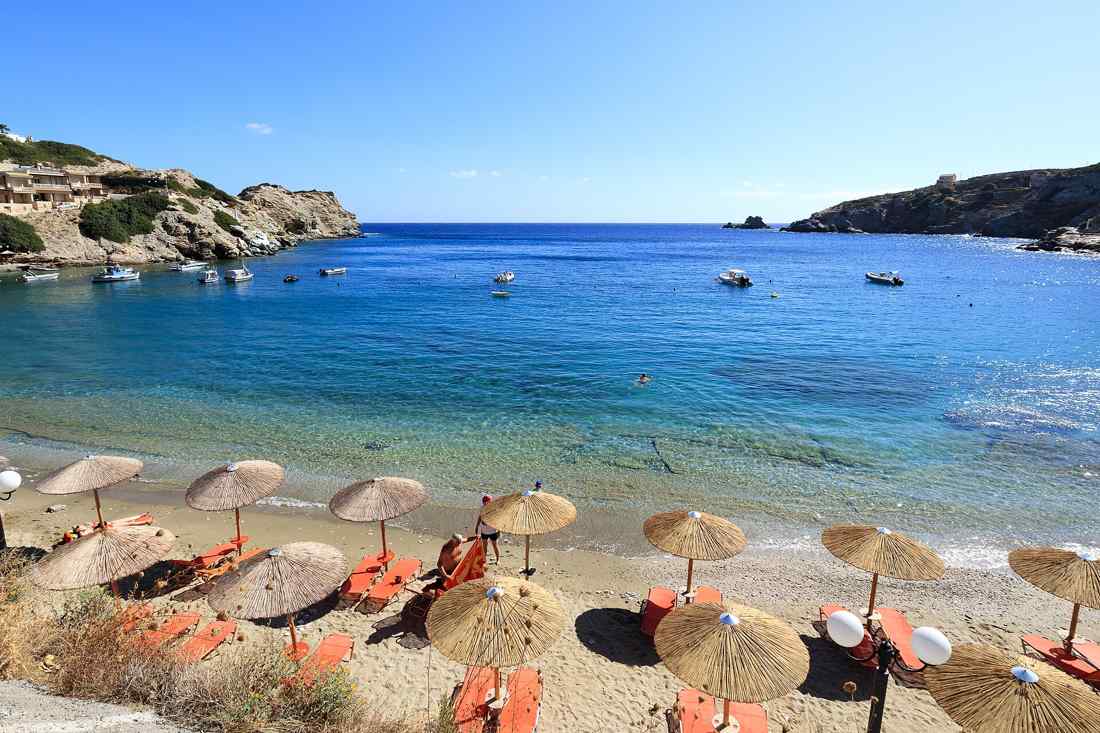
Agia Pelagia sits around a sheltered horseshoe bay on the north coast of Crete, just a short drive west of Heraklion. The main sandy beach fronts calm, clear water protected by headlands, with sunbeds, tavernas and water sports lining the shore. Hotels and villas climb the surrounding hillsides, offering wide sea views while the bay retains a relaxed atmosphere. Smaller coves such as Mononaftis and Ligaria lie close by, and the village’s position near the capital and airport makes it an easy first or last stop for travellers exploring the island with My Greece Tours.
The resort mixes convenience with a calm, sheltered beach, suiting families and travellers who want the coast within quick reach of Heraklion’s sights, museums and transport links. Boat trips and swimming fill unhurried days, and the protected bay provides safe conditions for children and less confident swimmers. The sections below cover the bay’s beaches, nearby coves, accommodation options, and how Agia Pelagia fits into a wider Crete itinerary. Our Crete travel guide offers further planning advice for the island.
What makes the main beach at Agia Pelagia in Crete special?
The horseshoe bay creates a sheltered, sandy beach with calm, clear water protected by headlands. Sunbeds, tavernas and water sports line the shore, and the bay’s natural shape keeps waves gentle for safe swimming.
The main beach curves around the sheltered bay, with soft sand sloping gently into clear turquoise water. Headlands on either side block strong winds and currents, creating calm conditions that suit families with young children and swimmers of all abilities. Sunbeds and umbrellas cover much of the sand during the high season, and tavernas set tables just steps from the water’s edge. The beach offers pedalos, kayaks and other water sports, and the shallow entry makes it easy to wade in and cool off. Fishing boats bob at anchor near the eastern headland, adding a traditional touch to the resort scene.
The bay’s compact size means you can walk from one end to the other in minutes, and the surrounding hillsides provide a scenic backdrop of whitewashed hotels and green slopes rising above the blue water.
Tavernas along the beachfront serve fresh fish, Greek salads and cold drinks throughout the day, and their terraces offer shade during the midday heat. The beach stays busy in July and August but never feels overcrowded, and the protected position means the water remains clear even on breezy days. Lifeguards patrol the main swimming area, and showers and changing facilities sit near the central section of sand. The calm conditions and gentle slope make the bay ideal for Crete with kids, and the mix of sunbeds, tavernas and water activities keeps everyone entertained.
The beach’s proximity to Heraklion airport means you can be swimming within an hour of landing, making Agia Pelagia a practical choice for short breaks or the start of a longer island tour.
Which nearby coves and beaches can you explore from Agia Pelagia?
Mononaftis and Ligaria lie close by, both offering quieter stretches of sand and pebble. These smaller coves provide alternative swimming spots with clear water, fewer crowds, and a more secluded feel than the main bay.
Mononaftis sits just east of the main bay, a short walk or quick drive along the coast road. This smaller cove mixes sand and pebble, with clear water and a more intimate atmosphere than the central beach. Sunbeds and a taverna serve visitors, but the cove remains quieter and attracts those seeking a more peaceful spot. The water deepens quickly, making it popular with snorkelers who explore the rocky edges and spot fish around the submerged stones. Ligaria lies further west, another compact cove with a sandy beach and calm water protected by low cliffs. A handful of tavernas and a small hotel overlook the shore, and the cove’s sheltered position creates excellent swimming conditions.
Both coves offer free parking nearby, and their proximity to Agia Pelagia means you can easily visit them during your stay.
Exploring these smaller beaches adds variety to your days and lets you discover quieter corners of the coast. The coves suit visitors who want to escape the busier central bay without travelling far, and their clear water and rocky edges provide good snorkeling opportunities. The coast road connecting the coves offers sea views and passes through low scrubland dotted with wildflowers in spring. Ligaria and Mononaftis appear on lists of Crete beaches worth seeking out, and their sheltered positions mean they stay calm even when the main bay sees gentle waves. Tavernas at each cove serve simple lunches, and the relaxed pace makes them ideal for a lazy afternoon by the water.
The short distances mean you can visit both coves in a single day and still return to Agia Pelagia for dinner.
How does Agia Pelagia connect to Heraklion and other parts of Crete?
The resort lies twenty-five kilometres west of Heraklion, a thirty-minute drive along the coast road. The capital’s airport, port, museums and Knossos site all sit within easy reach, making Agia Pelagia a convenient base for exploring the region.
The main coast road runs directly from Heraklion airport to Agia Pelagia, and the short distance makes the resort an easy first or last stop on a Crete itinerary. Rental cars reach the village in under thirty minutes, and taxis wait at the airport for arrivals who prefer not to drive immediately. Buses connect Agia Pelagia to Heraklion several times daily, stopping near the central beach and continuing to the capital’s bus station. The proximity to Heraklion means you can visit the Archaeological Museum, stroll the Venetian harbour, or explore the Knossos palace ruins without committing to a full day away.
The capital’s port also serves ferries to other islands, and staying in Agia Pelagia gives you coastal relaxation within quick reach of transport links and urban attractions.
The village sits on the north coast route that connects western and eastern Crete, and the main highway passes just inland. Rethymno lies an hour west, and Chania sits two hours along the coast, making day trips to those cities straightforward. The central position on the island’s north shore means you can explore mountain villages, gorges and archaeological sites without long drives, and the easy airport access suits travellers with limited time. Tour operators offer excursions from Agia Pelagia to popular sites, and boat trips depart from the bay for coastal cruises and swimming stops.
The combination of beach relaxation and convenient connections makes the resort a practical choice for visitors who want to balance things to do in Crete with unhurried days by the water. The short transfer time also reduces travel fatigue, leaving more energy for exploring the island.
What accommodation options does Agia Pelagia offer?
Hotels and villas climb the hillsides around the bay, offering sea views and terraced pools. Options range from family-run guesthouses to larger resort hotels, and the elevated positions provide panoramic views over the horseshoe cove and coastline.
The hillsides rising above the bay hold most of the village’s accommodation, with hotels and apartment complexes built into the slopes to capture sea views. Terraces and balconies face the water, and infinity pools seem to merge with the blue horizon. Family-run guesthouses offer simple rooms and personal service, while larger resort hotels provide all-inclusive packages, spa facilities and organised activities. The elevated positions mean most properties involve steps or short uphill walks, but the views reward the effort. Villas with private pools sit on the quieter edges of the village, suiting groups and families who want self-catering space and independence.
The compact size of Agia Pelagia means even hillside properties sit just minutes from the beach, and the stepped layout ensures most rooms enjoy unobstructed sea views across the rooftops below.
Choosing where to stay in Crete often involves balancing beach access with scenery, and Agia Pelagia delivers both. The hillside hotels provide sunset views and cooling breezes, and their pools offer an alternative to the beach on windier days. Studios and apartments with kitchenettes give flexibility for longer stays, and tavernas within walking distance mean you can eat out without needing a car every evening. The village lacks the sprawling resort complexes found in busier areas, keeping the atmosphere more intimate and relaxed. Booking early secures the best sea-view rooms, and properties on the western hillside catch the evening light as the sun sets over the water.
The mix of accommodation types suits different budgets and travel styles, and the sheltered bay remains the focal point for every property in the village.
When is the best time to visit Agia Pelagia in Crete?
Late spring and early autumn offer warm weather, calm seas and fewer crowds. July and August bring peak heat and visitor numbers, while the shoulder months provide comfortable temperatures ideal for swimming, exploring and enjoying the sheltered bay.
The swimming season runs from May through October, with water temperatures climbing steadily through spring and remaining warm well into autumn. June and September deliver the most comfortable conditions, with daytime temperatures in the mid-twenties Celsius, calm seas and enough sunshine for beach days without the intense heat of midsummer. July and August see the bay at its busiest, with sunbeds fully occupied and tavernas serving crowds of visitors. The sheltered position means the water stays calm even during the meltemi winds that affect more exposed coasts, and the bay’s natural protection makes it a reliable choice throughout the season. Winter brings cooler temperatures and occasional rain, and most hotels close from November through March.
The village quiets down outside the main season, with just a handful of tavernas remaining open for local residents and the occasional off-season visitor.
Planning your visit around the best time to visit Crete depends on your priorities, but Agia Pelagia’s sheltered bay performs well across the warmer months. May sees wildflowers on the hillsides and pleasant temperatures for walking, while October offers lingering warmth and quieter beaches as the crowds thin. The shoulder months also bring better availability and lower prices for accommodation, and the sea remains warm enough for swimming into late autumn. The village’s proximity to Heraklion airport means you can take advantage of off-peak flight deals and still enjoy beach weather, and the compact size of the resort means it never feels deserted even outside high summer.
The calm bay and reliable sunshine make Agia Pelagia a dependable choice for beach holidays across the extended Mediterranean season.
Frequently Asked Questions
Is Agia Pelagia suitable for families with young children?
The sheltered horseshoe bay creates ideal conditions for families, with calm, shallow water protected by headlands and a gentle sandy slope that makes entry easy for young swimmers. The compact beach means parents can keep children in sight, and the lack of strong currents or waves provides peace of mind. Sunbeds and umbrellas offer shade during the hottest hours, and tavernas along the shore serve simple meals that appeal to children. The hillside hotels often feature pools with separate children’s sections, and the short distance to Heraklion means you can break up beach days with visits to the aquarium or archaeological sites.
The village’s relaxed atmosphere and safe swimming conditions make it a practical choice for families seeking a straightforward beach holiday without the sprawl and crowds of larger resorts. The proximity to the airport also reduces travel time, which helps when managing tired children after a flight.
Can you take boat trips from Agia Pelagia?
Boat trips depart from the bay for coastal cruises, swimming stops and visits to nearby coves. Operators offer half-day and full-day excursions that explore the coastline west toward Bali or east toward Heraklion, with opportunities to swim in secluded bays and snorkel around rocky headlands. Glass-bottom boats let you view underwater life without getting wet, and sunset cruises provide a relaxed way to enjoy the evening light on the water. Fishing trips also leave from the bay, and some operators offer private charters for groups who want a tailored itinerary. The calm conditions in the horseshoe bay make boarding easy, and the sheltered water means trips run reliably throughout the season.
Booking through your hotel or directly with operators on the beach gives you options for different trip styles, and the short distances along this stretch of coast mean even half-day excursions cover interesting coves and swimming spots. The boat trips add variety to a beach-focused stay and let you see the coastline from a different perspective.
What dining options are available in Agia Pelagia?
Tavernas line the beachfront and cluster in the village centre, serving fresh fish, grilled meats and traditional Greek dishes. The waterfront restaurants set tables on terraces overlooking the bay, and the catch of the day often appears on chalkboards outside. Menus feature Greek salads, moussaka, souvlaki and seafood platters, with local wine and ouzo to accompany meals. The hillside hotels run their own restaurants, and some offer all-inclusive dining, but the village tavernas provide authentic atmosphere and the chance to eat with your toes in the sand. Bakeries sell fresh bread and pastries for breakfast, and small shops stock basics for self-catering in apartments and villas.
The dining scene stays relaxed and unpretentious, focused on simple, well-prepared food rather than fine dining. Prices remain reasonable compared to larger resorts, and the beachfront setting adds to the appeal. The compact village means you can easily walk between tavernas and try different spots during your stay, and the mix of traditional Greek cooking and international options suits most tastes.